
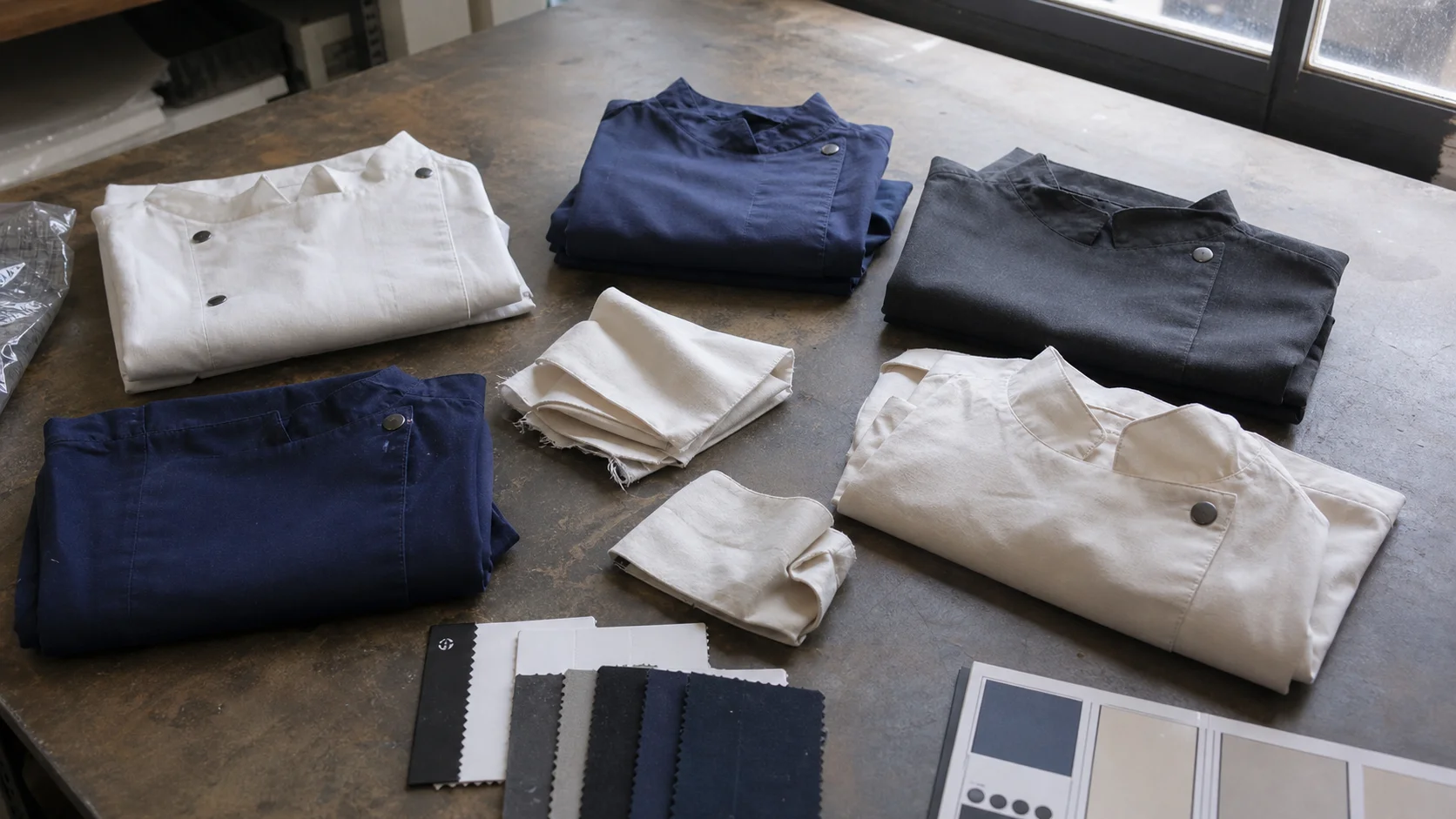
A sourcing-focused outline for warehouse safety teams auditing custom chef coat colorfastness before bulk orders, covering lab tests, wash trials, dye...
Warehouse safety teams do not usually think of chef coats as a high-risk purchasing item until a lot starts bleeding color, shrinking out of tolerance, or failing wash tests after a few cycles. In foodservice supply chains, that matters. A custom chef coat that looks fine on delivery can create avoidable problems later: inconsistent appearance across a team, complaints after laundering, wasted reorders, and questions from operations about whether the garment spec was written tightly enough in the first place.
A chef coat colorfastness audit is the practical way to reduce that risk. For warehouse safety teams, the job is not to chase fashion detail. The job is to confirm that the garment can survive the real usage pattern: repeated industrial laundering, heat exposure, moisture, friction, and long wear cycles without unacceptable dye transfer or visual breakdown. When buying custom chef coats at scale, this audit should be part of sourcing, approval, and receiving control.
This guide focuses on custom chef coat colorfastness audit for warehouse safety teams, with a buying lens on MOQ, cost, fabric choices, trim quality, sample approval, and inspection risks. If you are building a procurement spec or managing supplier review, this is the kind of due diligence that prevents costly surprises later.
Chef Coat Colorfastness Audit for Safer Buying - MOQ, Cost & Sourcing manufacturing guide
Colorfastness is the garment’s ability to retain color when exposed to washing, rubbing, perspiration, heat, sunlight, and cleaning chemicals. For chef coats, the most relevant risks are wash fastness, crocking or rub-off, and sometimes perspiration fastness. A coat that fails in any of these areas may not become unusable immediately, but it often becomes a recurring quality issue.
Warehouse safety teams care because poor colorfastness can affect more than appearance. Dye bleed can contaminate other garments in a bulk wash. Uneven fading can make it hard to maintain team consistency. Some dyed fabrics can also create extra concern if a company has strict laundering rules or if uniforms are washed with lighter-colored PPE and workwear. In practical procurement terms, weak colorfastness increases hidden cost.
Buying judgment: if the uniform will go through frequent commercial laundering, treat colorfastness as a core performance requirement, not a cosmetic preference.
Chef coats are often white, black, navy, grey, or branded colors. White coats may seem simple, yet the fabric and trim still matter because high-temperature wash and bleaching can expose weak construction. Dark or saturated colors carry more dye-transfer risk and usually deserve tighter testing and clearer acceptance criteria.
A colorfastness audit should start before production, not after delivery. The goal is to verify that the supplier understands the intended wash process, the fabric source, the dyeing method, and the approval standards. That usually means checking four areas.
Ask for the fabric content, yarn type, weave, and dyeing process. A cotton-rich chef coat may feel comfortable and breathable, but untreated cotton can be less stable than blended constructions under repeated laundering. Polyester-cotton blends are common because they balance comfort with better dimensional stability. The dye process matters too. Piece-dyed, yarn-dyed, and solution-dyed materials behave differently under wash and rub conditions.
Colorfastness should be judged against the real wash environment. Commercial laundry, hot water, oxygen bleach, chlorine bleach, tumble drying, and pressing all affect fabric differently. If the chef coat will be washed in a central facility, that should be stated in the spec. If it will be washed in-house with lighter workwear, the audit should include cross-contamination risk.
Buttons, piping, embroidery thread, labels, and contrast panels can fail at different rates. A coat may pass the base fabric test and still bleed from a contrasting trim or stitched logo. That is common with bold branding. Every visible component should be reviewed, not just the body fabric.
One approved sample does not prove a production lot will match it. The safest approach is to approve pre-production samples, then compare bulk output against the approved standard. This is especially important if the order uses custom dye matching or special trims.
A sourcing team does not need to run laboratory tests in-house, but it should know which tests are relevant and what a credible supplier can provide. Ask for test reports from a recognized lab or from the mill, then check that the test conditions match the actual use case.
Test area What it checks Why it matters for chef coats Wash fastness Color change and staining after washing Shows whether the coat will hold up under repeated laundering Rubbing / crocking Dye transfer from dry or wet rubbing Important for dark coats, apron contact, and stacking in storage Perspiration fastness Color response to sweat and moisture Relevant for high-heat kitchen use and long shifts Light fastness Fading from light exposure Useful if garments are stored or displayed under strong light Bleach resistance Reaction to cleaning chemicals Critical if the laundry process uses bleach or strong sanitizersFor procurement purposes, the exact test standard may vary by market and supplier. What matters is that the test is documented and relevant. A report that shows acceptable results under mild washing conditions is not very useful if your operation uses industrial wash cycles.
Color rating is often presented as a gray scale score. The scoring system may differ by standard, but in sourcing terms the message is simple: the higher and more stable the score, the lower the risk of visible fading or staining. Safety teams should ask for both initial and post-wash results if possible.
The fabric spec is usually the biggest driver of colorfastness, but trims and construction details can create unexpected issues. That is why the audit should read like a systems check, not just a fabric check.
Heavier fabric often performs better in abrasion and wash durability, but it can feel warmer. Lighter fabric improves comfort in hot kitchens, yet it can be more prone to visual wear. The right answer depends on the work environment. A common sourcing range for chef coats may sit around midweight woven fabric, but the final choice should reflect laundering frequency and temperature, not just price.
Cotton-rich fabrics are comfortable and absorbent. Polyester adds stability, faster drying, and better resistance to shrinkage. Blends often give a better cost-performance balance for custom chef coats in regular commercial use. A 65/35 or similar poly-cotton blend is often easier to manage in bulk laundering than a pure cotton garment, though the exact balance should be tied to comfort requirements and branding goals.
Buttons can discolor, crack, or stain surrounding fabric if the resin quality is poor. Metal snaps can introduce corrosion risk if the finish is weak. Hidden closures may reduce visual wear and help the coat maintain a cleaner appearance. If the coat uses decorative buttons, test the trim under the same wash conditions as the fabric.
Custom logos can be a weak point. Thread dye, stabilizer backing, and stitch density all affect how embroidery performs during laundering. If the brand uses a multicolor logo, request a wash test on the finished sample. A logo that looks sharp before washing but twists or bleeds later creates a more expensive complaint than a plain garment would.
Contrast fabrics can create more visual impact, yet they also raise the risk of shade variation and dye transfer. Piping and narrow inserts should be checked carefully because small components sometimes use different dye lots from the main body fabric. That is a common source of mismatch in bulk production.
MOQ affects the way every custom chef coat order is structured. A supplier may quote a low fabric MOQ but a higher MOQ for custom colors, special trims, or embroidered branding. Typical MOQ ranges vary widely by factory capability, but warehouse buyers should expect that more customization usually means a higher minimum.
As a rough sourcing guide, simpler stock-fabric chef coats can often start at lower MOQs, while custom-dyed fabrics, private labels, and special trims may require a few hundred units per color or style, sometimes more. The more points of customization you add, the more you may need to buy to make the run worthwhile for the supplier. That can improve unit cost, but it also increases inventory exposure.
Lead time is rarely just sewing time. For a custom chef coat, it can include fabric sourcing, color approval, trim sourcing, sample development, production, and inspection. If the order must meet a seasonal opening or an expansion schedule, the audit should build in approval time, not just manufacturing time.
Practical tradeoff: a lower MOQ looks attractive on paper, but a small run with custom color matching can still be expensive per unit and slower to approve.
If your team is comparing sourcing options, it may help to align early with the supplier’s service scope. See Fabrikn services for a broader view of production support, or go directly to contact us if you need to clarify an order spec before sampling.
Sample approval is where many colorfastness problems can be caught cheaply. A clean process should include more than one sample stage.
The proto sample checks silhouette, pattern, fabric feel, and basic branding placement. At this stage, color may not yet be final if the supplier is still matching shades.
If the coat uses a custom color, request lab dips or strike-offs for the fabric. Review them under the same lighting conditions used in your warehouse or office. Daylight, fluorescent light, and warm indoor light can all change perception. Shade approval should be signed off before bulk production begins.
The pre-production sample should reflect the final fabric, trims, labels, and embroidery. This is the right time to test wash behavior and inspect color transfer risk. If possible, run a small internal wash trial that simulates your actual laundry cycle.
The first production units should be checked against the approved sample. This matters because dye lot variation can show up even when the supplier follows the same pattern and sewing instructions.
A random check of finished goods helps catch mixed lots, poor packing, mislabeling, or color variation between cartons. The inspection should also verify that the items are packed in a way that will not cause staining during storage.
Sampling is not just about fit. For chef coats, it should also confirm whether buttons stay intact, logos remain stable, and the fabric survives wash cycles without obvious change.
Warehouse safety teams often inherit the end of the process: cartons arrive, items are counted, and the first real quality check happens at receiving. That is too late to catch most avoidable colorfastness issues, but it is still important.
Receiving teams should inspect carton condition first, then open a manageable sample from each lot. If there is a quality concern, separate the affected cartons before they enter active inventory. This prevents a small issue from becoming a cross-warehouse problem.
Documentation matters too. Keep the approved sample, lab reports, shade references, and packing list together. If a future complaint comes in, the team needs a fast way to compare the claim against the original approval set.
A strong spec reduces back-and-forth and gives the supplier a clear basis for quotation. For custom chef coat colorfastness audit for warehouse safety teams, the spec should be specific enough to control risk but not so rigid that it blocks practical sourcing options.
Spec area What to define Why it matters Fabric composition Fiber blend, weave, weight range Affects durability, comfort, and wash stability Color target Approved shade reference or lab dip Reduces shade disputes Colorfastness requirement Wash and rub performance benchmark Protects against bleeding and fading Laundering method Home wash or commercial wash process Tests must match actual use Trim specification Button type, thread color, label type Stops trim-related failures MOQ and overrun tolerance Minimum order and acceptable extra quantity Improves buying control Inspection plan AQL level or receiving check method Defines acceptance at shipmentBe careful with vague language such as “good quality” or “industry standard.” Those phrases do not protect a warehouse team when a shipment fails. The spec should state the wash context, the expected performance, and the approval process.
If your team is still shaping scope or wants a broader sourcing discussion, it can be useful to review the supplier’s background. See about us for company context, then use the contact page if you need to discuss a custom program in detail.
Before ordering custom chef coats, use a simple checklist to keep the conversation grounded in risk and cost.
A good purchase is rarely the cheapest initial quote. It is the one that survives production, arrival, laundering, and repeat orders with minimal friction. For warehouse safety teams, that usually means spending a little more time on the audit and a little less time chasing avoidable exceptions later.
A chef coat colorfastness audit is a small part of uniform sourcing that carries outsized value. It protects appearance, reduces laundering complaints, and helps warehouse safety teams buy with fewer surprises. The biggest mistakes usually come from assuming the fabric is the only issue, skipping wash-condition detail, or approving a sample without testing trims and branding.
For custom chef coat programs, the best path is straightforward: define the laundering reality, lock the shade, verify the fabric and trims, set an MOQ that matches business needs, and inspect the first shipment carefully. That approach is practical, defensible, and usually cheaper over the full life of the garment than reacting to failure after bulk delivery.
Get a free quote from Fabrikn — your trusted B2B clothing manufacturer with 10+ years of experience. MOQ as low as 200 pieces.
Get a Free Quote →It is a review of how well the fabric, trims, and branding retain color after washing, rubbing, moisture exposure, and normal use. For buying teams, it helps decide whether a custom chef coat is suitable for repeated laundering.
Wash fastness is usually the most important because chef coats are washed often. Rubbing fastness is also important, especially for dark garments and coats with contrasting trim or embroidery.
MOQ depends on fabric, color, and branding. Lower-complexity orders can sometimes start in smaller runs, while custom dyed fabrics and private-label details often require a few hundred pieces per style or color. The more customization involved, the higher the MOQ tends to be.
You can, but it is not the safest approach. A visual approval only confirms appearance at delivery. A wash trial helps reveal dye bleed, shrinkage, trim issues, and embroidery problems before bulk production.
Common causes include weak dye fixation, poor fabric finishing, incompatible trims, mixed dye lots, and wash conditions that are harsher than the fabric was tested against. High heat and aggressive detergents can make the issue worse.
Not usually. A practical receiving process checks cartons, then inspects a sample from each lot or size run. If a problem shows up, the team should escalate to a more detailed inspection before the goods are released.
You can start with the supplier’s service overview at fabrikn services and use contact us to discuss your product requirements, sampling plan, and order size.