
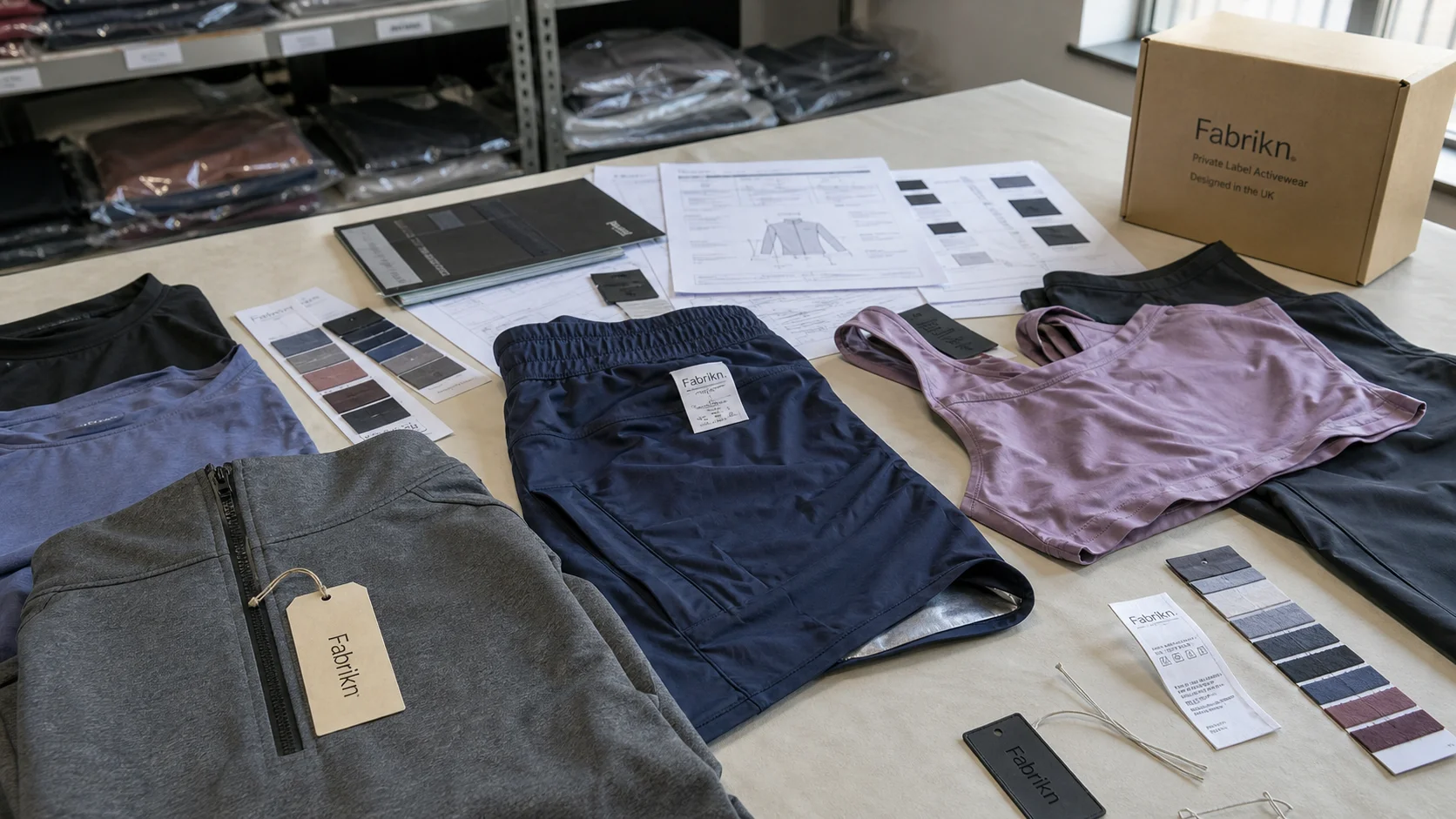
A focused outline for foodservice buyers evaluating custom chef coat seam strength testing, decoration impacts, test methods, production checkpoints, and sourcing decisions tied to durability.
Custom Chef Coat Seam Strength Testing for Buyers - Fabrikn production reference
Seam strength is not a technical detail that can be left entirely to the factory floor. For foodservice buyer programs, it is a commercial issue tied to wear life, replacement frequency, staff presentation, and complaint rates. A custom chef coat may look correct on a tech pack and still fail in use if seam construction is underbuilt for kitchen conditions.
Chef coats work under harder conditions than many standard uniform tops. Staff bend, lift, stretch, reach overhead, lean across prep stations, and wash garments frequently. Heat, moisture, chemical laundering, and repeated pressing create extra stress. In that environment, weak seams usually show up before fabric failure.
For buyers managing restaurant chains, hotel groups, catering programs, culinary schools, or institutional foodservice, seam strength testing helps answer a basic purchasing question: will this coat survive the duty cycle you are paying for?
That matters even more in custom programs where branding, embroidery, contrast piping, or printed elements are added. Decoration may be the visible feature, but the garment still lives or dies on construction quality. Buyers who focus only on fabric weight or logo appearance often miss the bigger risk.
A practical buying standard is simple. If the seam construction cannot hold through normal movement, industrial or commercial laundering, and expected garment life, the unit cost was never truly competitive.
When supplier discussions move beyond price, it helps to review construction planning early. Buyers comparing development options can usually save time by aligning testing expectations with production requirements from the start. That is especially important in custom programs involving multiple trims, branding positions, or fabric options. General sourcing support details are often covered through a supplier’s services pages, but the garment spec still needs its own seam performance criteria.
Seam strength testing measures how much force a stitched seam can withstand before failure. In chef coats, the result helps buyers evaluate whether seam engineering matches actual use. This is broader than checking if stitching simply looks neat.
Testing can reveal several different failure modes:
Each failure tells a different story. Thread breakage may point to poor thread quality, low stitch density, or incorrect thread size. Fabric tear near the seam may mean the fabric itself is not suitable for the seam load or that needle choice damaged yarns during sewing. Seam slippage often shows up in fabrics with smoother constructions or lower yarn cohesion. Buyers should not treat all seam failures as a single problem.
For chef coats, the test result also has to be read together with garment use. A lightweight front placket seam and an armhole seam do not face the same stress profile. The practical question is not whether every seam is equally strong. The better question is whether each seam is strong enough for its location and function.
Not all seams deserve the same attention. A buyer program that tests only one generic seam may miss the places where failures actually occur in kitchen use.
These are the areas that usually deserve closer review:
Double-breasted chef coats often carry extra front-layer construction, which changes drape and bulk. That can affect how stress is distributed around the placket and chest area. Short-sleeve coats may reduce cuff-related issues, but they put more attention on sleeve opening finish and armhole balance.
Programs with women’s and men’s fits should also avoid assuming the same seam behavior across both blocks. Different grading, waist shaping, and bust allowance can change where stress concentrates. That becomes relevant when buyers approve one fit sample and roll the same seam construction across a full size range without further checks.
Buyers do not need to run the lab equipment themselves, but they should know what is being tested and under which standard. A vague statement such as “passed seam test” is not enough for a production file.
Common lab approaches include seam strength testing and seam slippage testing under standardized textile methods. The specific test method may vary by market, laboratory, and buyer manual, but the reporting should clearly state the standard used, sample orientation, fabric condition, and pass criteria.
Ask suppliers or third-party labs to confirm these points:
For chef coats, pre-wash results alone can be misleading. Commercial laundering changes fabric hand, shrinkage behavior, and stitch tension. If the end use involves frequent hot wash or industrial laundry, buyers should strongly consider post-laundering seam evaluation as part of approval.
Purchasing judgment: if a supplier offers very strong pre-production numbers but cannot explain post-wash seam behavior, the program still carries risk. Kitchen uniforms are not showroom garments.
Some buyers also benefit from requesting seam appearance checks after wash cycles, not just force-based testing. A seam can technically hold while still puckering badly, twisting, or showing grin-through. In a branded uniform program, that appearance issue becomes a replacement cost issue.
Testing is only useful when the base specification is clear. Many seam failures are created upstream by incomplete development instructions rather than by a single sewing mistake during bulk production.
At minimum, the buyer tech pack should define:
For custom chef coats, common fabrics often fall in the medium-weight range to balance comfort and durability. Many buyer programs review options around 180 to 245 gsm, depending on market position, climate, and laundering intensity. Lighter weights can improve comfort and cost, but they often narrow the margin for seam failure if the garment is fitted or heavily washed. Heavier weights may improve durability, though they can increase heat burden for kitchen staff and sometimes reduce mobility if the pattern is tight.
There is no universal best fabric. The right choice depends on use case. A fine-dining front-of-house culinary concept may prioritize appearance and branding crispness. A high-volume institutional kitchen may care more about wash survival and replacement economics.
That is why seam strength targets should be written into the buyer program before sample approval, not added after complaints begin.
Sample approval is where most seam-strength problems can still be corrected cheaply. Once bulk fabric is booked, trims are dyed, and production lines are loaded, the cost of fixing construction errors rises fast.
A careful approval flow for custom chef coats often includes these stages:
Buyers should insist that tested samples match production intent. Testing a development sample with substitute fabric or different thread is weak control. The more custom the chef coat, the more this matters. Embroidery backing, name patch placement, contrast panels, and reinforced pockets all affect seam behavior.
A practical sample approval checklist should include movement testing by hand as well. Lab reports matter, but so does physical review. Raise the arms, cross the front body, bend the elbows, and stress the side seam lightly. This is not a substitute for formal testing. It is a quick way to catch obvious pattern balance issues before spending time on lab work.
Buyers often ask what minimum order quantity applies to custom chef coats. The answer varies widely by fabric sourcing model, trim complexity, and decoration method. For straightforward custom uniform programs, MOQs commonly start around 100 to 300 pieces per color or style with stock-supported fabrics. Fully custom fabric programs, special dye lots, or multi-trim developments may push practical MOQs into the 500 to 1,000 piece range or higher. Very small orders can still be possible, but the tradeoff is usually fewer fabric options, higher unit prices, or reduced testing flexibility.
That tradeoff should be discussed early with the supplier through the project scoping stage. For direct communication on development requirements, buyers typically move fastest when they send a complete tech pack and use a clear inquiry route such as a supplier contact page.
Seam strength testing is part of the calendar, not an isolated event. Buyers who want reliable results need to build test timing into the production plan.
Lead time depends on several variables:
A simple stock-fabric custom chef coat program may move faster than a fully engineered corporate rollout with embroidery, woven labels, printed branding, and multiple fits. Typical development plus bulk production timelines often land somewhere between 45 and 90 days after final approval for relatively standard programs. Complex programs can run longer, especially if custom fabric, test failures, or trim revisions appear.
Buyers under time pressure often face a familiar decision: approve quickly and accept more risk, or extend the calendar to validate seam performance properly. In most foodservice programs, the second option is cheaper in the long run. A delayed launch is visible. A weak uniform program creates recurring replacements, operational complaints, and brand inconsistency.
Decision Area Faster Option Lower-Risk Option Fabric sourcing Use stock-supported fabric Approve custom fabric after testing Sample process Skip size set Review full size range where needed Lab work Pre-wash seam test only Pre- and post-wash testing MOQ strategy Smaller run with limited customization Larger run with fuller spec control Approval timing Approve from visuals Approve from tested PPSThat kind of tradeoff table should sit inside the buyer’s internal sourcing file, not only in supplier email chains.
Many chef coat issues are not discovered in the lab. They show up during inline or final inspection, or worse, after uniforms reach the kitchen. Buyers should watch for several recurring risks.
A buyer can approve a strong seam construction in the pre-production sample and still receive weaker bulk if sewing conditions change. That is why inline inspection matters on custom uniform programs. The risk rises when orders are split across multiple lines or multiple subcontract sewing units.
Inspection should also compare decorated and non-decorated zones. Embroidery near chest pockets or name badge placements can stiffen panels and alter how the garment flexes. That may push stress into nearby seams rather than the decorated area itself.
Purchasing judgment: if the chef coat program includes frequent replenishment orders, it is worth documenting approved seam construction in a replenishment control sheet. Reorders drift when the original approvals are not translated into a repeatable production standard.
This article sits in the Decoration & Printing category for a reason. Branding decisions can influence seam performance more than some buyers expect.
Common decoration options on custom chef coats include embroidery, heat transfer logos, screen printing on lighter styles, woven labels, direct embroidery on chest panels, and applique or patch applications. Each one interacts differently with the garment.
Embroidery is durable and common for chef wear, but dense stitching adds local stiffness. If placed too close to a pocket edge, side panel join, or front placket fold, it can create drag or distortion. Heat transfers can preserve a cleaner hand in some placements, though the temperature and adhesive system must suit the fabric blend and laundering expectation. Screen printing is less common on traditional heavyweight chef coats than on promotional culinary apparel, but it still appears on lighter branded kitchen tops and event wear.
Buyers should review these decoration-related seam risks:
The safest approach is to validate decoration and seam construction together on the same pre-production sample. Splitting those approvals invites avoidable failure. A logo that looks clean on a strike-off may behave differently once the full coat is sewn, washed, and worn.
Buyers new to supplier evaluation can also review a manufacturer’s background and production scope before development begins. Basic company information is often summarized on an about page, though the real decision should still come from technical communication, sample consistency, and clear control of specifications.
For foodservice buyer programs, a useful control checklist should be straightforward and repeatable. Complex sourcing systems often fail because the garment review standard is too vague to execute consistently.
From a purchasing standpoint, the strongest custom chef coat program is usually not the one with the most complex specification sheet. It is the one where fabric, fit, seam engineering, decoration, and laundering expectations were aligned before the order was cut.
That alignment reduces rework, lowers return risk, and gives foodservice operators a more stable uniform program. It also protects the branded appearance of the garment, which matters in open-kitchen concepts and customer-facing culinary environments.
If a buyer needs one takeaway, it is this: seam strength testing should be treated as part of product development, not as a final obstacle before shipment. By the time final inspection begins, most of the real decisions have already been made.
Get a free quote from Fabrikn — your trusted B2B clothing manufacturer with 10+ years of experience. MOQ as low as 200 pieces.
Get a Free Quote →Seam strength testing measures how much force a stitched seam can take before the thread breaks, the fabric tears, or the seam pulls apart. For custom chef coats, it helps buyers confirm that garment construction can handle kitchen movement and repeated laundering.
Foodservice uniforms face frequent washing, heat exposure, and physical movement. Weak seams usually fail early at armholes, side seams, pockets, or plackets. That leads to replacement cost, staff complaints, and inconsistent brand presentation.
Armholes, shoulder seams, sleeve underarm joins, side seams, pocket attachments, and front placket areas are usually the first priorities. Those areas tend to carry the highest movement stress in kitchen use.
For relatively standard custom programs using stock-supported fabrics, MOQ often starts around 100 to 300 pieces per style or color. More customized programs with special fabrics, trims, or complex decoration may require 500 to 1,000 pieces or more for efficient production.
Yes, especially when garments will be commercially or industrially laundered. Pre-wash results alone do not show how seams behave after shrinkage, tension changes, and repeated cleaning cycles.
Yes. Embroidery, patches, heat transfers, and other decoration methods can stiffen fabric panels, change drape, and create localized tension. Buyers should approve decoration and seam construction together on the same production-representative sample.
A solid tech pack should include fabric composition, fabric weight, seam types, stitch density, trim details, decoration placements, laundering requirements, size specs, and approval standards. Clear documents reduce miscommunication and make test results more useful.
Simple programs may move from approval to bulk production in roughly 45 to 90 days, depending on sample rounds, testing, fabric availability, and decoration complexity. Custom fabric development or failed sample revisions can extend that timeline.
No. Heavier fabric can improve durability, but it may reduce comfort and mobility. Seam performance depends on the combination of fabric, pattern ease, thread, stitch density, and laundering conditions, not fabric weight alone.
The most common mistake is approving based mainly on appearance or price without testing production-representative samples. A chef coat can look correct in the sample room and still fail quickly in real kitchen use if seam engineering is not validated properly.