
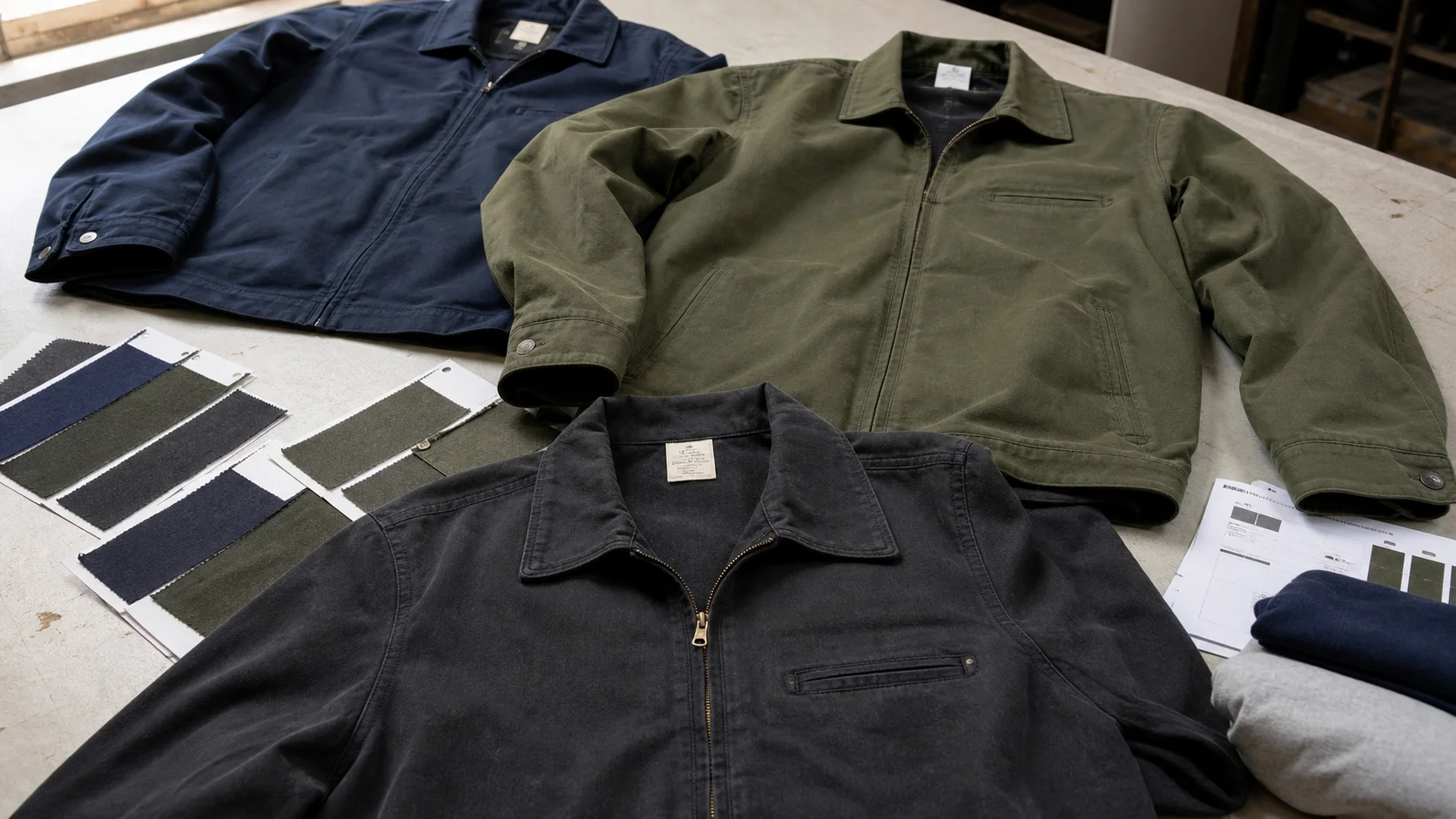
A procurement-focused outline for planning custom chef coats with accurate size grading, fit consistency, and production specs for hospitality teams.
Custom Chef Coats Size Grading for Buyers - Fabrikn production reference
Custom chef coats size grading is one of the most overlooked parts of hospitality procurement, and it causes real cost problems when it is handled casually. A coat can look right in a sample room and still fail in production because the grading rules are too loose, the body measurements were not anchored to a target size, or the supplier assumed a retail fit instead of a kitchen fit. For procurement teams buying at scale, the goal is not only a good-looking garment. It is a repeatable size curve that fits staff across departments, controls returns, and keeps replenishment simple.
For hospitality use, chef coats sit in a practical category. They must allow movement through heat, long shifts, repetitive arm motion, and frequent laundering. That means size grading cannot be treated as a pure fashion exercise. It needs to reflect workwear reality, fabric behavior after wash, trim placement, and how the garment will sit over base layers during service. Buyers who push size grading too late in the development cycle usually pay for it in re-sampling, mismatched stock, and avoidable complaints from operators.
Size grading is the process of scaling a base size into a full size range while preserving fit intent. In a chef coat program, that means more than adding the same amount to every measurement. A good grade keeps shoulder balance, sleeve mobility, torso ease, button placement, and pocket alignment working together across all sizes.
Procurement teams should think of grading as a controlled translation from sample to production, not a cosmetic adjustment. The base size, usually a medium or large, becomes the reference point. From there, the supplier or pattern maker applies increments for chest, waist, hip, sleeve length, body length, bicep width, cuff opening, and collar stand. Each item in that list influences comfort and appearance. Leave one out and the coat can still “fit” on paper while failing on the body.
Most custom chef coat programs use a standard size run such as XS to 5XL, though the exact range depends on the buyer’s workforce profile and the supplier’s pattern library. Smaller hospitality groups sometimes order only S to 3XL. Larger operators may need extended sizing, especially when uniforms are shared across front-of-house, back-of-house, and catering teams. Extended size runs usually need more careful approval because the grading differences become easier to see at the ends of the curve.
Bad grading is expensive in ways that do not always show up in the initial quotation. A coat that is too tight through the upper back may trigger exchanges. A sleeve that is too short can look unprofessional and restrict reach. A size that grades upward in chest width but not enough in shoulder span often creates a boxy garment that staff refuse to wear. The procurement team then has a practical problem, not a theoretical one: unusable stock sitting in the warehouse.
In hospitality, fit also affects hygiene and daily compliance. Staff are more likely to keep wearing a coat that moves properly, closes cleanly, and does not ride up during service. That matters when the uniform is part of a brand standard. Buyers should treat consistency as a cost-control measure. A precise size curve reduces replenishment friction, lowers return rates, and makes it easier to order later batches with the same fit.
Uniform buyers often focus on fabric price first and grading quality second. In practice, poor grading can cost more over a program’s life than a small fabric upgrade. Rework, replacement, and negative staff feedback are harder to budget for than a slightly higher unit price.
There is also a supplier-management angle. When grading rules are vague, every re-order can turn into a new fit discussion. That slows procurement and creates dependency on whichever factory happened to interpret the last order. Clear grading documents reduce that risk and make supplier switching less painful if the buyer needs to rebid the program later.
Before asking for a size chart, buyers should decide which measurements are non-negotiable. For chef coats, the usual critical points are chest circumference, shoulder width, center back length, sleeve length, bicep width, cuff opening, neck opening, and waist or hem sweep. Double-breasted styles also need button overlap confirmed. A small change in overlap can alter the front closure and make the coat feel undersized even when the chest measurement looks acceptable.
It helps to separate body measurements from garment measurements. Body measurements describe the wearer. Garment measurements describe the finished coat. Suppliers should grade the finished garment, not improvise from body numbers alone. A good tech pack states the target ease clearly. For example, a chef coat intended for active kitchen wear often needs practical ease through the chest and upper arm so the wearer can lift, chop, reach, and bend without strain.
Buyers should also define acceptable tolerance ranges. A typical tolerance for woven uniform garments may fall around +/- 1 cm to +/- 1.5 cm on many points, though this varies by factory capability and measurement location. Higher-risk points such as sleeve length or body length may need tighter control if the coat has a structured look. Tolerances should be written into the purchase order and confirmed in pre-production review.
Useful points to include in the tech pack:
Grading rules are the step increments from one size to the next. In a chef coat, these increments should reflect proportional body change rather than a flat jump across all points. Chest and waist may grade in different amounts from sleeve length or body length. A wearer moving from M to L does not gain width and length in a perfect square. Good pattern work acknowledges that.
For example, a standard grade may add a modest amount to chest width, a smaller amount to shoulder width, and a separate increment to sleeve length and bicep width. The neck may require only a limited increase, especially in a double-breasted silhouette where lapel overlap already affects closure. The point is not to standardize every rule blindly. The point is to keep the coat balanced across sizes.
Buyers should ask whether the supplier uses a manual pattern grader, CAD grading, or a hybrid method. CAD is common in commercial apparel programs and offers better repeatability, but software alone does not guarantee a good outcome. The source pattern must still be sound. A weak base size, translated digitally, simply produces a full range of weak sizes.
One practical judgement call: if a supplier cannot clearly explain the grade between two adjacent sizes, the program is not ready for bulk. This is especially important for outerwear and jackets, where structure matters more than in soft knits. Chef coats sit in that structured zone even though they are workwear, so the same discipline applies.
The intended fit style changes the entire grading conversation. A classic chef coat usually has a relaxed, professional fit with enough ease for movement and layering. A modern tailored fit uses less body ease, narrower sleeves, and cleaner lines through the torso. An oversized or unisex fit needs a different logic again, especially if the coat is expected to work across a broad size distribution.
Gender-neutral programs are common in hospitality procurement, but they need extra attention. A unisex label does not solve fit on its own. Buyers still need a size chart built around actual wearing conditions, not assumptions. If the coat is going to be issued to a mixed workforce, the size curve should be tested on a representative fit model set before bulk approval.
Longer body lengths are often requested in chef coats for coverage and a cleaner silhouette. That creates a tradeoff. More length improves appearance and coverage, but too much length can interfere with seated comfort or create a hot, heavy feel in warm kitchens. Sleeve length has similar tradeoffs. A slightly longer sleeve may suit a formal look, while a shorter sleeve may be more practical in high-heat environments. Buyers should make the choice based on use case rather than habit.
Consider the closure system as part of fit. Double-breasted chef coats need overlap to maintain the look and closure security. Hidden snaps, visible buttons, and stud systems all affect how the garment sits. A snap placket may hold a cleaner line, but the chest measurement has to account for the closure position. If not, the front can gap at the wrong point.
Fabric choice changes how the size run performs after washing and wear. Cotton-rich twills, poly-cotton blends, and heavier structured weaves each behave differently. A fabric with more cotton may shrink more unless it is properly pre-shrunk or sanforized. A poly-cotton blend may hold its dimensions better, but the hand feel and breathability can differ. Procurement teams should not approve size grading without checking the fabric’s shrinkage behavior.
Typical chef coat fabrics may sit in the range of 160 gsm to 250 gsm depending on climate, durability target, and desired drape. Heavier fabrics can improve structure and opacity, but they also add heat load. Lighter fabrics often wear better in hot kitchens, though they may need more careful construction to avoid looking flimsy. The right choice depends on operation type, laundering frequency, and brand presentation.
Trim specifications matter more than many buyers expect. Collar insert, piping, cuffs, snaps, buttons, and embroidery all influence fit perception and production consistency. Thick embroidery near the chest can pull on the fabric if it is placed too close to a seam or closure. Heavy snaps may distort the placket if spacing is poor. Sleeve cuffs that are too tight can make a correctly graded coat feel wrong in daily use.
Key trim checks include:
Buyers should confirm that all trims are measured in the sample and not left to factory discretion. A small trim change can shift the effective fit, especially around the front opening and sleeve hem.
A disciplined sampling process is the easiest way to reduce grading risk. The sequence should usually move from proto sample to size-set sample to pre-production sample, though not every program needs every stage. The important part is that the buyer signs off the correct questions in the correct order. Fit should be assessed before decorative details are frozen, and shrinkage should be checked before the size chart is locked for bulk.
For custom chef coats, a size-set sample is often worth the time. That means reviewing multiple sizes, not just the base size. Many grading problems only show up when the garment is tested at the upper or lower end of the curve. A coat that fits perfectly in M may break down in 3XL if the grading is not balanced.
Use a measurement sheet with actual garment dimensions after each sample stage. The sheet should note the sample date, size tested, measurement point, and any changes requested. Keep the comments specific. “Sleeve feels long” is not enough. “Shorten sleeve length by 1 cm in sizes S to XL, maintain wrist opening” is usable. That level of precision saves time and avoids interpretation errors.
Buyers should also insist on wash testing where the program allows it. If the coat will be laundered frequently, the supplier should confirm dimensional stability after wash and dry cycles. Even a small percentage of shrinkage can create visible inconsistency across size ranges. A shrinkage allowance may be built into the pattern, but it needs to be backed by fabric test data, not guesswork.
Custom chef coats usually have higher MOQs than off-the-shelf uniforms, but the range is broad. A practical MOQ might start around 100 to 300 pieces per color or style for simpler programs, while more complex programs, specialty fabrics, or multiple decoration options can push that much higher. Smaller buyers should expect to pay for customization through either higher unit cost or reduced flexibility.
Lead time depends on fabric availability, sampling cycles, logo approval, and production queue. A straightforward order with approved fabric and simple decoration may be possible in 30 to 45 days after confirmation, while fully custom programs often need 60 to 90 days or more. Knit trims, custom dyeing, or imported specialty components can add further delay. Buyers should not promise hotel or restaurant opening dates until the supply chain is real, not just theoretical.
The tradeoff is clear. Faster lead times usually mean fewer options and less room to optimize the fit curve. More detailed size grading, extra sample rounds, and custom trims improve the product but lengthen the program. Procurement teams should decide where the program sits on that scale before RFQ, not after the supplier has already quoted.
One good purchasing rule: do not compress sample approval just to protect a launch date if the coat will be used across a whole operation. A rushed bulk order can create a year of sizing complaints. It is usually cheaper to take the extra week on approval than to reissue uniforms later.
Inspection should cover more than stitching quality. For graded chef coats, the most common risk is inconsistency between sizes in a production run. A factory may cut a correct base size and still drift at the extremes if marker control, spreading, or grading files are not well managed. That is why buyers should request size breakdown checks during inline and final inspection where volume justifies it.
Other risks include seam puckering, uneven placket alignment, mislocated embroidery, crooked button placement, and inconsistent collar height. Heat transfer or embroidery applied too close to stress points can distort after laundering. Pocket placement is another frequent issue. A pocket that sits correctly in M may look too low in XS or too high in 4XL if the grade is not adjusted intelligently.
Buyers should also inspect shrinkage risk and shade variation when multiple fabric lots are involved. Hospitality programs often reorder in waves. If the fabric is not tightly controlled, later batches may feel different from the initial delivery even when the measurements are technically correct. That creates visible inconsistency across the team.
A practical inspection checklist should include:
Good buyers ask for the grading method, not just the final size chart. Ask how the base pattern was developed, which size is the block size, and whether the factory can provide graded nest files or a size set approval process. Ask for fabric composition, finishing treatment, and shrinkage expectation in writing. Ask what tolerance standard the factory uses on critical measurements. These are basic questions, but they quickly separate a capable supplier from a reactive one.
It is also worth asking how the supplier handles repeat orders. A uniform program is only valuable if the fit stays stable six months later. Buyers should request version control on patterns and specs, so a reordered chef coat does not accidentally shift in length or chest ease. That matters even more when a hospitality group opens new locations and needs the same uniform standard across sites.
For teams comparing vendors, supplier transparency is often more useful than a low initial quote. A factory that explains shrinkage allowances, pattern updates, and grading logic usually creates fewer surprises. A factory that avoids detail tends to create them later. That is not a matter of style; it is a procurement risk signal.
For more detail on our garment development and production support, see services, review the company background on about us, or reach the team through contact us.
Custom chef coats size grading is not a technical side note. It is the structure that determines whether a uniform program works in daily service or becomes a recurring exception list. Buyers who define the base size, lock the measurement chart, test the full size run, and confirm shrinkage and trim behavior will usually get a more reliable result. Buyers who skip those steps often end up paying more for fixes after the first delivery.
The most practical approach is simple: treat grading as part of the buying decision, not only the production detail. That means asking direct questions, reviewing real measurements, and accepting that better fit control is worth time up front. In hospitality procurement, that discipline usually pays back through lower returns, cleaner replenishment, and a more consistent front line.
Get a free quote from Fabrikn — your trusted B2B clothing manufacturer with 10+ years of experience. MOQ as low as 200 pieces.
Get a Free Quote →Sizing is the measurement set for a garment. Size grading is the method used to create each adjacent size from the base size. In custom chef coats, both matter, but grading determines whether the range stays balanced across the full run.
It varies by supplier, fabric, and decoration. A common working range is around 100 to 300 pieces per style or color for simpler programs, with higher minimums for special fabrics, complex trims, or multiple logo applications.
Many programs use a proto sample, a size-set sample, and a pre-production sample. Smaller orders may compress that process, but the base size and at least one additional size should be checked before bulk approval.
Yes. Chef coats need workwear ease, stronger movement allowance, and better attention to wash stability. The fit must account for service motion, layered uniforms, and repeated laundering, which makes grading more practical and less style-driven.
There is no single best fabric, but stable poly-cotton blends often hold dimensions better than untreated cotton-heavy fabrics. Cotton-rich options may feel more natural, though they can need tighter shrinkage control and more careful wash testing.
Inconsistent measurements across sizes is the main issue. A coat may pass in the base size and still fail at the upper or lower end of the curve. Sleeve length, chest ease, and placket alignment are common trouble points.
Yes, but only if the spec sheet, grading rules, pattern version, and fabric standard are controlled. Reorders should be checked against the original approved sample to avoid accidental fit drift.