
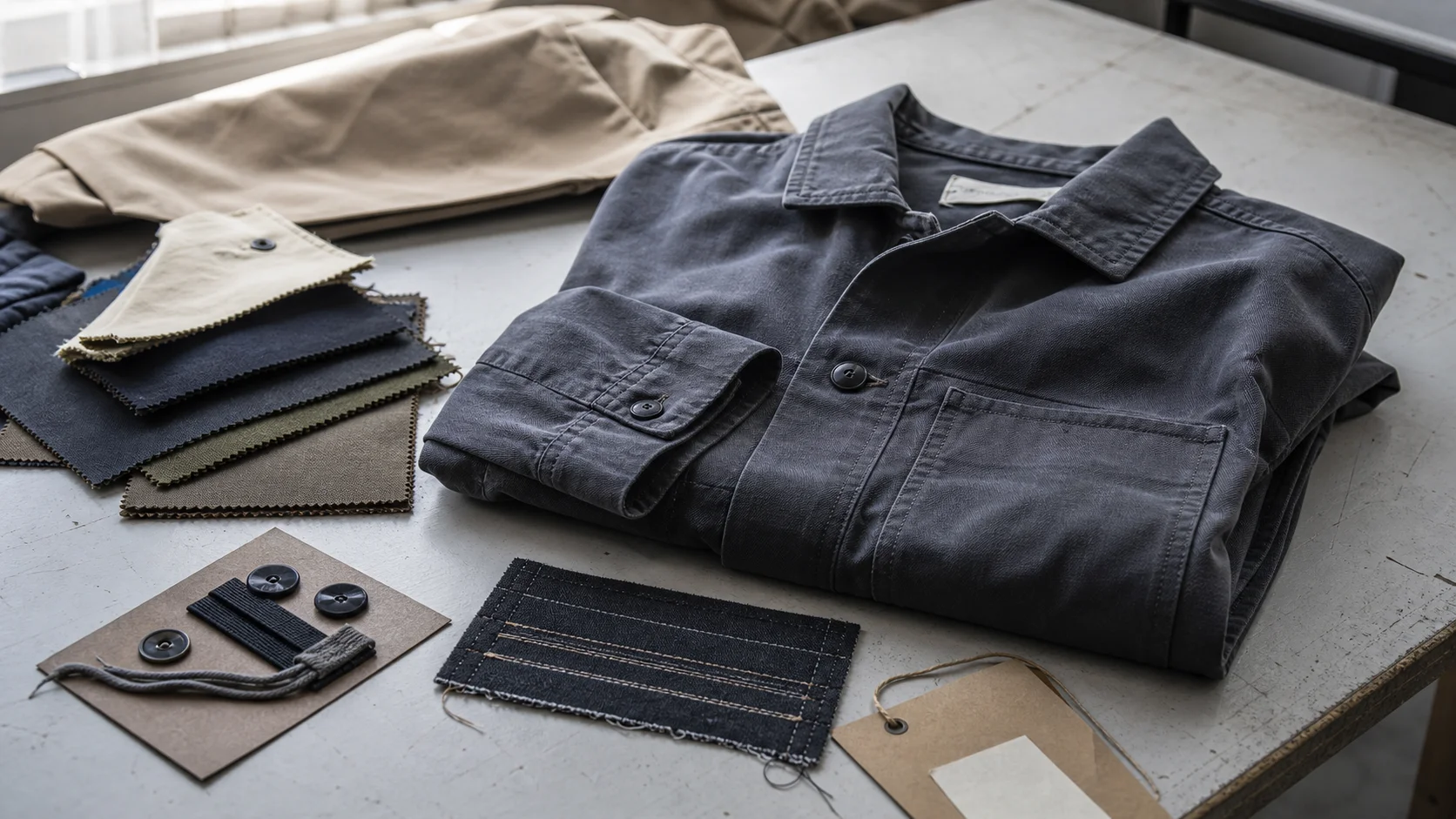
A product-specific outline for boutique restaurant buyers sourcing trim for custom chef coats, covering trim types, construction details, supplier specs,...
Custom Chef Coats Trim Sourcing Buyers Need - Fabrikn production reference
For boutique restaurant suppliers, custom chef coat trim sourcing is one of those details that looks minor on paper and can create outsized trouble in production. The coat body may be straightforward. The trim is where quality, consistency, lead times, and brand feel can all start to drift if specifications are vague or approvals are rushed.
In the outerwear and jackets category, chef coats sit in a narrow space between uniform function and hospitality presentation. Buyers need trim that supports durability, cleaning performance, and visual distinction without pushing the garment into avoidable cost or supply risk. That means planning buttons, piping, binding, collar edge finishes, sleeve cuff details, embroidery placements, and contrast panels as a procurement exercise, not a styling afterthought.
Chef coat trim does more than decorate a garment. It affects durability, wash life, comfort, and how the coat reads on staff during service. For boutique restaurant suppliers, the trim often carries the brand identity that operators want guests to notice immediately. A narrow contrast piping line, branded buttons, or a cleaned-up collar finish can make a coat look premium without changing the full pattern.
The problem is that trim is also where cost creep hides. A buyer may approve a sample quickly, then discover the chosen button finish is not stable under industrial laundering, or that the binding tape needs a wider fold allowance than the factory planned. Good sourcing treats trim as part of the technical package, with the same level of measurement control as body fabric and stitching.
In practical terms, trim should be selected for repeatability first, visual impact second. A coat that looks polished at delivery but fails after a few wash cycles is a poor purchase, even if the unit price seemed attractive.
A complete chef coat trim package usually includes several items, each with its own sourcing risk. Buyers should not assume the factory will standardize these details unless they are called out clearly.
Buttons are the most visible trim element on many chef coats. Common choices include resin, polyestertype, metal-look resin, and covered snaps for cleaner branding. Resin buttons are usually the safest option for industrial washing. Metal trims can look sharp, but they raise corrosion, heat, and snag risk unless the finish is proven through wash testing.
Buyers should confirm button diameter, hole count, color code, attachment stitch method, and pull strength. A button that feels premium in hand can still fail if the shank or stitching is weak. For boutique restaurant programs, this becomes a repeat-order issue because staff replacements need to match exactly.
Piping and binding are where color contrast and edge definition are most often carried. Narrow piping along the collar or front edge can create a clean hospitality look, while binding can reinforce seam edges and cover raw construction. The tradeoff is labor cost. Piping usually needs more precise sewing, and binding increases cut-and-sew time if the factory is not set up for it.
Specify finished width, fold method, fabric content, and shade tolerance. If the trim is dyed to match a restaurant’s brand palette, ask for lab dip approval or a Pantone-based reference before bulk cutting begins.
Chef coat collars need shape retention without feeling stiff or heavy. Trim choices here include topstitch details, contrast undercollars, collar facing, or reinforcement tape. Cuffs may use folded self-fabric, bias binding, or a contrast edge finish. These details matter because they affect both appearance and service comfort when staff move quickly and wash garments repeatedly.
Embroidery is often treated as decoration, but it is still a trim decision in sourcing terms. Thread weight, logo size, stitch density, backing, and placement all influence how the coat performs. Dense embroidery can distort lighter fabrics, especially around the chest or sleeve. Buyers should request a stitched sample on actual production fabric before approving full placement.
Even in uniform programs, labels are part of trim sourcing. Private-label branding, size labels, care content, and origin marking should be aligned with the buyer’s retail or contract requirements. Care labels also need to survive repeated laundering and maintain legibility. Heat-transfer labels can feel cleaner inside the coat, but they are not always the best choice for long wash cycles.
The right trim material depends on the washing standard, expected wear rate, and brand positioning. Boutique restaurant buyers often want a premium look, yet the garment still has to survive frequent commercial laundering, heat exposure, and repeated folding.
For buttons, heat-stable resin is usually the more conservative choice. For piping and binding, tightly woven polyester or poly-cotton tape tends to hold shape better than loose or novelty trims. Cotton-rich trim can look softer, though it may shrink more unless it is pre-shrunk and tested. For contrast panels and decorative edges, the buyer should confirm colorfastness under wash and light exposure, not just compare swatches under showroom lighting.
Fabric and trim compatibility matters. A lightweight body fabric paired with a heavy trim can distort the garment and make pressing difficult. A dense coat body with a flimsy trim can look unfinished. The safest sourcing approach is to build the trim package around the main cloth weight, then verify how the assembled coat drapes after washing and pressing.
Custom chef coats for boutique restaurant suppliers rarely run at the same scale as mainstream uniform programs. MOQ expectations vary by factory, but a practical starting point is often 100 to 300 pieces per colorway or style, with some vendors willing to go lower if fabric and trim are sourced from stock. Custom buttons, custom-dyed piping, and branded labels can push the minimum higher.
Sampling usually happens in stages. Buyers should expect a development sample, a fit sample if sizing is being adjusted, and a pre-production sample once the final trim set is confirmed. If embroidery or custom buttons are involved, the factory may need extra time to secure approvals from trim vendors before the pre-production stage can move.
Lead time depends on three variables: fabric availability, trim availability, and approval speed. A simple coat made from stock fabric with standard trim can move faster than a visually custom piece that requires dyed-to-match binding or specialized branded buttons. In many cases, trim sourcing becomes the critical path rather than sewing capacity.
From a buying standpoint, the safer move is to lock the trim spec before bulk fabric cutting begins. That avoids late substitutions that can change the coat’s visual tone or reduce consistency across sizes and reorder lots.
Sample approval should not be a quick visual check. The buyer needs to confirm both the garment and the trim package under conditions that resemble use. A coat that appears right on a hanger may still fail once it is worn, laundered, and pressed.
A disciplined approval process usually includes these steps:
Fit matters even in hospitality uniforms. Chef coats need room through the shoulders and upper back, but too much ease can make the garment look sloppy. Trim placement can affect fit perception more than some buyers expect. A misplaced button line, for example, changes how the coat closes at the chest and can create stress at the placket.
Trim-related problems often surface in the final inspection, when they are hardest to fix. The most common issues are shade variation, weak attachment, inconsistent spacing, and visible sewing drift on mirrored panels. For chef coats, mismatched buttons or uneven piping can make a whole order look less controlled than it should.
Inspection should cover more than measurements. Buyers need to look at trim symmetry, stitch neatness, button pull strength, embroidery placement, label alignment, and whether the coat still hangs cleanly after pressing. If the garment uses contrast trim, inspect under normal retail light and in a kitchen-like environment, since warm lighting can hide shade mismatches that become obvious later.
One recurring risk is substitute trim. A factory under timeline pressure may try to swap a button supplier or binding stock without flagging it clearly. That can be a tolerable move for low-risk commodity goods. It is a weak choice for boutique restaurant programs where repeat orders must match. Buyers should state that no trim substitution is allowed without written approval.
For boutique restaurant suppliers, the best sourcing partner is not always the one with the broadest catalog. The better fit is usually the vendor that can manage small-to-mid batch production without losing control of details. That means asking pointed questions about trim sourcing discipline, not just garment capacity.
Buyers should ask where buttons, tapes, labels, and embroidery threads come from, whether the factory holds stock for repeat orders, and how change control is managed if one component goes out of stock. A supplier with clear traceability and a stable approved trim list is easier to work with than one that improvises every order.
It is also worth checking whether the vendor can support reorders with matched trim lots. Boutique programs often expand slowly, and a coat introduced in one season may need replenishment later. If the supplier cannot repeat shade and hand feel with reasonable consistency, the buyer may end up with uneven uniforms across locations.
For buyers comparing options, it helps to review the supplier’s broader capabilities and communication style. Fabrikn’s services page is a useful starting point for understanding production support, while the about-us page can help buyers judge whether the operation is built for repeatable apparel work rather than one-off sampling. When the trim brief is already defined and the team is ready to move, the contact-us page is the direct route for quoting and lead-time questions.
Boutique restaurant suppliers usually want a coat that feels refined and memorable. That is a fair goal. The mistake is to let branding override washability, comfort, or reorder discipline. A coat with too many decorative trim elements may look sharp in a concept review and become expensive to maintain in service.
The better approach is restrained customization. Use one or two visible trim cues that reinforce the brand without complicating production too much. A clean contrast collar, a controlled button choice, or a subtle embroidered logo is usually easier to scale than multiple trim layers, specialty closures, and mixed-fiber detailing. Each additional feature adds decision points, and decision points become failure points when volume rises.
Buyers should also think about the total look across sizes. Small coats and larger coats do not always carry trim proportions the same way. A piping line that feels elegant on a sample size may look overdone on a larger back panel. Tech pack grading notes should reflect that, especially for multi-location hospitality programs.
Before placing an order, a sourcing buyer should be able to answer the following with confidence:
Spec Area What to Confirm Buying Judgment Buttons Material, diameter, color, attachment method, wash stability Choose the most stable option unless there is a strong visual reason not to Piping/Binding Width, fold method, fiber content, color reference Keep it simple if the order needs fast repeat production Embroidery Logo size, stitch density, placement, backing Test on production fabric before approving bulk Labels Content, durability, compliance text, placement Prioritize legibility and wash durability over a cleaner look alone Sampling Development sample, fit sample, pre-production sample Do not skip wash testing before sign-off MOQ Style, colorway, trim type, size range Expect lower MOQ only when trim is stock-supportedCustom chef coat trim sourcing is a technical buying task disguised as a design choice. For boutique restaurant suppliers, the right answer is usually not the fanciest trim package. It is the one that can be approved cleanly, produced repeatably, washed reliably, and reordered without mismatch.
If a supplier can handle the trim details with discipline, the coat feels more premium and the program is easier to maintain. If the trim is handled loosely, small errors compound fast. That is the core tradeoff, and it should drive the purchase decision.
Get a free quote from Fabrikn — your trusted B2B clothing manufacturer with 10+ years of experience. MOQ as low as 200 pieces.
Get a Free Quote →MOQ often starts around 100 to 300 pieces per style or colorway, though stock fabric and standard trim can sometimes support smaller runs. Custom-dyed trim, branded buttons, and special embroidery usually increase the minimum.
Heat-stable resin buttons, tightly woven polyester binding, and colorfast embroidery threads are generally the safer choices. Buyers should still ask for wash testing against the expected laundry process.
Most programs need at least a development sample, a fit sample, and a pre-production sample. Custom trim work may also require strike-offs or lab dip approval before sewing starts.
Shade variation, weak button attachment, crooked piping, embroidery puckering, and label failure are common problems. Substitute trim without approval is another serious risk.
Minimal to moderate trim is usually easier to produce, wash, and reorder. Highly branded trim can work, but it raises cost, approval time, and consistency risk across replenishment orders.