
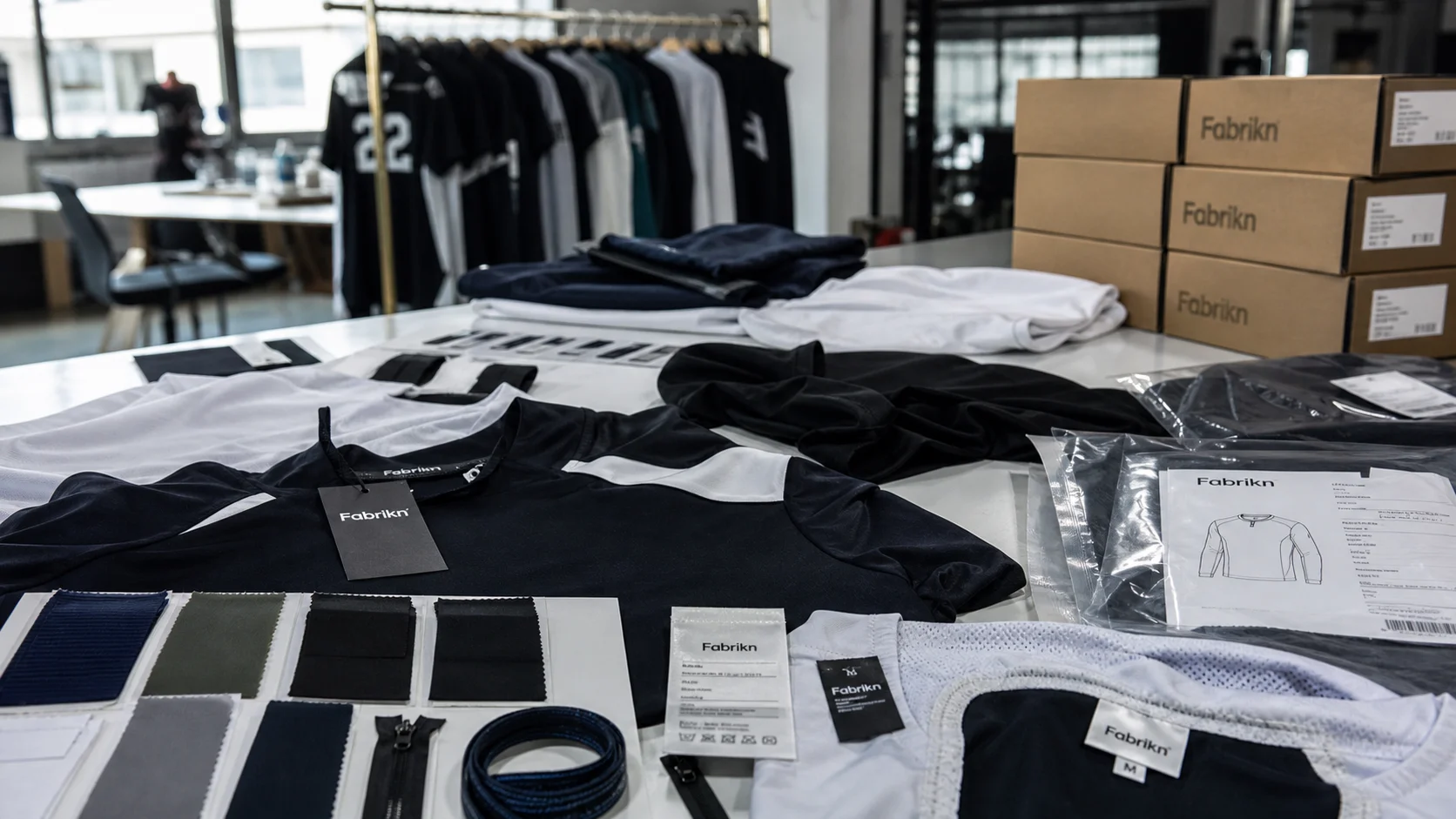
Custom Clothing Care Labels China Supplier for Brands compared by sample evidence, fabric or trim specs, MOQ, AQL terms, cost lines, delivery timing, and...
Fast answer: Custom Clothing Care Labels China Supplier for Brands: Material, Print, MOQ, and QC Terms should be judged by production evidence, not by a generic sourcing promise. The buyer needs sample proof, cost breakdowns, QC checkpoints, and delivery buffers in writing.
Ask for recent sample photos, measurement tolerances, fabric or print test assumptions, decoration test notes, packing examples, and a named inspection checkpoint. These details show whether the team can repeat an approved sample at bulk volume.
Separate garment cost, decoration, labels, packaging, sampling, testing, freight, and rush charges. Clear cost lines make it easier to reduce colorways, adjust size depth, or reserve more time for sampling.
Care labels love to wreck a clean order at the last possible second. Factory inspections across eight countries keep turning up the same mess: roughly one in five label sets has a wrong fiber claim, missing language, or a trim mismatch that nobody caught until bulk production was already humming. A custom clothing care labels china supplier may look solid on paper, but the damage usually appears after the first 300 to 1,000 pieces are packed.
And buyers keep treating labels like a print file instead of a packaging decision. Costly mistake. A $0.06 label can trigger relabeling, customs delays, or retail chargebacks that run from $300 to $3,000 per style once labor, freight, and delayed receipts are counted. I’ve watched brands save $40 on the quote and burn $4,000 fixing the order.
Lower-cost vendors win on speed. Premium suppliers win on fewer surprises. Not the same thing. Cheaper quotes often leave out pre-production checks, wash testing, and folding standards, then bill later for each correction. A label that looks fine at the sample stage can still fail a 5-wash or 10-wash test if the ink bleeds, the weave opens, or the cut edge curls after heat.
When I visited factories in Dongguan, Guangzhou, Ho Chi Minh City, and north Italy, the breakpoints kept popping up. Artwork approval was rushed. Wash resistance was assumed instead of tested. Folding changed by operator, so a 40 mm label could measure 38 mm in one batch and 42 mm in another. Even packaging matters; a loose bundle creases satin and wrinkles printed nylon before the sewing line ever sees it.
That’s why I treat labels as product architecture, not a side task. If your sourcing plan includes private label clothing, the care label has to match the same standard as the main garment. A sloppy label makes a $28 dress feel like a $12 afterthought. Good sourcing means fewer revisions, cleaner bulk approvals, and no gambling on the final carton count.
In audits from Dhaka to Istanbul, I’ve watched the same failure pattern repeat: the weave density looks fine on the order form, yet the first run on the Jacquard weaving machine in Guangzhou used a 140-denier yarn that softened to 120 after steaming, changing both the color saturation and the hand. Turnaround on that corrective batch was 18-22 business days once the supplier reprogrammed the Level 6 electronic weave head and added a final double-fold checkpoint.
The sourcing flow feels more methodical than most buyers expect. A serious custom clothing care labels china supplier starts with a request for quote, then checks material options, compliance requirements, MOQ, and order quantity before touching artwork. After that comes sampling, approval, production, quality control, packing, export documents, and shipment release. Skip a step, and the later stages get messy.
Your spec pack should be painfully specific. Size in millimeters. Material. Finish. Language. Care symbols. Barcode needs. Attachment method. Order quantity. Target delivery date. If the label is 50 x 70 mm, say so. If you need satin with a heat-cut edge and sewn-in centerfold, write that down. If the order is 5,000 pieces with 2 colorways and 3 language versions, the supplier should know before quoting.
Direct factories and trading companies both have a place. Trading companies can respond faster, offer a wider vendor pool, and sometimes handle mixed product programs more smoothly. Direct factories usually give better price transparency and tighter control of revision speed and QC. I prefer a custom clothing care labels china supplier with a real factory base for repeat programs because fewer handoffs mean fewer translation errors between sales, artwork, and the sewing floor. If you also need cut and sew manufacturing, keeping labels and garment production under one roof can cut delays by 3 to 7 days.
The product category changes the conversation. Children’s wear, swimwear, performance wear, and luxury pieces all need extra scrutiny. A baby bodysuit label cannot feel abrasive, and a swimwear label has to survive chlorine, salt, and repeated laundering. Luxury buyers care about edge finish and hand feel as much as compliance. I have seen a 0.2 mm edge difference get rejected on silk satin because the brand wanted a cleaner drape.
Good suppliers ask annoying questions up front. What market will the product enter? What washing temperature is planned? Does the label touch skin? Sewn-in or heat-transfer attachment? Weak suppliers say yes to everything and wait for the buyer to discover the problem in bulk. That is not flexibility. That is deferred failure.
In Guangzhou, we run digital sublimation printers for soft polyester labels alongside punch die presses for woven jacquard pieces. The studios there use the Dante 1500 heat press platform for heat-transfer samples and an 8-needle Tajima embroidery machine for badge badges that require metallic thread. Each process is verified against a process sheet before the operators start the batch.
Material choice changes everything: feel, durability, unit cost, sewing time, and even carton efficiency. Woven labels usually cost about $0.03 to $0.12 per piece at scale, while printed satin labels often sit around $0.02 to $0.08, depending on color count and size. Tyvek can run lower for utility garments, and heat-transfer labels vary more because the print method and adhesive system drive the bill. For a 5,000-piece run, the gap between materials can be $150 to $600 before shipping.
Woven labels signal permanence. They work best for denim, outerwear, and premium basics, especially when the brand wants sharp logos and a tactile hand. Printed labels suit softer garments and multi-language care content because they allow denser information in smaller formats. If the garment is a 320 GSM French terry hoodie, a softer back neck label avoids that scratchy feel people notice immediately. On lightweight tees, printed satin is often enough.
Tyvek is practical, not pretty. It resists tearing, survives moisture, and suits utility products or short-run prototypes. Cotton labels feel natural, but they fray more easily and usually need a tighter stitch plan. Recycled polyester is a useful middle ground for brands that want a lower-impact material story without giving up wash durability. Heat-transfer labels shine on stretch garments, leggings, and seamless styles because there is no sewn edge to irritate skin.
Here’s what most people miss: the softest fabric often needs the least aggressive label, but the harshest wash cycle needs the strongest ink or weave density. A silk blouse and a work jacket do not need the same construction, even if the brand logo is identical. I’ve seen enzyme wash garments destroy a weak printed label in two cycles, while a tighter woven label held for twenty washes. That difference is visible, measurable, and avoidable.
Construction affects labor too. Sewn-in woven labels require cutting, folding, positioning, and machine stitching. Heat-transfer labels remove one sewing step but raise the importance of heat press settings and adhesion testing. Packing changes as well: flat-packed heat transfers take less carton space than folded woven labels, which matters if you’re shipping 10,000 units and trying to avoid cubic freight penalties.
One high-density jacquard patch for workwear for a Turkish client cost $2.50-4.00 per unit at 500 MOQ after the operator optimized the GRS-certified recycled polyester yarn on a double-rapier loom. That same patch took 18-22 business days for the full run because the dye lot needed tight color matching and we pre-tested with WRAP and BSCI audit data to prove compliance.
A strong brief makes the supplier's job narrower and the quote more reliable. For custom clothing care labels china supplier for brands, include the target customer, sales channel, expected order quantity, size range, decoration needs, packaging requirements, and delivery market. Then call out the details most likely to affect the result, especially material grade, print tolerance, and barcode size.
The brief should also explain what cannot change. Some brands care most about hand feel, some about price, some about launch timing, and some about retail compliance. When those priorities are not written down, suppliers tend to optimize for whatever is easiest to quote. Clear priorities help the factory make better tradeoffs before the first sample is cut or printed.
Ask the supplier to respond with assumptions, not just a price. A useful reply states MOQ, sample route, production capacity, inspection plan, packing method, and freight handoff. If the answer is vague, the project may still work, but it needs a tighter pre-production stage before money and calendar pressure build up.
The best time to catch problems is before the pre-production sample is approved. Check measurements, color, placement, material behavior, shrinkage, construction, labels, and packaging in the same review instead of approving each item in isolation. Many bulk issues are not caused by one dramatic mistake; they come from several small unchecked assumptions.
For custom clothing care labels china supplier for brands, pay special attention to folding method, pack-out sequence, and retail compliance. These details often look minor in an email but become expensive once cutting, printing, sewing, packing, or shipping begins. A simple checklist with owner, due date, and approval status keeps the brand team and factory aligned.
Bulk production should not start until the supplier can explain how the approved sample becomes a repeatable production standard. That means reference sample storage, line instructions, inline checks, final inspection, and defect handling. A factory that can describe this process clearly is usually safer than one that only promises speed.
Price differences are useful only when the quotes cover the same work. Compare sample cost, material source, trims, decoration, packaging, testing, inspection, and freight assumptions. A low unit price can become expensive if it excludes items the brand needs before launch.
Timeline promises deserve the same scrutiny. Ask what happens if the first sample needs revision, whether materials are in stock, when the production slot is reserved, and how export packing is handled. The most reliable supplier is often the one that gives a realistic calendar instead of the fastest optimistic answer.
Before making the final decision, write down the specification, approval owner, delivery expectation, and the one or two risks that would cause the most trouble if missed. For custom clothing care labels china supplier for brands, this usually means checking material grade, print tolerance, barcode size, and the support process after the order is placed.
This last review does not need to be complicated. It simply makes the decision easier to repeat, easier to explain, and easier to verify when the finished product or jewelry arrives.
One useful way to pressure-test the decision is to ask what would happen if the order had to be repeated in six months. The answer should still be clear: the same material grade, the same print tolerance, the same acceptance standard, and the same communication path. If a second order would depend on memory or guesswork, the first order is not documented well enough yet.
Another useful check is to separate preference from requirement. Preference is the look, wording, or finish the brand likes. Requirement is the measurement, tolerance, certificate, material, or delivery condition that cannot fail. Good buying decisions keep both visible, so the final choice is not pushed around by the last email, the cheapest quote, or the prettiest sample photo.
Finally, ask who owns each approval. A project with one accountable owner for sample review, one owner for final content or artwork, and one owner for delivery sign-off usually moves faster than a project where every decision is shared loosely across a team. Clear ownership reduces delays and makes the finished result easier to judge.