
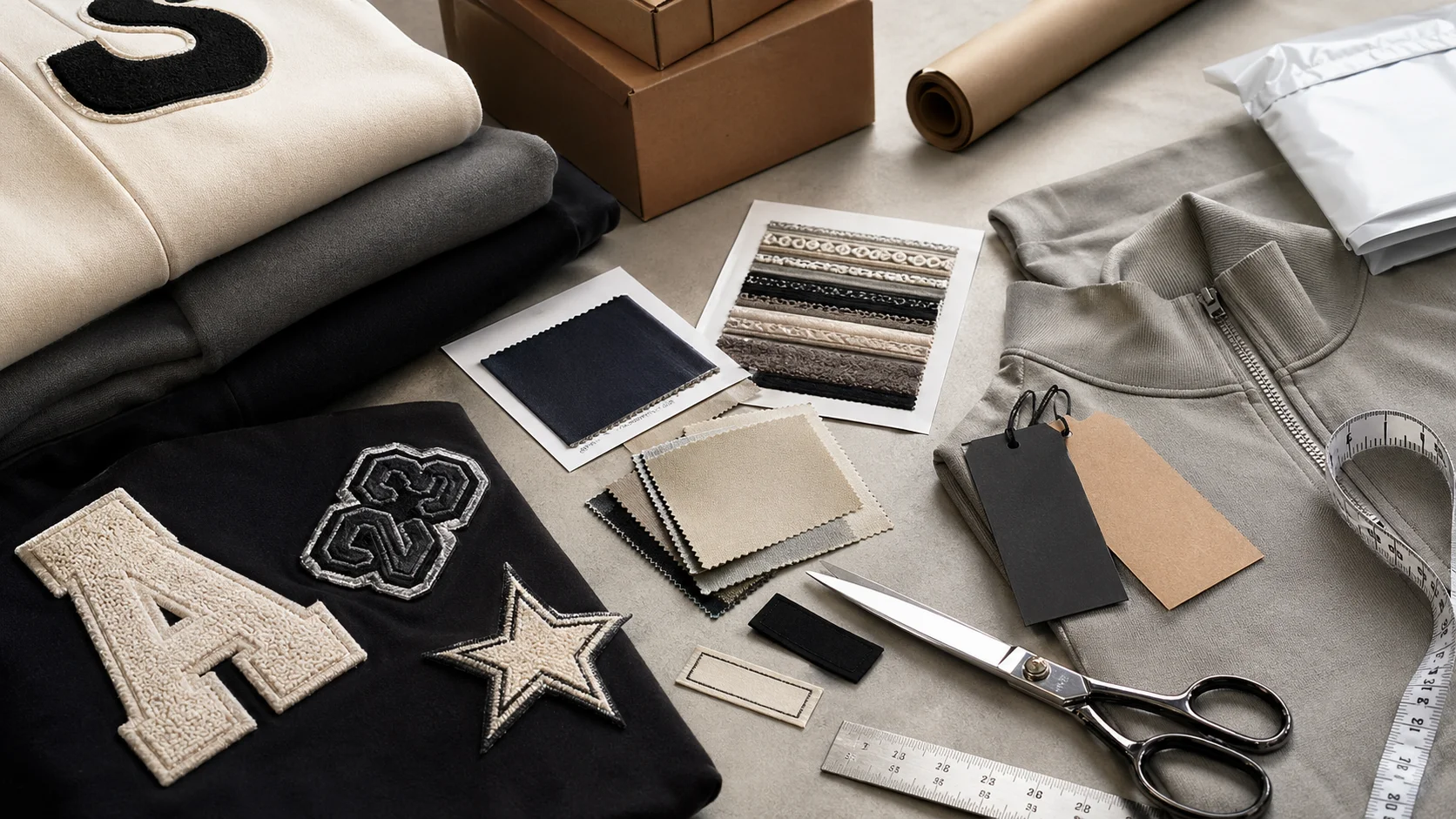
Custom Clothing Manufacturing Lead Time Planning for Wholesale Buyers with checks for samples, fit, MOQ, QC evidence, pricing terms, and delivery risk.
Fast answer: Custom Clothing Manufacturing Lead Time Planning for Wholesale Buyers should be judged by production evidence, not by a generic sourcing promise. The buyer needs sample proof, cost breakdowns, QC checkpoints, and delivery buffers in writing.
Ask for recent sample photos, measurement tolerances, fabric or print test assumptions, decoration test notes, packing examples, and a named inspection checkpoint. These details show whether the team can repeat an approved sample at bulk volume.
Separate garment cost, decoration, labels, packaging, sampling, testing, freight, and rush charges. When every cost line is visible, it becomes easier to reduce colorways, adjust size depth, or reserve more time for sampling.
For wholesale buyers, timing can make or break a clothing program. Whether you are stocking a retail chain, launching a private label collection, or replenishing a best-selling style, custom clothing manufacturing lead time planning for wholesale buyers is one of the most important parts of the sourcing process. If your production timeline is too short, you risk delays, missed launch windows, rushed approvals, higher freight costs, and disappointed customers. If it is too long, you may miss seasonal demand or tie up cash in inventory that arrives too early.
Lead time planning is not just about asking a factory, “How long will it take?” It is about understanding every step from concept to delivery, identifying risks early, and building a timeline that works for your business model. In apparel manufacturing, even a small change in fabric choice, trim availability, print method, or packaging can shift your schedule by weeks. That is why wholesale buyers need a practical and realistic lead time strategy before placing orders.
In this article, we will break down the key stages of custom clothing production, the variables that influence timing, and the best ways for wholesale buyers to plan orders with confidence. If you are looking for a manufacturing partner, you can also review our services or contact our team to discuss your production needs.
Wholesale apparel businesses operate on tight calendars. Seasonal collections, retail deadlines, trade show launches, back-to-school periods, holiday shopping windows, and promotional campaigns all depend on products arriving on time. A delay in manufacturing can impact every downstream activity, including distribution, merchandising, marketing, and sales forecasting.
For wholesale buyers, lead time affects more than delivery dates. It influences purchasing decisions, order quantities, margin planning, inventory turnover, and customer satisfaction. A well-planned timeline allows you to:
In custom clothing manufacturing, lead time planning becomes even more important because every order is unique. Unlike off-the-shelf products, custom garments may require special fabrics, custom colors, logo placement, technical approvals, sizing adjustments, and packaging requirements. Each of these steps adds coordination time, so wholesale buyers need to build a timeline that accounts for the full production cycle.
To plan lead time accurately, wholesale buyers should understand the main stages of production. While every manufacturer is different, custom clothing orders usually follow a similar path.
This stage includes sharing design details, tech packs, size charts, fabric preferences, trims, logos, and packaging requirements. If the product is still being developed, time is needed for sampling and revisions. A clear and complete specification package can significantly reduce delays.
Samples are created to confirm fit, construction, fabric behavior, and branding details. Depending on the complexity of the garment, this phase may take one to several weeks. If revisions are required, additional sample rounds may be necessary.
Once the sample is approved, the factory sources fabrics, trims, labels, zippers, buttons, hangtags, and packaging materials. Material sourcing can be quick for in-stock items, but custom-dyed fabrics or specialty trims may take much longer.
This step includes confirming quantities, production schedules, cutting plans, and quality requirements. The manufacturer prepares for bulk production and aligns all materials and labor resources.
Bulk manufacturing is often the longest stage. It may include cutting, sewing, printing, embroidery, washing, finishing, labeling, folding, and packing. Production time varies based on order volume, garment complexity, factory capacity, and seasonal workload.
Before shipment, garments are inspected for measurements, workmanship, color consistency, and packaging accuracy. Any defects or inconsistencies may require rework, which can add time.
After production is complete, goods are packed and shipped by air, sea, rail, or courier. International shipments also require customs clearance and documentation, which should be included in your lead time plan.
For wholesale buyers, the total timeline may range from a few weeks for simple repeat orders to several months for complex custom programs. The exact timing depends on product type, order size, and supplier capacity.
Understanding what drives lead time helps wholesale buyers make smarter sourcing decisions. Several factors can shorten or extend the timeline.
A basic T-shirt will usually move faster through production than a multi-panel jacket with lining, embroidery, and custom trims. The more components a garment has, the longer it may take to source, assemble, and inspect.
Lead time depends heavily on whether materials are ready in stock or need to be developed. Common fabrics are easier to source, while custom colors, specialty finishes, or imported materials can create delays.
Slow feedback from buyers is one of the most common reasons orders run late. If sample comments are unclear or approvals are delayed, the entire schedule can slip.
Larger orders may take more time due to extended sewing and finishing cycles. However, very small orders can also be slow if the factory must interrupt larger production runs to accommodate them.
Manufacturers operate on schedules. During peak seasons, factories may have limited production slots available. Booking early is often the best way to secure your place in the queue.
Printing, embroidery, garment washing, dyeing, special labeling, and custom packaging all add steps to the process. These details are important for branding, but they should be planned from the beginning.
Air freight is faster but more expensive. Sea freight is more economical for large orders, but transit times are significantly longer. Your shipping method should be selected based on launch timing and budget.
Holiday periods, factory shutdowns, public holidays, weather disruptions, and global shipping congestion can all affect delivery schedules. Buyers should always account for external risk when setting deadlines.
Lead time planning works best when it starts early and is broken into clear milestones. Wholesale buyers can use the following approach to reduce risk and improve accuracy.
Start with the date your products must arrive in warehouse, retail, or distribution centers. Then work backward to determine when approvals, production, and shipping must begin. This method helps you see whether your target date is realistic.
Do not plan on the fastest possible timeline. Add buffer time for sample revisions, material delays, quality checks, customs clearance, and unexpected production issues. Even a one-week buffer can protect your launch schedule.
A reliable manufacturer should provide a clear production timeline with each stage outlined. This should include sampling, material sourcing, bulk production, QC, packing, and transit estimates.
Prepare internal decision-makers in advance so sample reviews can be completed fast. Use structured feedback that covers fit, color, measurements, branding, and packaging in one round whenever possible.
If your design depends on custom fabrics or trims, confirm availability before finalizing launch dates. Material sourcing is often the biggest variable in custom apparel lead times.
Think about which steps are most likely to delay the order. For many wholesale buyers, those steps are fabric approval, sample revision, and shipping. Focus on controlling the stages that matter most.
Keep all key dates documented in email or project management tools. Written records make it easier to monitor progress and resolve issues if the schedule changes.
Different wholesale programs require different planning approaches. Here are a few common scenarios.
For best-selling products that have already been approved, lead times are usually shorter because the style, pattern, and materials are already established. These orders benefit from predictive forecasting and standing production schedules.
For spring/summer or fall/winter launches, timing is critical. Buyers should start planning months ahead so samples, sourcing, and production are complete before the selling season begins.
New private label programs often require more development time because buyers are creating a product from scratch. Expect extra time for sampling, fit refinement, branding, and packaging setup.
When products are tied to a trade show, event, or campaign, deadlines are fixed. These orders need the most conservative timeline planning because there is little flexibility once the date is set.
Higher quantities can improve unit costs, but they also demand stronger production planning. Divide large orders into phased schedules if needed and confirm whether the factory can handle the volume without affecting quality or timing.
Strong communication is one of the most effective ways to improve lead time performance. Wholesale buyers should treat the manufacturer as a strategic partner rather than a one-time vendor.
Share forecasts as early as possible, especially if you expect repeat orders or multiple seasonal drops. Forecasting helps the factory prepare materials, reserve labor, and suggest realistic delivery schedules. The more visibility your supplier has, the better they can support your business.
It is also important to ask direct questions before placing an order:
Good communication also includes transparency from your side. Share target launch dates, expected quantity changes, branding details, and any known risks early. This gives the factory time to advise on the best production path.
Even experienced wholesale buyers can make timing mistakes. Avoiding these issues can save money and prevent launch delays.
One of the biggest errors is waiting until the sales season is nearly here before starting development. Custom apparel always takes longer than buying ready-made stock.
Many buyers assume the first sample will be approved immediately. In reality, it is common to make one or more revisions before moving to bulk production.
Production may finish on time, but that does not guarantee delivery on time. Transit, customs, and inland transportation should always be included in your plan.
A product schedule is only as good as its slowest material. Confirm all fabrics, trims, and packaging before promising a launch date to your customers.
Even the best suppliers encounter occasional delays. Without buffer time, one small issue can affect the entire order.
Incomplete tech packs and unclear instructions create confusion and rework. Clear documentation speeds up every stage of the process.
At Fabrikn, we understand that wholesale buyers need more than manufacturing capacity. They need dependable planning, clear communication, and a partner who can help them move from concept to delivery with confidence. Our team supports custom apparel projects with a focus on quality, scheduling, and production transparency.
If you are comparing suppliers or building a new sourcing plan, you can learn more about our company and how we work with B2B clients. We also encourage buyers to review our services to see how we support custom clothing development, production, and fulfillment planning.
Whether you need a repeat reorder, a private label launch, or a seasonal wholesale collection, the key to success is starting lead time planning early. With the right structure in place, you can reduce risk, protect margins, and keep your inventory flowing at the right pace.
Custom clothing manufacturing lead time planning for wholesale buyers is a critical part of successful apparel sourcing. It affects product launches, inventory strategy, customer satisfaction, and profit margins. By understanding the full production process, identifying the biggest timing risks, and working closely with your manufacturer, you can create a realistic schedule that supports your business goals.
The best wholesale buyers do not just ask how long production will take. They plan backward from delivery, build in buffer time, confirm materials early, and communicate clearly at every stage. That approach helps turn custom manufacturing from a risky process into a predictable business advantage.
If you are preparing for your next wholesale clothing project, now is the right time to start planning. Reach out through our contact page and let’s discuss how to align your production timeline with your sales goals.
Get a free quote from Fabrikn — your trusted B2B clothing manufacturer with 10+ years of experience. MOQ as low as 200 pieces.
Get a Free Quote →Lead time is the total amount of time from order confirmation to final delivery. In custom apparel, it usually includes sampling, material sourcing, production, quality control, and shipping.
It is best to start planning several months in advance, especially for seasonal or complex orders. The exact timeline depends on the product, order size, and shipping method.
Lead times vary based on fabric availability, sample revisions, order quantity, production complexity, factory capacity, and transportation method. Custom details often add more time than buyers expect.
You can reduce delays by providing clear specifications, approving samples quickly, confirming material availability early, and building buffer time into your schedule.
Air freight is faster than sea freight and can help meet urgent deadlines. However, it is more expensive, so buyers should balance cost and timing based on the product launch plan.
Ask about production capacity, sample timelines, material availability, quality control steps, shipping options, and any seasonal factory closures that could affect delivery.