
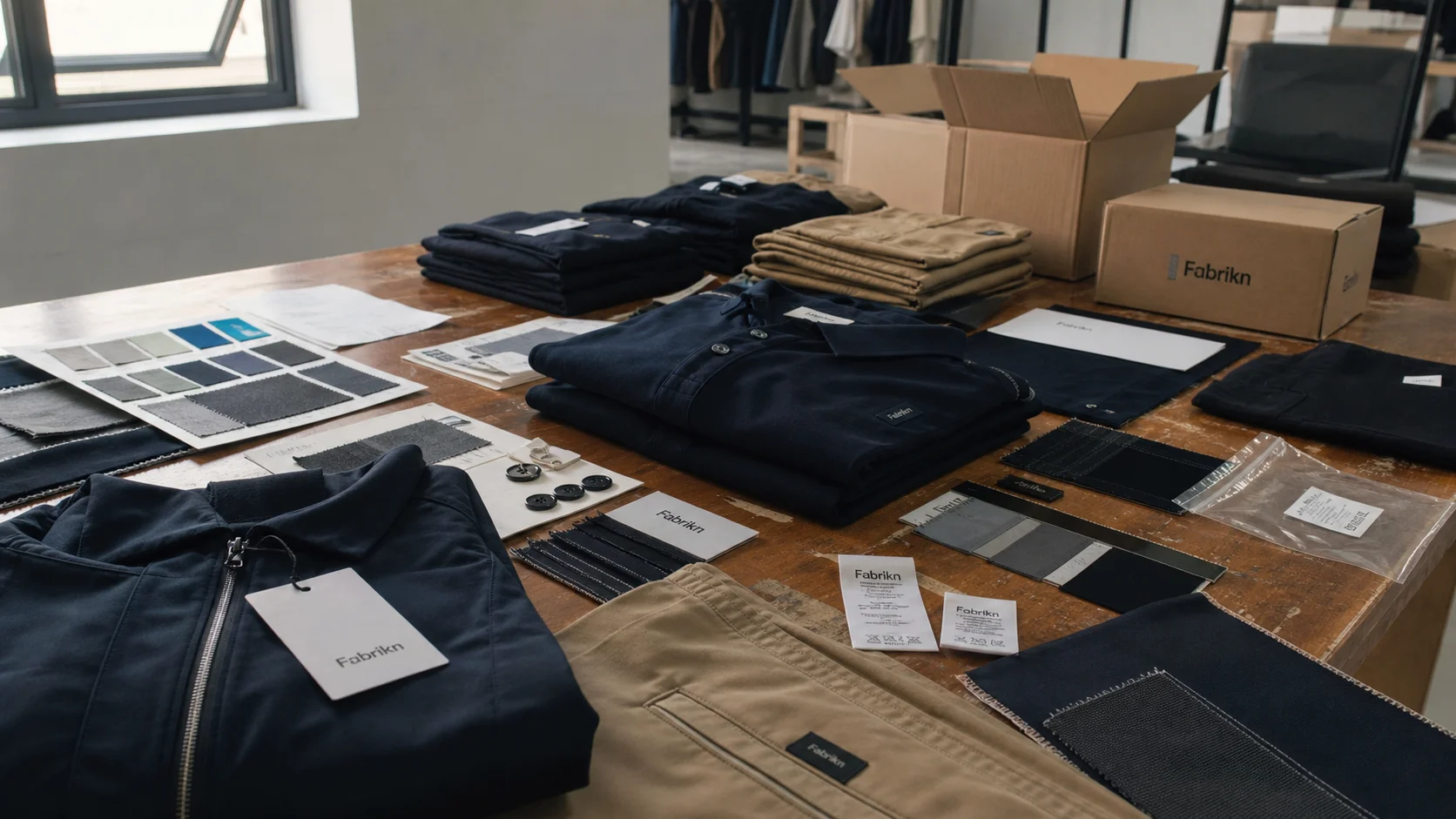
Custom Clothing Sizing Chart for Brands compared by sample evidence, fabric or trim specs, MOQ, AQL terms, cost lines, delivery timing, and rework...
Fast answer: Custom Clothing Sizing Chart for Brands: Tech Pack, Sample Gate, MOQ, and QC Terms should be judged by production evidence, not by a generic sourcing promise. The buyer needs sample proof, cost breakdowns, QC checkpoints, and delivery buffers in writing.
Ask for recent sample photos, measurement tolerances, fabric or print test assumptions, decoration test notes, packing examples, and a named inspection checkpoint. These details show whether the team can repeat an approved sample at bulk volume.
Separate garment cost, decoration, labels, packaging, sampling, testing, freight, and rush charges. Clear cost lines make it easier to reduce colorways, adjust size depth, or reserve more time for sampling.
A custom clothing sizing chart is one of the most important tools a fashion or apparel brand can create. It does more than list numbers. It defines how your products fit, how your customers shop, and how confidently they can choose the right size before placing an order. For brands selling online, in retail, or through wholesale channels, fit is often the deciding factor between a successful purchase and a costly return.
When customers trust your sizing, they buy more often, keep more items, and feel more loyal to your brand. When they do not trust it, they hesitate, return products, leave negative reviews, and avoid repeat purchases. That is why a sizing chart should never be treated as an afterthought. It should be built as part of your brand identity and product development strategy from the very beginning.
If you are developing a clothing line and want help creating a fit system that supports long-term growth, you can explore Fabrikn’s manufacturing services or learn more about our team on the About Us page.
A custom clothing sizing chart is a brand-specific guide that maps body measurements to garment sizes. It usually includes bust, chest, waist, hips, inseam, shoulder width, sleeve length, or other measurements depending on the product type. Unlike generic sizing systems, a custom chart is built around your actual designs, target customer profile, and intended fit.
This means your size small is not simply borrowed from a standard industry template. It is developed based on pattern measurements, grading rules, sample fittings, and real-world wear testing. A custom sizing chart should reflect how your garments are made, not just how you want them to look on paper.
For brands, this distinction matters. Customers want predictability. If they buy a medium today, they expect the same fit next month and in the next season. A custom sizing chart helps create that consistency across styles and collections.
Trust is one of the biggest commercial advantages in apparel. Customers cannot always feel fabric, try on garments, or compare shapes in person when shopping online. They rely on your sizing chart, product images, reviews, and brand reputation. If your size chart is inaccurate or inconsistent, the shopping experience breaks down quickly.
Consistent fit builds trust in several ways:
Many brands lose customers not because the design is unattractive, but because the fit feels unpredictable. A strong sizing system removes this friction. It tells the customer, “You know what to expect from us.” That message is powerful, especially in a crowded market.
Building a reliable sizing system starts with understanding your target audience and your product direction. Before making a chart, define who you are designing for. Are you creating tailored officewear, relaxed casualwear, activewear, luxury basics, or gender-neutral fashion? Different customer groups and garment categories require different approaches to fit.
A strong sizing system usually follows these steps:
It is also essential to keep your sizing framework aligned across product categories. A T-shirt, hoodie, dress, and jacket may not use the same proportions, but your brand should still feel coherent. Customers notice when one item fits dramatically differently from another, even if both are labeled the same size.
The best custom clothing sizing charts focus on measurements that matter most to the garment type. Not every chart needs every measurement. The goal is to include only the dimensions that help the customer make a correct decision.
Common body measurements include:
For tops, bust/chest and shoulder width often matter most. For bottoms, waist, hip, rise, and inseam are critical. For dresses, bust, waist, and hip should usually be paired with garment length notes. For outerwear, brands should pay close attention to layering ease, sleeve length, and shoulder structure.
Remember that body measurements are only part of the equation. Garment measurements, ease allowance, and design features also influence fit. A well-built sizing chart should clearly reflect how the garment is intended to sit on the body.
Size ranges should be built from real data, not assumptions. A brand may want to offer sizes XS to 3XL, but the actual size range should depend on your customer base, product type, manufacturing capability, and fit tolerance.
Start by defining your base size and then grade up and down according to accepted patternmaking rules. The increments between sizes should be logical and consistent. For example, a jump between sizes should not feel too small in one area and too large in another. Each grade step should support the garment’s intended silhouette.
There is no universal rule that works for every brand. A fitted blazer may require tighter tolerances than a casual sweatshirt. Similarly, body-skimming dresses need more precise bust, waist, and hip control than oversized tees.
When planning your size range, consider these questions:
If you are unsure how to structure your production sizes, Fabrikn can support you with product development and production planning through our services page.
Fit type has a major impact on how a custom clothing sizing chart should be built. A size chart for a slim-fit shirt should not look the same as one for an oversized hoodie. The intended silhouette affects garment measurements, ease allowance, and customer expectations.
Common fit types include:
Each fit type changes how you measure the garment. Oversized clothing, for example, may have generous chest width but shorter proportions in other areas to keep the design intentional. Tailored pieces often need more attention to shoulder placement, darts, armhole depth, and jacket length.
Your chart should explain the fit clearly so customers know whether to size up, size down, or choose their usual size. This is especially important for brands with multiple product lines. A customer may wear a medium in one style and a large in another if the fit philosophy changes.
Tech packs and spec sheets are the backbone of an accurate sizing system. A sizing chart should not be created in isolation. It should come from precise product specifications that the factory can follow consistently.
A spec sheet typically includes:
When these documents are aligned, your sizing chart becomes much easier to manage. The factory knows exactly how the garment should be made, and your team can compare production samples against approved standards.
Without proper spec sheets, sizing becomes guesswork. That often leads to variation from batch to batch, which damages customer trust. Brands that invest early in technical documentation usually see better fit consistency and fewer production surprises.
Testing is essential. No sizing chart should go live without sample validation. Even well-designed specs can behave differently once fabric stretch, shrinkage, construction, and wash treatments are introduced.
Testing should include:
Use multiple test wearers when possible. One model may confirm the fit visually, but several people with different body shapes will reveal issues that a single fitting cannot. Pay special attention to problem areas such as armholes, crotch depth, rise, bust tension, and hem positioning.
If returns begin to cluster around one size or one style, that is a sign your chart needs updating. Sizing should be treated as a living system, not a one-time project.
Many brands struggle with sizing because they rely on assumptions instead of structured development. A few avoidable mistakes can create major fit problems later.
Common mistakes include:
Another common issue is using the same size label across different silhouettes without adjusting the customer guidance. If a relaxed-fit shirt and a slim-fit shirt both use the same size chart, customers may be confused unless the product pages clearly explain the difference.
The solution is simple: build a consistent process, document everything, and review fit before every launch.
As brands grow, they usually expand into new categories. A sizing system that works for tops may not work for pants, dresses, swimwear, or outerwear. Each product category has its own fit logic, which means your chart structure should evolve with your line.
To scale effectively:
This approach helps your brand grow without sacrificing clarity. Customers should feel that your fit system is organized, even when the products are different. A clean and scalable sizing structure is especially important for omnichannel brands that sell online and through wholesale partners.
Even the best sizing chart will underperform if customers do not understand it. Communication is just as important as measurement. Your chart should be easy to read, easy to compare, and supported by clear sizing guidance on product pages.
Helpful communication elements include:
Customers should not need to guess what your sizes mean. If possible, give practical advice such as “size up for a relaxed fit” or “true to size with slight stretch.” The clearer your language, the more confident the purchase.
Brands that communicate well about fit often reduce unnecessary returns and improve customer satisfaction. This is especially valuable for e-commerce businesses where fit uncertainty is one of the biggest purchase barriers.
A reliable fit system depends on strong manufacturing execution. The best size chart in the world will not help if the factory cannot reproduce it consistently. That is why choosing the right partner matters. You need a manufacturer that understands grading, tolerances, technical development, and quality control.
The right partner can help you:
At Fabrikn, we work with brands that want dependable production and clear fit standards. If you are building a new collection and need support from concept through production, reach out through our Contact Us page to start the conversation.
A custom clothing sizing chart is more than a technical document. It is a trust-building tool, a sales asset, and a foundation for better customer experience. When a brand invests in fit development, testing, and clear communication, it creates a stronger relationship with its audience.
The brands that win in apparel are often the ones that make shopping feel simple. Customers want to know that if they buy from you once, they can buy from you again with confidence. That confidence starts with a sizing system that is accurate, consistent, and built for the real people wearing your clothes.
If you are developing a clothing line and want a manufacturing partner that understands fit, sizing, and production quality, Fabrikn is ready to help you build it right from the start.
Get a free quote from Fabrikn — your trusted B2B clothing manufacturer with 10+ years of experience. MOQ as low as 200 pieces.
Get a Free Quote →A size chart is the published guide customers use to choose a size. A sizing system is the full framework behind it, including measurements, grading rules, fit philosophy, and production standards.
Both can be useful, but they serve different purposes. Body measurements help customers choose a size, while garment measurements show how the finished product is made. Many brands use both for clarity.
Update your sizing chart whenever fit changes, fabric changes, or customer feedback indicates a problem. It is also wise to review sizing regularly before launching new collections.
Usually not. Tops, pants, dresses, and outerwear often require different measurement priorities and fit allowances. A brand can keep one overall sizing philosophy, but the charts should be category-specific.
Returns often happen because the fit was unclear, the chart was inaccurate, the product fit differently than expected, or the customer misunderstood the intended silhouette.
A good manufacturer helps develop sample fit, refine grading, maintain tolerances, and ensure production matches approved specs. This support is essential for creating a sizing system customers can trust.