
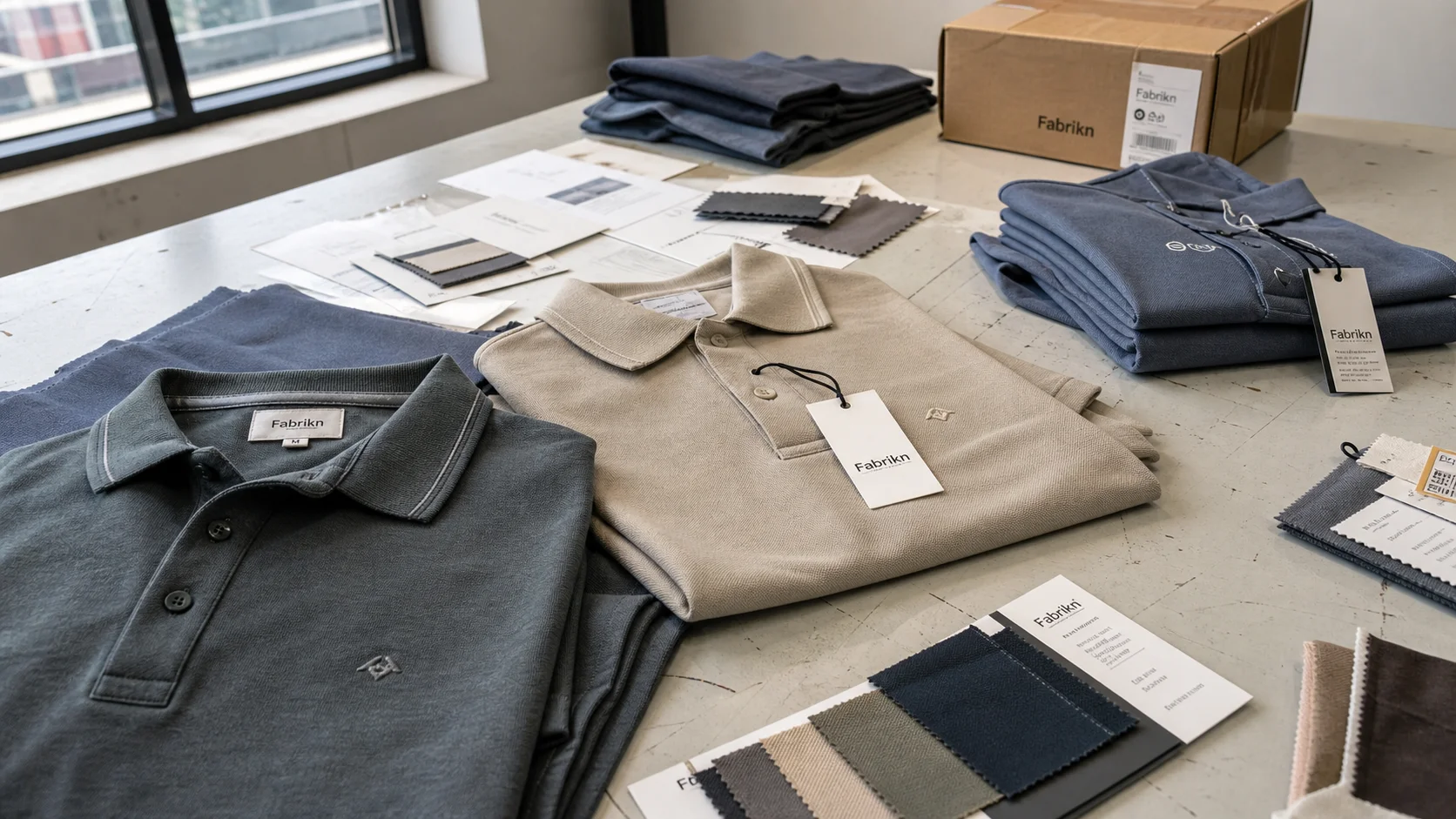
Defective B2B Apparel Returns with checks for samples, fit, MOQ, QC evidence, pricing terms, and delivery risk.
Fast answer: Defective B2B Apparel Returns: RMA Rules, Photos, Rework, and Credits should be judged by production evidence, not by a generic sourcing promise. The buyer needs sample proof, cost breakdowns, QC checkpoints, and delivery buffers in writing.
Ask for recent sample photos, measurement tolerances, fabric or print test assumptions, decoration test notes, packing examples, and a named inspection checkpoint. These details show whether the team can repeat an approved sample at bulk volume.
Separate garment cost, decoration, labels, packaging, sampling, testing, freight, and rush charges. When every cost line is visible, it becomes easier to reduce colorways, adjust size depth, or reserve more time for sampling.
In the fast-paced world of custom clothing production, returns are an inevitability. Even the most meticulous suppliers encounter a defective garment or a misprinted logo from time to time. What separates the best from the rest is not the absence of issues, but the speed, clarity, and fairness with which they are resolved. This guide walks through the essential components of structuring a reliable returns program specifically tailored to defective B2B orders, offering actionable insights for custom clothing suppliers intent on increasing client trust, simplifying internal processes, and protecting margins.
Get a free quote from Fabrikn — your trusted B2B clothing manufacturer with 10+ years of experience. MOQ as low as 200 pieces.
Get a Free Quote →Every return begins with two basic facts: there is a defect and a business expectation that it will be resolved responsibly. In the B2B custom clothing niche, defects range from obvious flaws—like ripped seams, incorrect sizing, or color-matched inaccuracies—to subtle issues such as off-spec fabric weight or poor embroidery tension. The stakes are high. When a retail partner receives a shipment of custom-branded uniforms or staff apparel and finds numerous defective pieces, it jeopardizes seasonal launches, corporate training programs, and promotional events.
Understanding what constitutes a defect in a B2B relationship requires empathy and meticulous documentation. The supplier must align on tolerances with the buyer’s quality assurance team before production begins. A transparent agreement prevents subjective interpretations and minimizes disputes. For example, if a client’s brand guidelines demand precise Pantone matches for logos, the acceptance criteria should include lab dip approvals and signed-off swatches before bulk production. A robust onboarding process that captures the client’s quality expectations in writing is the cornerstone that differentiates personalized service from general merchandising.
Beyond the defect itself is the client’s expectation about the return process. Businesses expect swift acknowledgment, consistent status updates, and an early indication of how quickly they will receive replacements or credits. The longer the process drags on, the more trust erodes. That is why return protocols are not merely a few paragraphs in the contract—they are an extension of the brand’s customer experience. Properly setting expectations at the outset means clients do not feel blindsided when a defective batch surfaces.
A well-defined return policy for defective B2B orders acts both as a safety net and a blueprint for consistent action. It begins with clarity on what qualifies as a defect versus a change request. The policy should enumerate examples, such as:
Equally important is establishing the timeframe for reporting defects. A standard industry approach is to allow inspections within 5 to 10 business days of receipt, while keeping in mind the logistics timelines of the client. The policy should also clarify what is not considered a defect, such as expected wear and tear, intentional customization changes not documented, or issues caused by improper care after delivery. Distilling these distinctions prevents unnecessary conflicts and ensures only legitimate claims enter the return queue.
Another key component is outlining the return authorization process. Many suppliers use an online portal or a dedicated account manager to issue Return Authorization Numbers (RANs). Each RAN centralizes communications, documents photographic evidence, and provides reference for accounting departments. Coupling this policy with real-world penalties for non-compliance—such as refusing unauthorized returns or charging for additional handling—reinforces accountability without straining long-term relationships.
Communication is the connective tissue that keeps return processes from dissolving into confusion. From the first acknowledgment of a defect to the final resolution, every interaction must be precise and customer-centric. Ideally, the supplier should designate a point of contact, such as a returns coordinator or account manager, who acts as the single thread linking fabricators, quality inspectors, logistics handlers, and the client.
Begin with the confirmation email or portal notification that outlines next steps. Include details about:
These proactive touchpoints reassure clients that their concerns are being handled diligently and give them visibility into every stage. When possible, provide real-time status updates through the order management system or via scheduled calls. Over-communicating beats under-communicating in the world of B2B custom clothing. A supplier that regularly educates clients on returns statistics, prevention steps, and service improvements positions itself as a partner rather than a vendor.
Once a defective order is returned to the facility, the receiving team is the first line of defense. Streamlining this phase reduces the chances of misclassification and ensures accurate data logging. When the return arrives, the receiving team should:
Documentation is critical, especially when processes move to the accounting or legal departments for reimbursements. Each piece of data, from barcodes to internal quality tags, should be cataloged. Modern ERP systems simplify this by automatically logging returns against production batches and client accounts, but even manual processes can work if standardized forms are used.
Inspection is the most important but time-consuming step. It should involve a trained quality assurance specialist who confirms whether the defect falls within agreed tolerances. Ideally, this specialist has access to the original order specifications, reference images, and brand guidelines. When multisite production is involved, ensure the inspection team understands the unique requirements of that client’s location as shipping damages or customs mishandling might mimic defects. A layered inspection approach—initial visual review followed by technical tests if needed—balances speed with accuracy.
Once the defect is confirmed, it’s time to decide on a response. The options typically include remaking the defective items, issuing a credit, or providing a mix of refund and replacement depending on urgency. The supplier should consult the client’s preferences, prioritized within the Service Level Agreement (SLA). For instance, a hospitality brand launching a seasonal uniform might prefer expedited reprints even at extra cost, while a wholesale partner might accept a credit for future orders.
The resolution should be recorded in the client’s account history for transparency. If a remake is necessary, flag the production queue and ensure the remake follows the exact specs after incorporating any additional inspections or samples. The goal is to deliver the replacement faster than the defect’s discovery timeline to minimize disruption. Also, if a credit is issued, ensure finance and the client’s procurement teams receive all documentation and approval traces. The clean administrative closure prevents future disputes.
Handling credits also offers a chance to demonstrate value. Some suppliers offer tiered credits depending on the severity of the defect or the client’s volume, which can reinforce loyalty. For example, a 100% credit might be issued for critical defects affecting more than 5% of a shipment, while a 25% credit might apply to minor imperfections. These policies must be clear but flexible enough to align with the particular circumstances of each return.
Returns logistics in the B2B custom clothing space can be complex because defective batches often span multiple units and may require specialized handling. Suppliers should provide clients with clear instructions on how to package returns, including:
From a carrier perspective, negotiate return rates with logistics partners to ensure consistent pickup windows. The goal is to align the carrier’s timeline with the supplier’s inspection process so the labor and warehouse space are ready when the return arrives. Once inside the warehouse, use barcode scanning or RFID tagging to track each garment through the inspection and resolution pipeline. Real-time dashboards can show the status—received, under review, resolved—helping internal teams prioritize workload and feed timely updates to clients.
A return process is only as strong as the people executing it. Regular training for customer service reps, receiving teams, inspectors, and production supervisors ensures everyone understands both the policy and the client’s expectations. Workshops can use anonymized case studies to highlight how certain defects were resolved, what documentation was helpful, and how miscommunications were avoided.
Technology plays a vital supporting role. Modern Manufacturing Execution Systems (MES) or Enterprise Resource Planning (ERP) tools can track defects, trigger workflows, store client approvals, and generate reports. For example, a client could upload photos of a defect directly through a branded portal, automatically linking the image to the relevant production batch number. Automated alerts can notify the returns manager when a threshold of defects triggers additional quality audits, enabling proactive interventions.
Investing in a knowledge base or internal FAQs ensures staff have immediate access to policies, defect definitions, and escalation paths. Coupling this with analytics allows the supplier to identify recurrent issues—be it a specific fabric supplier, print vendor, or machinery—and take preventive actions. Training combined with smart technology creates a loop of continuous improvement.
Returns impact both operational costs and relationships. Suppliers must balance cost recovery with the need to maintain client satisfaction. Some approaches to manage this balance include:
The financial reconciliation of returns should happen promptly. Shortened cash flow cycles help keep operations healthy. For example, processing a credit memos within days of defect confirmation rather than waiting until the entire batch is resolved keeps procurement teams and finance partners happy. Offering visibility into the cost of defects can also drive collaboration on quality improvements; when a client sees that recurring embroidery issues cost both parties time and money, they are more likely to tighten their input controls.
Great return management does more than solve problems—it builds trust. Suppliers should treat every defective return as an opportunity to learn. After resolving a defect, consider conducting a joint review with the client to dissect what went wrong and how future orders can be safeguarded. These reviews can include:
Transparency fosters partnership. Offering clients access to returns dashboards or executive summaries about recurring root causes communicates that the supplier is not merely reacting, but actively improving the process. That level of service builds loyalty and makes the supplier a true extension of the client’s brand operations.
As the custom clothing industry evolves—with new materials, technologies, and sustainability expectations—returns management must evolve too. Here are strategies to future-proof the returns process:
By staying ahead of industry shifts, custom clothing suppliers can convert returns from a liability into a competitive edge. A returns system that is transparent, quick, and aligned with client expectations becomes a differentiator, especially for clients with complex brand requirements or large-scale uniform programs.
Respond within 24 hours to acknowledge the report and outline the next steps. Prompt acknowledgment reassures clients and establishes your commitment to resolving the issue.
Yes, photographic evidence should accompany every defective return when possible, as it streamlines the inspection process and eliminates ambiguity.
Yes—most suppliers offer expedited returns handling and remakes for urgent launches, typically with associated rush fees. Discuss these options with your account manager through https://fabrikn.com/contact-us/.
Fabrikn integrates pre-production quality checkpoints, digital proofs, and client approvals through its services portal, ensuring alignment before full production begins.
Visit https://fabrikn.com/about-us/ to explore Fabrikn’s commitment to quality, innovation, and customer satisfaction in custom clothing manufacturing.
Mastering returns is not an overnight achievement—it requires policy, communication, inspection rigor, and continuous improvement. By building a process that prioritizes transparency, accountability, and collaboration, custom clothing suppliers can transform defective B2B orders into opportunities to reinforce their reliability. Remember, a return handled well is a client who will return again.
Prepare product specs, size range, target quantity, artwork, material expectations, packaging needs, delivery market, and launch timing. Clear inputs make supplier quotes more realistic.
Use a written brief, sample approval checklist, material confirmation, quality checkpoint plan, and final packing standard before bulk production starts.
Compare sample quality, communication, capacity, QC process, documentation, and landed cost together instead of looking only at the unit price.