
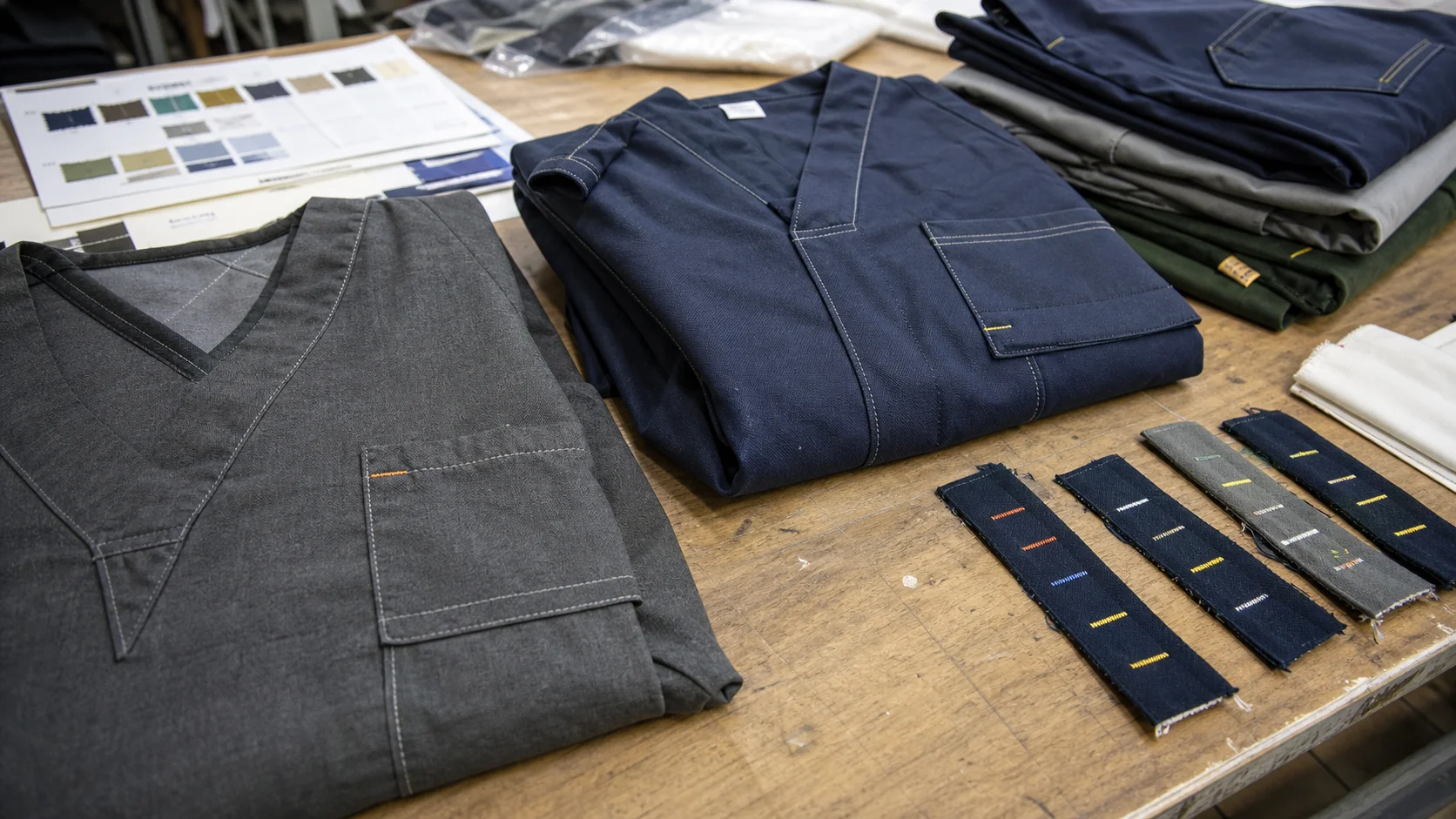
A practical SEO outline for warehouse safety teams evaluating custom contrast bartack map colorfastness audits, with a focus on production traceability,...
Custom Contrast Bartack Maps for Safety Audits - Fabrikn production reference
Category: Decoration & Printing
Custom contrast bartack map colorfastness audit programs help warehouse safety teams verify that critical reinforcement stitches remain visible, durable, and consistent after wear, washing, abrasion, and industrial handling. For safety apparel, workwear, hi-vis garments, tool vests, cargo pants, utility jackets, harness-compatible layers, and warehouse uniforms, bartacks are not only construction details. They are visual control points.
A contrast bartack map gives buyers, QA teams, and safety managers a documented layout showing where reinforcement stitches should be placed, what color they should be, what thread specification should be used, and how the bartack should perform during inspection. When colorfastness is added to the audit scope, the map becomes more than a sewing guide. It becomes a practical safety and compliance tool.
A custom contrast bartack map is a production document that identifies every bartack location on a garment and assigns a visible thread color, stitch type, size, density, and quality standard to each point. In warehouse safety apparel, these points are usually placed at stress zones: pocket corners, belt loops, tool loops, zipper ends, side vents, shoulder seams, reflective tape junctions, and reinforcement panels.
The “contrast” part matters. A bartack in the same color as the garment can reinforce the seam, but it is harder to audit visually. A contrast bartack gives safety teams and inspectors a quick way to confirm whether the garment has been reinforced as specified. On a black work pant, this might mean orange, yellow, red, lime, or light grey thread. On a hi-vis yellow vest, contrast may be navy, black, red, or royal blue, depending on the brand and safety policy.
The “map” is usually built into a tech pack or quality manual. It may include flat sketches, numbered callouts, thread color codes, stitch count, bartack length, placement tolerance, and acceptance criteria. For larger uniform programs, the map may also include size grading notes, because a bartack location on a small size may not sit in the same relative position on a 4XL garment.
For sourcing teams developing new workwear or warehouse uniforms, bartack mapping should be agreed before bulk production. Changing contrast thread after production begins can cause rework, shade inconsistency, rejected inventory, or delays at final inspection.
Warehouse safety teams use contrast bartack maps because they simplify garment checks. A safety manager may not have time to inspect seam construction in detail, but a visible reinforcement point is easy to confirm during receiving, issue, and routine wear review.
In a warehouse environment, uniforms are exposed to repeated bending, lifting, abrasion, carton handling, conveyor contact, tool carry, pallet movement, and laundering. Stress points fail first. Loose pocket corners, torn tool loops, split reflective tape ends, and damaged belt loops can create snagging risks or reduce garment function. The bartack map helps reduce uncertainty by making reinforcement zones visible and auditable.
Typical goals include:
Contrast bartacks are not a substitute for proper seam engineering. They only help if the base fabric, thread, seam construction, and reinforcement density are suitable for the garment’s real use. A bright bartack placed on weak fabric can still tear. A well-sewn bartack in the wrong position may not protect the stress point. The map should be treated as a control document, not decoration alone.
Contrast bartacks sit between construction and visual identification. They are sewn, not printed, but they function much like a decorative or visual control feature. In B2B apparel programs, they often need to coordinate with screen prints, heat transfers, embroidery, reflective tape, woven labels, and brand color standards.
That is why buyers often manage bartack color through the same approval discipline used for decoration. Thread color must be matched, shade variation must be controlled, and colorfastness must be tested against the garment’s wash and wear requirements. If the bartack is part of a brand identity or safety coding system, a loose color match can become a compliance issue.
For example, a warehouse team may assign red bartacks to high-stress utility zones, blue bartacks to supervisor garments, or black bartacks to reinforce hi-vis panels without distracting from reflective tape. Those decisions are visual, operational, and technical at the same time.
Buyers reviewing decoration and construction options can compare related manufacturing capabilities through Fabrikn’s services, especially when garments require coordinated sewing, labeling, decoration, and finishing specifications.
A custom contrast bartack map colorfastness audit checks whether the bartack thread retains acceptable color during normal use and does not stain adjacent fabric, reflective tape, lining, labels, or skin-contact areas. This is especially important when bright synthetic threads are sewn onto light fabric or hi-vis materials.
Colorfastness is not only about fading. The audit should look for:
Common test references may include wash fastness, rubbing fastness, perspiration fastness, and light fastness, depending on the product type and market. Buyers should specify the required test method and grade rather than asking generally for “good colorfastness.” A vague requirement leaves too much room for interpretation.
For warehouse safety teams, the practical question is simple: can the bartack still be seen and trusted after the garment has been washed and used? If the answer is uncertain, the audit specification needs tightening before bulk production.
A contrast bartack should not be approved on color appearance alone. It should be checked after wash, rub, and abrasion conditions that reflect the garment’s actual use.
Bartack placement varies by garment type, but warehouse apparel tends to share predictable stress points. A good map separates decorative bartacks from functional reinforcement bartacks. The two can look similar, but the performance requirements are different.
A typical bartack length may range from 6 mm to 18 mm, depending on the zone and fabric weight. Stitch density is often adjusted by material thickness. Heavy canvas, twill, and ripstop usually need different settings than lightweight mesh or polyester vest fabric. A map should never copy the same bartack setting across every material without testing.
Thread selection affects both appearance and durability. For contrast bartacks, buyers usually specify thread fiber, ticket size, color code, finish, and performance requirements. Polyester thread is common for workwear because it offers strength, abrasion resistance, and better wash performance than many alternatives. Nylon may be used in some heavy-duty applications, though heat and colorfastness behavior should be checked carefully.
A useful specification may include:
Trim interaction needs attention. Reflective tape, heat transfer logos, PVC patches, woven labels, coated fabrics, and elastic bindings can react differently during heat, washing, and abrasion. A bright red bartack on a white reflective tape edge may look sharp at sample stage but create staining risk if the thread is not properly tested. A black bartack on a lightweight hi-vis mesh panel may show needle damage or puckering if thread and needle size are too aggressive.
For decoration-heavy workwear, the safest route is to review bartack thread together with all visible trims. That includes logo placement, printed safety marks, heat transfers, reflective tape, woven patches, snap colors, zipper tapes, and label materials.
Specification Area Buyer Decision Audit Risk Thread color Select approved contrast shade and supplier code Bulk thread shade does not match approved sample Thread fiber Choose polyester, nylon, or other suitable thread Poor abrasion resistance or heat instability Bartack size Define length, width, and stitch density Weak reinforcement or bulky appearance Placement Map exact stress points and tolerances Missing or misaligned reinforcement Colorfastness Set test method and minimum grade Bleeding, fading, or staining after washA controlled sample process prevents most bartack map problems. Buyers should avoid approving contrast bartacks from photos only, especially when the garment uses hi-vis fabric, reflective trims, or strong brand colors. Screen lighting can distort orange, red, yellow, lime, and royal blue shades.
A practical sample flow usually includes the following stages:
Sample approval can be faster for simple garments, but safety-related uniforms should not skip performance review. A bartack can look correct before washing and fail after one or two laundry cycles. If garments are intended for industrial laundering, the test conditions need to reflect that. Home-wash testing alone may not be enough.
Buyers should also ask whether contrast thread will be stocked consistently for repeat orders. Substitution is a common risk in long-running uniform programs. If the original thread is unavailable, the replacement should go through approval before use.
MOQ depends on garment complexity, fabric sourcing, thread availability, trim requirements, and factory setup. Contrast bartacks alone do not usually drive high MOQ, but custom fabric, reflective tape, branded trims, and special thread colors can raise the minimum.
As a cautious reference, typical MOQ ranges may look like this:
Program Type Typical MOQ Range Notes Simple warehouse vest with contrast bartacks 300 to 800 pieces Lower MOQ is more likely if stock fabric and standard thread colors are used. Work pants or cargo pants 500 to 1,500 pieces More operations, size range, and pocket details increase setup effort. Hi-vis uniform program with reflective tape and decoration 800 to 2,000 pieces Testing, trim approval, and compliance requirements affect feasibility. Custom dyed fabric with special thread match 1,000 to 3,000 pieces or more Fabric dye MOQ and thread procurement may become the main constraint. Multi-style warehouse safety program Varies by style and color Suppliers may combine trims but usually separate MOQ by garment style.Small orders can be possible, but unit cost rises when the factory must set up special machines, purchase non-stock thread, create test samples, and manage multiple inspection points. If the buyer needs only a small pilot run, choosing stock fabric and standard thread colors is usually the more practical route.
For development questions or program scoping, buyers can use the Fabrikn contact page to share garment type, quantity range, required decoration, and safety audit expectations.
Lead time for custom contrast bartack safety apparel depends on more than sewing capacity. The biggest variables are material availability, testing scope, sample revision cycles, decoration approvals, and inspection requirements.
A typical development and production schedule may include:
Those ranges are not guarantees. They are planning references. Lead time can extend if thread color requires special procurement, reflective tape needs certification, fabric dyeing is delayed, or test results fail. Buyers often underestimate the time needed for sample revisions. A small bartack placement change can affect pattern pieces, pocket construction, or sewing sequence.
Decoration can also influence timing. Heat transfer logos may need separate artwork approval. Screen prints may need strike-off testing. Embroidery may require digitizing. Reflective tape placement may need measurement checks. The bartack map should be aligned with these decoration steps so that reinforcement does not interfere with logos, prints, or compliance labels.
Contrast bartacks are easy to see, which also makes defects easy to notice. That is useful for safety audits but unforgiving for production quality. If the factory does not control thread tension, stitch density, and placement, the garment can look inconsistent across the order.
Inspection standards should state whether defects are critical, major, or minor. Missing reinforcement on a safety-critical pocket or reflective tape end may be treated more seriously than a slightly off-center decorative bartack. Buyers should define this before inspection, not during a dispute.
Random inspection alone may not catch every missing bartack if there are many placements per garment. A mapped checklist helps inspectors count and verify each location. For complex work pants, a single garment may include 20 to 40 bartacks. A visual map reduces missed points and speeds up audit review.
A supplier brief should be specific enough to price and produce accurately. “Add contrast bartacks” is not enough. That phrase leaves open questions about color, placement, stitch density, thread strength, and testing.
A stronger brief includes:
Buyers should also include photos or marked samples if available, but the written specification should remain the controlling document. Photos are useful, yet they can be misleading for scale and color. A technical drawing with measurements is more reliable for production.
Supplier capability matters. Bartack machines need consistent settings and operators need clear sewing sequence instructions. If the garment has many reinforcement points, production time increases. That affects cost. A low quotation may reflect a weaker assumption about the number of bartacks, thread quality, or testing burden.
Contrast bartack programs involve tradeoffs. The best choice depends on the garment’s risk level, budget, expected wear life, and audit requirement.
High contrast is easier to audit. It also makes sewing defects more visible. If the warehouse team wants quick inspection, high contrast is the better choice. If brand appearance is more important than fast auditing, a medium contrast shade may look cleaner while still being visible.
Standard thread colors reduce MOQ, lead time, and replacement risk. Custom thread colors improve brand alignment but can introduce procurement delays and shade variation between lots. For safety uniforms, standard colors often make better operational sense unless brand control is strict.
A dense bartack can improve reinforcement, but too much density can cut or weaken lightweight fabric. Mesh vests, stretch panels, and coated textiles need careful testing. More stitches are not always better.
Full testing costs more and takes longer. It is justified for hi-vis garments, light-colored fabrics, industrial laundering, and large uniform rollouts. A basic wash check may be acceptable for small pilots or low-risk internal garments, but buyers should understand the risk.
More bartacks create more reinforcement and better visibility. They also increase sewing time and inspection complexity. A practical map focuses on real stress zones rather than placing contrast stitches everywhere.
The purchasing judgment is clear: do not pay for decorative complexity that does not improve safety, durability, or audit control. Spend the budget on the reinforcement points that fail first, the thread that performs after washing, and the inspection process that catches missing or incorrect bartacks before delivery.
A good audit plan connects the bartack map to measurable tests. It should define what is being tested, when it is tested, who reviews results, and what happens if the result fails.
For many warehouse safety garments, the audit plan may include:
Colorfastness acceptance criteria should be written plainly. For example, the buyer may state that contrast thread must not visibly stain adjacent fabric after the approved wash cycle, and post-wash color change must remain within the agreed grade or visual tolerance. If a formal lab test is required, the exact method and minimum grade should be listed.
Warehouse teams should keep the audit realistic. A garment used in dry carton handling may not need the same testing as a garment exposed to outdoor loading docks, sweat, rain, chemical cleaning, or industrial laundry. Over-specifying can increase cost without meaningful benefit. Under-specifying can create failure after rollout.
Documentation is where many programs become weak. A warehouse safety team may receive garments that look acceptable, but without a map, sealed sample, or test record, future audits become subjective. If the next production lot changes, there may be no clear reference.
A basic documentation set should include:
This documentation helps purchasing teams reorder consistently. It also gives safety managers a reference when checking garments after issue. If a pocket corner fails, the team can compare the garment to the approved map and determine whether the issue is production-related, wear-related, or design-related.
Companies reviewing supplier alignment, production scope, and quality process can learn more about the manufacturing background through Fabrikn’s about page.
Contrast bartacks are not usually the most expensive part of a garment, but they do affect cost. The impact increases when the garment has many bartack points, multiple thread colors, special testing, or strict inspection requirements.
Main cost factors include:
If the target price is tight, buyers should reduce unnecessary color changes first. Using one approved contrast thread across multiple styles can improve consistency and simplify procurement. Keeping bartack dimensions standardized across similar stress zones can also help production efficiency.
Cutting colorfastness testing is a riskier saving. If the garment uses dark contrast thread on light fabric or hi-vis material, testing should remain in the budget. A failed bulk order costs more than a controlled sample test.
Warehouse safety teams do not need to manage every sewing detail, but they should define what matters operationally. The sourcing or product team can translate those requirements into a technical specification.
Best practices include:
A map should evolve when the garment design changes. If a warehouse adds new tools, radio devices, scanners, or carrying points, stress zones may shift. The reinforcement plan should follow the job, not the other way around.
Custom contrast bartack maps are valuable when they make garments easier to inspect and harder to misproduce. They are less useful when treated as decoration without performance controls. For warehouse safety teams, the strongest programs combine visible reinforcement, clear documentation, colorfastness testing, and disciplined sample approval.
The key is to decide what the bartack is supposed to do. If it is functional reinforcement, specify stitch strength, placement, and density. If it is an audit marker, specify visibility and color consistency. If it is part of brand presentation, coordinate it with trims and decoration. If it is exposed to repeated laundering, test it before bulk production.
A practical buyer should ask three questions before approving the program:
If the answer is yes, a custom contrast bartack map can become a useful safety audit asset. If the answer is unclear, the specification needs more work before production starts.
Get a free quote from Fabrikn — your trusted B2B clothing manufacturer with 10+ years of experience. MOQ as low as 200 pieces.
Get a Free Quote →A custom contrast bartack map is a technical document showing every bartack location on a garment, usually with numbered callouts, thread color, stitch size, density, and placement tolerances. It helps production teams sew consistently and helps warehouse safety teams inspect reinforcement points quickly.
Contrast bartacks make stress-point reinforcement easier to see. This helps teams check pockets, belt loops, reflective tape ends, tool loops, and closures during receiving or routine garment audits. They also make missing or incorrect reinforcement easier to detect.
The best color depends on garment fabric, brand standards, and audit visibility. Common choices include orange, red, lime, yellow, black, navy, royal blue, and grey. The color should be approved against actual fabric and trims, not only from a digital image.
They can, but they are rarely the only MOQ driver. Stock thread colors may allow lower MOQs, often from a few hundred pieces for simple garments. Custom thread colors, special trims, hi-vis compliance requirements, and custom fabric can push MOQs higher.
Common checks include wash fastness, dry and wet rubbing fastness, perspiration fastness, and sometimes light fastness. The exact test method and minimum grade should be written into the specification before sample approval.
Yes. Dense bartacks, large needles, or high thread tension can damage lightweight mesh, coated fabric, stretch panels, or hi-vis materials. Sampling should confirm that the bartack reinforces the area without cutting, puckering, or weakening the fabric.
There is no fixed number. Many utility or cargo work pants may have 20 to 40 bartacks depending on pocket design, belt loops, tool pockets, knee panels, and fly construction. The map should focus on real stress points rather than adding stitches for appearance only.
Buyers should include the garment type, fabric specification, bartack map, thread color code, thread type, stitch density, placement tolerance, decoration details, colorfastness requirements, MOQ target, delivery deadline, and inspection standard.
Simple programs may move through sampling in a few weeks if materials are available. More complex safety uniforms with testing, reflective tape, decoration, and revisions can take longer. Bulk production often depends on quantity, fabric lead time, trim availability, and inspection requirements.
They are both. Bartacks are sewn construction reinforcements, but contrast thread makes them a visible design, branding, or audit feature. That is why they are often managed alongside decoration and printing specifications in workwear programs.