
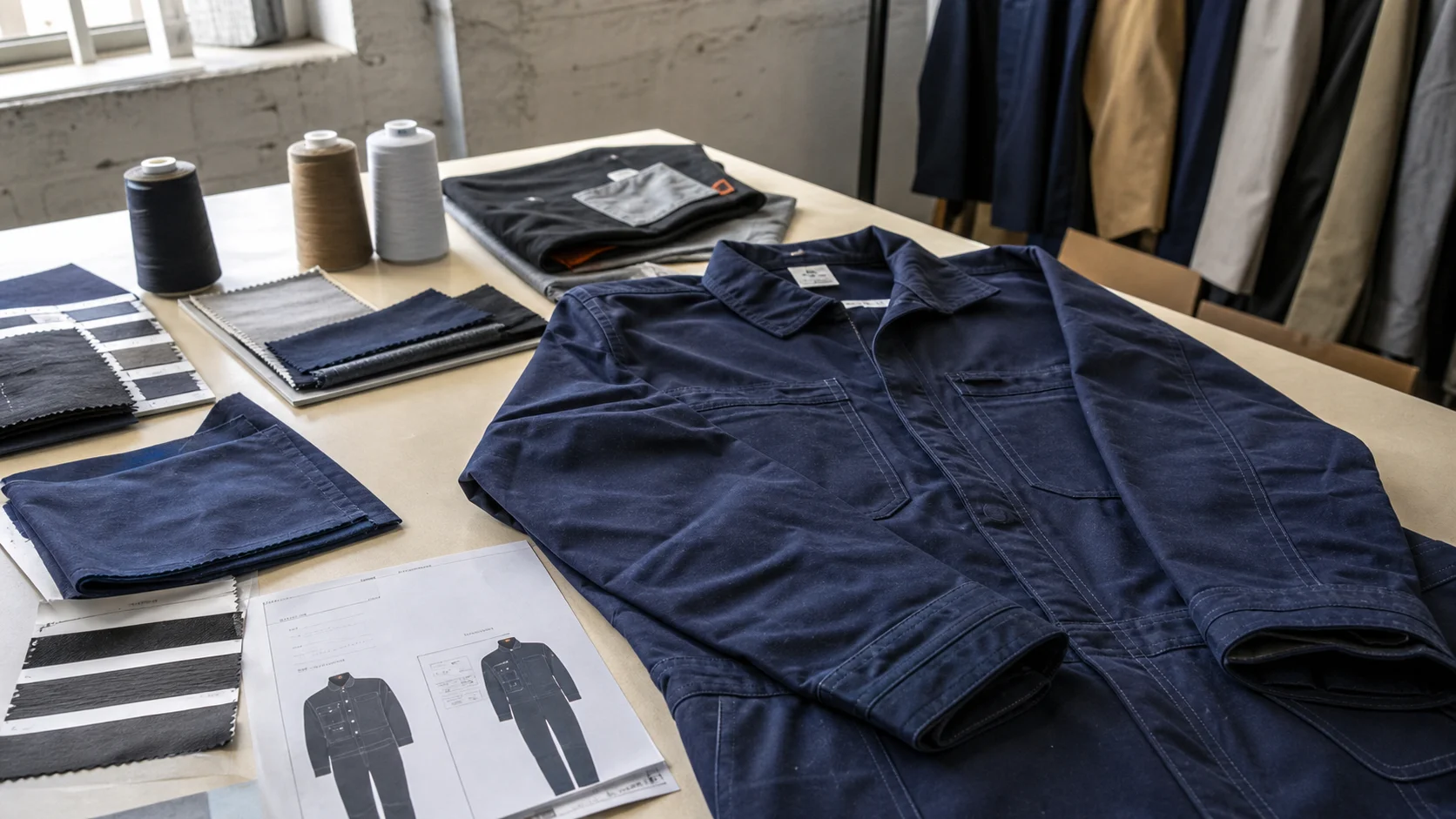
A quality and inspection outline for reviewing custom coverall size grading before event staffing uniforms go into bulk production, with fit, mobility,...
Custom Coverall Size Grading Review for Event Teams - Fabrikn production reference
Custom coverall size grading review for event staffing teams is one of the least glamorous parts of uniform sourcing, but it directly affects attendance readiness, brand presentation, safety, and replacement cost. Event teams often include temporary staff, volunteers, production crew, security support, hospitality workers, runners, and technical operators. A single size chart rarely fits this mixed workforce well.
For buyers, the question is not only “Can the supplier make coveralls?” The better question is “Can the supplier grade the coverall pattern across sizes without creating tight shoulders, long torsos, unsafe hems, or inconsistent branding placement?” That is where size grading review becomes a quality and inspection issue, not just a design task.
This article reviews how to evaluate custom coverall sizing for event staffing teams, what to check before bulk production, and which inspection risks matter most when coveralls need to be issued quickly across many body types.
Coveralls are more complex than T-shirts, polos, or simple jackets because they combine upper-body fit, lower-body fit, sleeve movement, body rise, crotch depth, zipper length, and inseam control in one garment. When the grading is weak, a coverall can look correct on a hanger but fail during actual event work.
Event staff do not stand still all day. They lift crates, move barriers, kneel to tape cables, direct guests, climb stairs, bend at registration counters, carry radios, and work long shifts. A tight shoulder or short torso becomes a productivity issue. A long hem becomes a trip risk. A loose sleeve near equipment can become a safety concern.
For branded events, size grading also affects visual consistency. Logos, name patches, reflective tape, printed slogans, chest pockets, and contrast panels should remain balanced across size ranges. A logo that looks centered on size M may sit too high on 3XL if the supplier only scales mechanically without placement review.
A proper custom coverall size grading review checks the full size run, not only the salesman sample. It confirms that the pattern grows intelligently across sizes and that the garment remains wearable for the actual staffing profile.
Event staffing teams are usually more varied than permanent corporate uniform programs. Many events hire short-term workers and may not have detailed employee measurement data. That creates sizing uncertainty before the order is even placed.
Typical fit challenges include:
In a standard retail garment, a slightly imperfect fit may be acceptable. In a staffing program, poor fit increases complaint volume, slows distribution, and creates inconsistent team presentation. The buyer should treat sizing as an operational risk.
Size grading quality starts with the base pattern. If the sample size is not well balanced, grading will only multiply the problem across the size range.
Most suppliers build the development sample in a middle size, often M, L, or a customer-defined base size. For event coveralls, the base size should reflect the expected order curve. If the majority of staff will wear L to 2XL, approving a slim size M sample may be misleading.
A practical base pattern review should check:
The buyer should decide whether the coverall is intended to be regular fit, relaxed fit, workwear fit, or over-garment fit. These are not interchangeable. A relaxed event coverall may look less tailored, but it will handle more body types and layering. A slimmer promotional coverall may photograph better, but it will produce more fit complaints.
For most event staffing teams, a slightly generous fit is usually safer than a fashion-tight fit. The tradeoff is visual sharpness. If brand image requires a cleaner silhouette, the size chart and exchange plan need more discipline.
A custom coverall size chart should not be copied blindly from retail apparel. It should be built around garment measurements, wearer body measurements, and intended ease.
There are two common types of size charts:
For production and inspection, garment measurements are essential. Body measurements help with staff size selection, but factories need finished garment specs with tolerances.
Measurement Point Why It Matters Typical Inspection Risk Chest Width Controls upper body comfort and layering space Too tight in larger sizes if grading increment is too small Shoulder Width Affects arm movement and visual fit Over-wide shoulders on small sizes or restricted movement on large sizes Torso Length Critical for bending, sitting, and reaching Short rise causing pulling at crotch and shoulders Sleeve Length Controls comfort and appearance Excess length on smaller sizes or short sleeves on tall staff Inseam Reduces dragging hems and trip risk Single inseam used across too many sizes Seat and Thigh Supports crouching and lifting Insufficient ease in hip and thigh for active rolesA useful size range for event coveralls often runs from XS to 4XL, sometimes 5XL for broader workforce coverage. Some programs also need short, regular, and tall lengths. That sounds simple, but each added size increases pattern work, sampling, inventory risk, and production control requirements.
When exact staff measurements are unavailable, buyers should request historical size data from similar uniform programs or collect basic size requests during onboarding. Guessing too aggressively toward smaller sizes is a common mistake. Replacement orders in larger sizes can be expensive and slow.
A custom coverall size grading review should test whether the garment remains proportional and functional across the full size set. The review can be done through digital pattern files, physical size-set samples, or a combination of both.
Key review points include:
Mechanical grading is not enough for coveralls. The pattern may need manual adjustment in larger sizes, tall sizes, or women’s fit versions. A supplier that refuses size-set review on a complex coverall order is shifting fit risk back to the buyer.
Purchasing judgment: If the event is high-visibility and the uniform will be photographed, approve at least three physical sizes before bulk production: one small, one middle, and one large. For larger orders, a fuller size set is worth the cost.
Fit is not only a pattern issue. Fabric and trims can change how a coverall behaves on the body.
Common fabric options include poly-cotton twill, cotton twill, ripstop, stretch woven fabric, lightweight canvas, and technical blends. For indoor promotional events, a lighter 180–220 gsm fabric may be acceptable. For production crew or outdoor work, buyers may look at 240–300 gsm or heavier, depending on climate and durability needs.
Stretch fabric can improve comfort, especially across shoulders, knees, and seat. The tradeoff is cost, shade consistency, and possible recovery issues after washing. If stretch is used, the inspection plan should include stretch and recovery checks, not only basic measurements.
Useful trim and construction specifications include:
Fabric shrinkage also matters. A coverall that measures correctly before washing may become short in the torso or sleeve after laundering. If staff will wash garments repeatedly, buyers should request shrinkage test data or approve sizing after wash testing.
For event uniforms used once or for a short campaign, wash durability may be less important than appearance and delivery timing. For recurring event teams, construction durability should carry more weight in the buying decision.
A disciplined sample approval process reduces the risk of issuing coveralls that do not fit the team. It also gives the buyer a clear record if bulk goods fail inspection.
A typical sample workflow may include:
Rushing from one approved middle-size sample into full production is risky for event staffing teams. The coverall may pass visually but fail at distribution when XS and 3XL staff try it on.
Fit testing should include basic movement checks. Ask wearers to raise arms, bend forward, sit, squat, reach across the body, and walk quickly. These movements reveal problems that flat measurements do not.
For branded coveralls, sample approval should also include logo size and position in each relevant size. A chest embroidery might need a fixed placement from center front and shoulder seam, while reflective tape may need proportional adjustments.
For sourcing support, buyers can review broader production options through Fabrikn’s services or contact the team through the contact page when preparing a custom uniform brief.
Minimum order quantity depends on fabric availability, color requirements, branding method, size range, and supplier setup. For custom coveralls, typical MOQs may range from 100 to 300 pieces for simpler styles using available fabric. Fully custom fabric colors, special trims, or wider size ranges can push MOQs higher, sometimes 500 pieces or more.
Small event teams often want full customization at low volume. That is possible in some cases, but it usually comes with tradeoffs: higher unit price, fewer fabric choices, limited size-set sampling, or longer development time.
Order Type Typical MOQ Range Buyer Consideration Stock coverall with logo 50–100 pieces Fastest option, but limited fit and color control Custom color with standard pattern 100–300 pieces Good balance if the base fit is acceptable Fully custom coverall pattern 300–500+ pieces Better fit control, higher development effort Extended size range or short/tall versions Varies by supplier Improves coverage but increases inventory complexityLead time depends heavily on sampling rounds and material sourcing. A basic logo application on available coveralls may take a few weeks. A custom graded coverall program can take 8–14 weeks or longer when fabric dyeing, lab dips, trims, sample corrections, and inspection are included.
Lead-time drivers include:
Buyers should avoid approving a size range late in the process. Adding 4XL, tall sizes, or women’s fit versions after production planning can delay the order and disrupt fabric consumption calculations.
Coveralls should be inspected more carefully than simple tops because there are more measurement points and more stress areas. A final inspection should compare bulk goods against the approved pre-production sample and measurement chart.
Important inspection risks include:
AQL inspection may be suitable for larger orders, but the buyer should define critical measurement points before inspection. For event uniforms, size label accuracy and carton sorting are more important than many buyers realize. A perfectly sewn garment in the wrong carton can still create a serious operational problem.
Pre-shipment inspection should include carton-level checks. Each carton should show style number, color, size, quantity, purchase order reference, and destination if the order is split across event sites.
Purchasing judgment: If there is no time for replacement before the event, inspection standards should be stricter. When the delivery date is fixed, prevention is cheaper than correction.
Custom coverall sourcing involves several practical tradeoffs. The lowest-cost quotation may not include the grading work needed for a mixed event team. The fastest supplier may rely on a standard unisex block that does not match the workforce. The most tailored coverall may look good in photos but perform poorly for staff who need movement and layering.
For most event staffing teams, the safest purchasing approach is to rank requirements in this order:
Cost matters, but a cheap coverall that triggers exchanges, complaints, or last-minute replacements is not cheap in operational terms. A moderate unit price with stronger size grading and better packing control often gives better value.
Buyers should also decide whether the coverall is a one-event garment, seasonal uniform, or recurring staff kit. A one-time activation can tolerate simpler trims and lighter fabric. A recurring event program should invest in better fabric, stronger seams, and more reliable grading.
Stock coveralls are suitable when the schedule is tight, budget is limited, or staff size data is uncertain. The buyer can add embroidery, heat transfer, patches, or basic print. The main limitation is fit control. Stock garments may have inconsistent proportions, limited color options, and restricted size availability.
This is a balanced option for many event teams. The supplier uses an existing coverall pattern but customizes color, fabric, trims, and branding. Buyers should still request garment measurements and at least a small size-set review.
Fully custom development is justified for large programs, premium events, recurring contracts, strong brand requirements, or special functional needs. It gives the buyer more control over fit, grading, pockets, trims, and visual identity. The tradeoff is higher MOQ, longer lead time, and more development responsibility.
Buyers who want to understand supplier capability and sourcing structure can review Fabrikn’s background before preparing a custom apparel brief.
Before confirming a custom coverall order for event staffing teams, use a checklist that connects design, grading, production, and inspection.
This checklist may look detailed, but coveralls leave little room for casual sizing assumptions. One bad measurement can affect the whole garment.
Good custom coverall size grading is not simply making every dimension larger. It is the controlled adjustment of multiple body zones so that each size remains wearable, proportionate, and consistent with the brand standard.
A well-graded event coverall should:
The best sourcing decision is rarely the most complicated one. For a short event, a stock or standard-pattern solution may be enough. For a large, recurring, or high-visibility staffing program, a custom graded coverall with size-set approval is the safer route.
In the Quality & Inspection category, coverall size grading deserves close attention because it sits at the intersection of fit, function, safety, and brand execution. Buyers who address it early have fewer surprises when the cartons arrive.
Get a free quote from Fabrikn — your trusted B2B clothing manufacturer with 10+ years of experience. MOQ as low as 200 pieces.
Get a Free Quote →Custom coverall size grading is the process of adjusting a coverall pattern across multiple sizes while keeping fit, movement, proportions, and branding placement consistent. For event staffing teams, it helps ensure that workers across different body types can wear the uniform comfortably and safely.
Many programs use XS to 4XL as a practical starting range. Some teams may need 5XL, short lengths, tall lengths, or separate women’s fit options. The right range depends on staff data, job roles, and whether the coverall is worn over other clothing.
Typical MOQs may range from 100 to 300 pieces for simpler custom coveralls using available fabric. Fully custom patterns, special colors, extended size ranges, or custom trims can push MOQs to 300–500 pieces or higher, depending on the supplier.
At minimum, buyers should approve a base fit sample and a pre-production sample. For event staffing teams with mixed body types, approving small, middle, and large size samples is safer. Large or high-visibility programs should consider a fuller size-set review.
Critical measurements include chest, shoulder width, sleeve length, torso length, waist, seat, thigh, inseam, rise, and leg opening. Torso length and crotch depth are especially important because they affect bending, sitting, and reaching.
Unisex sizing can work for basic event programs, especially when the fit is relaxed. It may perform poorly for teams with a wide range of heights, hip shapes, bust measurements, or torso lengths. Buyers should review size-set samples before relying on unisex sizing for a large order.
Rigid woven fabrics require more ease for movement, while stretch fabrics can improve comfort across shoulders, seat, and knees. Fabric weight, shrinkage, and recovery all affect final fit. Wash testing is recommended if the coveralls will be reused.
The biggest risks include incorrect measurements, wrong size labels, poor torso grading, inconsistent logo placement, zipper defects, weak crotch or seat seams, shade variation, and packing errors. Carton sorting is especially important when uniforms must be issued quickly before an event.
A simple logo order on available stock may take only a few weeks. A custom graded coverall program with fabric sourcing, sampling, size-set approval, branding, production, inspection, and shipping often takes 8–14 weeks or more.
Stock coveralls are better for speed, lower MOQ, and simple programs. Fully custom coveralls are better for large teams, recurring events, premium branding, or specific functional requirements. The best choice depends on schedule, budget, staff size range, and quality expectations.