
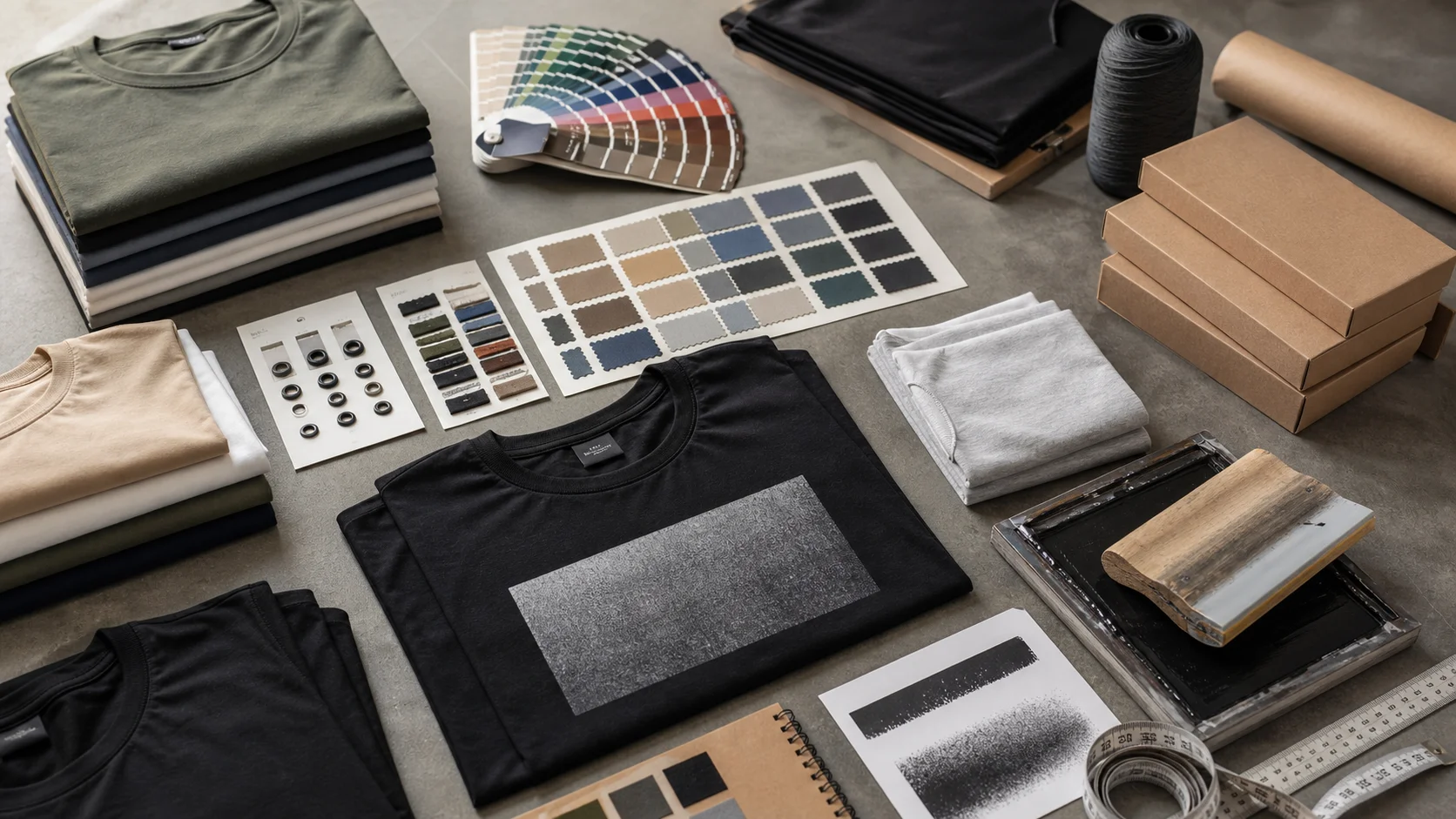
A practical breakdown of what affects heat transfer pricing on custom coveralls for industrial maintenance teams, including setup fees, labor, order size,...
Custom Coveralls Heat Transfer Pricing Guide - Fabrikn production reference
Industrial maintenance teams rarely buy decorated coveralls for style. They buy them for identification, compliance, traceability, and wear resistance in real working conditions. That changes the pricing conversation. A heat transfer that looks inexpensive on paper can become costly if it cracks on heavy fabric, fails after repeated laundering, or slows production because the decoration method is not suited to the garment construction.
This guide breaks down custom coveralls heat transfer pricing for industrial maintenance teams, with the cost drivers that actually matter: garment fabric, transfer size, print position, order volume, sample approvals, rush lead times, and the inspection risk that comes with rugged workwear. The numbers below are practical ranges, not promises. Actual pricing depends on the garment spec, decoration complexity, and the supplier’s workflow.
Heat transfer decoration uses heat and pressure to bond a printed graphic or lettering layer onto the garment surface. For coveralls, that usually means company name, team ID, department label, asset code, or safety-related text placed on the chest, back, sleeve, or leg. It is common in industrial settings because it can deliver a clean, sharp mark without the stitching bulk of embroidery.
On maintenance coveralls, the decoration method has to match the base fabric. A lightweight transfer that works on cotton-rich work shirts may perform poorly on textured poly-cotton twill, flame-resistant blends, or coated fabrics. The wrong spec can lift at the edges, distort under laundering, or lose legibility after repeated abrasion.
For industrial workwear, the lowest unit price is not always the lowest total cost. A transfer that fails early forces rework, replacement, and downtime.
For custom coveralls heat transfer pricing, most programs fall into a few broad bands. The final number depends on quantity, transfer coverage, and whether the supplier is applying the decoration to finished garments or building it into a cut-and-sew package.
Order Type Typical Heat Transfer Cost per Garment Notes Small run, 25 to 99 units $3.50 to $8.00 Higher setup impact, often one or two decoration positions Mid-volume, 100 to 499 units $2.00 to $5.00 Better amortization of setup and proofing Large volume, 500+ units $1.00 to $3.50 Lower unit cost if art is stable and the transfer spec is standardized Complex placements or multi-location branding $5.00 to $12.00+ Multiple logos, large back graphics, sleeve marks, or variable data increase laborThose numbers are decoration-only guidance. If the coveralls themselves are part of the quote, the garment price may dwarf the decoration cost. A basic poly-cotton coverall can sit in a broad range from roughly $20 to $60 wholesale, while heavier duty or treated garments can land much higher. Flame-resistant, arc-rated, waterproof, or chemical-resistant styles can move the base cost materially.
When a supplier quotes very low decoration pricing, check what is excluded. Common exclusions include artwork cleanup, transfer setup, size grading for multiple locations, second-surface application on zippers or pockets, and replacement for rejected pieces after inspection.
Volume is the biggest lever. Heat transfer has fixed setup work: art prep, carrier creation, press setup, temperature testing, and first-piece approval. Small orders carry those fixed costs across fewer units, so the per-piece price rises fast. Once the order becomes repeatable, unit cost usually drops.
For procurement teams, the practical question is not only “what is the unit price?” It is also “what is the repeat order price after the first run?” A program that supports replenishment with stable art and garment specs is easier to manage and often cheaper over a year than a one-time bargain order.
A left-chest mark is a different job from a full-back identifier. Larger transfers use more material and more press time, while placements near seams, pockets, snaps, or reflective trim require more care. Sleeve and leg marks can be slower to apply because of garment handling and alignment.
Multiple placements usually do not scale linearly. A second or third transfer position can add more than the raw material cost because labor rises with each press cycle and inspection step.
Simple text in one color is usually the cheapest. Detailed logos, small type, gradients, fine lines, and variable data cost more because they create a higher reject risk. Maintenance teams often want readable department IDs or serial codes rather than design-heavy branding, and that is sensible. Crisp, high-contrast art is cheaper to produce and easier to inspect.
Coverall fabric affects both adhesion and risk. Smooth poly-cotton twill is usually more transfer-friendly than rough, heavily textured, or treated fabric. Flame-resistant fabrics, water-repellent coatings, and high-performance blends can require specific transfer chemistry or lower-temperature pressing, which adds cost and limits supplier choice.
If the garment has a surface finish, the transfer may need more testing. That testing is worth paying for. Skipping it can create a transfer that looks fine at packing but fails after the first industrial wash.
Single-color transfers are commonly cheaper than multi-color graphics. Standard opaque logos are simpler than photoreal or gradient designs. Some suppliers quote “heat transfer” broadly but use different underlying technologies, including screen-printed transfers, digital transfers, or vinyl-based systems. The method matters. A low-cost option may not survive the laundering profile of industrial maintenance work.
The more demanding the wash and wear cycle, the more the transfer spec matters. If coveralls are washed frequently, exposed to solvents, or used in abrasive environments, the supplier may need a higher-grade transfer film or ink system. That usually increases price, but it can reduce the real cost of ownership.
Durable decoration is a specification decision, not just a branding choice. The cheapest transfer is the one that survives the intended wash cycle.
Industrial maintenance teams should treat the decoration quote as part of the full garment specification. The transfer price can shift when the base coverall includes any of the following:
Trim matters because the press operator has to avoid distortion, scorching, or pressure marks. If the logo sits close to a zipper, pocket flap, or reflective strip, placement time goes up and reject risk rises. That is one reason a supplier may ask for final garment photos or a sample of the actual coverall before pricing the run.
For teams ordering standardized uniform sets, the safest approach is to lock the garment spec first. After that, the decoration spec should be frozen: exact dimensions, Pantone target or artwork file format, approved placement, and allowable tolerance. Loose specs often turn into change orders.
MOQ for decorated coveralls varies by factory and by how the work is set up. For many programs, a realistic minimum is 25 to 100 units per design, though some suppliers will accept smaller runs at a premium. Large factories often prefer 100 units or more because it makes production planning easier.
Sampling is not optional if the garment is new, the fabric is technical, or the decoration must be durable. A disciplined approval process usually looks like this:
Sample fees are common, especially if there are multiple revisions. A simple sample may be inexpensive, while technical fabric testing, custom transfer development, or repeated revision cycles can add meaningful cost. That is normal. The mistake is treating sampling as overhead to cut. It is usually the cheapest way to avoid a bulk rejection.
A practical sourcing stance is to request the supplier’s sample policy up front: what is free, what is charged, what gets credited back on bulk, and what happens if the first sample misses the approved placement or color target.
Heat transfer lead time depends on whether the supplier is applying stock transfers or custom-developing artwork. Stock text is faster. Custom graphics take longer because transfer carriers must be prepared, tested, and approved.
Typical lead times for decorated coveralls often fall into these rough bands:
Lead time stretches when the garment spec is not settled, the artwork needs cleaning, or the supplier must source special transfers. Seasonal demand, raw material shortages, and production queue position also affect delivery. A quote that ignores those variables is not especially useful.
Inspection risk sits at the center of this category. The common failure points are edge lift, color shift, bubbling, scorch marks, misalignment, and inconsistent placement across sizes. Industrial coveralls also need tolerance control because a logo that looks centered on size M may sit too high or too low on size 3XL if the supplier does not grade the placement properly.
For high-volume programs, a basic AQL-style inspection plan is sensible. Check first pieces, verify random samples across sizes, and inspect after washing if the decoration is expected to survive repeated laundering. Rework on decorated workwear is slow and often more expensive than catching the issue early.
Heat transfer is usually a strong fit when the team needs sharp branding, moderate to high legibility, and a cleaner finish than embroidery. It is often the better option for larger logos or department labels that need to be readable at a distance.
It is not always the best choice. Embroidery can outperform transfers on some rugged garments where abrasion is severe and the design is small. Screen print may be better for flat apparel or very large runs. Sewn labels or patch systems can make more sense where the garment surface is irregular or the decoration must withstand repeated industrial laundering.
The right choice depends on the garment, the wash cycle, and the visibility requirement. For maintenance teams, heat transfer often wins when the priority is clear ID, controlled cost, and low bulk. It loses ground when the garment surface is harsh, coated, or exposed to heavy friction.
Price should be judged against service life. A transfer that costs one dollar less but fails after a few months is not a savings. A slightly higher-cost, better-tested transfer is usually the more responsible buy.
Before requesting quotes, lock the following items. It reduces back-and-forth and improves pricing accuracy.
When comparing suppliers, ask for a line-by-line quote. Decoration-only pricing should be separated from garment pricing, sampling, freight, packaging, and any setup or revision fees. That makes the real unit economics visible.
Fabrikn’s related pages can help teams move from specification to sourcing. See the services overview for production support, review the about us page for company background, and use the contact us page to request a quote or clarify a transfer specification.
If the order is small, simple, and urgent, expect to pay more per piece. If the order is repeatable, properly documented, and based on a stable garment spec, the pricing should improve. That pattern is normal across the category.
The better buying move is usually to standardize one or two transfer placements, choose a garment fabric that supports strong adhesion, and approve one master sample before scaling. That keeps cost under control and reduces the odds of avoidable rejects. Industrial maintenance teams do not need decorative complexity. They need consistency, legibility, and a decoration method that survives the job.
Get a free quote from Fabrikn — your trusted B2B clothing manufacturer with 10+ years of experience. MOQ as low as 200 pieces.
Get a Free Quote →Most suppliers want at least 25 to 100 units per design, though some will quote smaller runs at a higher unit price. Technical garments or highly customized artwork can push MOQ higher.
Pricing changes based on garment fabric, transfer type, number of placement locations, sample requirements, and whether the supplier is pricing decoration only or a full garment program. Some quotes also hide setup, revision, or inspection charges.
They can be, provided the transfer system is matched to the fabric and wash cycle. Durability should be verified on the actual garment, not assumed from a catalog claim.
Approve the artwork, placement, size, color target, garment spec, and sample result. A pre-production sample is the right checkpoint before the full order starts.
Often yes for larger logos or multi-location branding, though the answer depends on durability requirements and order size. Embroidery can be more durable in some rough-use situations, but it is not always the lower-cost option.
Keep the logo simple, reduce the number of placement locations, standardize garment fabric, and avoid late artwork changes. A clean spec reduces setup work and lowers reject risk.
For industrial maintenance teams, the right heat transfer price is the one that fits the garment, the wash cycle, and the inspection standard. Anything else is only a short-term number.