
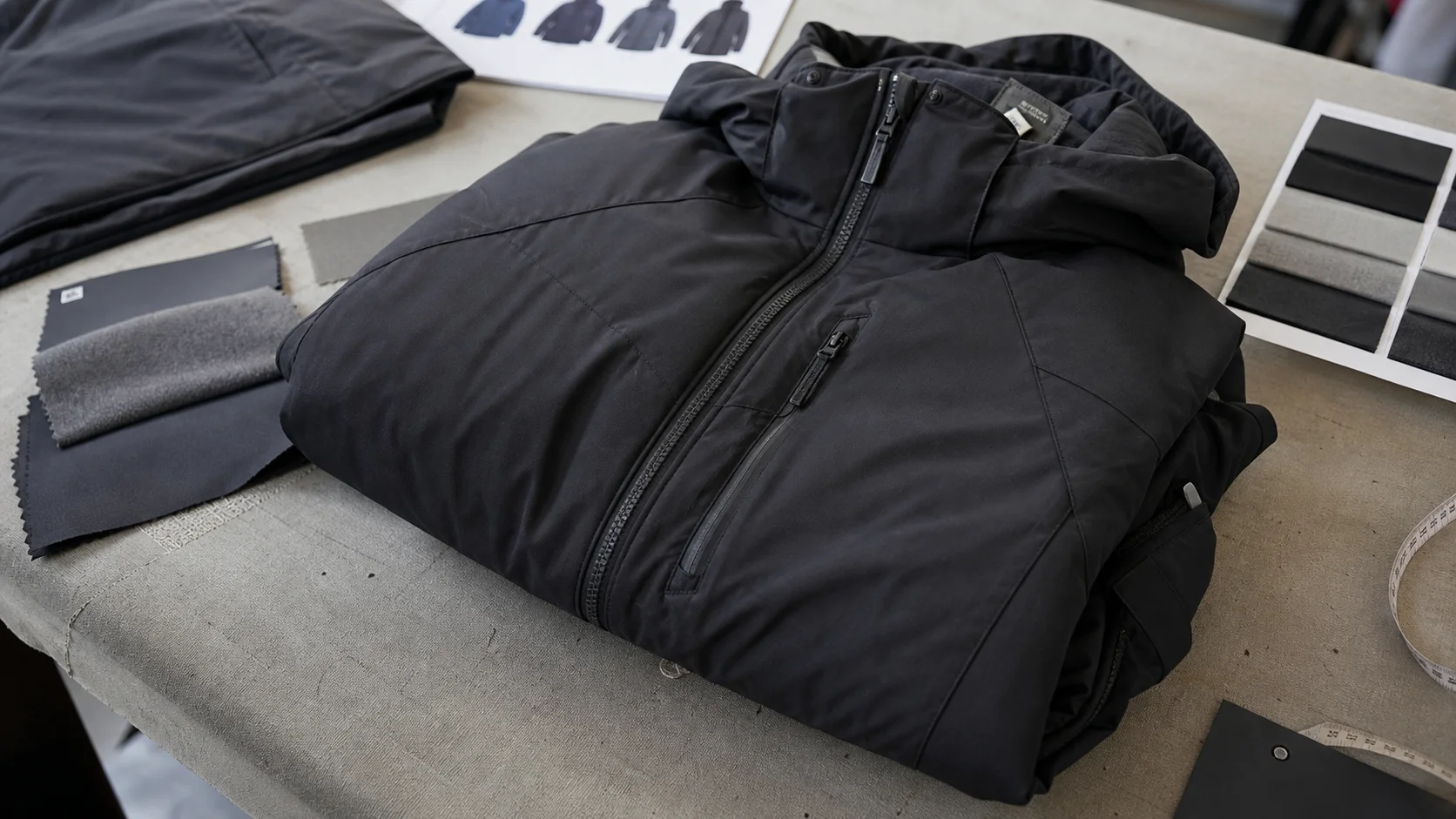
A product-specific SEO outline for gym program buyers planning custom freezer coats, focused on shrinkage control from fabric selection and pre-production...
Freezer Coat Shrinkage Plan for Gym Buyers - Outerwear & Jackets manufacturing guide
Gym program buyers usually think about freezer coats as a uniform item first: logo placement, member-facing appearance, staff comfort, and delivery date. Shrinkage control often gets treated as a factory problem until the first bulk delivery arrives short in sleeve length, tight across the chest, or uneven after laundering. For cold-storage gyms, recovery studios, ice bath facilities, wellness chains, and sports clubs with chilled environments, that is a costly mistake.
A custom freezer coat shrinkage control plan protects fit consistency before production starts. It gives the buyer, brand team, and manufacturer a shared standard for fabric selection, quilting stability, trim behavior, wash testing, pattern allowance, inspection, and carton handling. The goal is not to eliminate all movement. Textile materials move. The practical goal is to set measurable tolerance limits and manage the risk before the coat becomes a uniform program issue.
This guide is written for B2B gym buyers sourcing custom freezer coats under an outerwear and jackets program. It covers the buying decisions that matter: fabric and insulation choices, typical MOQ ranges, sample approval steps, shrinkage test methods, lead-time dependencies, production checkpoints, and inspection risks that commonly show up in bulk orders.
A freezer coat for a gym program is not the same purchase as a basic promotional jacket. It may be worn by employees moving between reception areas, recovery rooms, cold plunge zones, refrigerated storage, outdoor loading areas, or ice-based training spaces. Some buyers also source them for coaches, maintenance teams, cryotherapy staff, and brand ambassadors at winter events.
That means the coat must retain warmth, shape, and mobility through real use. If shrinkage changes the garment after cleaning, the program loses consistency. Staff may size up, sleeves may pull back when arms are extended, and logo placement can look distorted. In a chain gym program, one location may receive acceptable coats while another receives garments that no longer match the approved fit after laundering.
Shrinkage is especially relevant in freezer coats because several materials are combined in one garment. The shell fabric, lining, insulation, interlining, rib cuffs, zipper tape, binding, thread, and heat-transfer artwork may not react the same way to washing, drying, steaming, or storage humidity. A coat can pass visual approval as a sample and still fail after a basic care cycle if those components were not tested together.
For gym buyers, shrinkage control is not just a lab number. It is a uniform consistency issue, a comfort issue, and a reorder risk.
The strongest sourcing position is to require shrinkage planning before the size set is approved. Once fabric is quilted, cut, printed, and sewn, there is limited room to correct dimensional problems without delaying the order or accepting uneven sizing.
A useful custom freezer coat shrinkage control plan should be written into the tech pack or purchase specification. It does not need to be overly complicated, but it must be specific enough that the supplier can quote, test, and inspect against it.
At minimum, the plan should define the target garment use, approved materials, care method, shrinkage test standard, size measurement points, acceptable tolerance, sample testing sequence, bulk fabric controls, and final inspection requirements. If the coat is intended for industrial laundering, that must be stated at the start. A coat designed only for gentle home washing may not survive commercial wash cycles without significant movement, insulation clumping, or seam distortion.
Buyers should avoid vague wording such as “pre-shrunk fabric” or “low shrinkage.” Those phrases are not enough for a bulk order. A supplier can interpret them broadly, and different mills may use different finishing levels. A better instruction is “shell fabric shrinkage after three wash cycles must remain within agreed tolerance, with finished garment measurements maintained within approved spec.”
Freezer coat shrinkage usually comes from a combination of materials rather than one single failure. A good plan looks at the whole garment.
Common shell options include polyester oxford, nylon taslon, polyester pongee, cotton-poly twill, softshell fabric, and coated woven fabrics. For gym programs, polyester and nylon shells are popular because they are durable, relatively stable, and easier to clean. Cotton-rich shells can look premium, but they may carry higher shrinkage risk unless properly pre-shrunk and tested.
Coated fabrics need extra caution. Polyurethane or PVC coatings can improve wind resistance and water repellency, but heat exposure during drying may affect hand feel, bubbling, delamination, or dimensional stability. If the coat needs water resistance, request the coating type, coating weight, and care limitations before approving it.
Polyester insulation is common for custom freezer coats because it balances warmth, cost, and washability. Typical fill weights may range from around 120 gsm to 300 gsm depending on the warmth target, coat length, and price point. Heavier fill improves warmth but increases bulk, affects sewing consistency, and may create quilting tension that changes after washing.
Insulation can shrink, compact, migrate, or clump. Even if the shell fabric remains stable, the coat can appear smaller if the padding collapses unevenly or pulls against seam lines. For gym buyers, the practical test is not only flat measurement. Put the washed sample on a fit model or mannequin and check sleeve mobility, chest ease, and front zipper behavior.
Lining fabric is often overlooked because it is inside the garment. A lining that shrinks more than the shell can pull the hem upward, twist the sleeve, or create puckering along the zipper. Brushed or fleece linings provide comfort but may have more dimensional change than a simple woven taffeta lining.
If comfort is the main selling point, buyers may accept a warmer lining with slightly more movement, but it should be tested in the actual garment construction. Do not approve lining from a hanger swatch only.
Rib cuffs are a common shrinkage and appearance risk. Cotton-rich rib can tighten after washing. Polyester-spandex rib may recover better, but it can also wave or lose shape if the heat setting is poor. Cuffs that shrink too much make the coat feel smaller even when the body panel remains within spec.
Zipper tape can shrink differently from the shell, causing front placket waviness. Embroidery can pull fabric tighter in the logo zone. Heat-transfer logos may react poorly if wash or dry temperature is not controlled. For gym buyers ordering branded outerwear, logo testing should be part of shrinkage approval, not a separate decoration issue.
Component Common Risk Buyer Control Point Shell fabric Length or width shrinkage, coating distortion Request fabric shrinkage report and bulk lot testing Insulation Compression, clumping, uneven loft Test finished garment after washing and drying Lining Pulling, sleeve twisting, hem puckering Approve lining in full garment sample Rib cuffs Tightening, poor recovery, size discomfort Specify fiber content and recovery standard Zipper tape Front waviness after washing Check zipper length stability after wash test Logo decoration Puckering, cracking, distorted placement Test decoration on actual bulk fabricMOQ depends on fabric availability, insulation type, color customization, branding method, and factory setup. For custom freezer coats, buyers should expect higher MOQ than simple fleece or lightweight jackets because outerwear production requires more components and longer sewing time.
Typical ranges may look like this:
The purchasing tradeoff is straightforward. Lower MOQ is useful for testing a gym program, but it usually limits fabric selection and may rely on available materials. Higher MOQ gives more control over color, coating, fill weight, trims, and fit grading, but it increases inventory exposure if the shrinkage plan is weak.
For multi-location gym buyers, a sensible approach is to approve one controlled pilot batch before committing to a large rollout. The pilot should still follow the full shrinkage testing process. A cheap pilot that skips testing does not prove much.
If you need support building a sourcing brief for a custom outerwear program, review the manufacturing support options on Fabrikn’s services page. A clear brief helps suppliers quote the same garment instead of guessing around incomplete specifications.
Sample approval is where most shrinkage problems should be caught. Buyers should not approve freezer coat production based on appearance only. A complete sample path gives the supplier fewer excuses and gives the buyer a stronger basis for rejecting unstable bulk goods.
Before the first garment sample, confirm shell fabric, lining, insulation, rib, zipper, thread, labels, and decoration method. Ask whether each material is stock, nominated, or custom-developed. Stock fabric can be faster, but the supplier must confirm whether enough bulk yardage is available from the same lot.
The proto sample checks the concept, silhouette, major measurements, branding position, and construction approach. It may not use final bulk fabric, so do not use it as the final shrinkage reference unless all materials are confirmed. Record fit comments carefully, especially sleeve length, chest ease, shoulder width, body length, and hem sweep.
The fit sample should be closer to the target fabric and insulation. This is the stage to confirm ease allowance. Freezer coats need enough room for base layers and movement. Gym staff may wear hoodies, performance tops, or thermal layers under the coat. If the approved fit is already tight before washing, shrinkage tolerance will not save the program.
Use an approved sample for wash testing. Measure the garment before washing, wash according to the intended care label, dry as specified, condition the garment, then measure again. For a more conservative result, test after three cycles rather than one. If the coat is intended for frequent staff laundering, more cycles may be needed.
Approve size set samples across the size range, not only size medium or large. Shrinkage behavior can appear more obvious in larger sizes because longer panels have more room to move. Check grading after wash where possible, especially if the order includes extended sizes.
The pre-production sample should use actual bulk fabric, actual insulation, actual trims, actual labels, and actual branding. This is the most important approval sample before cutting bulk. If the pre-production sample fails shrinkage testing, do not release bulk cutting unless the supplier provides a corrective plan and a passing retest.
Sample Stage Main Purpose Shrinkage Action Material approval Confirm fabric and trim specification Request test data or run fabric wash test Proto sample Check design and construction concept Note risk areas, but do not rely on final shrinkage Fit sample Confirm comfort and movement Check ease allowance before wash testing Wash test sample Measure dimensional change Test according to care method and record results Size set Confirm grading across sizes Check high-risk sizes and sleeve/body length Pre-production sample Approve final bulk standard Require pass before cutting bulk fabricThere is no single shrinkage tolerance that fits every freezer coat. The right tolerance depends on fabric type, garment construction, wash method, and buyer expectations. Still, buyers need a written benchmark.
For polyester or nylon woven freezer coat shells, many buyers target low dimensional change after washing, often around 2% to 3% or less in key directions. Cotton-rich blends may need a wider tolerance unless the fabric is properly pre-shrunk. Rib cuffs and knit panels may have separate standards because they behave differently from woven panels.
Finished garment measurement tolerance should be separate from fabric shrinkage. A garment can show acceptable fabric shrinkage but still fail the size spec because of sewing tension, quilting distortion, padding migration, or poor pressing. For outerwear, common finished garment tolerances may range from about plus or minus 1 cm on smaller points to plus or minus 2 cm or more on larger body measurements, depending on the measurement point and size range.
Gym buyers should pay special attention to sleeve length and chest width. A staff member can tolerate a slightly fuller freezer coat more easily than one that restricts arm movement. If the coat will be worn while handling towels, moving supplies, assisting members, or operating equipment, the pattern needs enough functional ease.
Do not buy freezer coats to a fashion-slim spec unless the end use is purely promotional. Cold-environment staff outerwear needs movement allowance.
Bulk production control starts before cutting. Once fabric is cut, shrinkage risk becomes harder to manage. The supplier should confirm bulk fabric lot numbers, fabric relaxation time, spreading method, cutting direction, quilting tension, and sewing settings.
If the order uses more than one fabric lot, each lot should be checked. A passing lab result from one lot does not guarantee the next lot behaves the same. Shade variation and shrinkage variation can both occur between lots. For branded gym programs, mixing lots across one location’s order can create visible inconsistency.
Some fabrics need relaxation before cutting, especially if they were tightly rolled, laminated, coated, or quilted. Cutting fabric too soon after unrolling can create measurement changes later. Ask the supplier how long the fabric will rest before cutting and whether they record the process.
Quilting can stabilize insulation, but excessive tension can distort panels. Large quilt channels may allow insulation migration. Small quilt channels can increase sewing time and cost. A gym buyer should choose quilting based on function and stability, not only appearance.
Seam puckering is a warning sign. It may indicate thread tension, needle size, fabric feeding, or material mismatch. Puckered seams can worsen after washing. The production team should check sleeve seams, side seams, zipper attachment, cuff joining, and hem construction during in-line inspection.
The care label must match the tested method. If the garment only passed line drying, do not approve a tumble-dry care label. If the shell coating cannot tolerate high heat, the label must say so. Gym operations teams often clean uniforms in batches, so unrealistic care instructions can create real shrinkage complaints.
Final inspection should not be limited to counting pieces and checking logos. For freezer coats, the inspection should include measurement review, workmanship review, packing review, and at least a limited wash check if agreed in the purchase order.
Common inspection risks include uneven body length, twisted sleeves, tight cuffs, wavy zippers, lining showing below hem, padding clumps, skipped stitches, open seams, loose snaps, poor logo alignment, and carton compression. Carton compression matters because bulky insulated coats can be crushed during packing. The coat may recover, but deep creases or compressed insulation can affect presentation and perceived quality.
Many buyers use AQL inspection for bulk apparel. The exact AQL level should be agreed with the supplier or inspection provider. For freezer coats, measurement sampling should include multiple sizes and cartons, not only top-of-carton pieces. If the order is split by gym location, sample across location allocations where possible.
A final-stage wash test can catch serious issues, but it may also create timing pressure. If a bulk wash test fails right before shipment, the buyer faces a difficult decision: delay delivery, accept risk, or negotiate rework. That is why pre-production testing matters more. Final wash testing is a guardrail, not the first real test.
Inspection Area Risk for Gym Buyers Practical Check Measurements Inconsistent staff fit by size Check chest, sleeve, body length, and cuff opening Workmanship Premature seam failure in daily use Inspect stress points, zipper seams, pockets, and cuffs Branding Uneven appearance across locations Measure logo placement and check distortion Insulation Cold spots or poor presentation Check loft, quilting, clumping, and panel consistency Packing Compression marks and allocation errors Review carton size, polybags, size labels, and location packsLead time for custom freezer coats depends on design complexity, fabric sourcing, testing requirements, decoration method, production capacity, and shipping method. Buyers should not treat shrinkage testing as an optional add-on after the calendar is already fixed.
A typical development and production timeline may include 7 to 14 days for initial material sourcing, 7 to 15 days for proto or fit sampling, 5 to 10 days for wash testing and comments, 10 to 20 days for size set and pre-production samples, and 30 to 60 days or more for bulk production depending on quantity and season. Transit time is separate.
Outerwear factories are often busier ahead of cold-weather seasons. If gym buyers place orders late, they may face limited fabric options, longer trim lead times, and reduced flexibility for retesting. Rush orders also increase the temptation to skip sample stages, which is exactly when shrinkage problems slip through.
The best buying calendar builds testing time into the critical path. If the coat is needed for a winter program launch, order planning should begin months earlier, not weeks earlier. For help clarifying program requirements before speaking with suppliers, buyers can use the general company information on Fabrikn’s about page to understand how a structured manufacturing partner may approach apparel development.
A strong freezer coat shrinkage plan is not just a technical document. It is a purchasing filter. It helps separate suppliers that understand outerwear production from suppliers that only want to accept the order.
Buyers should be cautious when a supplier promises “no shrinkage” without asking about fabric, care method, or construction. That is not a serious answer. A better supplier will explain expected material behavior, propose test methods, and identify risk areas before bulk production.
The answer to the last question matters more than many buyers expect. A freezer coat program often ships to multiple gyms, studios, or regional managers. If coats are packed incorrectly, the buyer may face distribution delays even when the product itself is acceptable.
Not every program needs the most expensive construction. A gym buying 100 freezer coats for occasional cold-room use may not need the same specification as a national chain buying 5,000 coats for daily staff wear. The right choice depends on frequency of use, cleaning process, brand visibility, and reorder plans.
Accept stock fabric if speed and budget matter more than exact color matching. Choose custom fabric if brand color accuracy and long-term reorder consistency matter. Use embroidery when durability and premium appearance are priorities, but test puckering on insulated panels. Use heat transfer when a clean graphic look is needed, but verify wash and cold-crack performance. Increase fill weight for warmth, but check bulk, mobility, and carton volume.
For gym buyers, the safest commercial decision is often a mid-spec freezer coat with stable synthetic materials, controlled insulation, practical care instructions, and verified shrinkage results. Overbuilding the coat can waste budget. Under-specifying it can create complaints and replacement costs.
Use this checklist before approving production. It is intentionally practical. If a supplier cannot answer these points clearly, the program is not ready for bulk cutting.
Buyers planning a custom freezer coat program can also contact a sourcing partner early, before the design is locked. Early review is useful because shrinkage control depends on decisions made at the fabric and pattern stage. If your team is preparing an outerwear brief, you can start the discussion through Fabrikn’s contact page.
A custom freezer coat shrinkage control plan is a small investment compared with the cost of a failed uniform rollout. Gym buyers should treat shrinkage as part of product development, not as a complaint process after delivery.
The plan should connect fabric behavior, insulation stability, lining compatibility, trim selection, fit allowance, wash testing, and inspection. It should also reflect how the coats will actually be used and cleaned. A coat worn daily by cold plunge staff needs more disciplined testing than a giveaway jacket used twice a season.
The best suppliers will not object to clear standards. They may push back on unrealistic tolerances, rushed timelines, or incompatible materials, and that feedback can be valuable. The buyer’s job is to set the commercial goal, approve practical tradeoffs, and require evidence before bulk cutting.
For gym programs, the winning formula is simple: specify the materials, test the full garment, approve the size set, control bulk lots, inspect finished goods, and keep the care method honest. That is how shrinkage control becomes a predictable sourcing process rather than a post-delivery problem.
Get a free quote from Fabrikn — your trusted B2B clothing manufacturer with 10+ years of experience. MOQ as low as 200 pieces.
Get a Free Quote →It depends on the fabric and care method, but many buyers target low shrinkage for synthetic woven shells, often around 2% to 3% or less after agreed wash cycles. Cotton-rich fabrics may need wider tolerance unless they are properly pre-shrunk and tested.
Both are useful, but the full garment test is more important for approval. Fabric testing does not reveal lining pull, zipper waviness, insulation clumping, cuff tightening, or logo distortion.
Only in limited cases. Some measurement variation can be improved by pressing or conditioning, but true fabric shrinkage, lining mismatch, or insulation distortion usually cannot be corrected economically after production.
For stock fabric with custom branding, MOQ may start around 100 to 300 pieces. Custom fabric colors, special trims, or fully custom construction often require 300 to 1,000 pieces or more, depending on supplier and material availability.
Heavier insulation does not always increase fabric shrinkage, but it can increase bulk, quilting tension, sewing difficulty, and post-wash appearance risk. The finished coat should be tested after washing, not judged only by fill weight.
Chest width, sleeve length, center back length, shoulder width, hem sweep, cuff opening, and zipper length are high-priority points. For gym staff use, sleeve mobility and chest ease are especially important.
Embroidery can work well, but it should be tested on the actual insulated panel. Dense embroidery may cause puckering or localized pulling, especially on coated shells or thick quilted areas.
Testing should happen before bulk cutting, ideally at the pre-production sample stage using actual bulk fabric, insulation, trims, and decoration. Final inspection wash testing can be added as a safeguard, but it should not be the first test.