
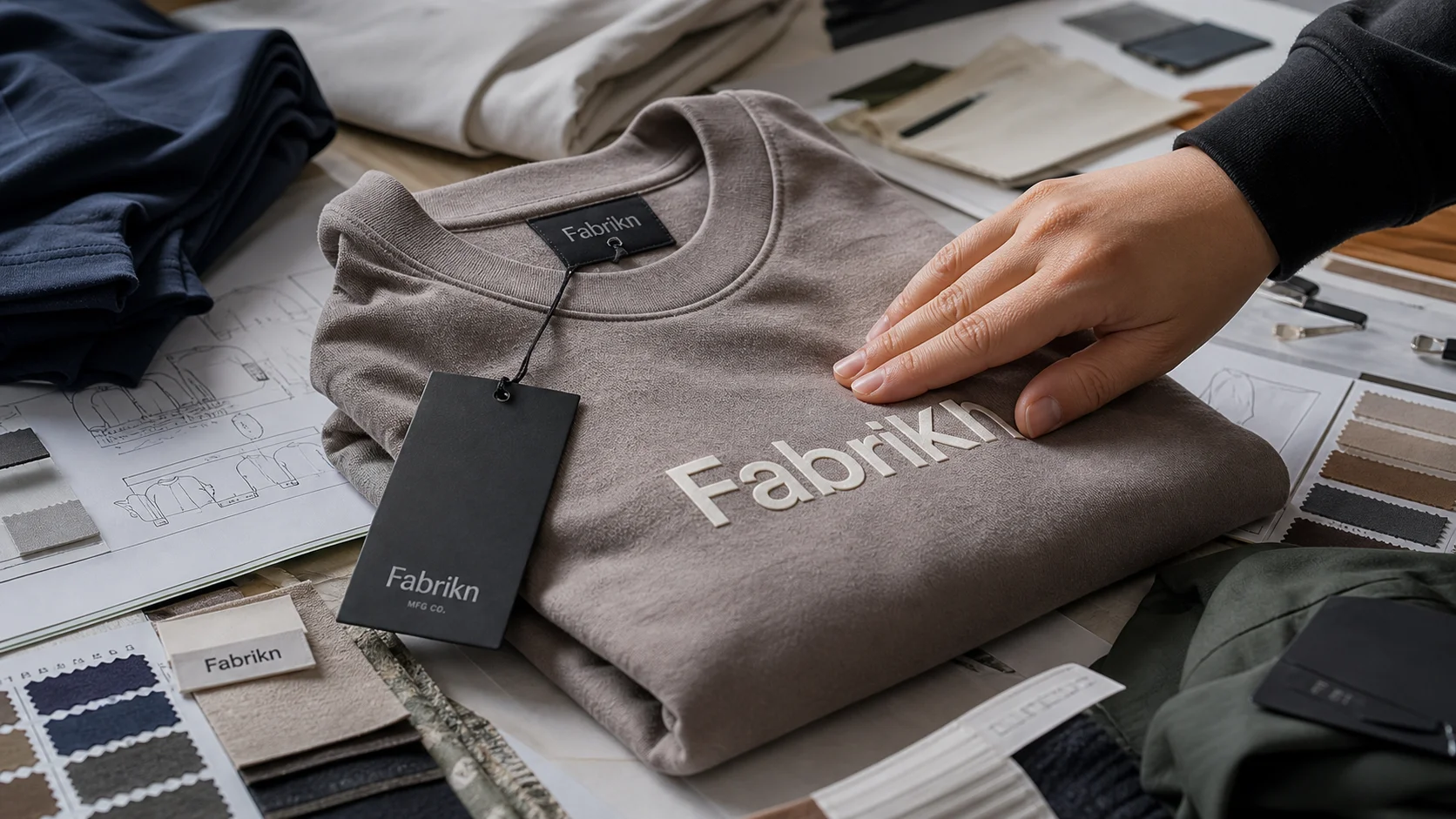
FSC Paper Hang Tags for Clothing Labels with checks for samples, fit, MOQ, QC evidence, pricing terms, and delivery risk.
Fast answer: FSC Paper Hang Tags for Clothing Labels: Stock, Claims, and MOQ should be judged by production evidence, not by a generic sourcing promise. The buyer needs sample proof, cost breakdowns, QC checkpoints, and delivery buffers in writing.
Ask for recent sample photos, measurement tolerances, fabric or print test assumptions, decoration test notes, packing examples, and a named inspection checkpoint. These details show whether the team can repeat an approved sample at bulk volume.
Separate garment cost, decoration, labels, packaging, sampling, testing, freight, and rush charges. When every cost line is visible, it becomes easier to reduce colorways, adjust size depth, or reserve more time for sampling.
Before a shopper reads the size, they read the signal. custom FSC paper hang tags for clothing labels are often the first thing they can touch, and that split second can make a brand feel credible, considered, or cheaply assembled. I’ve watched people pick up two or three garments, glance at the tag, and decide in under 10 seconds whether the label deserves a second look.
Tag stock, texture, and finish shape perception fast. A 400 GSM tag with a crisp matte surface reads differently from a 250 GSM recycled sheet with fuzzy edges, even before anyone checks the size chart. According to ISO standards around management systems and traceability, documented claims matter because they create a paper trail that can be verified, not just marketed.
FSC certification gives sourcing claims a chain of custody instead of a slogan. When a brand says its packaging is responsibly sourced, buyers increasingly ask for the FSC certificate number, the invoice, and the carton label. I’ve seen merchandising teams reject beautiful branding because the paper story was weak. They were right.
Luxury labels often overinvest in tactile details. Thick cotton paper, blind embossing, soft-touch film, and black foil can look impressive on a $180 dress. Value brands usually win by doing less. Clear typography, one or two inks, and a straight die-cut rectangle can signal discipline better than a crowded design with three finishes and a glossy coating.
Higher-priced tags do not automatically mean better sustainability. On factory visits in Vietnam and China, I found some lower-cost mills using cleaner fiber choices, simpler print layouts, and less ink than premium suppliers charging 2 to 3 times more. A $0.06 tag can be easier to recycle than a $0.22 tag covered in foil, lamination, and spot UV.
That is why the retail moment matters. The tag is not decoration. It is a claim, a price cue, and a signal of how a brand handles the details. If your clothing packaging stays consistent, custom FSC paper hang tags for clothing labels help close the trust gap in one glance.
FSC paper means the fiber comes from responsibly managed forests and the chain of custody can be traced from mill to printer. That is the practical business value: documentation, auditability, and a cleaner answer when a retailer asks where the paper came from.
Standard tag paper may be virgin, recycled, or mixed-fiber stock without certification. Virgin paper often gives sharper print and smoother edges. Recycled paper can bring visible fiber speckling and a warmer tone, which some brands want and some do not. FSC paper can be either virgin or recycled, but the certification adds a verified sourcing layer that plain stock cannot provide.
Coating choice changes the result. Uncoated FSC paper is easier to write on and usually feels more natural. Coated stock improves color consistency and image sharpness, especially for deep blacks, fine lines, and small barcodes. Aqueous coating is generally easier on recyclability than heavy plastic lamination, while matte laminate may look refined but can complicate fiber recovery.
Regional differences are real. In Asia, I’ve seen stronger mill availability, shorter print queues of 5 to 12 days, and more options for mixed-format production. Europe often has tighter paperwork discipline and longer lead times of 10 to 20 days, especially for certified papers. North America can be faster on domestic print runs, but FSC paper grades may be narrower and freight costs higher once quantities pass 10,000 units.
According to Textile Exchange, brands are under pressure to substantiate material claims with traceable systems, not broad sustainability language. Hang tags sit inside that wider proof chain. If the tag says FSC, the carton should also be certified or clearly documented, and the vendor file should match. If one link is missing, the claim looks weak.
I’ve worked with brands that spent $1,200 on beautiful tags and then lost weeks because the carton supplier used a different paper code and the invoices did not line up. A clean FSC claim is boring in the best way. It should survive a procurement review, a retail audit, and a buyer who reads beyond the headline.
Paper weight changes perception quickly. Lightweight tags around 200 to 250 GSM suit volume basics, underwear, and promotional drops where cost discipline matters. Heavier stocks in the 350 to 600 GSM range work for premium denim, knitwear, and outerwear because they resist bending and feel more deliberate in hand.
Texture does much of the talking. A smooth uncoated sheet creates a clean, modern tone. A toothier stock with visible fibers feels earthy and craft-led. For streetwear, that rougher finish can support an anti-luxury identity. For children’s apparel, softer edges and rounded corners reduce sharp feel and make the tag safer to handle. In workwear, dense black ink on a cream FSC sheet often reads more trustworthy than decorative effects.
Finishes carry trade-offs. Matte varnish adds protection without a heavy plastic layer. Spot UV can make logos pop, but it raises complexity and can create recycling headaches if overused. Foil stamping looks expensive, yet it can require extra dies, manual alignment, and reruns if registration drifts by even 1 to 2 mm. Embossing is elegant, but it presses the sheet harder and can weaken thin stock. Aqueous coating is usually the quieter choice.
Color and edge cut also shape brand tone. Natural kraft FSC paper works well for minimal labels and heritage brands. Bright white stock suits technical activewear and clean fashion basics. Dark edge painting can feel premium, though it adds another production step. For private label programs, the tag should mirror the garment’s pricing logic, not fight it. If the dress retails at $24, a heavy foil tag can feel fake.
I’ve seen the cheapest-looking tag cost more per thousand because the design demanded 3 specialty dies, 2 hand-feeding stages, and a rerun after the hole punch drifted 3 mm off center. The factory did not charge much for the paper. It charged for the labor no one planned for. That is where the invoice quietly grows.
For brands building broader ranges, custom FSC paper hang tags for clothing labels should sit comfortably beside private label clothing programs where trims, labels, and boxes all need to speak the same visual language. A tag that feels off by one grade can pull the whole collection down.
Pricing changes sharply by quantity. For 1,000 units, I usually see custom FSC paper hang tags for clothing labels quote around $0.18 to $0.45 each, depending on size, print color count, and finishing. At 5,000 units, that can drop to $0.07 to $0.18. At 10,000 units, many factories land between $0.04 and $0.12. At 50,000 units, simple jobs can go below $0.03 each.
Setup costs stay fixed, which is why small runs hurt. Die creation, proofing, plate making, and FSC document handling may add $60 to $250 before a single tag is printed. That means a 1,000-piece order can cost 2 to 4 times more per tag than a 10,000-piece order. Artwork complexity often matters more than paper grade. One-color black text on FSC uncoated stock is cheap. CMYK photos, multiple barcodes, and custom back printing are not.
Die-cut shapes can raise unit cost by 10 to 35 percent, depending on how far you move from a standard rectangle. A scalloped edge or a custom silhouette sounds small until the cutting tool slows the line and the machine has to be adjusted again. Stringing, plastic pins, reinforced eyelets, and bundled packing add more. Freight matters too. China may be lower on factory cost, Vietnam often sits mid-range, and Eastern Europe can reduce transit time but carry higher labor and paper input pricing.
For buyers sourcing apparel alongside trim items or custom baby clothing manufacturing, it pays to centralize packaging specs early. A consistent trim plan can cut duplicate artwork fees by 15 to 20 percent and reduce revision cycles from 4 rounds to 2.
A realistic timeline starts with brief, dieline, and artwork, then moves through proofing, sample approval, printing, finishing, packing, and shipping. For a standard order, I usually see 1 to 2 days for quote and spec confirmation, 2 to 4 days for artwork setup, 3 to 5 days for digital proofing, 5 to 10 days for production, and 3 to 7 days for packing and dispatch.
Domestic production can move in 7 to 12 working days if the supplier already stocks the right paper. Overseas production usually needs 15 to 30 days before freight. Air freight can add just 3 to 7 days in transit, but the bill can rise by 20 to 60 percent compared with sea freight. Sea freight is cheaper for 10,000 units or more, though it adds 15 to 35 days depending on route and customs.
Digital proofs catch layout mistakes. Physical samples catch the uncomfortable truth. Color can drift by 5 to 10 percent between screen and press. Hole placement can shift 1 to 3 mm. I have seen a perfectly approved file become a poorly punched tag because nobody checked the final die line against the garment tie method.
The most common delay sources are painfully predictable: missing dielines, late logo approvals, FSC paperwork gaps, and packaging changes after production starts. A 24-hour delay at the artwork stage can become a 5-day delay if the printer has already booked a machine slot. Rush orders can work, but only when the spec is locked, the paper is in stock, and the team can approve within the same business day.
For brands running seasonal programs or cut and sew manufacturing, I recommend planning tags 4 to 6 weeks before garment arrival. That gives room to fix an ink issue, switch to a sturdier stock, or redo a misaligned hole pattern before the shipment date becomes immovable.
Start with proof. Ask for the FSC certificate number, chain-of-custody documents, recent test reports, and sample packs from the same paper mill they propose for your order. If the manufacturer or supplier cannot match the sample stock to the quote stock, keep moving. That mismatch is where surprises hide.
Supplier types matter. A trading company can be fast and responsive, sometimes quoting in 2 hours, but it adds another margin layer and can blur responsibility. A print broker may manage artwork well but rely on subcontractors. A direct factory usually gives the clearest cost breakdown and better control over die-cutting, but it may require stronger spec sheets and more follow-up. In Europe, response time can be slower but documentation cleaner. In parts of South Asia, pricing may be sharper, yet close supervision is often necessary.
On the factory floor, I look at paper storage first. Humidity above 60 percent can warp sheets and throw off registration. I check whether cartons are stacked off the floor, whether dies are clean, whether the ink registers to within 1 mm, and whether packing counts are checked twice. A neat print line means little if the final boxes contain 980 tags instead of 1,000.
The thing nobody tells you: the lowest quote can be the most expensive choice. I have seen factories add hidden freight surcharges, charge again for reruns after color drift, and short-ship cartons by 2 to 4 percent. A supplier that quotes $120 more upfront can still save $300 to $600 once errors, delays, and rework are counted.
Good sourcing also depends on product category. Brands with infant lines often need softer edges and stricter packaging control, which is why teams working in custom baby clothing manufacturing should insist on more sample checks. The same discipline applies to woven trims, labels, and other finishing items.
Before requesting quotes, define the size, paper weight, finish, quantity, attachment method, print sides, destination country, and target delivery date. A one-page spec sheet saves time because it removes guessing. I’ve seen quote rounds drop from 5 emails to 1 when the buyer includes dieline, logo files, and carton count up front.
Align the tag with the full package. If the hang tag says FSC, the cartons, tissue, and inserts should support that same story or at least not contradict it. That consistency matters to buyers who audit packaging as a set. It also helps brands planning clothing packaging solutions across multiple SKUs and retail channels.
If the design is new, run a pilot of 500 to 1,000 units before committing to 10,000 or 50,000. A fresh finish, new hole position, or unusual fold can behave differently in production than in mockups. Ordering 2 to 4 weeks earlier than you think you need gives time to correct print errors and reduces the chance of paying for air freight at the last minute.
Once the spec is set, the next move is simple: request samples, confirm the FSC paperwork, and lock the artwork before the press room starts moving. That is how custom FSC paper hang tags for clothing labels go from a good idea to a reliable part of the range.
For 1,000 units, expect roughly $0.18 to $0.45 each. At 10,000 units, many orders fall to $0.04 to $0.12 each, depending on stock, finish, and print colors.
Typical production takes 10 to 20 working days, plus shipping. Domestic orders can finish in 7 to 12 days, while overseas orders often need 15 to 30 days before freight.
Many factories start at 500 to 1,000 pieces, but the best pricing usually begins at 5,000 units. Custom shapes or special finishes may push MOQ higher, especially for die-cut tooling.
Ask for the supplier’s FSC certificate number, chain-of-custody paperwork, and matching invoice details. The paper code on the sample, the quote, and the final carton labels should all align.
Yes, but those finishes can raise cost and complicate recycling. Foil stamping, embossing, and spot UV often add 10 to 35 percent to the unit price compared with a plain matte print.