
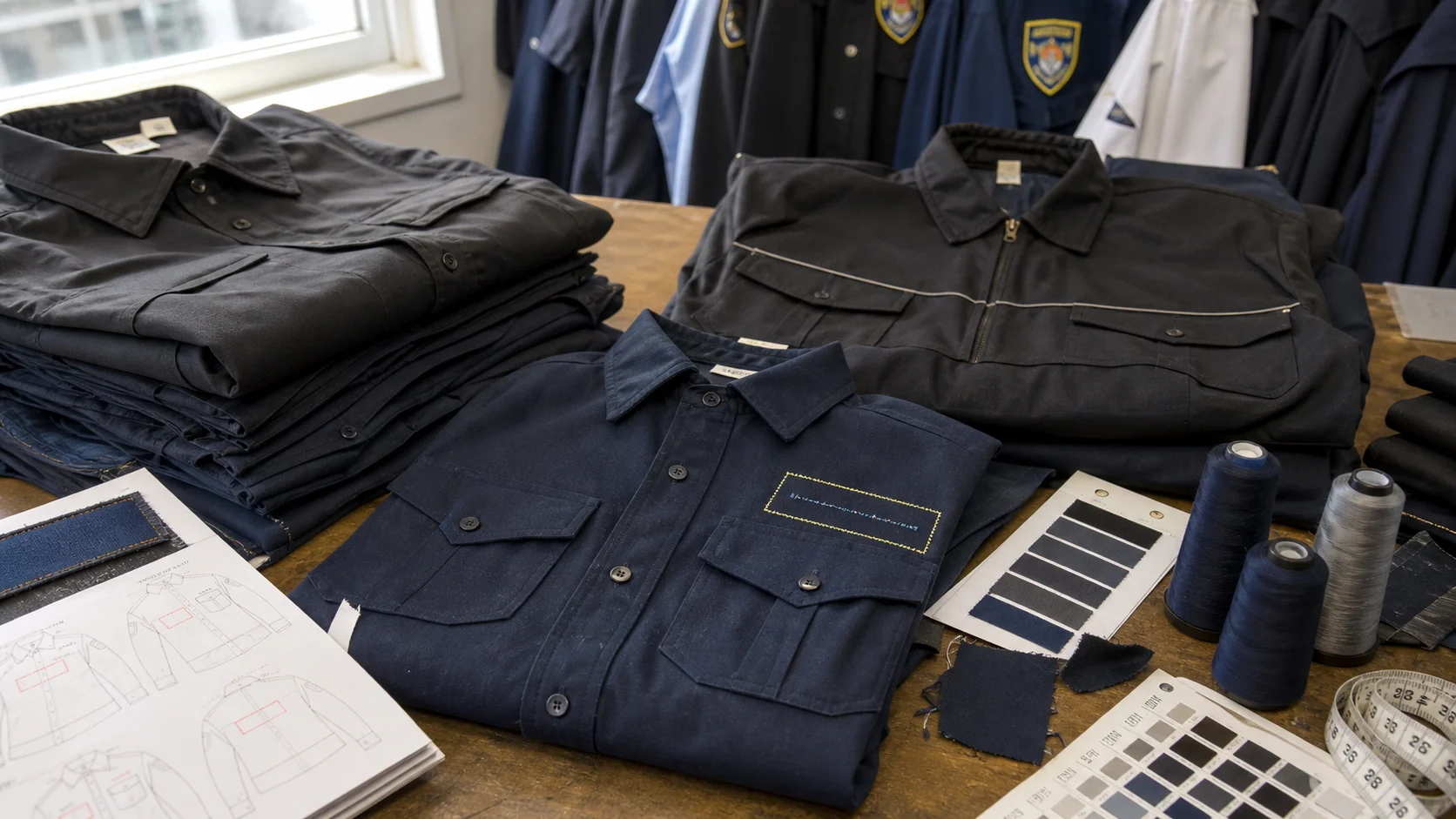
A focused outline for resort purchasing teams on reducing trim spend in custom hotel uniforms without compromising fit, durability, or brand consistency.
Custom Hotel Uniforms: Trim Sourcing Cost Cuts - Fabrikn production reference
Trim sourcing is one of the easiest places for a resort purchasing team to lose margin without noticing it. A uniform program may look well controlled on paper, yet buttons, zippers, piping, braid, labels, hanging tags, heat-transfer branding, and packaging choices can add meaningful cost once they are multiplied across departments, sizes, and seasonal reorder cycles. In hotel and resort work, trims are not decorative afterthoughts. They affect unit cost, sample timelines, consistency across production runs, and the risk of rework when garments arrive with the wrong color, size, or finish.
For custom hotel uniforms, the best cost reductions usually come from disciplined sourcing rather than aggressive price pressure alone. Purchasing teams that standardize trims, narrow the number of approved components, and lock specifications early tend to get better outcomes than teams that chase the cheapest quote on each line item. That matters in hospitality, where front desk, housekeeping, food and beverage, spa, and concierge uniforms often need to look coordinated while still performing different jobs.
This article covers practical ways resort buyers can reduce trim spend without degrading appearance or durability. The focus is on usable sourcing decisions: what to standardize, what to leave flexible, where suppliers typically build in cost, and where quality failures become expensive after the goods move into service. For teams building or refreshing a program, the service pages at fabrikn.com/services/, fabrikn.com/about-us/, and fabrikn.com/contact-us/ are natural starting points for supplier conversations.
Trim cost is not only about the line item price of a button or zipper. It includes setup charges, minimum order quantities, dye matching, packaging, inspection labor, replacement risk, and the knock-on effect of delays when a small component is not approved on time. In a hotel uniform program, a modest difference of a few cents per trim can become material when multiplied by thousands of garments across a property group.
Resort purchasing teams face a different pattern than fashion buyers. Uniforms need to be repeated, replenished, and kept visually consistent over long periods. That changes the sourcing logic. A trim that is available today but cannot be reliably reordered later can create replacement problems six months into service. A decorative finish that looks premium in sample form may fail in laundering, which is more expensive than the initial savings.
Trim choices also influence sewing efficiency. Some components are simple to apply, while others slow production, increase needle changes, or require more skilled operators. If a design uses several trim types across a single garment, factory labor and rejection risk can move up quickly. For that reason, trim sourcing should be treated as part of the garment engineering process, not as a styling decision left until the end.
Most trim overruns in custom hotel uniforms come from the same few places. The first is specification drift. A buyer approves a sample button or zipper and then later changes color, size, plating, or branding detail. Each change can trigger new tooling, new sampling, or a new minimum order. The second is complexity. Multiple trim types create more procurement work, more incoming inspection points, and more chances for inconsistency.
Another cost driver is customization depth. A plain stock button is cheaper than a branded molded button, and a standard woven label is usually cheaper than a custom jacquard or multi-layer heat transfer. The same pattern holds for zipper pulls, snaps, badge loops, epaulettes, piping, and tape. The more the trim needs to be made specifically for one program, the more likely the supplier will spread fixed costs across a smaller quantity.
Material choice matters as well. Metal trims often carry higher unit cost than resin or coated plastic alternatives. That is not automatically a reason to avoid them, since hotel uniforms can require a certain weight or image quality. The practical point is to match the trim to the use case. A lobby jacket may justify a more polished closure. A housekeeping shirt may not.
Packaging and presentation can also be overlooked. Individual polybags, paper inserts, branded hangtags, and custom carton labeling all add cost. In larger resort programs, packaging standards should be decided alongside the garment spec so the supplier can quote one complete package rather than piecing it together later.
The most effective approach is to simplify the trim architecture before requesting quotes. Start by separating trims into three groups: functional, visible, and branded. Functional trims include zippers, buttons, snaps, hook-and-loop closures, and reinforcement tape. Visible trims include piping, braid, contrast tape, and decorative stitching. Branded trims include logos, labels, badges, and custom hardware. Each group has different cost sensitivity and different replacement risk.
Functional trims should be standardized as much as possible across departments. If housekeeping, back-of-house, and casual F&B pieces can use the same zipper family or button base, the program becomes easier to source and replenish. Visible trims can be limited to the styles that actually carry the brand look. Branded trims should be used selectively, because they usually create the most sampling and tooling friction.
It also helps to build a trim matrix early. A simple matrix listing garment type, trim type, material, color code, finish, supplier source, and approval status prevents last-minute substitutions. Resort teams often work with multiple departments, and that is where hidden variation creeps in. One team may ask for matte black buttons while another prefers satin finish, and suddenly the buyer is carrying two stocks for a detail that could have been one.
Supplier consolidation is another practical lever. A single vendor that can source the garment and most trims may reduce coordination cost, but that is only valuable if their component quality is stable and the buying team keeps visibility into the actual sub-suppliers. In some programs, it is better to let the garment maker source standard trims locally while the buyer controls the brand-critical parts directly. The right answer depends on reorder frequency, customization level, and the team’s tolerance for component risk.
Trim sourcing savings usually disappear when specifications are vague. A quote is only useful if the supplier knows exactly what is expected. The more precise the trim spec, the less room there is for later cost escalation and sample churn.
At minimum, the buying team should lock the following before requesting prices: trim material, size, color reference, finish, attachment method, wash durability requirement, branding method, and replacement tolerance. If the trim is visible, request a sample for physical approval rather than relying only on photos. Color can shift significantly between screen display and actual production, especially on black, navy, ivory, and metallic finishes.
For buttons, specify diameter, hole count, shank type, weight feel, and whether the finish must survive industrial laundering. For zippers, specify coil or metal construction, tape color, puller style, length, and whether the zip must be lockable or hidden. For piping and braid, define width, colorfastness, shrinkage behavior, and whether the trim needs to tolerate repeated press cycles. For labels, confirm fold type, size, language, care information, and whether woven or printed construction is preferred.
Good specs reduce comparison noise. They let purchasing teams evaluate quotes on the same basis instead of chasing the lowest number on a loose description. In practical terms, that is often where real savings sit.
Trim pricing in hotel uniforms is tightly linked to order volume. Low minimum order quantities usually carry a premium because the supplier has to cover setup, dye matching, plating, or tooling across fewer pieces. That is not a flaw in the quote. It is how the economics work. The buying team’s job is to decide which trims are worth standardizing across a larger run and which can remain specialty items.
Resort programs that plan for phased rollout should be careful here. A pilot order may look inexpensive until the trim minimum is spread across only a handful of garments. If a branded button requires a factory run of 5,000 units and the initial uniform order only uses 800, the remaining inventory becomes a carry cost. In some cases, that is acceptable if the same button will be reused on future replenishment orders. In other cases, it is wasted working capital.
Lead time is affected by trim type as much as garment construction. Stock trims can move quickly. Custom-dyed fabrics, molded logos, metal hardware with special plating, and embroidered badges can all extend timelines. Sample approval also matters. If the team waits until pre-production to review trim details, any correction lands late in the cycle and can delay the whole shipment. It is more efficient to review trim cards, lab dips, strike-offs, and physical prototypes early, even if that means adding a few days at the front of the calendar.
A sensible purchasing rule is to approve the smallest possible number of trim variants that still support the brand. That reduces MOQ pressure and keeps the reorder path cleaner.
Trim defects are costly because they often show up after the garment has already been cut and sewn. A wrong-size button, a split zipper tape, a shade mismatch on braid, or a label with poor wash performance can force rework or rejection. Those are expensive outcomes in hospitality programs, where the garments are not high-margin fashion pieces and the buyer is often running to a fixed opening date.
Color consistency is a common problem. Trims can vary from one batch to another, and the variation may only become visible next to the garment fabric under daylight or warm indoor lighting. That is one reason physical bulk approvals are important. A trim approved in isolation may not be acceptable when matched against the uniform fabric.
Wash testing should not be treated as optional for resort uniforms. Industrial laundering, frequent pressing, and repeated handling can expose weak dyes, loose plating, adhesive failure, or unraveling edges. Labels may curl, printed logos may crack, and coated hardware may wear faster than expected. The cost of a failed trim after launch is not just replacement material. It includes labor, logistics, guest-facing inconsistency, and reputation risk for the property.
Incoming inspection should be proportionate to risk. High-volume stock trims may only need spot checks if the supplier history is good. Custom branded or color-critical trims deserve tighter checks. The point is to catch problems before production consumption, not after a thousand garments have already been cut with the wrong component.
One of the cleanest ways to cut trim cost is to reduce the number of unique trims used across the program. A single button family used across multiple tops can lower tooling and simplify replenishment. Shared label formats, unified thread colors, and one approved zipper standard all help. The savings may not look dramatic on paper, but they compound across large resort operations.
Another useful tactic is to reserve custom branding for the trims where it is actually seen. A custom molded logo button may be worthwhile on front-of-house outerwear. The same treatment on a low-visibility back-of-house shirt may be wasted. Buyers should not let every department ask for premium trim features by default.
Substituting a simpler attachment can also save money. For example, a decorative metal badge may be replaced by a stitched patch or woven label in some applications. A covered seam detail may be achieved with a standard piping profile rather than a bespoke tape. Small simplifications like these can preserve the look while cutting cost and lead time.
Packaging should be streamlined as well. If each uniform unit does not need luxury presentation, reduce bag complexity and preprint only the information that is necessary for distribution and size control. Resorts that receive and issue uniforms internally can often move to simpler packaging without affecting service quality.
Standardizing trim color references is another practical move. Instead of calling for vague “black” or “silver,” buyers should define the exact shade and finish. That prevents surprise variation and reduces the chance of a reorder mismatch. It is cheaper to keep one stable reference than to correct a production issue later.
Before issuing a purchase order, resort teams should confirm the following:
That checklist sounds basic, but it is where many programs leak cost. A supplier can quote a low garment price and still create expensive problems if the trims are underdefined. The buyer’s control point is the specification set, not just the final invoice.
Good trim sourcing depends on supplier behavior as much as on buyer discipline. A reliable partner should be able to explain where a trim comes from, what the MOQ is, what changes trigger new tooling, and what sample approvals are required before bulk production. If that information is hard to get at quote stage, the project is likely to get more expensive later.
Resort purchasing teams should ask for a trim breakdown rather than a single all-in price where possible. That makes it easier to see whether the cost is coming from hardware, branding, packaging, or special finishing. It also makes substitutions easier if a deadline changes. Some suppliers can help structure a program around stock trims first and custom trims only where the brand needs them.
For teams starting a new uniform project or reviewing an existing one, a short supplier conversation is usually enough to surface the main cost drivers. The useful questions are simple: which trims are standard, which are custom, what is the reorder path, and where are the failure points? Those answers matter more than a polished presentation. More detail on service scope is available at fabrikn.com/services/, while direct project inquiries can go through fabrikn.com/contact-us/.
Get a free quote from Fabrikn — your trusted B2B clothing manufacturer with 10+ years of experience. MOQ as low as 200 pieces.
Get a Free Quote →It varies by trim type. Standard stock trims can be low or flexible, while custom molded buttons, branded hardware, and specialty labels often require several hundred to several thousand pieces. The real MOQ depends on tooling, finish, and the supplier’s source network.
Buttons, zippers, labels, and thread colors are the usual starting points. These are repeated across many garments, so standardization creates better cost control and simpler replenishment.
As early as possible, ideally before bulk fabric cutting is released. Waiting until late sample stages increases the chance of delay and rework, especially when color matching or custom branding is involved.
Usually yes, but not always in a meaningful way. A small custom detail can be affordable if ordered in volume and reused across multiple garments. The cost problem comes when the custom component has low volume, special tooling, or frequent redesign.
Color consistency, wash durability, attachment strength, and size accuracy matter most. A trim that looks acceptable in sample form but fails after laundering creates more cost than the original savings.
Use custom trims only where they are visible and brand-relevant, standardize the rest, and lock specifications early. That gives the uniform a consistent look while reducing the number of special parts that must be quoted, approved, and replenished.