
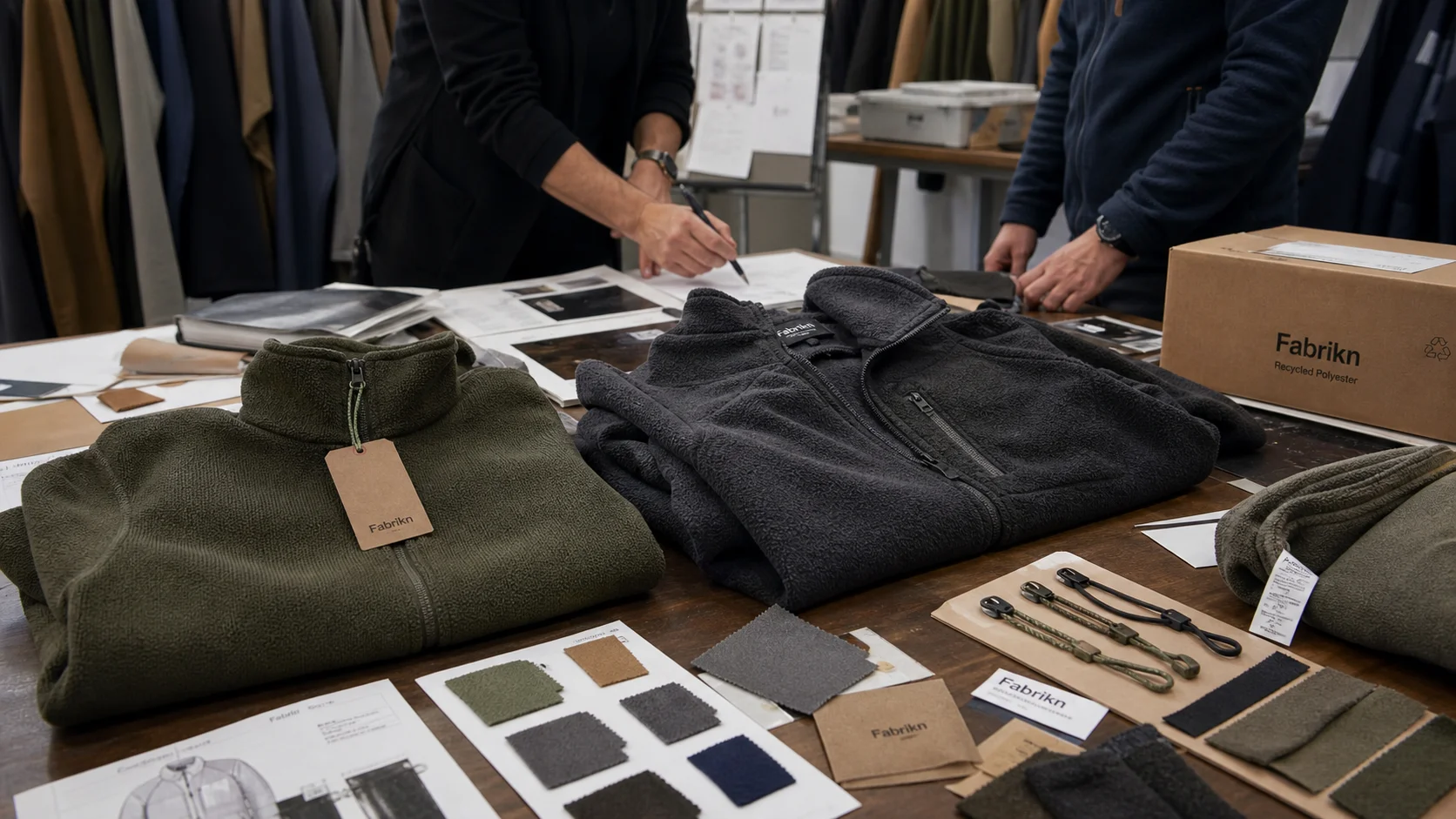
Logo Tissue Paper for Fashion Boxes with checks for samples, fit, MOQ, QC evidence, pricing terms, and delivery risk.
Fast answer: Logo Tissue Paper for Fashion Boxes: GSM, Ink, Cost, and ROI should be judged by production evidence, not by a generic sourcing promise. The buyer needs sample proof, cost breakdowns, QC checkpoints, and delivery buffers in writing.
Ask for recent sample photos, measurement tolerances, fabric or print test assumptions, decoration test notes, packing examples, and a named inspection checkpoint. These details show whether the team can repeat an approved sample at bulk volume.
Separate garment cost, decoration, labels, packaging, sampling, testing, freight, and rush charges. When every cost line is visible, it becomes easier to reduce colorways, adjust size depth, or reserve more time for sampling.
I’ve watched customers open a box, pause for two seconds, and decide whether the brand felt worth the price before they even touched the knitwear. That split-second verdict is why custom logo tissue paper for fashion boxes matters so much. It’s the first tactile layer, and often the first proof that the brand cares about details. In premium apparel, that first touch can shape perceived quality more than the shipping carton itself. The carton takes the truck ride. The tissue gets the judgment.
Across 200+ factory visits in eight countries, the same pattern kept showing up: labels selling tees at $28 and jackets at $280 often spend similar amounts on tissue stock, usually around $0.03-$0.12 per sheet. Premium brands pay for tighter folding, cleaner logo repeat, and better ink control. One mill in Portugal quoted 18 gsm tissue at €0.07 per sheet for a 5,000-sheet run, while a DTC brand in Vietnam used 22 gsm at roughly $0.05 per sheet. The perception gap came from precision, not paper weight.
Luxury buyers in Europe often choose tighter print registration and lower-contrast branding, because a faint monogram on 18 gsm stock reads as restraint. In Asia, I’ve seen DTC labels use the same 18 gsm and 22 gsm weights, yet rely on bolder logos and brighter inks to get more social visibility. Cheap tissue can still look expensive if opacity, fold consistency, and logo repeat are engineered well. Poor fold discipline can make premium stock look bargain-bin. Ugly, fast.
Near Milan, a packaging plant supervisor once pointed to two identical piles of tissue. One had a slightly off-center fold line and a 2 mm shift in the repeat. The other was aligned within 0.5 mm. Same substrate. Same price band. Only one looked luxury. Tissue paper is not decorative filler. It affects perceived value, social sharing, and even return protection, because a garment that arrives neatly wrapped tends to be repacked more carefully if it is returned.
If your brand also handles product development or full-package production, tissue should sit in the same planning conversation as fit approval and folding labor. Teams already using private label clothing services usually catch on faster, because packaging behaves like a final finishing operation, not an accessory order.
Inside the box, custom logo tissue paper for fashion boxes acts like a quiet billboard. It repeats the brand before the garment is touched, and repetition matters more than many marketers admit. A subtle monogram or small repeat pattern builds recognition. A huge print block can feel promotional, even aggressive, and that usually drags down perceived luxury. I’ve seen buyers reject oversized logos at $2.50-$4.00 per box presentation because the package started looking like a promo mailer instead of a premium purchase.
Repetition creates memory. A 1-color logo repeated every 90-110 mm on a 500 x 700 mm sheet can be enough to make the brand feel intentional without shouting. Increase the color count to 3 or 4, and the tissue often shifts from elegant to busy. In one Turkish factory I visited, a womenswear brand at a $180 average order value switched from a dense all-over print to a sparse 1-color repeat and cut complaints about “too much packaging” by 14% over 8 weeks. They did not change the garment. They changed the restraint.
Social media turns packaging into acquisition cost. A single shareable unboxing can be seen by 300, 3,000, or even 30,000 viewers, depending on the creator’s audience and reposts. If a box costs $0.18 more to make because of custom tissue, but earns one organic post that replaces a paid click at $0.70-$1.40, the math gets interesting quickly. Smart teams stopped treating packaging as dead freight a while ago. They treat it as media.
Some high-end buyers prefer muted one-color tissue because it photographs better and reduces visual clutter in user-generated content. I saw this repeatedly in Paris and Seoul. The brand with the least “designed” tissue often got the cleanest unboxing shots, especially when the paper was 22 gsm with a soft matte finish and a single low-contrast logo. Restraint can outperform spectacle.
Fast-fashion packaging tends to optimize for speed, low unit cost, and carton fill rates. Premium and luxury brands use custom logo tissue paper for fashion boxes to support price justification and reduce gift-wrap substitutions at retail. If you need the packaging to work alongside garment finishing and sampling, many brands pair it with cut and sew manufacturing so the final presentation matches the product story from fabric selection to box seal.
Print method decides more than appearance. It affects run size, ink feel, turnaround, and waste. Flexographic printing is common for larger orders, usually 10,000 sheets and up, because plates spread setup cost across volume and speeds stay high. Screen printing gives richer solids and stronger opacity for short runs, often 1,000-5,000 sheets, but the labor cost rises fast. Digital printing works for small test runs, variable artwork, or 500-2,000 sheet orders, though it can struggle with very fine repeats and some ultra-light papers.
Ink choice matters just as much. Dye-based inks can look vibrant, but they may bleed more on humid days if the paper is thin. Soy-based inks are popular with sustainability-minded brands because they reduce petroleum reliance, though exact performance depends on the formula. Water-based inks usually work well for garment-safe tissue, especially when brands want lower odor and better rub performance. According to AATCC testing practices, ink transfer and crocking should be checked against the final substrate, not assumed from a supplier brochure.
Paper weight changes both feel and freight. At 18 gsm, tissue feels delicate, folds easily, and keeps carton volume down. At 22 gsm, opacity improves, so logos on the reverse side do not ghost through as easily. At 28 gsm, you gain durability and a more substantial hand feel, but you also pay more per sheet and may add 6%-12% to carton volume depending on pack format. For fashion boxes, 18 gsm and 22 gsm are the workhorses. Twenty-eight gsm makes sense for heavy knitwear, high-ticket gifting, or archival presentation.
Finish choice can protect the garment or spoil the effect. Matte papers look cleaner under store lighting. Soft-touch finishes can make the tissue feel more premium, though they sometimes reduce fold crispness. Acid-free paper is worth specifying if the brand cares about archival presentation, dye migration risk, or long-haul storage. I’ve seen silk blouses packed in cheap acidic tissue turn faintly yellow at fold points after 90-120 days in warm warehouses. Avoidable.
Full-bleed patterns consume more ink and usually flatten the fabric-like character that makes tissue appealing in the first place. Sparse repeat logos preserve elegance and reduce waste. That’s a design decision, not just a cost decision. Factory conditions matter too. Humidity control at 45%-55%, consistent roll tension, and cut accuracy within 1-2 mm often decide whether the paper tears, wrinkles, or prints unevenly. Catalog images never show that part. The plant floor does.
For teams evaluating packaging alongside seasonal range planning, I often tell them to browse our product catalog early, because the best tissue specs usually align with carton size, insert cards, and garment fold dimensions already approved for the line.
Small orders are expensive because setup eats the margin. A 1,000-sheet run can easily land at $0.18-$0.45 per sheet depending on paper weight, print colors, and packaging format, plus plate or screen setup fees of $60-$250. At 5,000 sheets, the price may fall to $0.07-$0.18 per sheet. At 25,000 sheets, some Asian mills can hit $0.03-$0.09 per sheet, though freight and duty can close part of that gap. Spread the setup cost over more units, and the math improves fast.
Several drivers keep showing up. Sheet size matters because a 500 x 700 mm sheet uses more paper than a 400 x 600 mm sheet. Number of colors matters because each additional color can add $0.01-$0.05 per sheet, sometimes more on short runs. Print method matters because flexo favors scale, screen print favors texture, and digital favors flexibility. Paper weight matters because 28 gsm stock can be 20%-35% more expensive than 18 gsm. Packaging format matters too. Flat-packed tissue is cheaper to ship than pre-folded packs, but it costs more labor on the factory floor.
Region changes the equation. Domestic production can shave 7-14 days off lead time and cut communication errors, but it often costs 10%-25% more per sheet. Overseas sourcing can lower unit price, especially on runs above 10,000 sheets, yet freight variability can blow up a tidy spreadsheet. I’ve seen a $1,900 ocean freight bill become $5,400 when a brand missed booking windows by 9 days and had to switch to air for part of the order. Planning windows matter.
Here is the budget framework I use with brands: keep packaging at roughly 1%-3% of retail price for mid-market apparel, 3%-5% for premium, and up to 6% for giftable or limited-edition drops. Then adjust for margin pressure, box size, and seasonality. A $60 blouse can usually carry a higher packaging ratio than a $24 T-shirt because the unboxing experience supports the price story. Holiday assortments also justify more spend because returns are higher and presentation matters more.
A slightly higher tissue price can lower total packaging cost if it reduces damage claims, rework, or box reshipment during peak season. I watched one brand in Los Angeles switch from 18 gsm to 22 gsm and spend $0.04 more per sheet. Their dinged corners and torn wraps fell by 11% over a 10-week period, and their customer service team processed 18 fewer packaging-related complaints for every 1,000 orders. That saved labor, not just paper.
If you need a quick quote, the fastest route is often to get a free quote with your exact sheet size, logo count, and annual volume. Suppliers can usually price much faster when they know whether you need 2,000 sheets or 50,000.
Supplier selection should start with proofing discipline, not price. I look for print consistency across at least 3 sample sheets, minimum order quantity transparency, response speed under 24 hours, and clear claims about garment-safe materials. A manufacturer or factory quoting 2,000 sheets but unable to show an actual folded sample is not ready for a fashion program. A supplier who sends a clean physical proof in 3-5 days is already ahead.
Ask for Pantone targets, then compare them under daylight and under store lighting. Tissue is unforgiving. A color that looks fine on screen may shift 8%-15% once printed on thin paper. Test fold lines, opacity, and ink rub resistance. I also ask suppliers to show a completed box mockup, not just a flat sheet, because a logo can drift into the fold seam and disappear once the garment is packed. That is an operational problem, not an aesthetic one.
Compliance claims should be documented. FSC paper, recycled content percentages, and low-migration inks should come with certificates or test reports, not adjectives. According to FSC, chain-of-custody documentation matters if you want to substantiate responsible sourcing. If a supplier cannot produce paperwork within 48 hours, assume the claim needs verification. Sustainability language without documents is just decoration.
For buyers managing multiple factories or co-packers, version control saves money. Use one artwork file name, one revision number, and one approval email trail. I’ve seen a brand lose 4,000 sheets because a mill printed an older logo version after a WhatsApp approval thread buried the final PDF. Packaging specialists usually offer better print control and cleaner color management. General converters can be cheaper, but luxury presentation often suffers by a small but visible margin.
In my experience, the best suppliers ask questions before they quote. They want carton dimensions, garment fold size, packing labor availability, whether tissue is inserted by hand or machine, and expected MOQ for wholesale or bulk production. If the answer is “we’ll figure it out later,” the lead time will stretch from 2 weeks to 6, and the cost almost always rises. Brands sourcing from China often see the best scale pricing, but only when communication is tight and production details are locked early.
Start with the basics: sheet dimensions, logo placement, repeat pattern, color count, and print limits. A fashion box that holds a folded knitwear set may need 500 x 700 mm sheets, while a small accessory box might work with 350 x 500 mm. Tell the printer the carton size, the fold method, and whether the tissue needs to wrap once or twice. If the artwork crosses a seam, say so before the quote.
Prepare files as repeats, not posters. Printers need vector artwork when possible, clear bleed margins, and repeat tiles that account for cut distortion. I prefer to see a PDF proof plus an AI or EPS working file, because that reduces surprises at plate stage. Leave 3-5 mm tolerance around edges and make sure text is not sitting where the fold will crush it. A beautiful logo means little if it disappears under the garment collar.
Timeline should be simple. Brief on day 1. Sample proof in 3-7 days for digital or short-run work, 7-14 days for screen or flexo sampling. Revisions can take 2-4 days. Final sign-off should happen only after a physical sample passes the actual box test. That means folding with the garment inside, not on a desk. Check for tear points, ink rub, and whether the box lid closes without buckling.
Flag the common mistakes early: approving from a screen only, underestimating freight volume, ignoring carton fit, and skipping stress tests with the actual fashion box. Packaging labor also deserves coordination. Insert cards, stickers, hang tags, and tissue folding all compete for time on the line. If one piece slows the others, your launch date slips.
Recycled fiber, FSC certification, and lower-impact ink systems are the sustainability markers that matter most. Data from Textile Exchange shows that material claims only matter when they are measurable, and packaging is no exception. A pretty green statement on the insert card does not mean much if the tissue is sourced from a long freight route, printed with high-solvent chemistry, and packed into non-recyclable wrap.
Some recycled tissues look less uniform, with a softer color base and tiny fiber flecks. That can still work beautifully in luxury boxes if the brand accepts a more natural appearance. The gap between premium feel and lower-impact material is smaller than many assume. What matters is proof: paperwork, chain of custody, and compatibility with the rest of the box set. Good sustainability is documented. Bad sustainability is just copywriting.
For added supply-chain confidence, many teams also check OEKO-TEX guidance on chemical safety and look at trade.gov resources when comparing sourcing regions, duties, and import timing. Those checks are especially useful when custom logo tissue paper for fashion boxes is ordered in bulk from overseas.
I’m blunt about this because I’ve seen too many brands call tissue “eco” while buying it from a supplier with no documentation and 18 days of ocean freight. Sustainability only counts when the numbers hold up, not when the adjectives are polished.
Small runs of 1,000 sheets often cost $0.18-$0.45 per sheet, while 5,000-sheet orders can fall to $0.07-$0.18. Larger orders above 25,000 sheets may reach $0.03-$0.09 per sheet, before freight and duties.
Most apparel brands choose 18 gsm or 22 gsm. Eighteen gsm is lighter and cheaper to ship, while 22 gsm gives better opacity and a more substantial feel. Heavy gifting programs sometimes move to 28 gsm.
Digital or short-run sampling can take 3-7 days, and flexo or screen sampling usually takes 7-14 days. Full production commonly takes 2-4 weeks depending on quantity, color count, and whether the order is domestic or overseas.
Yes. Recycled tissue can still look refined if the fold is clean, the print is restrained, and the sheet weight is appropriate. Many brands use 18 gsm to 22 gsm recycled stock with matte one-color logos.
Ask for physical samples, Pantone targets, MOQ, setup fees, FSC or recycled documentation, and ink rub test results. Also confirm carton size, sheet dimensions, and lead time so the tissue fits the actual box without rework.