
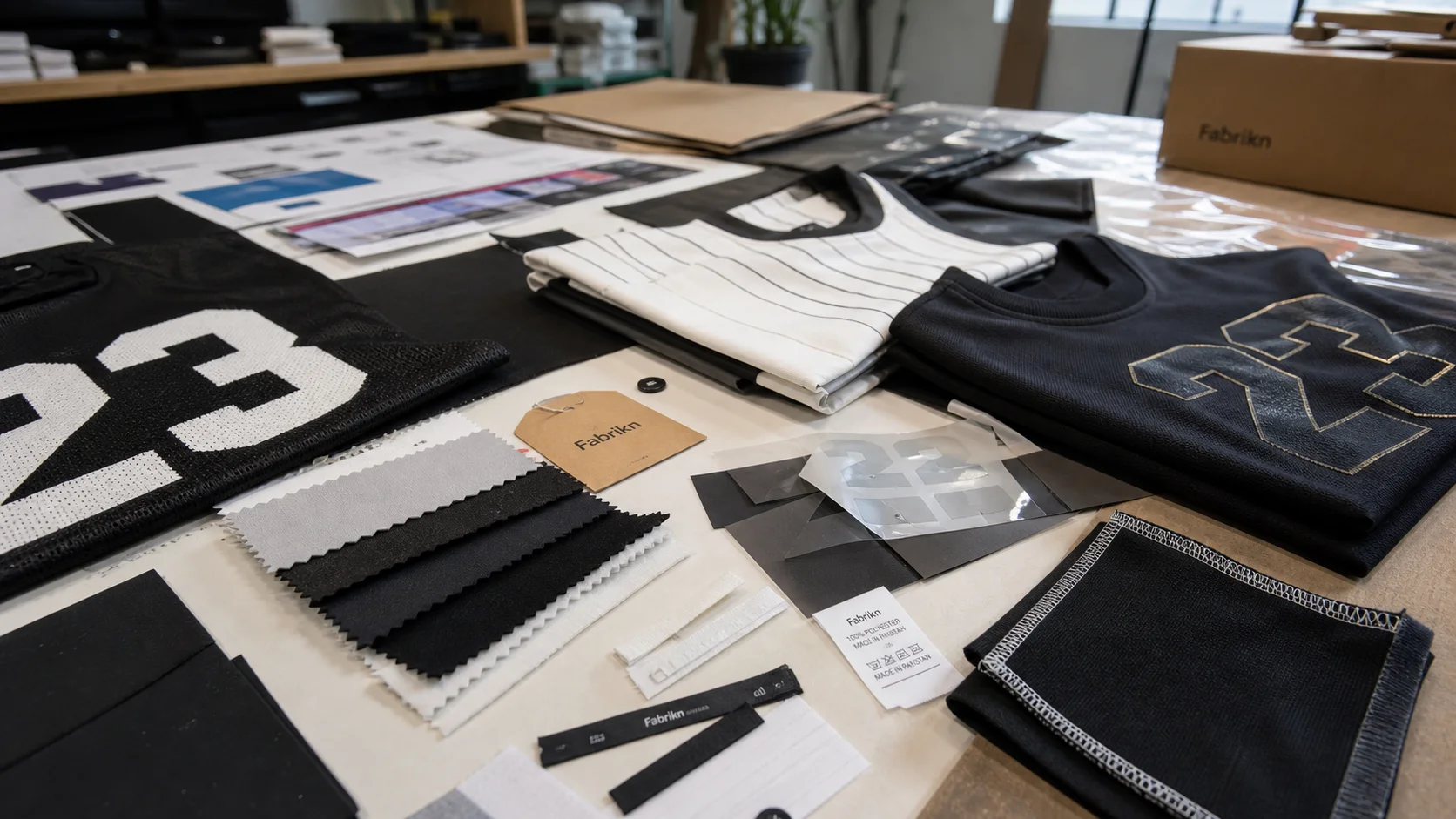
China Apparel Tissue Paper Printing with checks for samples, fit, MOQ, QC evidence, pricing terms, and delivery risk.
Fast answer: China Apparel Tissue Paper Printing: GSM, Ink, MOQ, and Lead Time should be judged by production evidence, not by a generic sourcing promise. The buyer needs sample proof, cost breakdowns, QC checkpoints, and delivery buffers in writing.
Ask for recent sample photos, measurement tolerances, fabric or print test assumptions, decoration test notes, packing examples, and a named inspection checkpoint. These details show whether the team can repeat an approved sample at bulk volume.
Separate garment cost, decoration, labels, packaging, sampling, testing, freight, and rush charges. When every cost line is visible, it becomes easier to reduce colorways, adjust size depth, or reserve more time for sampling.
On a factory floor in Guangdong, I watched a buyer argue over a $0.03 tissue sheet while approving a $4.20 mailer box. That mismatch shows up everywhere. Custom printed tissue paper for apparel brands china is often the cheapest packaging line item, yet it appears in the first photo, the return video, and the resale listing.
I’ve seen brands spend 4% to 7% of COGS on outer cartons and only 0.3% to 0.8% on inner wraps. Fast fashion labels usually stay near the low end, around 0.2% to 0.4% of COGS for tissue and inserts. Mid-market brands often sit at 0.5% to 1.2%. Luxury labels can reach 1.5% to 2.5% because they buy thicker sheet stock, higher ink coverage, and custom folding. Shoppers touch the tissue, not the shipping carton, and they photograph what they unfold.
A $24 tee wrapped in crisp 17 gsm tissue with a two-color logo reads differently from the same shirt dropped into plain white paper. The product did not change. The margin did not change. The brand did. That is why tissue becomes a merchandising tool, not just filler, especially for labels building repeat purchase behavior across private label clothing programs.
Many brands still overspend on rigid boxes and underinvest in the thing customers actually handle for 5 to 20 seconds. After visiting more than 200 factories across 8 countries, I found the same pattern from Dhaka to Dongguan. A well-printed tissue sheet can lift unboxing content, reduce scuffs on brushed knits, and protect delicate trims. It also signals order. Disorder travels fast online.
For apparel brands, the decision sits at the intersection of aesthetics, abrasion protection, and waste. That matters whether you sell $18 basics or $180 occasionwear. It also matters if your pack-out line runs 3,000 units a day or 30,000. The cost is tiny. The visibility is not.
Custom printed tissue paper for apparel brands china starts with pulp quality. Chinese converters commonly source virgin wood pulp, mixed recycled pulp, or a blend that balances softness with opacity. Virgin stock usually gives cleaner print edges and fewer specks. Recycled pulp can look slightly warmer and more matte, which some brands prefer for an earthier presentation. Basis weight typically runs 17 gsm to 30 gsm for apparel packaging, with 20 gsm and 22 gsm being the most common for folded shirts and lingerie.
Sheet size drives utility. A 50 x 75 cm sheet works for folded knits. A 70 x 100 cm format suits coats, shoes, and larger inserts. Print coverage matters too. A simple one-color repeat on 20% to 30% of the sheet costs less than a full-bleed pattern covering 80% to 100%. I’ve seen brands ask for “premium” and then approve paper so thin that the logo ghosts through before folding begins.
In China, the better factory setups usually pair stable pulp with flexographic or offset printing. Flexo handles larger runs, often above MOQ 3,000 to 5,000 sheets, and keeps cost down. Offset is sharper for fine lines and gradients, but setup can be pricier. Digital printing can work for short runs of 500 to 1,500 sheets, especially for launches or seasonal tests, though edge sharpness and color repeatability may vary more from batch to batch. For technical brands using printed packaging alongside sublimation printing services, color discipline matters even more.
Finishes look simple but they change performance. Matte tissue folds cleanly and photographs well. Glossy coatings can create a brighter look, though they may reduce absorbency and feel less natural. Acid-free tissue is better for garments with metal hardware or dyed components that might transfer. FSC-certified tissue gives traceability if the chain of custody is real, not decorative.
Verification matters. I ask for mill certificates, FSC chain-of-custody documents, and ink safety sheets before I approve a run. Soy-based and water-based inks are common claims. They are not always the same as low-impact. Ask for test reports, not adjectives. A manufacturer or supplier can print “eco” on a quote in 10 seconds. The paper does not care. The audit does.
Pricing is driven by five variables more than any glossy sales pitch: sheet size, paper gsm, color count, MOQ, and packing format. A 50 x 75 cm, 17 gsm, one-color sheet at MOQ 5,000 might land around $0.03 to $0.06 per sheet in China. The same size in 22 gsm, two-color print, folded and packed in sleeves can move to $0.06 to $0.11. Full-color coverage can push higher, especially if registration is tight.
Low-MOQ samples are rarely cheap. Expect $80 to $250 for a small prototype run, plus plate fees if the factory uses flexo or offset. At 10,000 to 30,000 sheets, unit pricing usually drops 15% to 30%. At 100,000 sheets or more, a stable design may fall another 8% to 12%, depending on how many colors you print and whether the converter packs bulk loose or pre-folded. The wrong folding spec can add labor that wipes out paper savings.
China often remains price-competitive because plate setup, line speed, and converter density are strong. Vietnam can be close for simpler specs, but labor and paper sourcing sometimes raise the landed price by 5% to 15%. India can compete on pulp-linked materials and certain recycled papers, yet longer lead times and variable print consistency can add rework. Europe usually costs more, often 20% to 50% higher for similar specs, though some brands pay for shorter transit, closer oversight, or local compliance needs. Data from the WTO, trade.gov, and OEKO-TEX shows how freight and compliance standards continue to influence landed cost more than many buyers expect.
Hidden costs catch teams off guard. Plate fees can run $30 to $120 per color. Sampling may add $40 to $150. Color matching on branded reds, deep navy, and black often needs one or two extra rounds. QC rework appears when sheet counts are off by 2% to 5% or cut edges curl. Carton spec matters too; if the outer carton is too soft, sheets arrive creased and you eat the loss. Duty and VAT depend on destination, so landed cost should be modeled before PO release, not after shipment.
Sometimes a paper that costs 8% more saves more than it costs. Thicker tissue can reduce tear rates by 30% to 40% on automated pack lines, and that means fewer stoppages. A smoother sheet also speeds packing. Two seconds saved per unit sounds trivial until you run 50,000 units.
I treat tissue QC like garment QC, just smaller and easier to ruin. The non-negotiables are print alignment, rub resistance, odor, thickness variance, and sheet cut accuracy. If the print drifts by more than 1.5 mm on a repeating pattern, the set looks sloppy. If the paper sheds pigment when folded three times, it will mark light garments. If it smells strongly of solvent, I reject it fast.
Factory audits tell you more than a quote. Good export converters store reels at 45% to 60% humidity, not next to open loading docks. They keep ink drums labeled by batch. They can trace one tissue lot back to a paper mill and a production date within 24 hours. Family-run converters often win on flexibility, but export-focused packaging plants usually outperform on batch records, speed, and sheet-count accuracy. I’ve seen a 5,000-sheet run delivered with a 1.8% shortage from a small plant and a 0.2% shortage from a larger one on the same street.
Specify tolerances in writing. I ask for color deviation within Delta E 2.0 to 3.0 for logos, spotting below 3 visible marks per 1,000 sheets, curling under 4 mm at the corners, and sheet-count accuracy within plus or minus 1%. For delicate tissue, tearing force should be tested across the fold line, not only in the center. That matters for brands shipping silk, knitwear, and lingerie, where a rough inner wrap can snag fabric. The same diligence belongs in other product categories too, including custom bra manufacturing and cut and sew manufacturing, where packaging damage quickly becomes product damage.
Approvals should move in three steps: pre-production sample, bulk reference sample, sealed golden sample. Keep one sealed copy with the buyer, one with the factory, and one with QC. If those three pieces do not match, stop the line. A 2-day delay beats a 20,000-sheet reprint every time.
Paper packaging gets called “eco” so often that the word has nearly lost meaning. The claims that matter are FSC, recycled fiber percentage, chlorine-free or elemental chlorine-free bleaching, and ink composition. FSC tells you the supply chain is controlled. Recycled content tells you how much virgin fiber was avoided. Soy-based ink sounds good, but unless the factory can prove formulation and cure behavior, it is mostly a marketing line. Textile Exchange and Global Organic Textile Standard both show how certification logic is only as useful as the evidence behind it.
I ask for chain-of-custody documents, mill certificates, and third-party lab tests before I accept a green claim. If recycled content is 30%, the document should say 30%, not “high recycled.” If FSC is listed, the license number should match the converter and the mill. If bleach-free is claimed, I want the process note or chemical declaration. A quote with no proof is just a wish in a spreadsheet.
The thing nobody tells you: recycled tissue does not always look better for fashion packaging. For a black knit tee, a recycled 18 gsm sheet may show more fiber flecking and lower opacity than a virgin 20 gsm sheet, which can hurt shelf presentation and increase reject rates.
The tradeoff is real. Recycled tissue can lower virgin fiber demand, but it may reduce tear strength by 10% to 20% and create more waste if it tears on the pack line. Virgin tissue often performs better for print sharpness and wrinkle control. Sustainability claims can raise costs by only 3% to 8% when the input genuinely changes. Other “green” claims add no verified change in material, ink, or sourcing. Those are just better adjectives.
Lightweight tissue can also lower freight emissions because it reduces cubic fill and carton weight. A 20 gsm sheet in a neat fold often ships better than a thicker, overprinted 30 gsm version that needs more corrugated support. But poor-quality tissue increases waste, and waste is not sustainable because the label says so. I’ve watched teams throw away 2% to 4% of a run after a bad humidity week. That is the real footprint.
Supplier selection starts with discipline, not charisma. I look for MOQ flexibility, export experience, clear proofing, QC documentation, and packaging know-how. A strong supplier can quote 5,000 sheets and 100,000 sheets without changing paper spec halfway through. They answer artwork questions in 24 hours, not 4 days. They understand how tissue sits inside a garment bag, a mailer, or a retail fold.
Direct factory sourcing usually wins on price and control. Trading companies can help when you need speed, multiple product categories, or smaller mixed orders, but they add margin and sometimes blur who owns the actual production line. For a brand launching 2 SKUs and 1,000 units, a trader may be practical. For a brand doing 20,000 units across several folds, direct factory communication is cleaner. This is the same logic I apply in private label clothing programs where one weak handoff can distort quality.
Red flags are obvious once you’ve seen enough of them. Vague specs. Refusal to share certificates. A quote 30% below the market with no explanation. Samples that arrive in different gsm, different cut size, or different red ink. If the factory cannot explain remake policy, plate ownership, and color tolerance on the first call, keep moving.
I score suppliers on a 100-point grid: 30 for quality, 25 for speed, 20 for price, 15 for sustainability proof, and 10 for communication. A factory with 84 points and transparent records beats a cheap 62-point quote almost every time. Apparel brands do not need perfect suppliers. They need predictable ones.
The cleanest buying process runs in seven steps. Define specs. Request comparable quotes. Approve artwork. Confirm a sample. Lock the quality standard. Schedule production. Arrange freight. If any step is skipped, the risk shows up later as a reprint, a delayed launch, or a box of tissue that looks nothing like the approved proof.
For a realistic timeline, I budget 2 to 4 days for RFQ responses, 3 to 5 days for artwork revision, 4 to 7 days for plate making or digital setup, 3 to 7 days for sampling, and 7 to 18 days for production depending on MOQ and print complexity. Sea freight can add 12 to 30 days. Air freight usually lands in 3 to 7 days, but the cost can be 3x to 6x higher. If you need custom printed tissue paper for apparel brands china on a fixed launch date, time the purchase backward from the retail delivery deadline, not the factory promise.
Write the RFQ like a technical document. State paper gsm, sheet dimensions, print colors, coverage percentage, folding style, carton pack count, and target delivery port. Tell suppliers whether you need loose bulk, pre-folded sheets, or wrapped bundles. Include a reference photo. Mention whether the pack line is manual or automated. That one detail changes the recommended sheet stiffness and cut tolerance.
For new brands, I recommend a pilot order of one SKU, one size, and one print complexity level. Test a 17 gsm one-color sheet before approving a 22 gsm full-bleed pattern. Measure tear rate, pack speed, and shelf appearance. Then scale only after the pilot survives real handling. That is cheaper than discovering a problem after 18,000 sheets are on the water.
Use this checklist before you release the PO: approved artwork, sealed golden sample, confirmed gsm, exact sheet size, color tolerance in writing, carton spec, remake policy, and delivery date with buffer. I’ve seen teams save 2 weeks and avoid a full reprint by checking those eight items once, carefully, before production starts. If you want custom printed tissue paper for apparel brands china to look effortless, make the decision-making boring and exact.
For common apparel specs, pricing usually falls between $0.03 and $0.11 per sheet, depending on gsm, sheet size, print colors, and MOQ. Small sample runs can cost $80 to $250 before freight, while larger orders of 50,000 sheets or more usually cut unit cost by 15% to 30%.
Typical lead time is 2 to 4 weeks from approved artwork to shipment, with sampling, plate making, and production each taking several days. Sea freight adds 12 to 30 days, while air freight can arrive in 3 to 7 days if the order is urgent.
Check gsm, sheet size, print method, color tolerance, folding style, carton pack count, and whether the supplier can provide FSC or recycled-content proof. I also ask for a pre-production sample and a sealed golden sample so the factory and buyer work from the same reference.
Yes, but only if the fiber quality and print consistency are strong enough for your brand standard. Recycled tissue often has more flecking and slightly lower opacity, so many premium labels move to 20 gsm or 22 gsm to keep the presentation clean.
The most common mistakes are under-specifying paper thickness, ignoring color tolerance, and approving quotes without checking plate fees or sampling charges. Another frequent error is overspending on boxes while choosing the cheapest inner wrap, which is the part customers actually touch.