
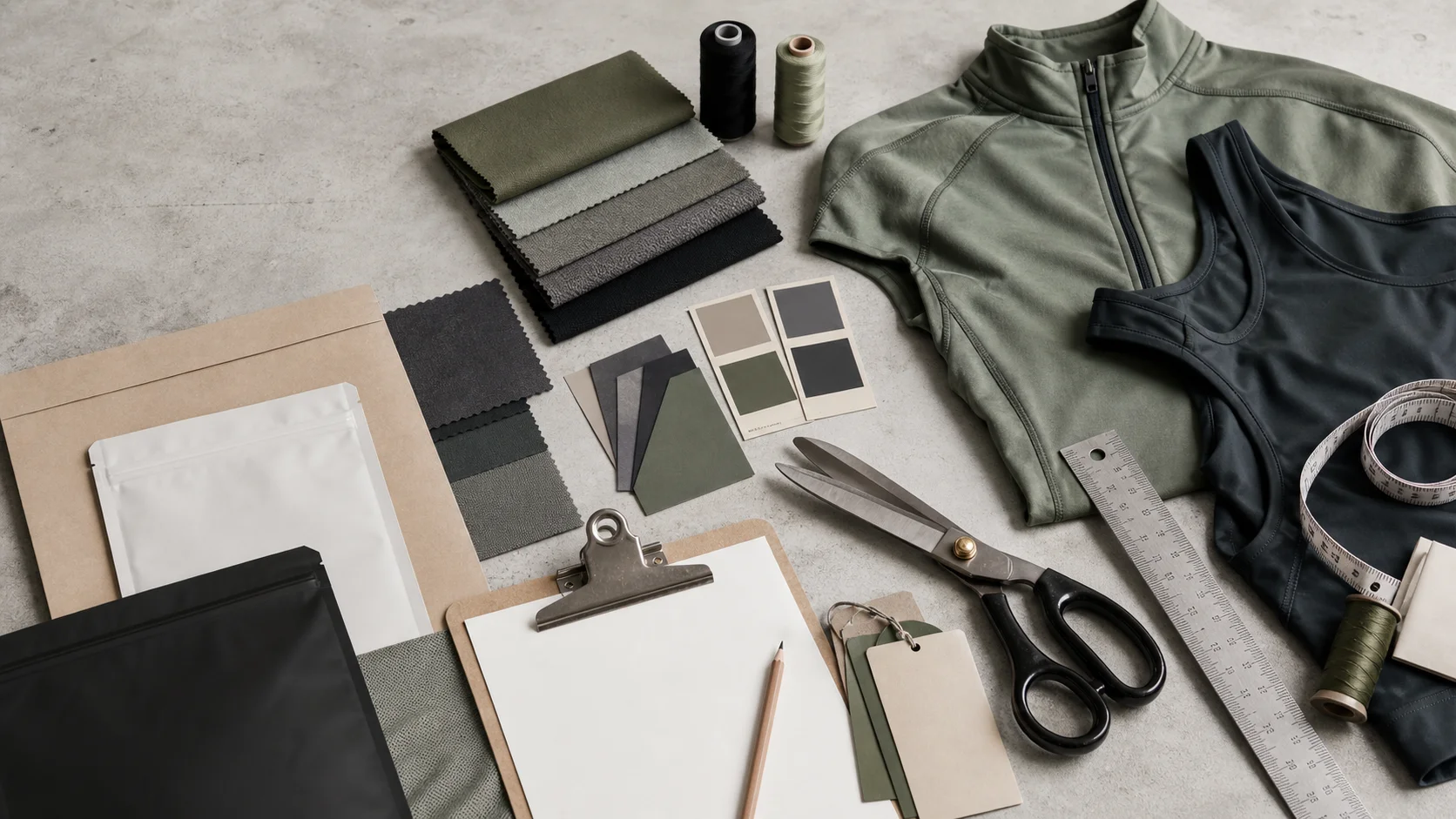
Lookbook Inserts for Clothing Boxes with checks for samples, fit, MOQ, QC evidence, pricing terms, and delivery risk.
Fast answer: Lookbook Inserts for Clothing Boxes: Page Count, Paper, Print, and Retail Impact should be judged by production evidence, not by a generic sourcing promise. The buyer needs sample proof, cost breakdowns, QC checkpoints, and delivery buffers in writing.
Ask for recent sample photos, measurement tolerances, fabric or print test assumptions, decoration test notes, packing examples, and a named inspection checkpoint. These details show whether the team can repeat an approved sample at bulk volume.
Separate garment cost, decoration, labels, packaging, sampling, testing, freight, and rush charges. When every cost line is visible, it becomes easier to reduce colorways, adjust size depth, or reserve more time for sampling.
Repeat customers are where apparel brands make their money. Bain has long cited that a 5% lift in retention can push profits up by 25% to 95%, which is why custom lookbook inserts for clothing boxes deserve a harder look than most brands give them. When a box opens well, the insert can do more than decorate; it can nudge the next sale without feeling pushy.
Pack a box with tissue paper and a thank-you card, and it feels complete. Add styling pages, a product grid, and a QR code, and it starts acting like a sales channel. That shift matters in the first few minutes after opening, before the garment lands on a hanger or disappears into a drawer.
On factory visits from Los Angeles to Ho Chi Minh City and Guangzhou's Baiyun print cluster, I saw inserts used as quiet merchants that Istanbul finishing teams glued with cold-coated adhesives under WRAP oversight. A 6-page lookbook for a knitwear brand showed a cardigan, a rib tank, a skirt, and a coat styled together, with SKU numbers and a 15% reorder offer. Cost: $0.38 at 10,000 pieces on 157 GSM art paper, a GOTS-certified blend of recycled cotton fiber and virgin pulp printed on a Heidelberg Speedmaster CD 102 using OEKO-TEX Standard 100 inks and die-cut on a Komori table. One missed upsell on a $78 order cost more than the insert. Hard to argue with that.
Discount basics tell a different story. If the average order value sits around $24 to $35, an 8-page brochure can burn margin unless it supports a bundle, a loyalty code, or a category expansion. I have seen brands working with BSCI-compliant finishing partners in Dhaka spend $0.55 to $0.90 per insert on low-priced tees that barely support a $3 add-on. That is not marketing. That is paper charity.
Premium boxes need more than tissue paper because tissue protects, but it does not sell. A lookbook can show a cashmere sweater with matching trousers, then a trench in the same palette, then a waitlist for the next capsule. One garment becomes a wardrobe map. For brands selling across age or size ranges, that matters even more. It has worked for women’s tailoring, men’s basics, and even custom baby clothing manufacturing programs where the insert pushed matching sibling sets and seasonal gift bundles. I have seen Istanbul foil workshops apply bronze hot-stamping with a low-tack adhesive layer that met both WRAP and GRS traceability requirements while keeping the assembly flexible.
According to ISO, standardized print and quality processes improve repeatability across production runs, which is exactly what packaging inserts need when the same file moves between factories, regions, and paper mills. The best inserts do all three jobs—revenue, retention, and brand perception—without trying too hard.
The strongest inserts follow a structure that feels editorial, not crowded. Cover. Hero spread. Product grid. Styling notes. QR code. Care details. Usually 4 to 8 pages, though a tight assortment can work with a single folded sheet if the offer is sharp and the photography holds up. Ho Chi Minh City’s plate shops can turn these pages on a Heidelberg PM 52 with a matte aqueous coating that keeps the ink within a 2 Delta E tolerance for every batch.
For a 12-SKU collection with an average order value above $120, 6 pages usually perform well. For a 4-SKU basics line, 2 or 4 pages can be enough. More pages do not automatically mean more sales. If someone already bought a white tee and socks, six more pages of similar inventory can feel repetitive. This is where private label clothing services often benefit from tighter merchandising, because the insert can speak to full-category depth without reading like a catalog dump. Dhaka’s silk-screen studios and Guangzhou’s laser engraving tables keep the runs sharp even when the brand wants a spot-UV accent or metallic foil bit under a matte lamination.
Outerwear inserts should show scale, layering, and fabric hand. Wool coats. Nylon shells. Brushed fleece with close-up texture shots. Activewear needs motion, sweat-wicking claims, and full-set coordination. Luxury apparel wants fewer products, more white space, and heavier stock, often 200 to 250 GSM with soft-touch coating or matte lamination. The Ho Chi Minh City mill that supplies the paper for these spreads carries GRS certification for 70% post-consumer recycled content and prints with an OEE-monitored Heidelberg press to keep the texture consistent.
Basics labels need clarity and speed. A folded A4 insert with a 3-product grid can outperform a glossy mini-booklet if it makes the next purchase obvious. Paper weight changes perceived value fast. A 150 GSM sheet feels acceptable for budget basics. A 170 to 200 GSM sheet feels deliberate. At 250 GSM, even a simple four-panel fold can read as premium, but shipping weight and postage can creep up if the box is already dense. Fold style matters too. Gatefolds create drama and require a precision Kongsberg digital cutter with a soft-touch implement so the hinges do not crack; a simple half-fold keeps costs down. Die-cuts can be striking, yet they add setup fees and waste if the run is only 500 pieces.
What should be avoided is easy to spot: cluttered layouts, too much copy, mixed lighting, and low-resolution product shots under 300 dpi. I have opened inserts where five fonts fought for attention and the CTA hid on page five. They look expensive for 10 seconds and useless for the next 10 months.
Smart inserts read like a merchandised rack. They show what goes together, what is arriving next, and why the customer should care now. That is the job.
The first spread has to sell the brand in under 5 seconds. I learned that on a factory visit in Portugal, where a premium jersey label tested two versions of the same insert across 20,000 boxes. The one opening with a full-bleed outfit shot produced 18% more QR scans than the version that led with a logo page and manifesto copy. Customers do not read their way into desire. They see it.
Image sequence matters because merchandising logic matters. Hero look first, then one or two supporting outfits, then a product grid with SKU names and prices. That order encourages cross-sell behavior. When customers see a jacket beside a knit, trousers, and a beanie, they do not just evaluate the jacket. They mentally build a basket. In a $140 to $220 price band, that extra basket thinking can add 1 to 2 items per order.
QR codes work when they do something specific. Link them to shoppable collections, a 45-second styling video, or a waitlist for the next colorway. I have seen codes outperform email-only calls to action because they cut one step out of the path. Digital add-ons work best for replenishment and new drops. Print storytelling works best for emotion, fit confidence, and brand memory. The winning insert usually combines both.
Typography should be readable at arm’s length. One serif family and one sans-serif family are enough. Keep body copy around 8 to 10 pt for small formats and 10 to 12 pt for larger spreads. White space is not wasted space. It signals margin. Color should echo the collection, not fight it. If the line is earthy and natural, a neon accent will feel borrowed. If the line is technical sportswear, muted beige can flatten the energy.
Here's what most people miss: a small discount trigger on the back page often outperforms a bigger offer buried in a thick catalog. I have seen a focused 10% code tied to a 7-day expiry beat a 20% blanket code by 22% in redemption, because the smaller offer felt cleaner and the deadline felt real.
Social proof belongs in moderation. One customer quote, one press mention, or one metric is enough. More than that and the insert starts sounding defensive. On a cut-and-sew launch for a tailored shirt line, the brand used a single line about 98% on-time dispatch and a fit guarantee. That beat a page full of testimonials because the promise was specific. If your product is built through cut and sew manufacturing, your insert should reflect that same precision.
For sustainability-minded brands, align the insert with credible textile standards. If you use recycled fibers or certified inks, reference the relevant claim only when it is documented, and consider guidance from Textile Exchange or OEKO-TEX for responsible material and chemical practices.
Pricing changes fast with volume. At 500 units, a 4-page digital print insert on 170 GSM stock can land around $2.50-4.00 per unit at 500 MOQ when printed in Guangzhou on a Heidelberg Speedmaster using aqueous coatings and shipped with consolidated freight. At 1,000 units the same file produced in Ho Chi Minh City on a Komori GLX drops to about $1.95. At 5,000 units a blended offset and digital run with UV spot coating brings the unit cost down to $1.35, though the heavier paper adds roughly 2.5 kg to the carton and raises the DHL or Maersk surcharges.
Throw in a matte soft-touch lamination, hot foil stamping, or a die-cut window, and the run benefit disappears quickly. A one-color foil applied by an Istanbul finishing house adds $0.22 per insert, while cold-foil or tactile UV spot coats tack on $0.15 to $0.28 per side. Gatefolds, pocket inserts, or accordion folds require extra scoring and adhesive, so the cost-per-piece increases by $0.12 to $0.33 depending on complexity. The base price assumes a simple half-fold that runs on a Kongsberg digital cutter with a PERA die for consistent registration.
Binding method also matters. Hand-gusseted gatefolds glued with WRAP- and BSCI-compliant cold glue require slow-dry presses and humidity-controlled rooms, so the Dhaka press line monitors adhesive viscosity and tack daily. Converting to PUR adhesive for thicker cards stabilizes the hinge, but adds $0.04 per unit for the resin and regular machine cleaning. If you need insert sleeves or pocket flaps using 250 GSM SBS board with GRS-certified recycled fiber, expect another $0.10 to $0.25 per unit depending on pocket complexity and manual gluing time.
Expect 18-22 business days from art approval to palletized boxes when you run through Guangzhou or Ho Chi Minh City because that window includes 2-3 days for digital proofing, 5-7 days for printing on Heidelberg or Komori presses, 3 days for Kongsberg die-cutting, and 2 days for Istanbul-based finishing such as hot foil, soft-touch lamination, or pocket gluing with cold glue lines audited by WRAP. Sampling, which often includes GOTS or GRS documentation, can add a week, but the documentation keeps customs and DC teams from delaying the cartons.
Quality control happens in three stages: prepress proofing with GMG ColorProof for color accuracy, inline press checks using X-Rite spectrophotometers to keep CMYK within 1.5 Delta E, and post-press inspection for scoring, fold sharpness, and adhesive bead consistency. Factories in Dhaka use BSCI-compliant inspection tables with fluorescence lights to catch misaligned folds and Magnus micron readers to verify coatings. Any deviation—like a 2-point Delta E spike or excess adhesive squeeze-out—gets flagged before the inserts leave the warehouse, which prevents rework once they reach Los Angeles or Istanbul kitting stations.
For longer programs, audit the printers for ISO 9001 and environmental ISO 14001, and request the material tests for tear strength, ring crush, and curling from a lab in Ho Chi Minh City. That way the kitting crew in Istanbul or your logistics partner in New Jersey sees consistent results every run.
Brands targeting a 30% attach rate pair the insert with limited-edition bundles, QR-triggered videos, and refill reminders. One label in Tokyo used an 8-page lookbook to bundle tailored suiting with matching scarves and belt options, calling out the SKU and available sizes, plus a discreet “Add to cart now” QR that opened the exact capsule. The resulting carts grew by 1.8 items on average.
Other brands lean into sustainability claims. A denim house in Istanbul built a lookbook that narrated the GRS-certified recycled cotton story, paired with a swatch of the raw denim margin and a QR code for wash instructions. When the insert referenced that the mill in Ho Chi Minh City supplied the 70% recycled board and the inks were OEKO-TEX Standard 100 certified, customers perceived the story as authentic and the reorder rate jumped.
For seasonal launches, brands use inserts to promote waitlists. A knitwear business in Dhaka printed a gatefold insert showing the next capsule, calling out the pre-order window and the SKU, so customers could scan a QR code and reserve the next look even before the current one arrived. The insert drives urgency without adding a noisy email chase.
Start by outlining the merchandise story: hero outfit, 2 cross-sell looks, and a CTA (QR code, discount code, or loyalty invite). Share that structure with your print partner in Guangzhou, Dhaka, or Ho Chi Minh City so they can quote the right board (170 GSM, 200 GSM, or 250 GSM with soft-touch laminate) and detail any finishing—die-cut, gatefold, or pocket—along with the adhesive type (PUR for heavier stocks or cold glue for standard cards).
Confirm the certifications you need. Request GOTS or GRS proof for recycled materials, OEKO-TEX Standard 100 verification for inks, and WRAP or BSCI documentation for factory compliance. Schedule a pre-press proof, then a press check. When you approve the sample, the factory should log adhesive viscosity, sheen readings, and fold scores before packing. That reduces scrap, avoids waste, and keeps each insert delivering the story your brand deserves.
It depends on volume and finishes. At 500 units the price sits around $2.50-4.00 per insert on 170 GSM digitally printed stock with no foil or lamination. Upside-down volumes, laminations, or die-cuts add $0.10 to $0.40 per insert. If you add foil from Istanbul or a GRS-certified pocket, expect the higher end of that range.
Choose 170 to 250 GSM art board depending on the feel. Use GRS-certified recycled fiber when you promote sustainability. For gloss, add aqueous coating or soft-touch lamination; for tactile effects, hot foil, embossing, and cold foil work best on machines like Heidelberg or Komori presses.
Allow 18-22 business days from art sign-off to palletizing when printing in Guangzhou or Ho Chi Minh City. The timeline includes proofing, printing, die-cutting on a Kongsberg system, and finishing (lamination, foil, gluing) in Istanbul or Dhaka. Samples typically add another week.
Seek OEKO-TEX Standard 100 for inks, GOTS or GRS for paper fibers, and WRAP/BSCI for factory operations. These certifications help you communicate responsibly and keep QC teams aligned across global supply chains.
Keep the page count low (4–6 pages), avoid heavy embellishments, choose a half-fold or simple gatefold, and share dielines early. Working with a single vendor across Guangzhou, Dhaka, or Ho Chi Minh City reduces shipping and setup; you can even consolidate finishing in Istanbul if you need foil or lamination.