
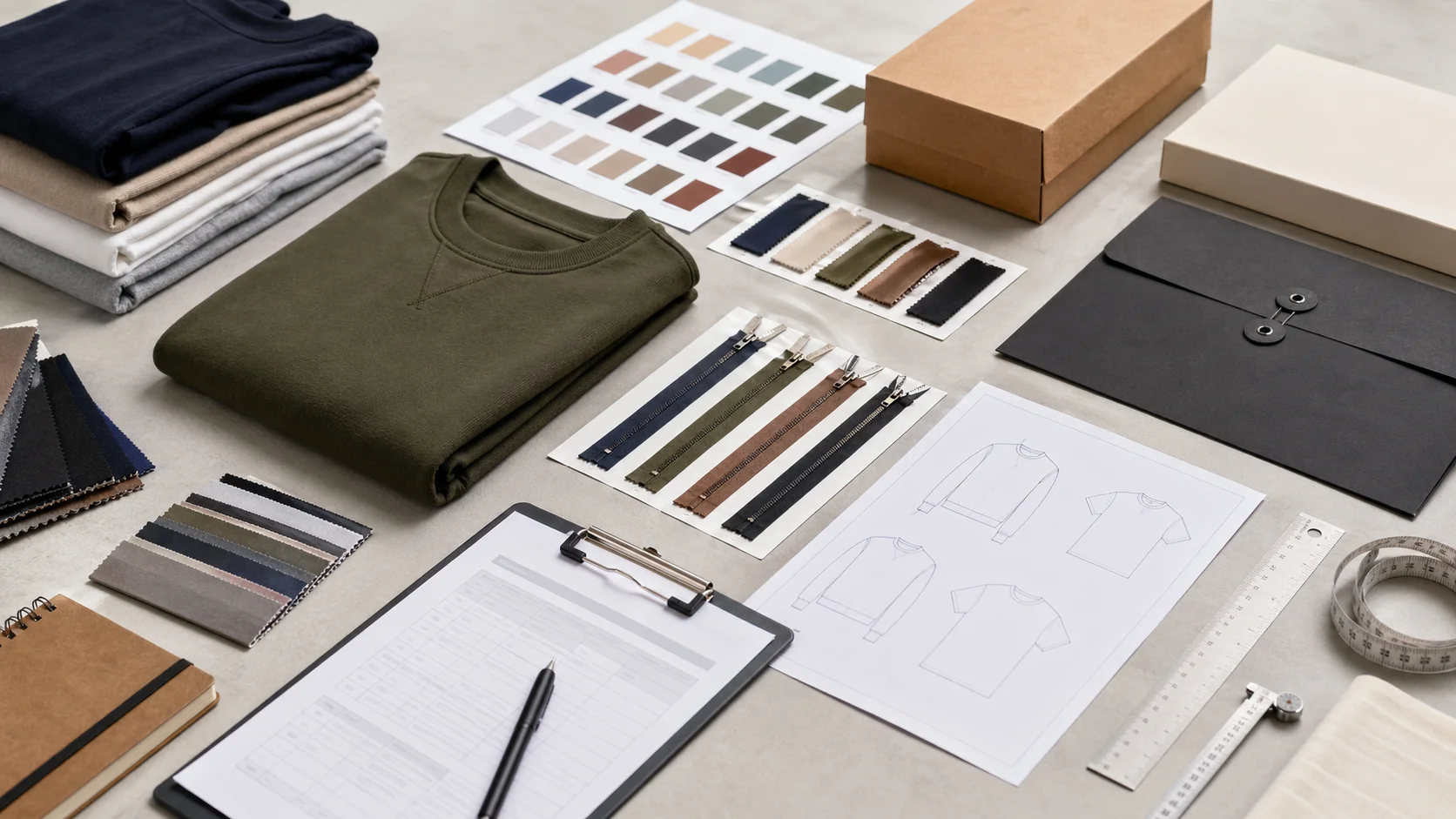
Custom Polo Shirt Embroidery Bulk Supplier compared by sample evidence, fabric or trim specs, MOQ, AQL terms, cost lines, delivery timing, and rework...
Fast answer: Custom Polo Shirt Embroidery Bulk Supplier: Sample Fit, Trim, AQL, and Delivery Risk should be judged by production evidence, not by a generic sourcing promise. The buyer needs sample proof, cost breakdowns, QC checkpoints, and delivery buffers in writing.
Ask for recent sample photos, measurement tolerances, fabric or print test assumptions, decoration test notes, packing examples, and a named inspection checkpoint. These details show whether the team can repeat an approved sample at bulk volume.
Separate garment cost, decoration, labels, packaging, sampling, testing, freight, and rush charges. Clear cost lines make it easier to reduce colorways, adjust size depth, or reserve more time for sampling.
Choosing a custom polo shirt embroidery bulk supplier is one of the most important decisions a brand, wholesaler, corporate buyer, school, or event organizer can make when planning custom clothing orders. A polo shirt is more than a uniform piece. It is often the first branded item people notice, and embroidery can determine whether that apparel looks premium, durable, and professional.
When ordering in bulk, the right supplier does more than simply stitch a logo onto fabric. They help you select the right polo style, match thread colors accurately, maintain consistent quality across thousands of pieces, and deliver on time without compromising workmanship. For B2B buyers, these factors directly affect brand image, customer satisfaction, and overall project profitability.
This article explains how to choose the best partner for bulk embroidered polo shirts, what to evaluate before placing an order, and how to reduce risk throughout the production process. If you are sourcing custom apparel for retail, uniform programs, corporate gifting, or promotional campaigns, this guide will help you make a smarter buying decision. You can also learn more about our broader manufacturing capabilities on our services page or reach out through our contact us page.
Embroidery is one of the most trusted decoration methods in the custom clothing industry because it creates a refined, long-lasting finish. Unlike printed graphics that may fade or crack over time, embroidery is stitched directly into the fabric, making it ideal for products that need to hold up through repeated washing and daily wear.
For bulk orders, that durability is especially valuable. Businesses often choose embroidered polos for staff uniforms because they present a clean and professional appearance while maintaining their look over time. Schools, sports clubs, hospitality teams, healthcare organizations, and trade show exhibitors also prefer polos because they are versatile, comfortable, and easy to brand.
Embroidery also adds perceived value. A neatly embroidered logo can make a standard polo shirt feel more premium, which is important for retail collections and brand merchandise. If your goal is to create apparel that reflects quality and credibility, embroidery is usually a strong choice.
However, achieving excellent results requires the right supplier. A poor embroidery partner can cause issues such as crooked placement, thread breakage, inconsistent logo size, poor digitizing, puckering, or delayed delivery. That is why supplier selection is just as important as the design itself.
Not all apparel suppliers are equally equipped to handle custom polo shirt embroidery in bulk. Some specialize in fast promotional printing, while others focus on premium garment manufacturing. The best supplier for your project should align with your order size, branding standards, timeline, and budget.
Look for a supplier that has direct experience producing embroidered uniforms and branded polos at scale. Experience matters because embroidery on knit fabrics requires careful handling, proper stabilizers, accurate digitizing, and machine settings that reduce distortion.
Bulk buyers need reliable updates at every stage. A good supplier should be able to confirm specifications, advise on thread and logo placement, share sample approvals, and flag potential production risks early. Clear communication is especially important if you are managing a multi-location business or a seasonal launch.
Ask how the supplier handles artwork review, sample approval, bulk manufacturing, quality control, and packing. A transparent process helps prevent costly mistakes and ensures accountability. If the supplier cannot explain how they manage each step, that is a warning sign.
Some suppliers can manage small boutique orders but struggle with larger volumes. If your project requires several hundred or several thousand polos, you need a partner with dependable production capacity, skilled operators, and quality systems in place.
Every business has different needs. You may want specific color matching, custom labels, individual packaging, size assortments, or multiple logo placements. The right supplier should be flexible enough to support these requirements while keeping production organized.
The quality of a custom polo shirt begins with the garment itself. Even the best embroidery cannot fully compensate for poor fabric, weak seams, or a bad fit. That is why experienced buyers evaluate both the base product and the decoration method.
Common polo fabrics include cotton, cotton-poly blends, polyester, and performance knits. Each material serves a different purpose. Cotton offers softness and breathability. Polyester is often chosen for moisture management and durability. Blended fabrics can provide a balance of comfort, stability, and affordability.
For embroidery, fabric stability is important. Very lightweight or stretchy fabrics may require more care because dense stitching can cause puckering. A knowledgeable supplier should guide you toward suitable materials based on your logo size, placement, and intended use.
Embroidery quality depends heavily on digitizing, the process of converting a logo into a stitch file. Poor digitizing can ruin an otherwise good design. A skilled supplier will adjust stitch direction, density, underlay, and pull compensation to produce a clean, readable result.
Before placing a bulk order, ask whether the supplier performs in-house digitizing or uses external contractors. In-house digitizing often leads to faster revisions and better control over quality. Also ask to review a sew-out sample or digital proof before production begins.
Thread quality affects both appearance and durability. Low-grade threads may lose sheen, break easily, or show inconsistent color. For brand-sensitive projects, matching thread colors to your brand identity is essential. The supplier should be able to propose accurate thread shades and maintain consistency across the full order.
Common logo positions include the left chest, right chest, sleeve, and back yoke. A well-placed logo enhances the garment without overwhelming it. Placement should reflect the polo’s size, intended audience, and use case. For example, corporate uniforms often favor subtle left-chest embroidery, while promotional apparel may also feature a larger back design.
Bulk clothing orders depend on timing. Whether you are launching a new product line, preparing for a conference, outfitting a staff team, or fulfilling retail demand, delays can create serious problems. That is why production capacity and lead time should be central to your supplier evaluation.
A reliable custom polo shirt embroidery bulk supplier should be able to provide a realistic production schedule based on your order quantity, complexity, and approval requirements. If a supplier promises unusually fast turnaround without first reviewing the details, proceed carefully. Rushed embroidery projects can lead to avoidable errors.
Ask the supplier about the following:
Lead time should also include approvals. If artwork corrections or sample revisions are required, the calendar can extend quickly. A professional supplier will build realistic timelines and communicate milestones clearly. This is one reason many B2B buyers prefer working with an established manufacturer rather than a generic reseller.
Bulk custom clothing orders are rarely one-size-fits-all. Most buyers need a supplier that can accommodate a range of customization options while keeping the finished product aligned with their brand standards.
Consistency is especially important when ordering multiple sizes or styles. The embroidery should appear uniform across all garments, and the garment colors should match across repeat orders. If you plan to reorder the same polo later, keep detailed records of the style number, thread codes, and artwork files.
For brands building a long-term apparel line, consistency also means repeatable fit and finish. A strong manufacturing partner can help standardize your product so every reorder feels like the same item. To learn more about Fabrikn as a manufacturing partner, visit our about us page.
Price is always important in bulk purchasing, but it should never be the only decision factor. The cheapest quote may hide hidden costs such as inferior fabric, weak stitching, slow service, or inconsistent sizing. Instead of looking at unit price alone, evaluate total value.
Minimum order quantity, or MOQ, is another important factor. Some suppliers require large MOQs because of factory efficiency, while others support smaller runs at a higher unit cost. Make sure the supplier’s MOQ matches your project goals and budget structure.
For large orders, ask for tiered pricing. This helps you compare cost efficiency at different quantities and may reveal savings if you increase the order slightly. Also ask whether sampling fees are refundable or deductible from the bulk invoice.
Good order planning includes inventory forecasting. If you expect repeat demand, it may be smarter to order a larger quantity upfront to reduce per-unit costs and avoid future production delays. The right supplier should help you think strategically instead of simply taking the order.
Sampling is one of the most important safeguards in custom apparel production. Even when a supplier has excellent reviews and strong references, you should still review a sample before bulk manufacturing begins.
During review, check the logo proportions, thread color, alignment, density, and overall presentation. Also inspect garment details such as collar shape, seam quality, button finishing, and size accuracy. If your order is large or brand-critical, a pre-production sample is worth the extra time.
Approval should be documented clearly. Confirm what happens if the sample differs from expectations and how revisions are handled. A good supplier will treat sampling as a quality-control step, not as a sales formality.
Strong communication is one of the clearest signs of a dependable supplier. In custom clothing, issues can happen at any stage: artwork adjustments, color matching, size confusion, packing requirements, or freight delays. A supplier who responds quickly and clearly can save you time, money, and stress.
Before choosing a supplier, consider how they communicate:
After-sales support matters just as much. If there is an issue with a shipment or quality concern, the supplier should have a defined process for addressing it. This is especially important for recurring programs where a long-term relationship may be more valuable than a one-time transaction.
At Fabrikn, we understand that bulk custom apparel orders require more than production capability. They require reliable communication, consistent quality, and a manufacturing process that supports your business goals from development through delivery.
Whether you need embroidered polos for uniforms, retail collections, promotional campaigns, or corporate branding, our approach is designed to help buyers manage custom clothing with confidence. We work with B2B clients who need scalable manufacturing, careful attention to detail, and a dependable partner for repeat orders.
If you are currently evaluating a custom polo shirt embroidery bulk supplier, our team can help you review specifications, discuss production options, and identify the best path for your order. Start with our services overview, or contact us directly through our contact page to discuss your project requirements.
The best supplier relationship is built on clarity. When your manufacturer understands your brand standards, target timeline, and quality expectations, the entire process becomes smoother and more predictable. That is especially important for custom clothing orders that need to arrive on schedule and look consistent across every piece.
Use the checklist below when comparing potential suppliers for embroidered polo shirts in bulk:
If a supplier checks most of these boxes, they are likely a stronger partner than a low-cost vendor with limited visibility into production. In B2B apparel sourcing, long-term reliability is often more valuable than short-term savings.
Selecting the right custom polo shirt embroidery bulk supplier is about finding a partner who can deliver quality, consistency, and accountability at scale. The best suppliers combine strong material knowledge, skilled embroidery production, accurate sampling, transparent communication, and dependable lead times. They do not just fill an order; they help protect your brand reputation.
When you evaluate suppliers, focus on more than just price. Consider their experience, process, capacity, quality control, and ability to support your long-term needs. A well-managed custom polo project can improve your brand, support your team, and create lasting value across every piece you deliver.
If you are ready to discuss your next custom clothing order, explore Fabrikn’s capabilities on our services page or get in touch through our contact us page.
Get a free quote from Fabrikn — your trusted B2B clothing manufacturer with 10+ years of experience. MOQ as low as 200 pieces.
Get a Free Quote →Cotton-poly blends and polyester polos are often best for bulk embroidery because they balance comfort, durability, and stitch stability. The ideal fabric depends on your intended use, budget, and brand preference.
Ask about their production capacity, equipment, lead times, sample process, and past bulk projects. A strong supplier should explain how they manage large runs and quality control at scale.
Digitizing determines how your logo will be stitched. Good digitizing improves clarity, consistency, and durability. Poor digitizing can cause puckering, distortion, and unreadable details.
Yes, many suppliers can add embroidery to the chest, sleeve, or back. However, each additional placement affects pricing, production time, and stitch planning.
Ask about fabric options, MOQ, lead time, sample approval, embroidery quality, thread colors, packaging, shipping, and after-sales support. These questions help you compare suppliers more effectively.
You can review our manufacturing capabilities on the services page and contact our team through contact us to discuss your project details, quantity, and timeline.