
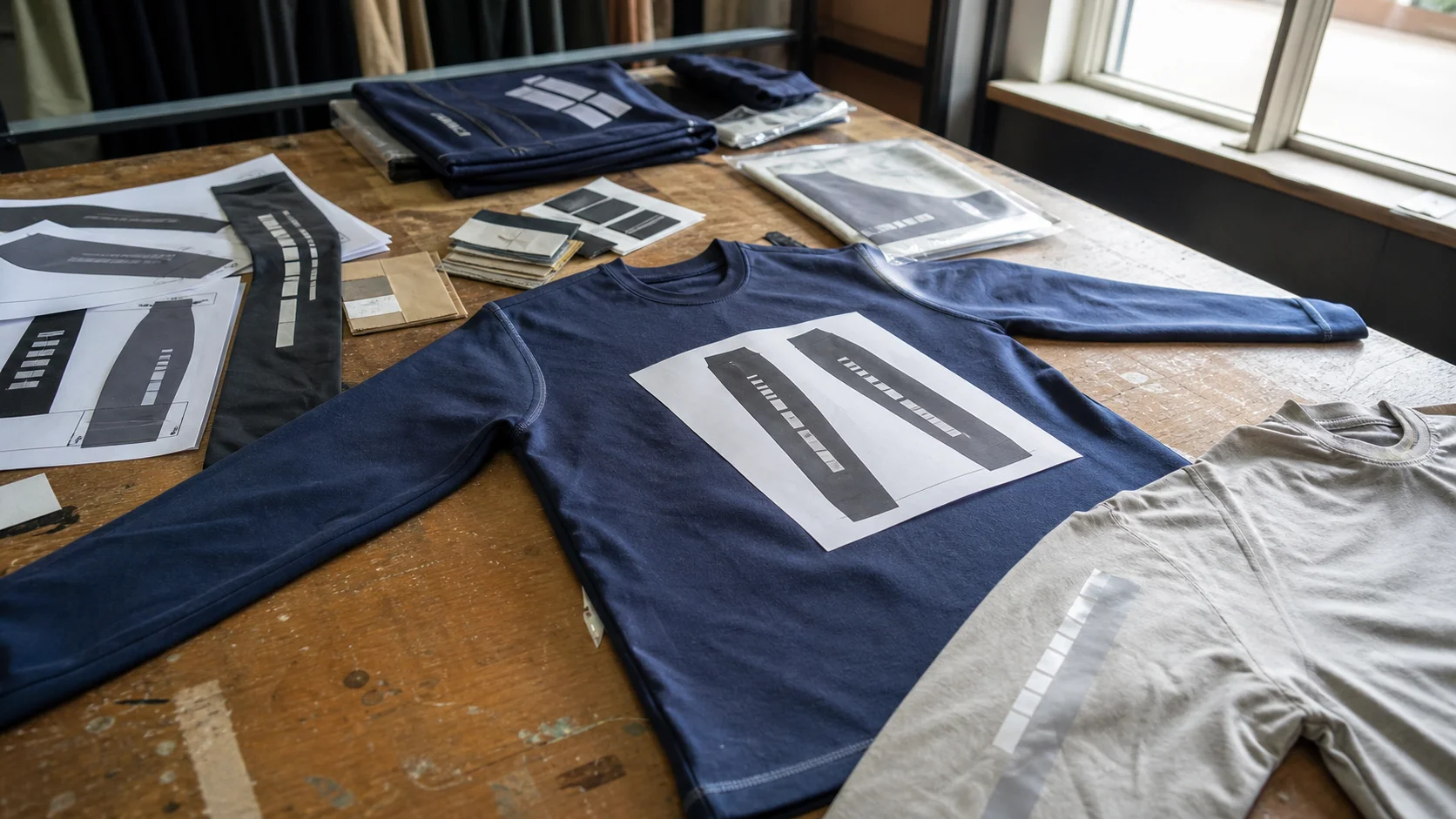
A practical outline for transport hub procurement teams auditing custom sleeve print maps for colorfastness, route clarity, wash durability, and production...
Sleeve Print Map Audit for Transport Hub Buyers - Fabrikn production reference
Transport hub uniforms work harder than most branded apparel. Airport ground teams, rail station staff, bus depot crews, ferry terminal personnel, security vendors, cleaning contractors, and customer-service teams all need garments that remain readable, professional, and compliant after repeated wear and laundering. When a sleeve carries a printed route map, terminal zone graphic, line diagram, directional motif, or branded location pattern, the print is not just decoration. It becomes part of the uniform’s visual system.
A custom sleeve print map colorfastness audit helps buyers confirm whether that sleeve decoration can survive real transport hub conditions: abrasion from bags and radios, exposure to rain and sweat, industrial washing, hand sanitizer, UV light, and frequent movement. The goal is simple: prevent sleeve graphics from fading, bleeding, cracking, staining the garment body, or becoming unreadable before the uniform reaches its expected service life.
This guide is written for procurement teams, uniform buyers, brand managers, concession operators, and sourcing teams working in the Decoration & Printing category. It explains how to audit sleeve print maps before bulk production, what to specify in a tech pack, which tests matter, where buyers commonly lose control, and how to make practical purchasing decisions without overengineering the garment.
A sleeve print map audit is a structured review of the artwork, substrate, printing method, colorfastness performance, placement accuracy, wash durability, and inspection controls for a map-style sleeve decoration. In transport hub uniforms, the “map” may be literal, such as a simplified terminal map, rail network line, pier layout, bus corridor graphic, or airport wayfinding pattern. It may also be abstract, using route lines, coordinate grids, station icons, or directional arrows as part of the brand system.
The audit focuses on two things. First, does the graphic look correct on the actual garment sleeve? Second, will it stay correct after use? Many buyers approve a sleeve print from a flat artwork file, then discover problems only after production: colors shift on dark fabric, narrow route lines fill in, cuff seams distort the print, or bright ink transfers during laundering.
Colorfastness is the core risk. A sleeve map often uses multiple colors, fine linework, and high-contrast details. These elements are vulnerable to fading, bleeding, and abrasion. The audit checks whether the print can tolerate washing, perspiration, rubbing, light exposure, and storage without unacceptable change.
For transport hub buyers, the best sleeve print is not the most complex graphic. It is the graphic that remains legible, aligned, and brand-correct through the uniform’s intended wear cycle.
Buyers sourcing custom-decorated garments can review broader production options through Fabrikn’s services, especially when decoration, garment construction, and quality control need to be managed together rather than treated as separate purchasing tasks.
Transport hubs are high-contact environments. Uniform sleeves rub against luggage handles, scanner belts, ticket counters, stair rails, radios, safety vests, lanyards, cleaning equipment, and outerwear. Staff may work indoors and outdoors during the same shift. Garments can be exposed to perspiration, rain, de-icing residue, fuel-adjacent grime, dust, food spills, disinfectants, and repeated laundering.
A sleeve map that looks sharp in a showroom can deteriorate quickly if the print system is wrong for the fabric or care process. Poor colorfastness creates several problems for buyers:
The practical issue is not whether every sleeve print must survive extreme laboratory conditions. The issue is whether the specification matches the uniform’s real use. A premium airport customer-service jacket needs a different durability target than a short-term event polo for a terminal launch. A rail maintenance shirt with industrial laundering needs stronger controls than a retail concession T-shirt worn behind a counter.
Transport buyers should define the expected service life before approving decoration. A 20-wash promotional garment, a 50-wash staff polo, and a 100-wash operational jacket are not the same product. The colorfastness audit should be calibrated accordingly.
Sleeve map prints appear across several transport-related uniform programs. The application affects artwork scale, print method, and inspection criteria.
Airport uniforms may use sleeve graphics inspired by runway lines, terminal zones, gate numbering systems, baggage belt patterns, or simplified city access maps. These garments often carry strong brand visibility, especially for customer-facing staff. The sleeve print must sit cleanly around curved arm panels and remain readable when the arm bends.
Rail and metro apparel may include route-line graphics, transfer symbols, station dots, or color-coded line references. These designs usually require precise color matching. A small color shift can cause confusion if the print resembles an official service line or operational category.
Bus operators may use corridor maps, route bands, depot identifiers, or sleeve graphics linked to city mobility campaigns. These uniforms frequently face outdoor exposure and repeated laundering. Ink adhesion and UV resistance deserve closer review.
Marine transport uniforms may include pier diagrams, wave-line route graphics, or port-zone references. Moisture, salt air, and wind exposure can accelerate wear. Buyers should be cautious with prints that rely on very thin lines or untreated metallic inks.
Contractors working inside transport hubs often need clear identification. A sleeve map can distinguish zones, service partners, or access levels. Cost control is important in these programs, but poor print durability can create a false economy if garments are replaced too often.
Colorfastness is not one single test. It is a family of performance checks. A sleeve print may pass washing but fail rubbing. It may pass dry crocking but transfer when wet. It may look good after laundering but crack after repeated elbow flexing. Buyers need to identify the most relevant risks for the garment’s use.
Wash fading occurs when the printed colors lose depth after repeated laundering. It is common with under-cured ink, weak pigment systems, unsuitable binders, aggressive wash chemistry, or printing on unstable fabric dye. For transport uniforms, wash fading is one of the most visible failures because teams are often viewed side by side.
Bleeding occurs when dye or pigment migrates into nearby fabric areas. Sleeve map prints with red, navy, black, or bright saturated colors need special attention, especially on light-colored garments. Bleeding can also occur during storage if garments are packed before the print is fully cured or if humidity is high.
Crocking is color transfer caused by rubbing. Sleeves are high-risk zones because they contact desks, armrests, luggage, radios, seat backs, and safety equipment. Wet crocking is especially important for outdoor staff exposed to rain or perspiration.
Map graphics often include narrow lines and small icons. If the ink film is too thick or brittle, it may crack at the elbow or cuff area. This is a common risk with heavy plastisol-style prints, poorly cured heat transfers, or unsuitable stretch fabrics.
Transport hub uniforms may contact disinfectants, hand sanitizer, cleaning agents, sunscreen, or fuel-adjacent contaminants. Not every decoration can resist these chemicals. Buyers should at least test common cleaning exposure if staff duties make it likely.
Outdoor transport teams can spend long hours in sunlight. Some fluorescent, neon, and bright spot colors fade faster than standard pigments. If the sleeve map uses safety-related or line-identification colors, lightfastness matters.
A sleeve print audit starts with the fabric. Decoration cannot be judged properly until the buyer confirms the garment substrate, dye process, finish, shrinkage, and surface texture. A print approved on one fabric may fail on another even if the artwork is identical.
Key fabric details to specify include:
Polyester performance fabrics often need dye migration control. Dark polyester can release dye into light-colored inks during heat curing, causing white map lines to turn grey, pink, or blue. Cotton fabrics may absorb ink differently and can show fibrillation, where surface fibers make the print look fuzzy after washing. Softshell and water-repellent fabrics may resist ink adhesion unless pre-tested.
Trim also matters. Reflective tape can be damaged by high heat. Cuff ribs can distort sleeve artwork. Velcro can abrade printed areas during washing. If the map print sits close to a heat-sealed patch or reflective element, the production sequence must be controlled.
The right printing method depends on fabric, artwork complexity, order volume, hand feel, wash target, and budget. Sleeve maps are not always easy to decorate because the print area is narrow, curved, and seam-interrupted. Buyers should ask suppliers how the sleeve will be held during printing and how placement variation will be controlled across sizes.
Printing Method Best Use Main Strength Main Risk Screen Printing Medium to large orders with solid map colors Good durability and cost efficiency at volume Fine lines can fill in; setup costs rise with color count Heat Transfer Small to medium orders, detailed graphics, names or zones Good detail and flexible customization Edge lifting, cracking, or dye migration if poorly matched Sublimation White or light polyester sleeves with all-over map designs Soft hand feel and strong wash performance Limited to polyester and lighter base colors Digital Direct-to-Garment Small batches and complex artwork on suitable cotton surfaces High artwork flexibility Variable durability on performance fabrics and seams Printed Cut-and-Sew Panel Large programs needing precise sleeve graphics Strong control before garment assembly Requires pattern planning and higher development disciplineScreen printing remains a practical choice for many transport uniform programs when the map uses limited colors and the order volume supports setup. For very fine map lines, buyers should confirm minimum printable line width and spacing. A route line that looks clean in vector artwork may close up after ink spread.
Heat transfer is useful for smaller orders, multiple terminal zones, or staff categories, but it must be tested on the exact fabric. Buyers should check stretch recovery, edge adhesion, and whether the transfer becomes stiff around the forearm. A transfer that feels acceptable on a chest logo may feel uncomfortable on a sleeve.
Sublimation works well for polyester sleeves when the design can be integrated into the fabric before assembly. It produces a soft hand and excellent wash resistance, but it is not suitable for dark cotton garments. It can also create color variation if panels are cut inconsistently after printing.
Printed cut-and-sew sleeve panels are often the cleanest option for complex map artwork. The tradeoff is development time. Pattern alignment, grading across sizes, and sewing distortion must be managed carefully.
A good audit begins before a supplier prints the first production sleeve. Buyers should avoid vague instructions such as “print map on left sleeve” or “match artwork.” The supplier needs enough technical detail to reproduce the decoration consistently.
The artwork file should be checked for printability. Confirm line thickness, spacing, color count, gradients, small text, icon size, and sleeve wrap position. If the map includes official transit lines or terminal identifiers, color references should be controlled with Pantone, LAB values, or an approved physical standard.
For sleeve prints, artwork must be reviewed in the context of garment size. A design that fits a size L sleeve may crowd the cuff on size XS or look sparse on 3XL. Buyers should define whether artwork scales by size or remains fixed.
The supplier should print on the exact bulk fabric or a certified pre-production fabric from the same mill lot where possible. Lab dips and strike-offs are helpful, but they do not replace garment-level testing. The fabric color, finish, and stretch can change print performance.
The test plan should match the garment’s expected use. Common checks include wash fastness, dry and wet crocking, perspiration, light exposure, dimensional stability, print adhesion, and print cracking after stretch or flex. Not every program needs the same test severity. A high-volume staff uniform should be tested more rigorously than a short campaign shirt.
Map artwork should be reviewed against sleeve seams, cuffs, elbow shaping, reflective tape, and size grading. If the print crosses a seam, the buyer should expect some distortion unless the process is engineered carefully. Many practical specifications avoid printing directly over bulky seams because adhesion and registration can suffer.
The approved decoration method must match the care label. If the print cannot tolerate tumble drying, bleach, or industrial washing, the label and buyer expectations must reflect that. Uniform programs often fail when garments are laundered more aggressively than the decoration was designed to handle.
Teams that need help defining production standards, decoration routes, and sourcing checks can start a discussion through Fabrikn’s contact page.
Sample approval should be staged. Approving only one attractive salesman sample is risky. A sleeve print map needs to be evaluated through development, wash testing, and pre-production confirmation.
Confirm scale, color references, sleeve side, orientation, print dimensions, and placement from sleeve seam, shoulder point, or cuff edge. The buyer should approve a marked artwork layout, not just the original design file.
A strike-off shows the print on the intended fabric. This step helps reveal line spread, opacity problems, dye migration, hand feel, and color shift. For dark fabrics, check white and light inks after heat exposure and after resting for at least 24 to 48 hours.
The graphic should be reviewed on a sewn garment. Check whether the map remains visible when worn, whether it twists around the arm, and whether seams or cuffs distort key details. If staff wear outer vests, radios, or armbands, review the print with those accessories in mind.
Wash the sample according to the intended care process. For transport hub uniforms, buyers commonly ask for 5, 10, or 20 wash-cycle checks during development, with higher targets for final validation. Industrial laundry programs may require more demanding testing and clearer wash chemistry controls.
The pre-production sample should use bulk fabric, bulk trims, confirmed print chemistry, production placement method, and final packaging approach. This is the approval that should govern bulk production. Any change after this point should trigger re-approval.
Keep one approved sample with the buyer and one with the factory or printer. This sealed standard becomes the reference for color, placement, hand feel, and finish during inspection. Photographs are useful, but they do not replace a physical standard under controlled lighting.
Inspection should not wait until final packing. Sleeve print problems are easier to correct before the full order is decorated. The buyer or appointed quality team should define checkpoints based on order size, risk level, and supplier history.
Confirm fabric color, width, GSM, shrinkage, finish, and shade lot. A change in fabric lot can affect print appearance and curing. Trim checks are important when sleeve prints sit near rib cuffs, reflective tape, or heat-sensitive components.
Review the first production pieces before the printer continues. Check print position, color, line clarity, opacity, registration, curing, and hand feel. For map graphics, pay close attention to small station dots, route intersections, arrows, and text labels.
Inspect samples throughout the print run. Screens can clog, transfers can shift, heat presses can lose temperature consistency, and operators can misplace sleeves. In-line checks reduce the risk of discovering a full batch of misprinted garments.
Under-cured prints can wash out or transfer. Overheated fabrics can scorch, shrink, or trigger dye migration. Heat transfers need correct time, pressure, temperature, and peel method. Buyers should ask suppliers to record process settings for high-risk orders.
Final inspection should include visual review, measurement of print placement, color comparison to approved standard, rubbing check, stretch or flex check where relevant, and packaging review. Random inspection cannot prove every garment is perfect, but it can detect systemic issues before shipment.
Fresh prints should be cooled and cured before packing. Dark prints pressed against light panels can cause staining if packed too soon, especially in humid conditions. Tissue, polybag selection, folding method, and carton compression may affect decorated sleeves.
Minimum order quantities and lead times vary by garment type, fabric availability, print method, size range, and customization level. Buyers should treat any quoted MOQ as conditional until artwork, fabric, and testing requirements are confirmed.
Typical MOQ ranges for custom sleeve print map programs are:
These are planning ranges, not guarantees. A supplier may accept lower quantities with surcharges, limited color options, or relaxed testing. A more controlled program may require higher MOQ because fabric mills, dye houses, and print shops need efficient production runs.
Lead time also depends on the approval path. A simple sleeve transfer on an existing garment may be possible in a few weeks after artwork approval. A custom-developed uniform with lab dips, strike-offs, fit samples, wash testing, pre-production samples, and bulk production may need 8 to 16 weeks or more. Peak seasons, public holidays, fabric delays, failed tests, and artwork revisions can extend the schedule.
Buyers should not compress sample testing to meet a launch date unless the risk is acceptable. Skipping wash and crocking checks may save two weeks and create a replacement problem that lasts an entire uniform cycle.
The following table shows practical specification points for a sleeve print map colorfastness audit. Buyers can adapt it into a tech pack, request-for-quote document, or quality checklist.
Specification Area What to Define Buyer Judgment Artwork Final vector file, print size, sleeve side, orientation, line width, color references Do not approve complex map details until minimum line width is tested on bulk fabric. Fabric Fiber content, GSM, construction, finish, color, shrinkage, shade lot Exact fabric testing is essential for polyester, dark shades, and treated surfaces. Print Method Screen print, heat transfer, sublimation, digital, or printed panel Choose based on durability and sleeve geometry, not only unit price. Colorfastness Wash, rubbing, perspiration, light, and chemical exposure where relevant Match test severity to expected garment life and laundering method. Placement Distance from cuff, shoulder, underarm seam, or sleeve seam; tolerance by size Allow realistic tolerance on curved sleeves, but reject twisting or inconsistent orientation. Curing Temperature, dwell time, pressure, cooling, and post-cure rest time Poor curing is a common root cause of wash failure and color transfer. Inspection First print approval, in-line audit, final random inspection, defect classification Inspect early. Final inspection alone is too late for most print defects. Care Label Wash temperature, drying method, ironing limits, bleach restrictions, industrial wash status The care label must match real transport hub laundry practices.Buyers do not always need to name every international test method in the purchase order, but the supplier and lab must understand what performance is expected. Commonly referenced areas include colorfastness to washing, rubbing, perspiration, and light. Some buyers use grey scale ratings to judge color change and staining. Others use internal brand standards based on approved washed samples.
For practical purchasing, define acceptance in plain terms as well as test terms. For example, “no obvious color staining on adjacent white fabric after 10 home laundry cycles” may be easier for non-technical stakeholders to understand than a lab rating alone. A technical rating is still useful for supplier accountability.
Suggested audit targets vary by program:
The most useful acceptance standard is one that the supplier can reproduce and the buyer can verify. Overly strict standards may raise cost and limit supplier options. Weak standards create inconsistency and early failure. The correct point sits between those extremes.
Map-style graphics create problems that ordinary logos do not. A logo may use bold shapes with generous spacing. A map graphic often uses thin route lines, tight intersections, small arrows, dots, legends, labels, and multiple colors. These details can fail in production even when the print method is generally sound.
Buyers should challenge the artwork before sampling. Ask whether every line, icon, and label is necessary. If staff or passengers must understand the map, legibility matters more than decoration density. If the map is only a brand motif, simplify it enough to survive production.
Common artwork adjustments include:
A sleeve is not a flat poster. Arms bend, twist, and move. The audit should include a worn-garment review because some graphics look aligned on a table but rotate out of view when worn.
Transport hub buyers should ask direct questions before confirming a supplier. The answers reveal whether the vendor understands sleeve decoration or is treating it like a basic chest print.
A strong supplier will give specific answers and may push back on risky artwork. That pushback is valuable. A supplier that approves every detail without testing may be prioritizing order capture over production control.
Every sleeve print map decision involves tradeoffs. More colors improve visual accuracy but increase setup cost and registration risk. Softer prints improve comfort but may reduce opacity on dark fabrics. Heavy inks improve coverage but can crack or feel stiff. Lower MOQs help pilot programs but raise unit cost. More testing improves confidence but adds time.
Buyers should decide which outcomes matter most:
The cheapest decoration method is not always the lowest-cost option. If a sleeve transfer fails after 15 washes and the garment target is 60 washes, the buyer pays through replacements, staff complaints, and inconsistent presentation. At the same time, a highly engineered printed panel may be unnecessary for a one-month campaign. Good sourcing means matching the print investment to the uniform’s real duty cycle.
A custom sleeve print map colorfastness audit is worth doing when the sleeve graphic carries brand, operational, or visibility value. It is especially important for transport hub buyers because uniforms are exposed to heavy use, frequent washing, and public scrutiny. The audit does not need to be complicated, but it must be disciplined.
Lock the fabric before approving print performance. Test the artwork on the actual sleeve, not just a flat swatch. Define wash, rubbing, and placement expectations before bulk production. Inspect the first production run before the printer continues. Keep sealed samples and make sure care instructions match real laundering.
If the artwork is complex, simplify it or choose a production method that can handle the detail. If the garment will be industrially laundered, do not rely on decorative assumptions from retail apparel. If the uniform is customer-facing, do not accept visible fading, staining, or inconsistent sleeve position as minor issues.
For buyers comparing garment development, decoration, and sourcing support, Fabrikn’s background provides context on apparel production coordination. The best outcome is a sleeve print map that looks intentional on day one and remains presentable through the planned service life of the uniform.
Get a free quote from Fabrikn — your trusted B2B clothing manufacturer with 10+ years of experience. MOQ as low as 200 pieces.
Get a Free Quote →It is a quality review that checks whether a map-style sleeve print can maintain its color, placement, adhesion, and legibility after washing, rubbing, perspiration, light exposure, and normal transport hub use. It usually includes artwork review, fabric testing, sample approval, and production inspection.
There is no single best method. Screen printing is strong for volume and solid colors. Heat transfer works for detail and smaller batches. Sublimation is effective on light polyester. Printed cut-and-sew panels are suitable for complex sleeve designs but need more development time.
Typical MOQs may start around 50 to 200 pieces for heat transfer on stock garments, 100 to 300 pieces for screen printing, and 300 to 1,000 pieces or more for custom cut-and-sew programs. Exact MOQ depends on fabric, artwork, print method, testing, and supplier capacity.
It depends on the uniform’s expected service life. Development checks may start with 5 to 10 washes. Customer-facing staff uniforms often justify 20 or more wash-cycle reviews before final approval. Industrial laundry programs should be tested against the actual laundry process.
Sleeves experience more bending, rubbing, and contact with equipment, bags, counters, and outerwear. Curved sleeve geometry also makes placement and curing more difficult. These conditions increase the risk of cracking, crocking, edge lifting, and uneven wear.
Sometimes. Fixed artwork improves consistency and simplifies production, but it may look too large on small sleeves or too small on larger sizes. Scaling by size can improve appearance but increases control requirements. Buyers should decide this during artwork engineering.
Yes, but they need compatibility testing. Water-repellent finishes can reduce ink or transfer adhesion. Heat settings may also affect coatings or laminated fabrics. A print trial on the exact bulk fabric is strongly recommended.
The most common risks are color variation, poor opacity, dye migration, print misplacement, line blur, under-curing, cracking, wet crocking, staining during packing, and inconsistent alignment across sizes. Early in-line inspection helps catch these problems before the full order is completed.
The tech pack should include artwork files, sleeve placement measurements, color standards, fabric details, print method, line-width requirements, care label instructions, colorfastness targets, sample approval stages, inspection tolerances, and packing requirements.
Not always. For small, short-term programs, controlled internal wash and rub checks may be acceptable. For high-volume transport uniforms, public-facing brand apparel, or industrial laundry use, independent or formal lab testing is a safer purchasing decision.