
A facilities-manager-focused SEO outline for evaluating custom sleeve print maps with seam strength checks, production risks, and decoration quality...
Custom Sleeve Print Map Seam Strength Review - Fabrikn production reference
Facilities managers rarely buy decorated apparel for novelty alone. The job is usually more practical: keep uniforms durable, keep branding consistent, and avoid garment failure in the field. That is where a custom sleeve print map seam strength review becomes useful. It combines decoration placement, seam behavior, and wear expectations into one sourcing decision.
For workwear, technician shirts, industrial polos, and similar programs, sleeve prints often sit near a stress point. The sleeve seam flexes, the arm moves repeatedly, and the printed area may cross a panel join or land close to one. A decoration that looks fine on approval day can still crack, distort, or contribute to seam failure after repeated laundering or heavy use.
This review is aimed at facilities managers who need a practical way to compare vendors and reduce avoidable returns. The main question is not whether a sleeve print looks sharp on a flat mockup. The real question is whether the print location, ink system, garment construction, and stitch quality can hold up together over time.
If your sourcing process needs a broader production partner, review the capabilities listed on fabrikn.com/services/. For a direct project discussion, use fabrikn.com/contact-us/.
Seam strength is not a decorative detail. It determines whether the garment survives repeated use, washing, and friction from movement or equipment contact. When sleeve printing is involved, the risk profile changes because the decoration can stiffen the fabric, add localized stress, or conceal early seam distortion.
A weak seam near a print zone can fail in several ways. The stitching may pop at the underarm, the sleeve edge may twist after laundering, or the fabric can tunnel and pucker around the print. None of these problems are flattering on a brand presentation piece, and they are expensive on a multi-site uniform program.
Facilities teams should think in terms of wear cycles rather than one-time appearance. A shirt that passes a visual QC check can still fail if the seam allowance is too narrow, thread choice is too light, or the print process is too aggressive for the fabric weight. That is especially true on stretch blends and lighter knits.
The best purchasing judgment here is simple: do not separate decoration approval from garment construction approval. The print may be accepted on its own, but the combined system has to be reviewed as one product.
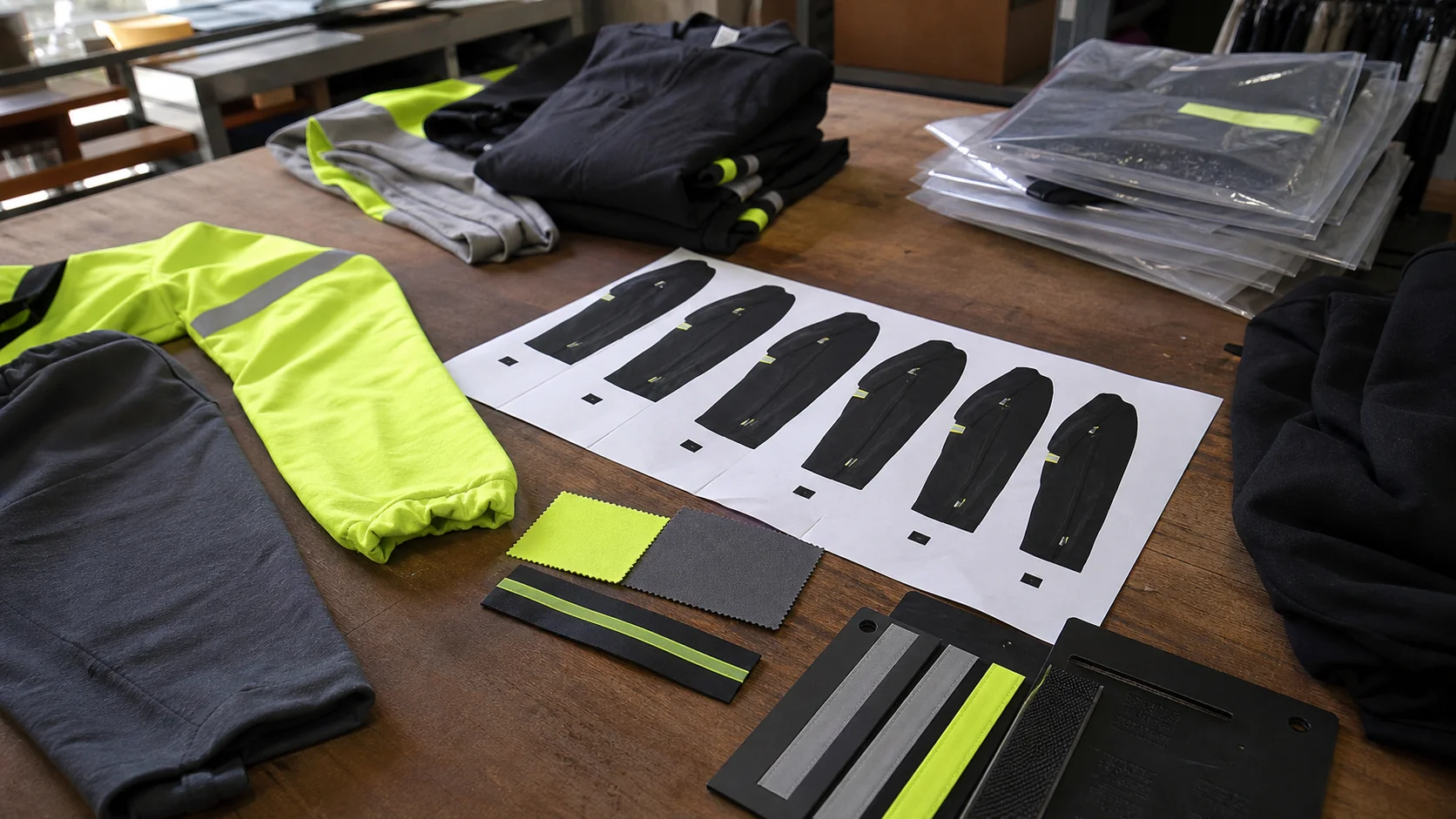
A sleeve print map is the placement guide that shows where the artwork sits relative to sleeve cap, underarm seam, cuff, and side panel. For facilities managers, this map should be more than a graphic. It should function as a risk document.
Start by checking the exact print coordinates. A print that sits too close to a seam may behave differently after the garment is worn and stretched. Even if the artwork is technically within tolerance, a few millimeters can matter when the sleeve rotates, the fabric relaxes, or the ink layer dries with tension.
Look at how the map is drawn:
One common mistake is approving a clean mockup without checking whether the final production size changes the print’s relationship to the seam. On small sleeves, a slight scale adjustment can push the decoration closer to a stress point than originally intended.
A good map also helps set expectations with the supplier. If the artwork must stay clear of the underarm seam by a specific distance, put that in writing. If the print must align with a pocket, badge, or reflective trim, define the reference point precisely. Vague placement language causes rework.
Seam strength is not only a sewing issue. It depends on fabric type, needle selection, stitch density, thread quality, and trim choices. Sleeve print durability can also change based on how much heat, pressure, or ink saturation the fabric can take.
Facilities managers should review the fabric spec first. A heavier ring-spun cotton knit behaves differently from a lightweight polyester blend. Stretch content matters as well. A small amount of elastane can improve comfort, but it also increases the chance that a print or seam will move after repeated use unless the pattern and stitch are adjusted properly.
Stitch construction is another important variable. Overlock seams, coverstitch details, and reinforced topstitching do not perform the same way. A narrow seam allowance may save material, but it can reduce margin for error in laundering and wear. On higher-stress garments, that tradeoff deserves attention.
Thread selection should not be treated as an afterthought. Thread denier, fiber content, and colorfastness all affect both appearance and strength. In some programs, the print may outlast the thread; in others, the thread may remain fine while the print fails first. A complete review compares both.
Trim choice also matters. Labels, heat transfer branding, reflective elements, and elastic inserts all influence how a sleeve behaves. Any added trim can create a stiffness transition, and that transition may become the weak point next to the decorated area.
For many facilities programs, the safest approach is to specify the performance target rather than only the aesthetic target. A useful spec will identify the fabric weight, seam allowance, stitch type, thread type, and decoration method together.
Sample approval should happen in stages. A flat artwork approval is not enough. The garment needs a production-style evaluation that includes decoration placement, hand feel, seam tension, and wash durability.
A practical approval flow usually looks like this:
Buyers should ask whether the vendor is using a strike-off, lab dip, or pre-production sample and what each step confirms. A strike-off may show artwork color and edge quality, but it does not always reveal how the garment behaves after laundering. A pre-production sample is more useful because it reflects the actual construction method and trim package.
Lead times depend on the print method, fabric availability, sample rounds, and how quickly approvals come back. A typical small-to-mid program may need 7 to 14 days for sample development and 2 to 6 weeks for bulk production, but complex trims, specialty fabrics, or higher-volume orders can push that longer. When the schedule is tight, the approval window often becomes the real bottleneck.
Facilities teams should also ask for a documented test plan. Even a basic internal check can reveal problems before bulk cut-and-sew begins. Inspect sleeve alignment after a wash cycle, check for seam twisting, and look for ink cracking where the sleeve bends. If the garment is intended for repeated industrial use, a more formal test protocol is worth the extra time.
Most failures in sleeve print programs are predictable. The issue is usually not a single catastrophic defect. It is a combination of small misses that add up across a batch.
The first risk is print placement drift. If the artwork sits too close to a seam, even a small shift in cutting or sewing can change the final look. The second risk is incompatible heat or pressure during decoration. Some fabrics tolerate the process well, while others distort, shine, or shrink locally.
The third risk is poor seam recovery after laundering. If the garment fabric relaxes while the print remains fixed, the sleeve can warp. That creates a mismatched appearance and can make the garment feel cheap even when the printing itself is clean.
The fourth risk is weak inspection discipline. A supplier may check print clarity but miss seam puckering, thread breakage, or misaligned sleeves. Good QC should inspect the whole sleeve area, not just the decoration.
Another practical risk is color shift across replenishment orders. Facilities managers often reorder in waves. If the fabric lot changes, thread lot changes, or ink cure changes, the next shipment may not match the first. That matters when uniforms are issued by department or site and need to remain visually consistent.
Tradeoff matters here. Tight pricing can be acceptable if the program is low risk and the artwork is simple. It is a poor choice when the sleeve sits under hard wear, frequent washing, or high visibility requirements. In those cases, a slightly higher unit cost is usually cheaper than replacement and rework.
Every program is different, but facilities managers still need baseline ranges to compare quotes. The table below gives a cautious starting point for common sleeve print and seam review decisions. These are not universal standards. They are practical benchmarks for sourcing discussions.
Spec Area Typical Range Buyer Note MOQ for decorated tops 50 to 300 units Smaller runs are possible, but unit cost usually rises. Sample approval time 7 to 14 days Can extend if artwork revisions or fabric sourcing are involved. Bulk production lead time 2 to 6 weeks Depends on order size, season, and print method. Seam allowance on sleeves 6 to 10 mm typical Higher-stress garments may justify more margin. Artwork clearance from seam 10 to 25 mm recommended Use more clearance when the sleeve bends heavily or stretches. Fabric weight for workwear knits 160 to 240 gsm Heavier fabrics usually handle print and seam stress better.These ranges help the buying team ask better questions. For example, if a vendor is quoting a very low MOQ, confirm whether the garment is stock-based or fully custom. If the supplier promises a short lead time, ask what happens if the print approval changes. The fastest program is not always the most reliable one.
A facilities manager should also look at cost structure. Lower price can come from lighter fabric, fewer stitches, simpler print application, or reduced inspection. Each of those choices has consequences. The quote should be read as a performance proposal, not just a price sheet.
Vendor review should be evidence-based. Ask for garment specs, decoration method details, and inspection standards before placing the order. A capable supplier will be able to explain how the print aligns with seam construction and what happens if the artwork must be shifted.
Strong vendors usually provide clear answers to the following:
It is worth asking whether the supplier checks the garment after decoration for seam distortion. A print can pass visual inspection and still be applied in a way that changes the sleeve’s hang. That is a quality issue, not just an aesthetic one.
For a broader sense of company background and capabilities, see fabrikn.com/about-us/. That kind of context matters when you are evaluating whether a vendor can support repeat orders, quality continuity, and specification discipline.
Facilities managers should favor suppliers who document problems instead of hiding them. If a fabric type is not suitable for a certain print location, the best answer is a clear warning and a revised method, not an optimistic promise. That honesty protects both lead time and budget.
Before you approve a custom sleeve print map seam strength review, make sure the following items are in place:
This checklist saves time because it reduces back-and-forth once the order is in motion. It also helps procurement and operations teams stay aligned. One group may care more about cost, while the other cares more about durability. A shared checklist turns both concerns into measurable requirements.
For projects that need a full-service print and decoration conversation, start with the service overview at fabrikn.com/services/ and move into project intake from there.
A custom sleeve print map seam strength review is a practical step, not a luxury step. For facilities managers, it reduces the risk of premature wear, inconsistent branding, and avoidable reorder costs. The main discipline is to review the print, seam, fabric, and approval process as one system.
The best result usually comes from a balanced specification: enough fabric weight to support the garment, enough seam allowance to tolerate wear, enough clearance from stress points, and enough testing to confirm that the printed sleeve behaves the way it should after use. That approach may not always be the cheapest on paper, but it is usually the better purchasing decision over the life of the program.
If you are starting a new decorated workwear order or reviewing a current supplier, use the production details first and the mockup second. The mockup sells the idea. The seam and print review decides whether the garment will hold up.
Get a free quote from Fabrikn — your trusted B2B clothing manufacturer with 10+ years of experience. MOQ as low as 200 pieces.
Get a Free Quote →It is a sourcing check that evaluates how sleeve print placement, garment seam construction, and fabric behavior work together under use. The goal is to reduce failure risks before bulk production.
Typical MOQ ranges for decorated apparel are often 50 to 300 units, depending on the garment, print method, and whether the item is built from stock or custom fabric. Lower MOQ usually means higher unit cost.
One to two sample rounds are common. A flat art approval may be followed by a pre-production sample, especially when the print sits near a seam or the garment uses a stretch fabric.
Common causes include too little seam allowance, incompatible decoration heat or pressure, fabric distortion after washing, and print placement too close to a high-movement area.
Many programs take 2 to 6 weeks after sample approval, though complex trims, high volume, or fabric sourcing issues can extend the schedule.
Include the fabric blend and weight, seam type, seam allowance, print size and placement, color references, sample approval steps, and inspection standards. Clear specs reduce avoidable errors.