
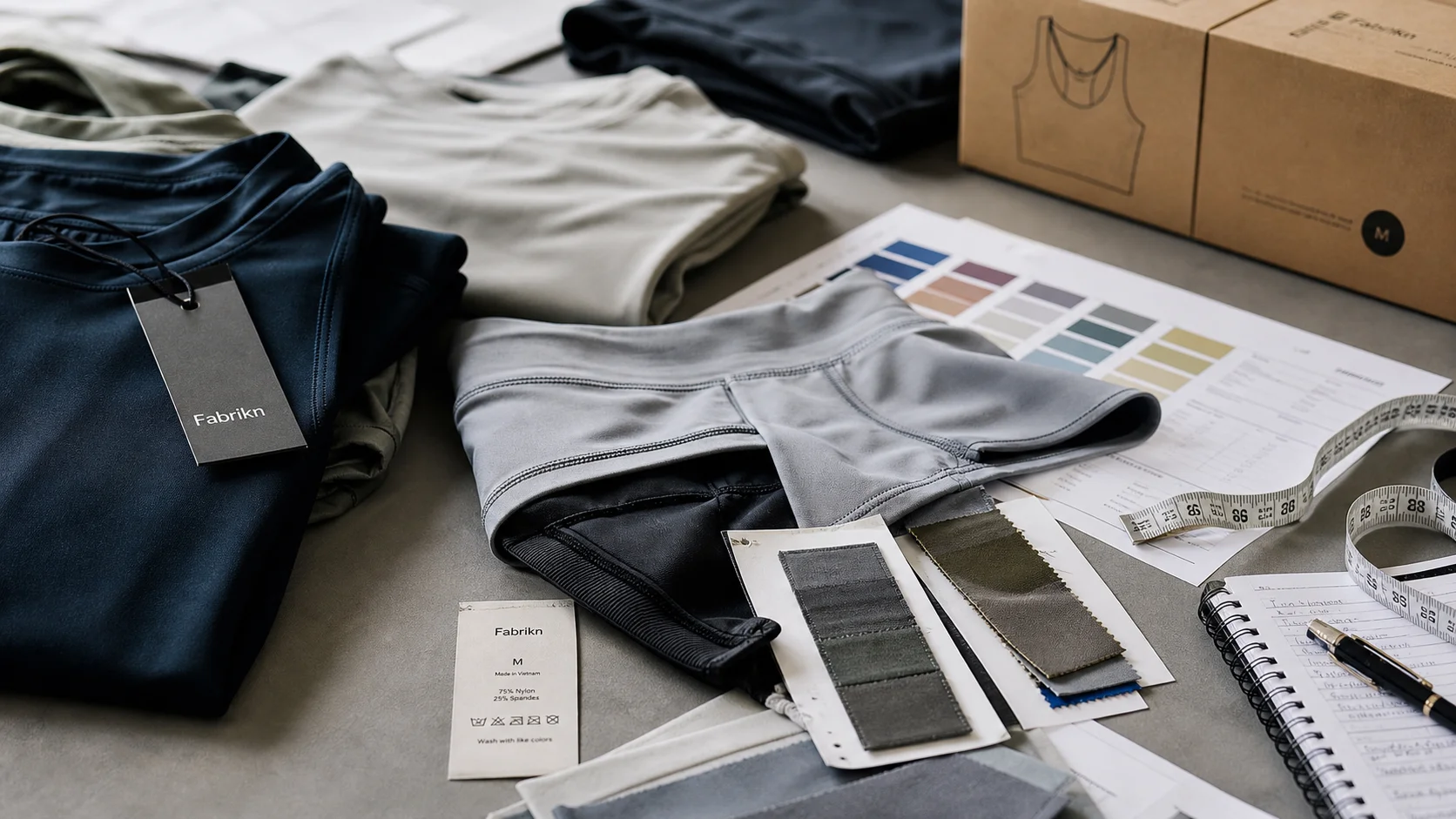
A focused outline for sourcing trims on custom soccer team uniforms sold through retailer collections, with practical coverage of materials, color...
Custom Soccer Team Uniform Trim Sourcing - Fabrikn production reference
Custom team uniforms trim sourcing for soccer club retailer collections is one of the places where small decisions have outsized commercial impact. Trim choices shape the look of the kit, affect production lead time, influence defect risk, and often determine whether a retailer can hold a consistent collection across youth, adult, home, away, and third-strip programs. In practice, trim is not just decoration. It is part of the garment’s construction, branding, wash performance, and margin control.
For soccer clubs and retail programs, trim usually includes collar finishes, cuff details, side panels, piping, chevrons, insert tapes, hem binders, woven labels, heat-transfer neck prints, zipper pulls on warm-ups, drawcord ends, sleeve tape, and decorative stitching. Each item creates a sourcing decision. The right choice depends on target price, order volume, performance requirements, and how much variation the buyer can tolerate across replenishment runs.
Trim is one of the easiest places for a soccer uniform program to drift off-spec. A body fabric can be approved and still land wrong if the collar rib is too loose, the contrast tape shade is off, or the heat-transfer logo sits poorly against a textured panel. Buyers tend to focus on the visible garment silhouette, yet trim is what keeps the line consistent across sizes and repeat orders.
For club retailers, trim also carries brand discipline. A youth replica, women’s fit, and elite team issue shirt may all share the same visual identity, but the trims must survive different pattern blocks and different price points. That often means balancing a premium branded look with a supply chain that can actually repeat the same result. A design that depends on a specialty braid or custom jacquard tape can look strong on a sample and become expensive or unstable at scale.
There is a commercial rule worth keeping in view: the more custom the trim, the more the program depends on early sign-off, stable forecasting, and disciplined color control. That is acceptable for flagship ranges. It is a poor fit for highly volatile retailer programs with unpredictable reorders.
Soccer teamwear uses a fairly predictable trim set, but the commercial role of each item varies by program. The main trim categories are below.
Collars are one of the most visible style cues in soccer apparel. Common constructions include rib crew necks, V-necks, mock collars, polo-style collars for off-pitch wear, and bonded or self-fabric necklines for performance shirts. Rib collars usually offer better shape recovery and a cleaner premium look. Self-fabric necks are often easier to integrate into sublimated or cut-and-sew kits, though they can lose definition if the knit weight is too light.
Rib cuffs, folded hems, and contrast sleeve bands are standard across warm-ups and some training tops. Sleeve trim has to work with player movement and repeated laundering. A cuff that looks sharp in the sample room can stretch out if the rib quality is too soft or the recovery yarn content is too low. For activewear, buyers should confirm stretch, recovery, and pilling resistance before approving bulk.
Side panels are not merely styling devices. They help control fit, ventilation, and visual identity. Knit inserts, mesh panels, and contrast side seam tapes are common on soccer jerseys and training tops. The main sourcing issue is color consistency. If the panel is made from a different knit base or finishing route, shade variation can show up under stadium lighting or e-commerce photography.
Piping and decorative tape create a premium athletic look, but they add sewing complexity. They also introduce seam bulk and possible puckering. Buyers need to decide whether the visual benefit justifies the extra labor and quality risk. For lower-ticket retailer programs, simple applied tape or printed detailing is often the smarter route.
Woven labels, satin labels, TPU badges, silicone patches, and heat-transfer care labels are all part of trim sourcing. For soccer retailer collections, the garment label must be legible, compliant, and durable through wash cycles. A soft hand is desirable, but not at the expense of traceability or brand compliance. Heat-transfer neck labels reduce irritation, though they can fail if the substrate fabric has silicone contamination or an unsuitable finish.
Training pants, rainwear, and warm-up layers often use drawcords, cord ends, zipper pulls, and toggles. Hardware must be specified carefully. Nickel-free and child-safe requirements may apply depending on market and age group. Cheap hardware can create QC problems quickly, especially when color coating chips or cords fray after washing.
Trim sourcing is only as reliable as the spec sheet behind it. Buyers should avoid vague descriptions such as “high quality rib” or “premium tape.” Those phrases do not protect the order when bulk production starts.
For soccer kits, the most common trims are polyester-based because they align with the main garment fabric and hold color better in performance programs. Cotton components can still be acceptable for some retail and lifestyle collections, especially in neck labels or premium casual wear, but they need tighter shrinkage control. Mixed-material trims can create inconsistencies unless the buyer sets strict wash tests and tolerance ranges.
Color matching deserves special attention. Trim suppliers frequently work from standard yarn stocks, while the garment body may be dyed or printed to order. If the trim is intended to match a stripe, panel, or secondary club color, approve the sample in the actual garment context, not in isolation. A trim roll can look correct on the bench and still read too warm or too cool next to the finished shirt.
In soccer teamwear, trim approval should be treated as a production control step, not a styling formality. A sharp sample that lacks a locked spec often becomes a claim, a delay, or a repeat-order problem.
Custom trim sourcing is usually staged in the same order as the garment development process. Skipping steps saves little time and usually increases risk later.
Start by deciding whether the trim is structural, decorative, or compliance-related. Structural trims affect fit and durability. Decorative trims affect brand identity. Compliance trims cover labels, safety, and care information. Each category needs a different approval threshold.
A useful tech pack should include artwork, placement, measurements, target materials, color codes, application method, and tolerance. For retailer collections, the tech pack should also note whether the trim must be repeatable across seasons or only for one-off club drops. Reorder programs need tighter control than event-specific kits.
Suppliers can usually provide swatches, strike-offs, or trim cards before bulk production. That step is worth taking even when the trim appears straightforward. Many defects begin with the wrong base material, not the wrong sewing operation.
Sample approval should cover hand feel, appearance, color, stretch, application quality, and wash behavior if possible. For heat-transfer trims, ask for wash and abrasion testing where the order value justifies it. A pre-production sample is not the same thing as bulk confirmation, but it is the best checkpoint before a purchase order is committed.
Before bulk starts, confirm trim inventory, color lot consistency, cutting direction where relevant, and packaging method. Trim often arrives in mixed lots or partial rolls. That is manageable only when the supplier has documented the lot control process.
Inspection should verify placement accuracy, registration on print or weave, stitch quality, color uniformity, and trim attachment strength. For retail collections, buyers should also check size grading consistency because trim proportions can look wrong when scaled up or down across youth and adult sizes.
Fabrikn’s service pages can be useful for teams structuring a sourcing workflow or building a private-label program. See the broader capability overview at /services/, or use the direct route to discuss a collection at /contact-us/.
MOQ is where many trim ideas become commercially real or commercially impossible. The numbers vary by construction, but some practical ranges are common in the market.
Trim Type Typical MOQ Range Lead-Time Driver Risk Level Standard rib collar or cuff 300 to 1,000 pieces per color/style Yarn stock and knitting schedule Low to medium Custom jacquard tape 1,000 to 3,000 meters Loom setup and sample approval Medium to high Woven label 1,000 to 5,000 pieces Artwork approval and finish method Low Heat-transfer neck label 500 to 2,000 pieces Artwork, film, and application testing Medium Custom patch or badge 300 to 2,000 pieces Mold/tooling and color match Medium to highLead time usually depends on more than the trim itself. The largest variables are artwork sign-off, lab dip approval, raw material availability, and how many times the buyer revises the design. A clean approval process can keep a trim item on a shorter timeline. A changing spec can add weeks.
Retailers should be careful about promising fast replenishment on highly customized trims. A standard collar can often be repeated more easily than a jacquard side tape or molded badge. If replenishment speed matters, reduce custom elements where they do not materially support the brand story.
Retail collections are not the same as team-issued apparel. Retail programs need stronger shelf appeal, better packaging discipline, and a tighter sense of margin. Trim sourcing has to support those goals without making the line too expensive to repeat.
Soccer club retailers usually need multiple silhouettes: match jersey, training top, pre-match layer, travel wear, and fan apparel. The trim system should feel connected across all of them. That may mean using a shared neck label format, coordinated color blocking, or a family of tapes and badges that tie the collection together. Consistency improves merchandising, but only if the trim supplier can hold the same standard across styles.
A premium retail range can support more elaborate trim. A value program often cannot. Buyers should avoid overbuilding lower-price SKUs with expensive trim that the consumer will not pay for. Simple, clean trims usually perform better in value tiers. Premium ranges can justify layered details, provided the factory has the skill to apply them consistently.
Reorders are where custom trim becomes expensive. If the original trim uses a special dye lot or tooling-dependent patch, the next batch may not match exactly. Retailers should decide early whether the collection will tolerate small shade differences or whether repeat orders must be nearly identical. That choice affects sourcing strategy more than the style board does.
Trim-related defects often appear after the garment has already passed the first visual check. That is why inspection needs to include both the trim piece and its application to the garment.
One of the most common issues is trim color drifting from the approved reference. This happens when yarn lots change, printing calibration shifts, or the trim is matched to a fabric finish that was not approved under the same lighting. Buyers should approve color under a controlled light standard.
Loose stitches, puckering, skipped seams, and twist in tape application are frequent defects in trims that are sewn onto stretch fabrics. The risk increases when sewing operators switch between thick and thin areas or when the trim is applied over a curved seam line.
Ribbing and binding can shrink or grow after wash testing. If the trim is not pre-shrunk or correctly stabilized, collars can warp and hems can wave. That defect is especially visible on performance jerseys where the rest of the garment holds shape well.
Badges, transfers, and printed tapes can shift out of registration. Even small alignment errors are noticeable on soccer apparel because club branding tends to use strong symmetry and crisp lines. Buyers should define registration tolerance in the spec pack.
Heat transfers, silicone prints, and bonded details must survive repeated wear and laundering. If the wrong adhesive is used or the curing process is off, edge lifting can appear after very few wash cycles. That is a return risk, not a cosmetic nuisance.
A trim supplier should be judged on repeatability, documentation, and communication speed as much as on price. The lowest quote can become the most expensive option if the supplier cannot hold spec.
Suppliers that can explain their process clearly are usually easier to work with than suppliers that only talk about price. A practical sourcing partner will ask questions about fabric base, intended wash cycle, placement constraints, and whether the trim must work across several garment sizes. That is a positive signal. It means the supplier is thinking about production risk rather than just quoting a line item.
It also helps to check whether the supplier understands the retailer side of the business. A club collection often needs barcoded packaging, reorder naming discipline, and consistent carton labeling. Those details are not glamorous, but they matter when a buyer is managing multiple SKUs under one season plan.
For brand, capability, and company background, the overview at /about-us/ is useful for sourcing teams comparing program fit and operational structure.
Trim decisions are rarely binary. They are tradeoffs between visual value, production reliability, and unit cost. A better-looking trim can be worth the spend if it helps sell the collection, but only when the supply chain can support it.
Custom jacquard tape creates a strong branded identity, yet it adds setup cost and minimums. A printed stripe is cheaper and easier to repeat, though it may look flatter and wear differently. Silicone badges feel modern and premium, but they can increase rejection risk if placement or curing is inconsistent. Woven labels are durable and controlled, while heat-transfer labels improve comfort but demand more process control.
The smartest buying approach is to reserve the most custom trims for hero SKUs and use simpler trim systems on supporting items. That keeps the collection coherent without forcing every garment into the highest-cost construction. It also improves the odds that a retailer can carry stock through season changes and replenishment cycles.
Trim sourcing should be treated as part design discipline, part supply chain discipline. A buyer who sets clear specs, controls sample approval, and keeps an eye on MOQ and inspection risk will usually end up with a cleaner program than one who starts from a mood board and figures out the trim later.
Get a free quote from Fabrikn — your trusted B2B clothing manufacturer with 10+ years of experience. MOQ as low as 200 pieces.
Get a Free Quote →Trim sourcing is the process of selecting and approving the smaller components used on the garment, such as collars, cuffs, tapes, labels, badges, piping, and drawcord hardware. In soccer teamwear, trim affects appearance, durability, comfort, and repeat-order consistency.
Typical MOQ varies by trim type. Standard rib trims may start around 300 to 1,000 pieces per color or style, while custom tapes and branded patches often need 1,000 units or more. Exact minimums depend on material, tooling, and color complexity.
Lead time depends on artwork approval, sample making, lab dips, and raw material availability. Simple trims may move faster, while jacquard tapes, molded badges, and special hardware usually take longer. A buyer should assume revisions will add time.
Color inconsistency is one of the biggest risks, followed by poor application quality and poor wash performance. A trim can look acceptable in isolation and still fail when matched against the finished garment or after laundering.
Only when the sales price and reorder plan can support them. Highly custom trims improve brand identity, but they increase cost and make replenishment harder. Many retail programs work better with a limited custom set and simpler supporting trims.
Sample approval locks down the look, feel, and construction before bulk production begins. Without it, the buyer has little protection against shade mismatch, size inconsistency, or trim application defects in production.
Custom soccer team uniform trim sourcing works best when the buyer treats trims as controlled components rather than finishing touches. The strongest programs are usually the ones with the clearest specs, the simplest feasible construction, and the least tolerance for guesswork.