
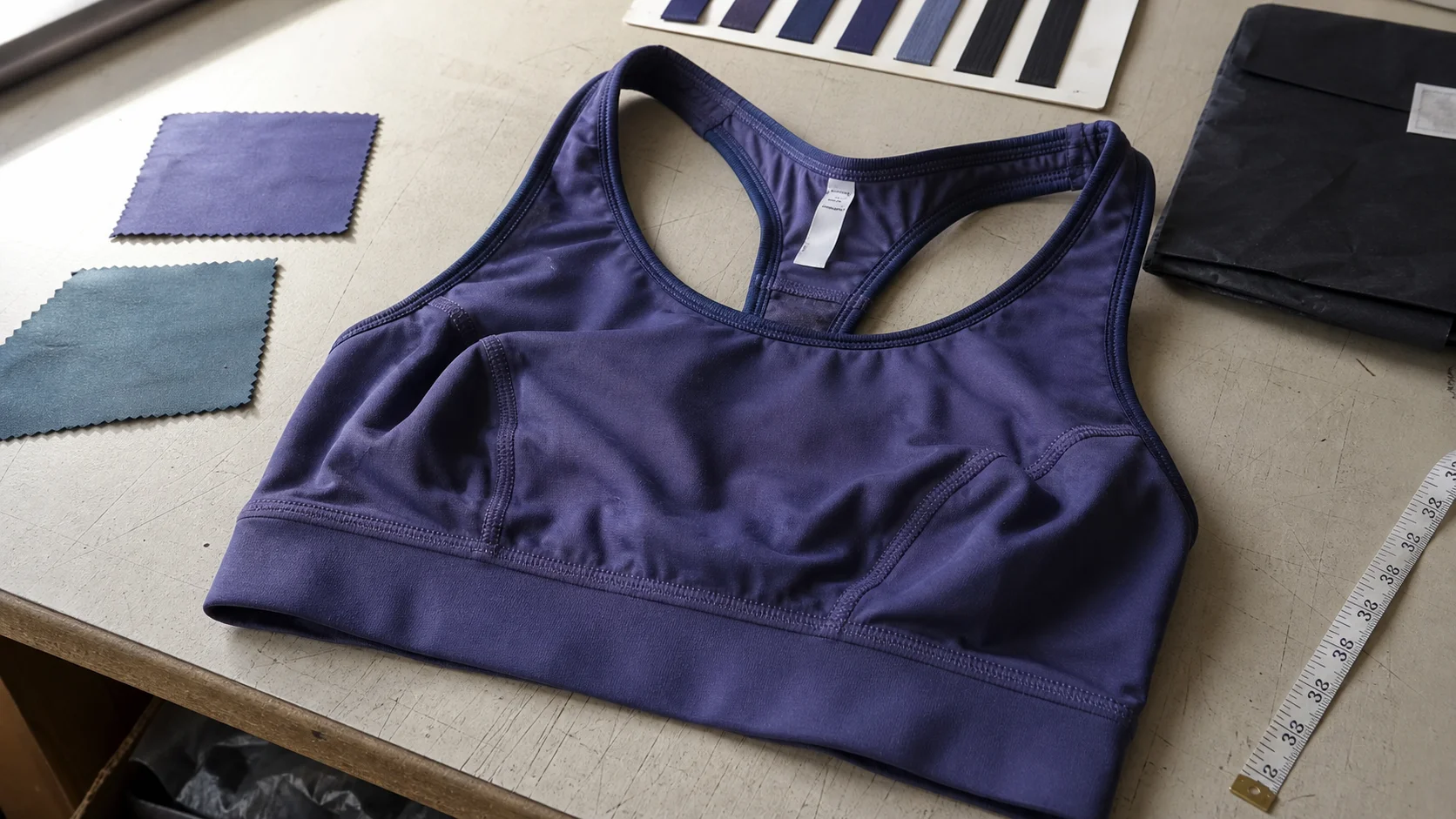
A product-specific audit outline for hotel procurement teams sourcing custom sports bras for spa, wellness, gym, and staff uniform programs.
Sports Bra Vendor Audit Brief for Hotel Buyers - Activewear & Teamwear manufacturing guide
Category: Activewear & Teamwear
A custom sports bra order for hotel procurement is not the same as a standard retail activewear purchase. Hotels buy for controlled environments: staff uniforms, spa teams, wellness instructors, resort fitness programs, guest retail corners, and branded amenity packages. The product must look consistent, wash well, support movement, and avoid fit complaints across a broad wearer group.
The risk is not only whether the sports bra looks good in a sample photo. The real question is whether the vendor can repeat the same fit, shade, stitching, support level, packaging standard, and delivery timing across bulk production. A weak vendor may pass on price and fail on execution. For hotel buyers, that failure becomes an operations problem: delayed uniform rollouts, inconsistent branding, staff discomfort, guest returns, and extra freight cost.
This audit brief is designed for procurement teams sourcing custom sports bras from an apparel manufacturer or private-label activewear vendor. It focuses on factory capability, fabric control, support construction, sample approval, inspection points, MOQ expectations, and commercial tradeoffs. Buyers developing a wider uniform or wellness apparel program can also review related manufacturing support through Fabrikn services.
A hotel sports bra program should be assessed as a performance uniform item, not a simple logo merchandise item. Fit, recovery, opacity, and wash durability matter as much as branding.
The audit should cover both the vendor’s business reliability and the factory’s technical ability. Some vendors are strong at sales presentation but weak at production control. Others have good sewing capacity but limited experience with compression fabrics, elastic handling, or cup construction. Procurement teams should separate these two questions before issuing a purchase order.
The audit brief should apply to these sourcing scenarios:
A practical audit does not need to be overly academic. It should confirm whether the vendor can make the exact product required, at the expected quantity, within the hotel’s delivery window, and with tolerable quality risk. If the answer depends on too many assumptions, the buyer should slow down before committing bulk payment.
Sports bras for hotels fall into different performance levels. A low-impact bra for yoga, spa, or lounge retail has different construction needs from a medium-impact bra for gym training or instructor uniforms. Procurement teams should specify the intended activity level before requesting quotes. Without that detail, vendors may quote a cheaper construction that does not match the wear environment.
Hotel Use Case Recommended Support Level Key Product Priorities Common Risk Spa and yoga staff Low to medium impact Soft handfeel, modest coverage, breathable fabric Fabric too thin or straps stretching after wash Fitness instructors Medium impact Compression, bounce control, sweat management Insufficient underband support Resort retail Low to medium impact Brand appeal, size range, packaging, color consistency Guest returns due to poor sizing Employee wellness events Low to medium impact Cost control, quick delivery, logo placement Rushed sampling and uneven print quality Premium hotel merchandise Medium impact Premium fabric, refined stitching, retail-ready trims MOQ too high for seasonal demandFor hotel procurement teams, the strongest buying position is a clear product brief. It should include target user, support level, fabric weight, size range, color standard, logo method, packaging, compliance requirements, and target delivery date. If the vendor receives only a reference image and a logo file, the quote will be vague and the sample process will likely stretch.
A sports bra vendor should be assessed on activewear-specific capabilities. General cut-and-sew experience is not enough. Sports bras require controlled stretch handling, accurate elastic tension, clean binding, stable seams, and repeated fit accuracy across sizes. The buyer should ask what equipment and technical processes are used for stretch garments.
Useful capability checks include:
Procurement should request production photos, machinery lists, sample history by category, fabric swatches, and a basic production flow. A vendor that avoids technical questions may still be able to produce simple garments, but it is a poor fit for hotel programs where repeat orders and brand consistency matter.
Factory capacity should also be checked against the hotel’s timing. A small workshop may handle 300 pieces well but struggle with 3,000 pieces across multiple colors and sizes. A larger factory may offer capacity but impose higher MOQs and less flexibility for small resort-specific assortments. The correct choice depends on order structure, reorder plans, and the cost of delay.
Fabric selection drives comfort, support, opacity, and perceived value. For custom sports bras, common fabrics include polyester-spandex, nylon-spandex, recycled polyester-spandex, and performance blends with moisture-wicking finishes. Hotel buyers should avoid choosing fabric by GSM alone. Weight matters, but stretch recovery, opacity, handfeel, colorfastness, and pilling resistance are equally important.
Typical fabric specifications may include:
Trim quality is often where low-cost vendors cut corners. Underband elastic should be firm but not abrasive. Strap elastic must not twist easily. Removable cups should fit the cup pocket properly and should not fold, migrate, or show hard edges through the shell fabric. Labels should avoid irritation, especially for staff uniforms worn through long shifts.
Logo application deserves a separate check. Heat transfer logos can look clean on activewear, but they must be tested for stretch, wash durability, and cracking. Embroidery can feel premium, yet it may irritate the skin or restrict stretch if placed poorly. Screen printing can work for larger branding, but ink handfeel and stretch resistance must be approved before bulk production.
Fit approval is the most important stage in a custom sports bra program. A sports bra that looks correct on a table can fail during movement. Hotel buyers should request wear testing across the intended size range, especially if the order is for uniforms. Staff comfort affects adoption, and poor fit can create immediate complaints.
A controlled sample approval process usually includes these steps:
Size grading should not be treated as automatic. A pattern that works in size M may not work in XS or XXL. Underband tension, cup coverage, and strap length often need practical adjustments. For hotel uniform programs, procurement should ask whether the vendor can support extended sizing. A limited size range may reduce cost but can create staff allocation problems.
Fit comments should be written clearly. Terms like “make it better” or “more supportive” are too vague. Better comments include “increase underband width by 1 cm,” “reduce front neckline drop by 1.5 cm,” “shorten strap by 2 cm on size S,” or “switch cup foam to softer edge profile.” Specific comments reduce sampling cycles and prevent misinterpretation.
MOQ depends on fabric availability, dyeing requirements, logo method, trim customization, and factory size. For custom sports bras, typical MOQ ranges can vary widely. Stock fabric with standard trims may start around 100–300 pieces per style or color with some vendors. Custom-dyed fabric often pushes MOQ to 500–1,000 pieces per color. Fully custom fabric, jacquard elastic, molded cups, and private-label packaging can increase MOQ further.
Order Type Typical MOQ Range Best For Tradeoff Stock fabric, simple logo 100–300 pieces Trial orders, boutique hotel retail, events Limited color and fabric control Custom color using available base fabric 300–800 pieces Brand-matched uniforms or retail capsules Longer lab dip and dyeing process Custom trims and private labels 500–1,000 pieces Multi-property hotel groups Higher upfront commitment Fully custom performance program 1,000+ pieces Long-term activewear lines More development time and higher sampling costLead times should be reviewed in stages, not as one broad promise. A supplier may quote 30–45 days for production, but that clock usually starts after fabric approval, fit approval, deposit, and trim confirmation. Lab dips, strike-offs, cup sourcing, elastic development, and packaging approvals can add time before production begins.
A cautious timeline for a new custom sports bra program may look like this:
Hotel buyers should be careful with vendors offering very short lead times for complex orders. Fast delivery may be possible for stock fabric and simple branding, but compressed schedules usually reduce time for testing and fit correction. That may be acceptable for a one-day wellness event. It is not ideal for staff uniforms or premium guest retail.
Sports bras have inspection risks that differ from basic T-shirts or hoodies. Stretch garments can look acceptable when relaxed but fail after wear or washing. The inspection plan should include measurement, visual checks, construction checks, stretch recovery, logo durability, and packing accuracy.
High-risk inspection points include:
Measurement tolerance should be defined before production. Sports bras are stretch garments, so measurement method matters. The vendor and buyer should agree whether measurements are taken relaxed, stretched, or both for certain points. Key points of measure usually include half chest, underband width, front body length, strap length, neckline drop, armhole curve, and bottom opening.
For hotels ordering across multiple properties, packing accuracy is critical. Cartons should be marked by style, color, size, and destination if the order is split. A good vendor should provide a packing list before shipment. Procurement teams should verify that retail orders, uniform orders, and spare inventory are not mixed without clear labeling.
Hotel buyers should request compliance documents based on the selling market and product use. For staff uniforms, requirements may be internal and operational. For guest retail, labeling, fiber content, country of origin, care instructions, and safety standards become more important. Rules differ by market, so procurement should confirm local requirements before bulk production.
Useful documents to request include:
Social compliance and factory audits may also be required by larger hotel groups. Buyers should avoid assuming that every vendor has current third-party audit records. Some small factories produce good garments but lack formal certifications. That is not automatically a rejection, but it changes the risk profile. For branded hotel groups with supplier policies, missing audit documentation can block onboarding even if the sample is acceptable.
Sustainability claims require caution. Recycled polyester, recycled nylon, organic cotton blends, and low-impact dyes should be supported by documents where relevant. A vendor’s marketing claim should not be used on guest-facing packaging unless the hotel has reviewed acceptable proof. Unsupported sustainability language can create reputational risk.
A simple scorecard helps procurement compare vendors consistently. Price should not dominate the evaluation. A low unit cost may become expensive if the vendor needs multiple sample rounds, misses delivery, or ships inconsistent quality. For hotel programs, reliability and repeatability often justify a moderate price premium.
Audit Area What to Check Suggested Weight Buyer Judgment Technical capability Sports bra construction, stretch fabric handling, pattern and grading skill 25% Reject vendors with no activewear proof for medium-support styles Fabric and trim control Fabric sourcing, elastic quality, cup options, color consistency 20% Prioritize vendors that can document material specs clearly Sampling discipline Fit samples, size sets, pre-production sample process 20% Do not skip size sets for uniform programs Quality management In-line QC, final inspection, measurement reports, packing control 15% Require inspection before balance payment Commercial fit MOQ, price, payment terms, lead time, reorder flexibility 15% Match vendor scale to hotel demand Compliance readiness Labels, test reports, audit documents, sustainability proof 5% Increase weighting if product is sold to guestsScorecards are most useful when paired with sample review. A vendor may score well on documents but produce a weak sample. Another may have good workmanship but poor communication. Procurement teams should treat both issues seriously. Communication delays during sampling usually become bigger problems during production.
For hotel procurement teams sourcing custom sports bras, the safest route is to start with a controlled pilot order if timing allows. A pilot can validate fit, staff feedback, wash performance, logo durability, and vendor responsiveness before a wider rollout. This is especially useful for multi-property hotels or resorts planning seasonal replenishment.
A direct purchase can make sense when the style is simple, fabric is in stock, branding is minimal, and the event date is fixed. The buyer should still approve a pre-production sample and require final inspection photos or a third-party inspection for higher-value orders. Speed should not remove basic controls.
For premium retail or long-term uniform programs, the better tradeoff is usually a slightly longer development cycle with stronger fabric approval and size-set review. The unit price may be higher, but the total cost can be lower when fewer defects, returns, and emergency replacements are considered.
Procurement teams that need manufacturing guidance, vendor coordination, or custom activewear development can review Fabrikn’s company background and request sourcing support through the contact page.
The best vendor is not always the cheapest or the largest. For hotel buyers, the best vendor is the one that can hold fit, color, delivery, and packaging standards consistently at the required order size.
Get a free quote from Fabrikn — your trusted B2B clothing manufacturer with 10+ years of experience. MOQ as low as 200 pieces.
Get a Free Quote →The brief should include product use case, support level, size range, fabric composition, GSM target, logo method, trim requirements, packaging, MOQ expectation, delivery date, compliance needs, and inspection criteria. A reference sample or technical sketch helps reduce misunderstanding.
Typical MOQs often start around 100–300 pieces for stock fabric and simple branding. Custom colors, private labels, special elastic, molded cups, or custom packaging may push MOQ to 500–1,000 pieces or more. Exact MOQ depends on vendor capacity and material sourcing.
For a new style, a cautious timeline is often 6–12 weeks after the brief is confirmed, depending on sampling rounds, fabric availability, trim sourcing, and production capacity. Repeat orders using approved materials and patterns can be faster.
Yes, size set samples are strongly recommended for staff uniforms and wider retail size ranges. Sports bra grading affects support, coverage, underband tension, and comfort. Approving only one sample size increases the risk of fit problems in bulk production.
Heat transfer is common because it can look clean and feel lightweight, but it must be tested for stretch and wash durability. Embroidery can look premium but may irritate skin or reduce stretch if placed poorly. The best method depends on fabric, logo size, placement, and intended use.
Common risks include inconsistent underband tension, skipped stitches, wavy seams, poor stretch recovery, visible cup edges, color shading, peeling logos, and inaccurate sizing. These should be checked during sample approval and final inspection.
Yes, many vendors can source recycled polyester or recycled nylon blends, subject to MOQ and availability. Buyers should request supporting documentation before making sustainability claims on retail packaging or marketing materials.
A low-cost vendor may be suitable for simple event merchandise or small trial runs. For staff uniforms, fitness instructors, or premium retail, buyers should prioritize fit consistency, fabric quality, and inspection discipline over the lowest unit price.