
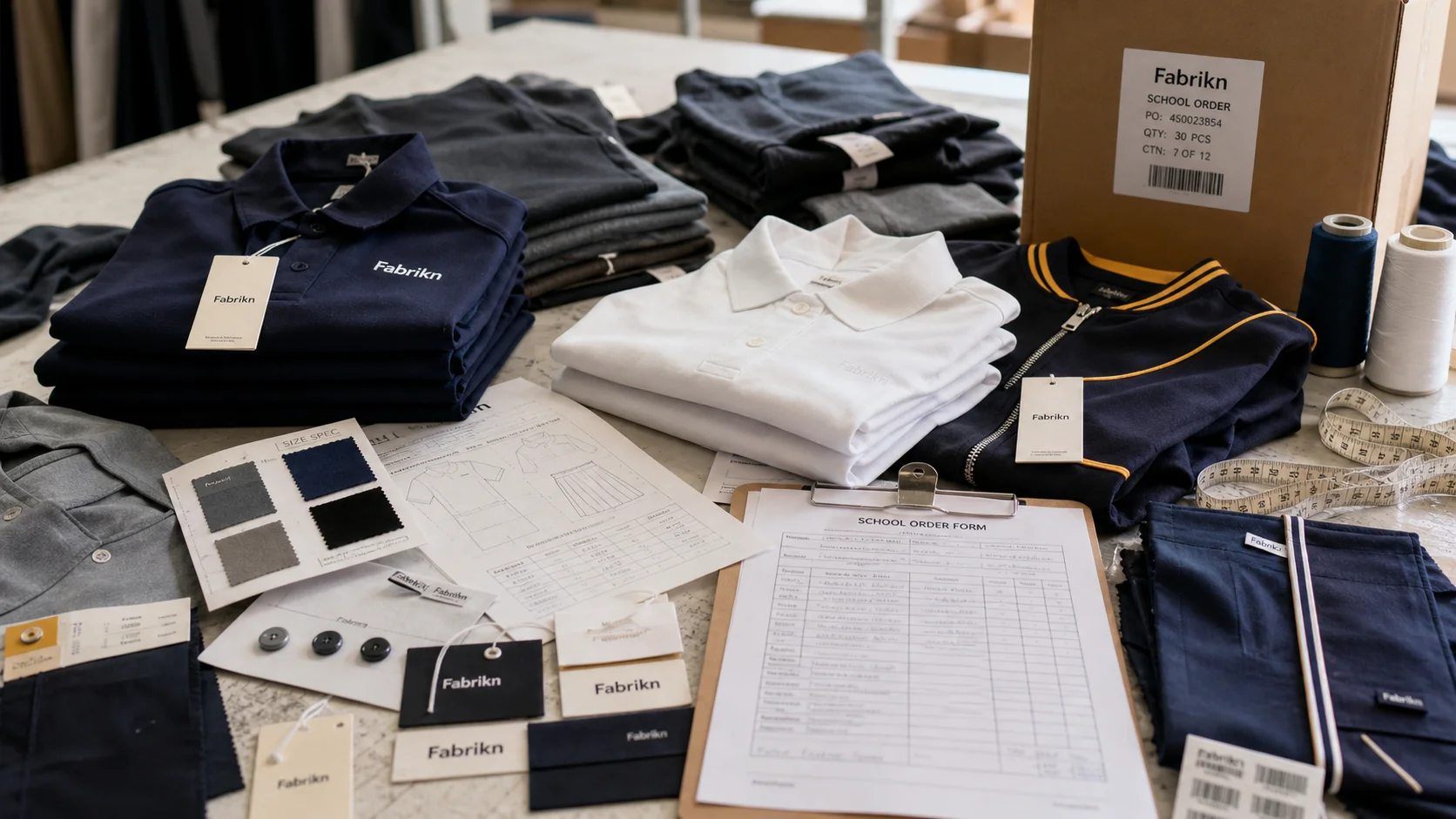
Custom Sublimated Jerseys compared by sample evidence, fabric or trim specs, MOQ, AQL terms, cost lines, delivery timing, and rework responsibility.
Fast answer: Custom Sublimated Jerseys: Tech Pack, Sample Gate, MOQ, and QC Terms should be judged by production evidence, not by a generic sourcing promise. The buyer needs sample proof, cost breakdowns, QC checkpoints, and delivery buffers in writing.
Ask for recent sample photos, measurement tolerances, fabric or print test assumptions, decoration test notes, packing examples, and a named inspection checkpoint. These details show whether the team can repeat an approved sample at bulk volume.
Separate garment cost, decoration, labels, packaging, sampling, testing, freight, and rush charges. Clear cost lines make it easier to reduce colorways, adjust size depth, or reserve more time for sampling.
Custom sublimated jerseys are revolutionizing how teams, clubs, and organizations present themselves on and off the field. Unlike traditional screen printing techniques, sublimation embeds the ink directly into the fabric, resulting in vibrant, durable, and breathable apparel that stands the test of countless competitions and wash cycles. As a B2B clothing manufacturer, Fabrikn takes pride in guiding partners through the complete process — from initial artwork to final production. A critical component to achieving a flawless custom sublimated jersey is ensuring that the design files are meticulously prepared.
In this practical guide, we dive deep into the design file checklist every team or business should follow. By paying attention to specifics such as resolution, color matching, layout, and supporting documentation, you can prevent costly delays and guarantee that the jerseys reflect your brand identity flawlessly. Whether you are coordinating jerseys for a youth soccer team or outfitting a corporate squad, this checklist will help navigate the subtleties that make a sublimated jersey exceptional.
Before diving into the more technical aspects of colors and formats, establishing a solid foundation for your design files is paramount. Accurate planning ensures that your creative vision translates well into wearable apparel.
Start by mapping out the key panels of the jersey: front, back, sleeves, collar, and side panels. Take note of where text, logos, and numbers should appear. Silhouettes and templates provided by manufacturing partners like Fabrikn are essential to work within the correct dimensions. Always base your design on the jersey template relevant to your chosen cut. For instance, a football jersey has different panel structures than a cycling jersey.
If you plan to offer multiple versions — home, away, alternates, or special events — include all variations in your design plan. This ensures that the manufacturing team understands every element and can maintain consistency across the entire line. Keep track of any unique specifications per version, such as colorblocking or gradient placements.
Compile high-resolution logos, sponsor marks, badge art, and typography files before starting the design. Vector files like AI, EPS, or PDF guarantee the best clarity and scalability. Ensure that you have usage rights or approvals for all assets, especially sponsor logos. Organizing these files in labeled folders simplifies collaborative workflows and aligns everyone on the creative direction.
Sublimation printing opens up endless creative possibilities, but it also demands precision. When designing your custom sublimated jerseys, pay attention to how artwork interacts with the fabric and the jersey structure.
Use Adobe Illustrator or similar tools to create the full jersey artwork, respecting seam lines and panel divisions. Include sleeves and collar details in your layout, as sublimation prints across the entire garment. Artists should consider how gradients, patterns, and motifs flow from one panel to another without abrupt breaks. If you plan on having a wraparound gradient or a repeating pattern across the body and sleeves, sample it on the prototype to visualize cohesiveness.
Plan the placement of player names and numbers with spacing and legibility in mind. Ensure that the fonts used are bold and high-contrast, especially when designing light letters on dark backgrounds or vice versa. In your design files, create placeholders for the names and numbers, allowing the production team to anticipate alignment with seams or sponsors. If you expect to personalize jerseys later, provide clear instructions on font styles, sizes, and any effects such as outlines or drop shadows.
Typography should complement the overall aesthetic while remaining readable from a distance. Convert fonts to outlines in your final artwork to avoid substitution issues. Keep text away from edges unless intentionally wrapped or inverted, as the dye may bleed slightly during sublimation, especially near seams. Maintain a minimum margin around the text areas and keep it properly centered within the panel.
Color fidelity is crucial for conveying brand identity. Since sublimation involves printing water-based dyes on polyester fabric, managing colors within your design files plays a significant role in ensuring accurate reproduction.
Always design in CMYK color mode. Sublimation printers require CMYK files, and RGB colors can shift unpredictably during the color separation process. Use Pantone conversion guidelines where necessary, especially for corporate branding requirements. If you’re unsure of color translation, Fabrikn’s production team can provide color swatches or mockups to match brand palettes effectively.
While special spot colors can be used for vibrant elements like metallics or neons, ensure that your design files clearly label these colors. In the case of full sublimation, spot colors are typically converted into CMYK equivalents. If you have metallic logos or foil elements, communicate those details separately, as sublimation itself is limited to dye-based printing and may not produce metallic shine without an additional finishing process.
When submitting design files, accompany them with a color callout document detailing CMYK values or Pantone references for major color swatches. Use consistent naming conventions—such as "Primary Navy," "Accent Lime," or "Gradient Sunset"—to avoid confusion. This practice is especially helpful when collaborating remotely or across departments.
A well-structured design file communicates professionalism and minimizes revisions. Here are the critical file specifications Fabrikn recommends for custom sublimated jerseys:
Remember to compress files without sacrificing quality when sending via file-sharing systems. Fabrikn’s clients benefit from our secure upload portal, allowing for seamless transfer of large design packages and reference materials.
While the artwork files themselves are vital, the supplementary documents you provide can expedite the production workflow and minimize misunderstandings.
Include a PDF or Word document summarizing the design concept, the intended audience, and any specific requests. This can highlight how gradients should blend, whether any elements require embossing, or if parts of the design must align with fabric textures. Clear notes prevent assumptions during pattern layout and help the production team stay aligned with your creative vision.
Provide a detailed size chart with quantities per size. If jersey customization is per team member, supply a roster file with names, numbers, and special instructions (e.g., unique nicknames or different fonts for captains). A consolidated CSV or spreadsheet ensures accuracy when pairing design files with personalization data.
Gather approvals from stakeholders before submitting final files. Include signed approval sheets or email confirmations detailing that all parties agree to the design, colors, fonts, and placements. Having a documented approval trail mitigates legal risks and clarifies responsibility for final aesthetics.
For additional support on project planning or timelines, explore Fabrikn’s dedicated services page, where you can learn about our production capabilities and how we assist partners through every stage of custom clothing creation.
Before hitting send on your final files, run through a comprehensive review. This phase is where small errors are caught and corrected.
Request a digital mockup from the production team before printing. Mockups provide a visual preview of how the final garment will look, allowing for last-minute tweaks. When evaluating mockups, compare them side by side with your original branding guidelines to ensure consistency.
Once you approve the mockup, Fabrikn schedules your production run. Keep in mind that last-minute approvals can impact lead times, so plan your timeline accordingly. After approval, resist making major changes to the design, as this could lead to additional charges or delays. For urgent adjustments, consult directly with your production manager through our contact us page to discuss feasibility and timeline repercussions.
Get a free quote from Fabrikn — your trusted B2B clothing manufacturer with 10+ years of experience. MOQ as low as 200 pieces.
Get a Free Quote →A strong brief makes the supplier's job narrower and the quote more reliable. For custom sublimated jerseys, include the target customer, sales channel, expected order quantity, size range, decoration needs, packaging requirements, and delivery market. Then call out the details most likely to affect the result, especially fit intent, material source, and trim selection.
The brief should also explain what cannot change. Some brands care most about hand feel, some about price, some about launch timing, and some about retail compliance. When those priorities are not written down, suppliers tend to optimize for whatever is easiest to quote. Clear priorities help the factory make better tradeoffs before the first sample is cut or printed.
Ask the supplier to respond with assumptions, not just a price. A useful reply states MOQ, sample route, production capacity, inspection plan, packing method, and freight handoff. If the answer is vague, the project may still work, but it needs a tighter pre-production stage before money and calendar pressure build up.
The best time to catch problems is before the pre-production sample is approved. Check measurements, color, placement, material behavior, shrinkage, construction, labels, and packaging in the same review instead of approving each item in isolation. Many bulk issues are not caused by one dramatic mistake; they come from several small unchecked assumptions.
For custom sublimated jerseys, pay special attention to sample review, bulk inspection, and shipping plan. These details often look minor in an email but become expensive once cutting, printing, sewing, packing, or shipping begins. A simple checklist with owner, due date, and approval status keeps the brand team and factory aligned.
Bulk production should not start until the supplier can explain how the approved sample becomes a repeatable production standard. That means reference sample storage, line instructions, inline checks, final inspection, and defect handling. A factory that can describe this process clearly is usually safer than one that only promises speed.
Price differences are useful only when the quotes cover the same work. Compare sample cost, material source, trims, decoration, packaging, testing, inspection, and freight assumptions. A low unit price can become expensive if it excludes items the brand needs before launch.
Timeline promises deserve the same scrutiny. Ask what happens if the first sample needs revision, whether materials are in stock, when the production slot is reserved, and how export packing is handled. The most reliable supplier is often the one that gives a realistic calendar instead of the fastest optimistic answer.
We primarily work with vector-based formats such as Adobe Illustrator (.AI), EPS, and editable PDFs. For bitmap designs, we accept high-resolution TIFF or PSD files at 300 DPI. Please ensure fonts are converted to outlines or embedded within the document.
Yes. Using the correct jersey templates ensures the artwork aligns with seams, panels, and sizing. Fabrikn provides templates tailored to specific styles and cuts. If you don’t already have one, request the appropriate template through our services team.
Absolutely. Provide your color specifications using CMYK values or Pantone references, and we’ll match the hues as precisely as possible within the sublimation process. Attaching color callouts and referencing your brand guidelines helps maintain consistency across the line.
Include placeholders in your design files and supply a roster spreadsheet with names, numbers, and any special instructions. Specify fonts, sizing, and effects such as outlines or drop shadows. For personalization, keep a style guide for reusable standards across future orders.
Use a secure file transfer service or cloud storage link when submitting large packages. Clearly label all folders and files, and include a summary document outlining contents. If you need assistance, Fabrikn’s production team can guide you through our preferred submission channels.
Custom sublimated jerseys offer unmatched customization and durability for teams and organizations seeking standout apparel. By carefully following this design file checklist, you empower your manufacturing partner to deliver garments that match your vision every time. For additional insights on collaborating with a trusted B2B clothing manufacturer, visit Fabrikn’s about us page and discover how we help brands bring designs to life.