
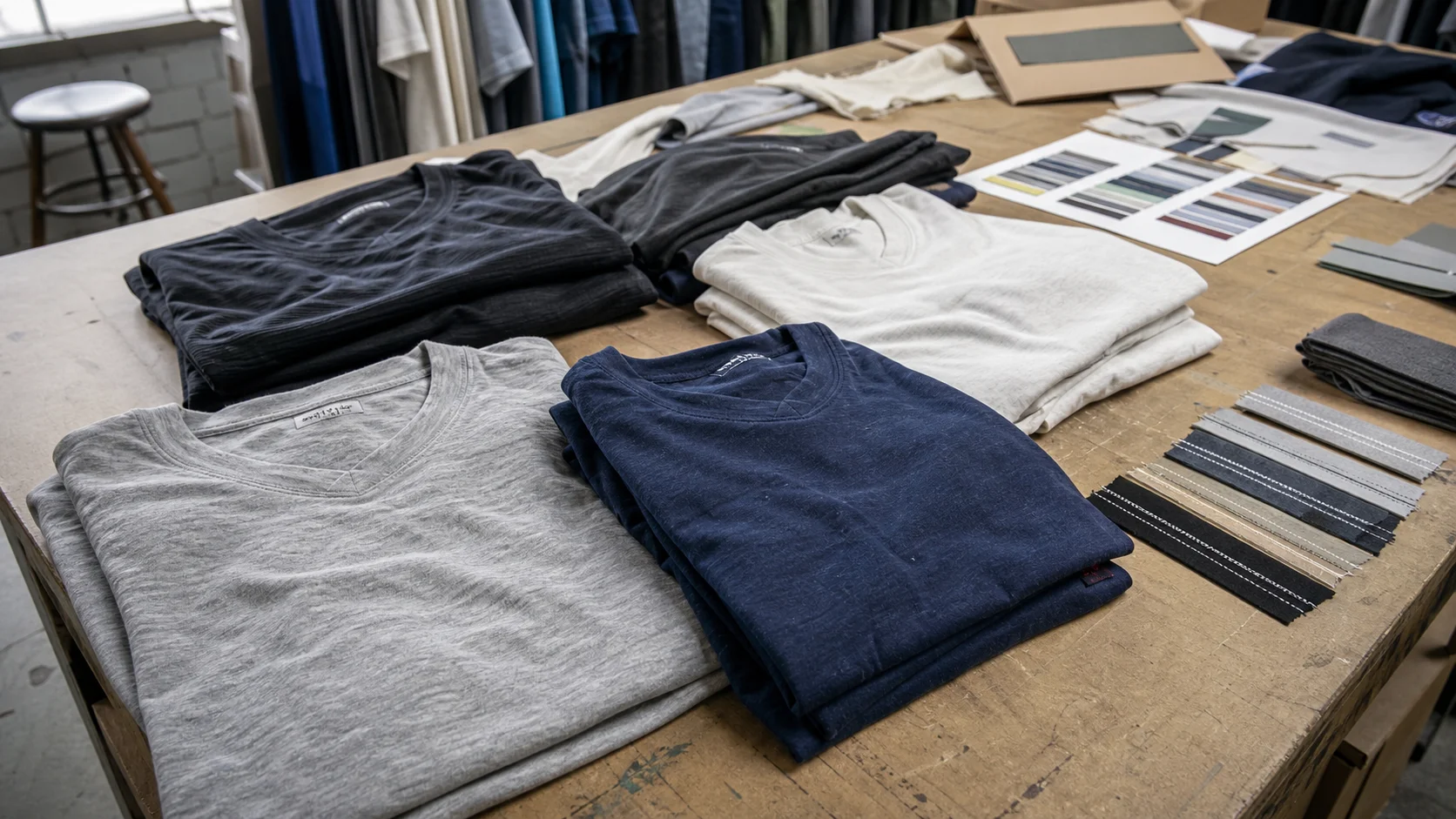
A practical outline for hospitality buyers planning custom sustainable uniforms with size grading that supports consistent fit, repeat production, and...
Custom Sustainable Uniforms Size Grading Buyers Guide - Fabrikn production reference
Hospitality chains buy uniforms for consistency, not just appearance. A front desk shirt, housekeeping tunic, or restaurant apron has to fit a wide span of body types, hold up under repeated laundering, and still look aligned across locations. That is where size grading becomes a procurement issue, not a pattern-making detail.
For custom sustainable uniforms size grading for hospitality chain workwear, the buyer’s job is to balance three things at once: fit, durability, and responsible material choices. If any one of them is handled casually, the result is predictable. Staff complain about restrictive garments, replenishment runs late, and the chain ends up over-ordering sizes that do not move.
This guide is written for sourcing teams, procurement managers, and uniform programs that need repeatable fit across multiple properties. The focus is on practical decisions: how to set a grade rule, what to ask for in samples, where sustainable materials create tradeoffs, and how to avoid expensive fit corrections after bulk production starts.
Size grading is the step between a base size and the full size run. A pattern is adjusted up or down in controlled increments so each size keeps the intended proportions. In hospitality uniforms, that control matters because the same style may need to fit reception teams, housekeeping teams, F&B staff, and supervisors with different movement demands.
The right grade rule depends on garment type and use case. A fitted women’s blouse needs a different grading logic than a relaxed unisex apron or a structured blazer. Chain buyers should not assume one grade set can cover every role. That shortcut often creates the biggest problems in wear testing.
A sensible grading plan usually starts with one base sample size, then expands into a full size set for approval. Common industrial size runs for hospitality workwear often range from XS to 3XL, sometimes 4XL depending on the workforce profile. Some chains also need short, regular, and tall options for trousers or skirts. The wider the size range, the more important it is to validate fit on real wearers before bulk approval.
Sustainable fabric choices change how a uniform behaves in use. Recycled polyester, organic cotton, lyocell blends, and lower-impact finishing systems each bring different handfeel, shrinkage, recovery, and colorfastness profiles. That means the fit approval process cannot rely on assumption or old spec sheets from a conventional program.
For hospitality chains, sustainability also changes the procurement brief in a practical way. The buyer may need recycled content documentation, restricted substance compliance, traceability for yarn or fabric origin, and care instructions that support longer garment life. A garment that looks efficient on paper but wears out too quickly is not sustainable in a real purchasing sense.
A sustainable uniform program only works when the fit is stable enough to keep staff comfortable and the fabric is durable enough to survive commercial laundering. Otherwise the replacement cycle erodes the environmental case.
There is a tradeoff worth stating plainly. More sustainable materials can be slightly less forgiving in wash performance, handfeel, or dimensional stability than legacy blends. That does not make them a bad choice. It means the buyer needs tighter lab testing, clearer wash standards, and stronger sample discipline before production approval.
Most hospitality chains use one of three models: a single unisex grade, separate men’s and women’s grades, or role-based grading by department. The right answer depends on fit risk, staff demographics, and how standardized the chain needs to be.
Unisex uniforms simplify inventory and can work well for aprons, overshirts, and some housekeeping styles. The fit risk is obvious: bodies are not identical, and a unisex block can be too boxy for some roles and too restrictive for others. This model is best for garments where ease of movement matters more than shaped tailoring.
Separate men’s and women’s patterns usually produce better fit and fewer complaints. The downside is more SKU complexity. Buyers who choose this route should manage the size chart carefully and avoid overextending the range if reorder volumes are thin at the edges.
This is common in larger chains. Guest-facing roles may require sharper tailoring, while back-of-house garments prioritize movement and laundering durability. The approach gives better control, but it demands tighter planning. A supplier needs enough volume per style to justify pattern work, lab dips, and sample cycles.
A practical rule: if a chain has enough volume and enough fit diversity, separate grading is usually worth the added complexity. If the program is small, a clean unisex range may be the better commercial choice, provided the wear test proves it does not create obvious comfort problems.
Grading Model Best For Strength Tradeoff Unisex Aprons, overshirts, utility tops Simpler inventory Less precise fit Men’s/Women’s Shirts, jackets, trousers, dresses Better wearer comfort More SKUs Role-based Large hospitality chains Best alignment to job function More development effortUniform grading is not one discipline. Shirts, trousers, jackets, skirts, dresses, and aprons each behave differently in size progression. The buyer should ask whether the supplier has fit logic specific to each category, not just a generic grading template.
Chest ease, shoulder slope, collar opening, and sleeve length are the usual failure points. Hospitality staff need freedom to bend, reach, and lift without strain. For fitted styles, the grader should protect arm mobility and avoid tightness across the upper back. A sustainable fabric with less stretch needs even more care here.
Seat, thigh, and rise determine whether the garment works in real service conditions. A short rise may look neat on a hanger and fail in a working environment. If the fabric contains recycled polyester with minimal elastane, the pattern must give enough room without relying on stretch to save the fit.
Outer layers need clearer grading around chest, armhole, and sleeve cap. These pieces also sit on top of another garment, so buyers should confirm what base layer the wearer will actually use. A jacket measured over a tee will not behave the same way as one worn over a shirt.
Aprons appear simple, but neck straps, waist ties, pocket placement, and length all matter. A size-grade issue here often shows up as poor coverage or awkward movement rather than formal fit failure. That still creates operational complaints.
The best fitting sample can still fail in bulk if the fabric or trims change. Buyers should freeze the core material specification before fit approval whenever possible. In sustainable uniform programs, that is especially important because suppliers may propose substitutions to hit a price target or manage availability.
For hospitality workwear, a fabric around 160 to 220 GSM is often used for shirts and blouses, while trousers and jackets may go higher depending on the silhouette and laundering load. These are only typical ranges, not a universal rule. The real decision should come from the required drape, opacity, and wash cycle.
Sampling is where many programs lose time. The process should be structured and documented. A single photo approval is not enough for chain workwear, especially when the same style must fit across several locations and body types.
The size set step matters more than buyers sometimes expect. A style that fits perfectly at the base size can drift badly at the upper and lower ends of the range. That is where grading problems show up: collar opening becomes too large, shoulders distort, or pant proportions no longer match the intended fit.
Buyers should insist on measurement tolerances in writing. Common apparel tolerances may sit around +/- 1/2 inch to +/- 3/4 inch for many points, but the exact allowance depends on garment type and factory capability. The point is not the exact number. The point is to lock the accepted range before bulk starts.
Do not approve size grading from flat sketches alone. A fit problem that looks minor on paper can turn into a chain-wide uniform complaint after the first wash cycle.
Uniform buyers often ask for a size range that is too broad for the expected order volume. That is a commercial risk. Broader size runs increase pattern work, sampling effort, and fabric waste. They also make small replenishment orders harder to execute efficiently.
Typical MOQ ranges in custom workwear vary widely by factory and garment type. For many custom sustainable uniforms, practical MOQs may start around 200 to 500 pieces per style and color, with higher thresholds for tailored garments or custom-dyed fabrics. Some factories will accept lower runs, but the buyer usually pays through higher unit cost, limited size flexibility, or weaker access to premium fabrics.
A realistic development cycle for a new sustainable uniform style can take 8 to 16 weeks before bulk production, and longer if the fabric must be custom developed or certified documentation is incomplete. Buyers who need a seasonal rollout should build in buffer time. Tight calendars usually force compromises in sample review, and those compromises show up later in fit and finish.
Size grading is only one part of uniform quality. The biggest failures often involve drift between approved sample and bulk production. That drift can come from fabric shrinkage, trim substitution, measurement inconsistency, or poor line-side control.
Buyers should ask for both inline and final inspection records. A uniform program for a hospitality chain is not finished when the first bulk shipment lands. Reorder continuity matters just as much, especially if new hotels or restaurant openings will require the same style six months later.
A good supplier for sustainable hospitality uniforms should be able to speak clearly about fit, grading, fabric behavior, and repeat production control. Price still matters, but it should not be the only filter.
Ask whether the supplier can provide a complete tech pack review, graded size chart, wash testing support, and documented material traceability. Check whether they are willing to freeze the approved fabric and trims before bulk. A supplier that keeps recommending substitutions may be flexible, but that flexibility often weakens consistency across replenishment orders.
Fabrikn’s service pages are a reasonable starting point for buyers who want to compare uniform development support and production workflow. See services, read more on about us, or move directly to contact us for a sourcing enquiry.
In practical buying terms, the better vendor is usually the one that protects your spec, not the one that promises the fastest yes. Chains need fewer surprises, not more optimism.
Get a free quote from Fabrikn — your trusted B2B clothing manufacturer with 10+ years of experience. MOQ as low as 200 pieces.
Get a Free Quote →Size grading is the process of scaling a base pattern into multiple sizes while preserving fit proportions. For hospitality uniforms, it helps keep shirts, trousers, jackets, and aprons consistent across a broad workforce.
Sustainable uniforms usually depend on stricter material choices and longer wear life. If the grading is wrong, staff discomfort increases and replacement rates rise, which weakens both the operational and environmental case.
Many programs cover XS to 3XL, sometimes extending to 4XL. Trousers and skirts may also need inseam or length variants. The final range should follow the actual workforce profile, not a generic size chart.
A common sequence includes a proto sample, fit sample, size set sample, and pre-production sample. The exact number depends on style complexity, fabric availability, and how quickly the buyer can approve each round.
For custom sustainable uniforms, MOQs often begin around 200 to 500 pieces per style and color, with tailored garments or custom fabrics sometimes requiring more. Lower MOQs are possible, but unit cost and flexibility usually worsen.
The main risks are poor fit at the size extremes, shrinkage after washing, measurement drift in bulk production, and trim or fabric substitutions. These issues are easier to prevent than to fix after shipment.
In some cases, yes, especially for simple utility garments. For front-of-house, housekeeping, and supervisory wear, separate grading often delivers a better result. The more distinct the role, the less useful a one-size-fits-all approach becomes.