
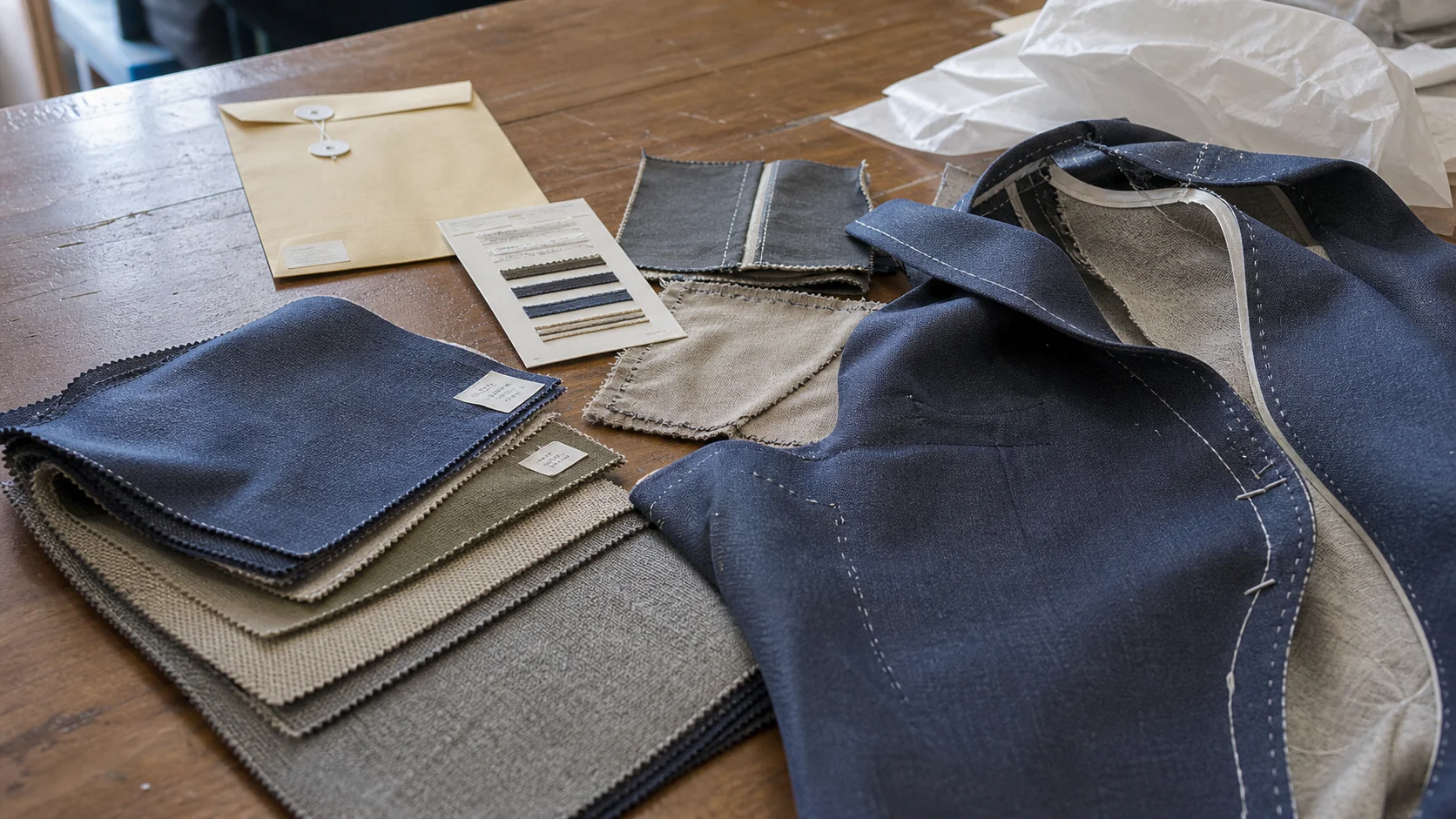
A fabric-testing outline for transport hub buyers specifying how to validate warmth, weather resistance, durability, and safety performance in custom...
Transit buyers face a different outerwear problem than fashion retailers. A thermal parka for station staff, platform teams, shuttle drivers, or winter operations crews must hold up to repeated use, weather swings, and frequent laundering while still meeting branding, comfort, and budget targets. Fabric choice matters, but fabric testing matters more. A well-written test plan reduces returns, protects wearers, and keeps a custom program from failing after the first cold season.
This guide covers the practical fabric tests that matter for custom thermal parkas used in transport hubs and related operations. It focuses on the checks that influence comfort, durability, moisture control, and field performance. It also explains how to structure approval, where inspection risk usually appears, and what buyers should ask suppliers before placing a bulk order. For sourcing teams that want a broader production overview, see services, about us, and contact us.
Custom Thermal Parka Fabric Tests for Transit Buyers - Fabrikn production reference
Transit environments punish outerwear in ways that general retail buyers do not always see. Staff may move between heated interiors, open platforms, cold depots, and wet curbside zones in the same shift. A parka that looks warm on a hanger can still fail when the shell wets out, the insulation shifts, the zipper jams, or the fabric pills after repeated wear. Buyers who skip testing often discover the issue only after distribution, when replacement cost is far higher than the cost of a better lab program.
Testing gives sourcing teams a way to compare claims against measurable performance. It also narrows down which fabric combinations actually support the use case. A waterproof shell may be unnecessary for indoor-focused staff, while wind resistance and abrasion durability may matter more for outdoor platform teams. On the other hand, a parka for winter operations crews may need both insulation retention and strong water repellency to avoid heat loss during prolonged exposure.
The right test plan should be tied to the job function, climate, and wash cycle. A uniform for a bus terminal in a damp coastal city needs different performance priorities than a parka used by rail staff in a dry but freezing inland climate. Buyers should start with use conditions, not fabric catalog language.
A thermal parka is not a single fabric. It is a system. The shell, membrane or coating, insulation, lining, and trims all affect performance. Testing should reflect the full construction rather than just one swatch from a supplier card.
The buyer’s mistake is often to approve a shell fabric without validating how it behaves once stitched, quilted, laminated, and washed. A 200 gsm shell may feel robust in a lab, yet become noisy, stiff, or poorly draped when assembled with a heavy lining and insulation package. Testing should anticipate the final garment, not a single component.
For transit parkas, the essential tests are usually a mix of physical durability checks, weather resistance, and color stability. Exact thresholds should be matched to the program, but the following categories are the ones most often worth specifying.
Start with weight in gsm and yarn construction. Weight alone does not define quality, but it helps detect substitution risk. If a supplier sends a lighter fabric than approved, thermal performance and abrasion life may both change. Weave density, denier, and coating presence should also be confirmed against the approved tech pack.
Tension and tear performance matter in operational wear because parkas are pulled, caught, and stressed around zippers, pocket entries, and sleeve openings. Buyers should ask for warp and weft tensile values, plus tear strength on the shell and any reinforcement zones. For transit use, weak tear values often translate into failed elbows, pocket corners, and back hem areas after a season of wear.
Fabric abrasion testing is one of the most useful predictors of long-term appearance. Uniform outerwear gets rubbed by seatbacks, belts, radios, harness straps, doors, and luggage edges. A parka may still be technically functional after abrasion, but a worn face fabric can create a poor public-facing image. Buyers should ask for abrasion results on the shell and on any high-wear reinforcement patches.
Transit uniforms should retain a consistent color across multiple production lots. Colorfastness to washing protects against shade loss after repeated laundering, while crocking resistance reduces transfer onto shirts, bags, and gloves. Lightfastness matters when garments are exposed to daylight during long shifts or storage near windows. Dark navy, charcoal, and black are especially vulnerable to visible fade variation if the dye process is inconsistent.
Parkas that shrink unevenly are difficult to reissue and awkward for staff. Buyers should check shrinkage after washing and drying cycles that mirror actual maintenance practice. Dimensional drift can affect sleeve length, hood coverage, and pocket alignment. It also creates fit inconsistency across bulk units.
Pilling is not only a cosmetic issue. Once a shell or lining begins to pill, the garment often looks tired earlier than expected. This is especially relevant for brushed linings and softer hand-feel finishes. Test results should be considered alongside expected frequency of wear and washing.
Some transit buyers want a more breathable parka for active staff who move quickly between indoor and outdoor zones. Others need stronger wind resistance for exposed platforms and roadside work. Air permeability gives a clearer read on how much wind passes through the shell, while breathable laminates help manage moisture build-up inside the garment. The right balance depends on the job, not on a generic performance claim.
Weather claims should be backed by the right test methods. A parka for transport hub use is often judged first by how it handles real weather, not by how it looks in a showroom. If the garment is intended for standing duty, security patrol, baggage handling, or platform work, the shell and insulation package need to stay stable in wet and windy exposure.
DWR treatment on its own is not the same as waterproof construction. A buyer should distinguish between water-repellent shells, water-resistant builds, and fully waterproof-breathable designs. Transit parkas used in light precipitation may only need strong repellency and good seam construction. Longer outdoor shifts, especially in sleet or heavy rain, usually require a more serious barrier system.
Water repellency should be tested after washing, not only on new fabric. DWR often weakens as the garment is laundered. If the buying program depends on repellent performance through a full service life, the test standard should reflect that.
When waterproofing is required, buyers should ask for hydrostatic pressure values on the shell system and confirm seam sealing strategy. Stitch holes remain a common failure point. A garment can pass fabric-level testing and still leak at critical seams, hood join lines, pocket openings, and zipper garages. Sample rain testing is useful, but controlled lab data is more reliable for buying decisions.
Thermal performance depends on how well insulation loft returns after packing, storage, and repeated use. This matters for transit buyers because parkas are often stored in lockers, bags, or vehicles. Insulation that collapses too easily can feel warm on day one and weak by midseason. Synthetic fills with better recovery generally perform more predictably than cheaper alternatives, though the best option depends on budget and intended use.
Staff who walk briskly, climb stairs, or work in sheltered areas may overheat even in winter. A parka that traps too much internal moisture can feel clammy, then cold once activity stops. Buyers should consider breathability together with insulation weight. More fill is not always better. In practice, a balanced system often performs better for transit environments than a heavily insulated, low-breathability garment.
Transit outerwear is rarely judged on one metric. The shell, lining, insulation, and trim package all interact, and a weakness in one component can undermine the whole garment.
Fabric tests are necessary, but many bulk failures come from trims and assembly details. Transit buyers should include the following checks in the approval plan.
Seam construction deserves attention because thermal parkas carry more weight than lightweight jackets. A reinforced seam can improve durability, but too much bulk may create stiffness and reduce comfort. Buyers should ask how seam allowances, stitch density, and reinforcement tape affect the final hand-feel. That balance matters in a staff uniform, where wearability affects compliance.
A reliable approval process is more important than a long spec sheet. Many problems appear because buyers sign off too early, often after only a visual check of a sales sample. A better process separates material approval from garment approval and includes wash and wear checks before bulk production.
Request fabric swatches, coating or laminate details, insulation data, zipper brand information, and color references. Confirm whether the supplier is using stock materials or developing custom ones. A custom coloration or special finish can extend lead time and introduce shade variation risk.
Color approval should happen before cutting bulk fabric. Transit buyers often need consistent shades across multiple seasons, so the approved standard should be well documented. Keep a physical standard, not just digital images.
Check fit, mobility, pocket access, hood coverage, and layering space. Transit staff often wear uniforms over multiple layers, so the parka should not fit too tightly in the shoulders, upper back, or sleeve cap. A garment that passes measurements but restricts movement will underperform in the field.
Wash at least one sample according to the intended care method. Review shrinkage, appearance, seam puckering, pilling, and hardware performance after laundering. If the buyer expects industrial laundering, the sample should be tested against that method, not a home laundry cycle.
The pre-production sample should match bulk materials, trims, and construction methods. This is the last practical stage to catch issues before mass cutting starts. If a supplier proposes substitutions at this point, those changes should be documented and re-approved.
Custom thermal parkas usually sit in a moderate-to-high complexity category. MOQ and lead time depend on fabric sourcing, insulation type, and trim customization. Buyers should plan around those variables rather than assuming a fixed factory schedule.
Program Factor Typical Range or Impact Buyer Note Custom shell fabric Higher MOQ, longer dye and finish lead time Shade approval and color consistency become critical Standard stock fabric Lower MOQ, faster sampling Good option when timelines are tight Waterproof membrane or seam sealing More testing, more assembly steps Raises cost and can extend production schedule Special reflective or branded trims Custom sourcing or print lead time Confirm wash durability and placement tolerance Bulk order volume Often influences pricing and material allocation Larger orders usually improve unit cost, but only after fit and test approvalTypical MOQ ranges for custom outerwear vary widely by supplier and material package. A simple stock-fabric parka might start in the low hundreds per color, while a fully customized shell with special trims can require a much larger commitment. Buyers should ask whether MOQ applies by color, by style, by size run, or by fabric minimum. That detail changes the economics more than the headline number.
Lead time is usually driven by material availability, sampling loops, and approval speed. A straightforward parkas program with stock materials may move faster than a custom-laminated or fully branded build, but bulk production can still slip if lab testing or fit comments arrive late. Transit buyers should leave schedule room for one or two sample revisions and for re-testing if any material substitution is proposed.
Some failures are easy to spot in first samples. Others surface only during bulk inspection or after distribution. Buyers should pay close attention to the following risk areas.
Inspection plans should include both measurement checks and functional checks. A parka can meet the size chart and still fail if the hood does not fit over a helmet, the cuffs do not seal, or the zipper snagging frustrates users. For transit buyers, practical usability is as important as lab performance.
Before order placement, a sourcing team should translate performance goals into a clear specification sheet. A structured spec reduces ambiguity and helps suppliers quote more accurately.
Spec Area What to Define Why It Matters Shell fabric Fiber content, weave, denier, weight, finish Controls durability, hand-feel, and weather performance Insulation Type, fill weight, loft target, quilting pattern Determines thermal level and bulk Lining Fabric type, color, durability, comfort finish Affects wearability and appearance over time Weather barrier DWR, laminate, coating, seam sealing Determines wet-weather performance Fit Size range, layering allowance, mobility zones Supports staff comfort and uniform compliance Branding Logo method, placement, color, reflectivity rules Protects brand visibility and consistency Care method Home wash, industrial wash, dry clean limits Must align with actual maintenance practiceIf the buyer expects the garment to be used across multiple transport sites, standardization is essential. A single approved fabric system should be shared across all locations unless climate conditions clearly justify a different build. That approach simplifies replacement planning and avoids a mixed inventory of parkas with different performance levels.
Good suppliers answer material questions clearly and without pushing vague “premium” language. The following questions help separate real capability from weak quoting.
Where a supplier cannot provide clear answers, the buyer should treat that as a risk signal. Ambiguity at the sourcing stage often becomes inconsistency in bulk production. A practical supplier will explain tradeoffs such as cost, hand-feel, weight, and durability rather than promising everything at once.
Transit buyers should resist over-specifying features that add cost without improving field use. A high-end membrane, for example, is useful only if the staff role justifies it. If the garment is mostly used in cold but sheltered conditions, strong wind resistance, durable DWR, and reliable insulation may deliver better value than a fully waterproof build. The reverse is also true: if staff stand outside for long periods in wet weather, a lighter shell with weak water resistance will create complaints and replacement pressure.
Fit testing deserves the same attention as fabric testing. A parka that fits over a winter uniform but still allows arm movement will be worn more often and maintained better. A stiff or bulky garment may get left in lockers or replaced by staff with personal jackets, which defeats the purpose of a uniform program. Buyers should test the garment with the real layers and accessories it will be worn with, not just over a T-shirt.
The best procurement decisions are usually the ones that simplify risk. A limited set of proven materials, clear test targets, a documented sample path, and realistic MOQ planning will outperform a highly complex spec that is difficult to source consistently. In outerwear, consistency is often more valuable than novelty.
Get a free quote from Fabrikn — your trusted B2B clothing manufacturer with 10+ years of experience. MOQ as low as 200 pieces.
Get a Free Quote →There is no single best fabric. For most transit applications, a polyester or nylon shell with DWR, synthetic insulation, and a durable lining is the practical starting point. If wet-weather exposure is frequent, a laminated or seam-sealed construction may be justified.
MOQ varies by material package and supplier. Stock-fabric programs can sometimes start in the low hundreds per color, while custom-dyed shells, special trims, or waterproof constructions often require higher minimums. Buyers should confirm MOQ by color, size range, and fabric source.
At minimum, buyers should check tensile strength, tear resistance, abrasion, colorfastness, shrinkage, and the relevant water resistance or repellency test for the intended use. For parkas with technical features, zipper, seam, and insulation checks are also important.
Yes. A sample that looks correct before washing may shrink, pill, bleed, or lose repellency after laundering. Wash testing should match the actual care method expected in service.
Lead time depends on fabric readiness, sampling rounds, and trim sourcing. A simple program with stock materials can move faster, while custom fabrics, waterproof construction, and branded trims can extend both sampling and bulk production.
Shade variation and trim inconsistency are common risks, followed by seam and hardware failures. If the supplier changes fabric lots or substitutes components without approval, the end result may not match the approved sample.
That depends on the work environment. Water-resistant may be enough for sheltered or intermittent exposure. Waterproof makes more sense for prolonged outdoor duty in rain or sleet, especially when seam sealing is included.