
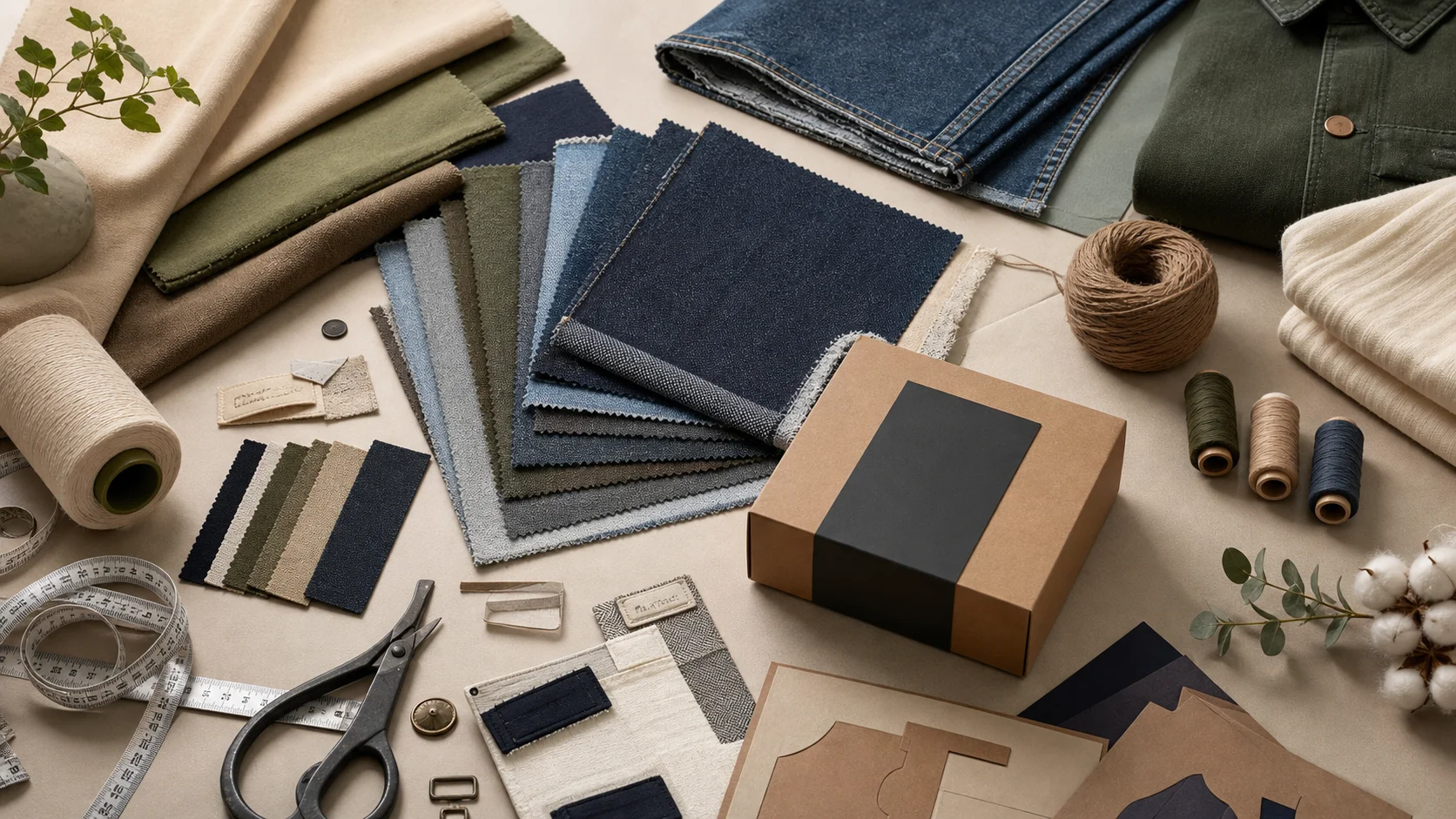
Custom Tissue Paper for Clothing Brands with checks for samples, fit, MOQ, QC evidence, pricing terms, and delivery risk.
Fast answer: Custom Tissue Paper for Clothing Brands: Cost, GSM, Print, and ROI should be judged by production evidence, not by a generic sourcing promise. The buyer needs sample proof, cost breakdowns, QC checkpoints, and delivery buffers in writing.
Ask for recent sample photos, measurement tolerances, fabric or print test assumptions, decoration test notes, packing examples, and a named inspection checkpoint. These details show whether the team can repeat an approved sample at bulk volume.
Separate garment cost, decoration, labels, packaging, sampling, testing, freight, and rush charges. When every cost line is visible, it becomes easier to reduce colorways, adjust size depth, or reserve more time for sampling.
In a Ho Chi Minh City packing line, I watched a blouse get wrapped in seconds, then capped with a printed tissue sheet before the carton flap went down. That tiny sheet cost almost nothing and did more for the customer’s first impression than the adhesive strip, the mailer, or the thank-you card. That is what custom tissue paper for clothing brands does: it’s the first thing hands touch, and the verdict starts there. At a WRAP- and BSCI-certified Guangzhou packaging hub across the river, the same printed tissue had been formed on a Fourdrinier machine, calendered twice at 110 °C, and die-cut by CNC to the exact 20 x 30 inches before ever leaving the press room; the first impression started in the machine hall.
Factory math gets ugly fast. A rigid box can add $1.80 to packaging cost, a printed insert 16 to 22 cents, a high-grade mailer 24 to 35 cents. Tissue often sits at 2 to 9 cents per sheet in mid-volume orders, and the unit cost drops again above 10,000 sheets. Cheap in isolation. Not cheap in effect. A brand can spend five or ten times more on structure and still ship a package that feels cold because the tissue is thin, floppy, or folded badly. The Fourdrinier headbox stays at 0.6 mm and the inline calender stack presses at 200 tons per meter so that the silicone release coat adheres evenly to the GRS-certified recycled cotton pulp used on that run, proving the saving is in control as much as in raw price.
Luxury labels use tissue as ceremony. Basics brands use it as a shield. In Milan, I saw a cashmere label wrap one sweater in three 17 x 24 inch sheets because theater mattered. In Dhaka, a basics supplier used a single 20 x 30 inch sheet mainly to stop zipper teeth and snaps from scuffing the face fabric. Same material. Different job. When I visited an Istanbul mill that holds GOTS and OEKO-TEX Standard 100 certification, the team ran the same 17 GSM stock through a water bath to remove lignin before printing, giving softness without sacrificing durability.
Sometimes the cheaper supplier wins. A lower-cost mill can produce a stronger premium feel than a pricier rival when the print density is cleaner and the folds line up better. I have seen 1-color logos on 28 GSM tissue look sharper than 2-color prints on thicker 17 GSM stock because the plant ran better tension control on the flexographic press and stacked sheets more neatly. The buyer paid less and got more perceived value. That is not glamorous. It is effective.
According to WTO trade data, packaging costs rarely show up as a separate line in retail sales analysis, which is exactly why brands underestimate them. The question is not whether the tissue looks nice. It is whether 3 cents per order, the adhesive strip, and a sheet that has been certified by OEKO-TEX Standard 100 can protect a $90 dress, cut abrasion claims by even 1%, and make the customer remember the brand two weeks later.
Artwork gets the attention. Material does the work. For custom tissue paper for clothing brands, the real spec sheet starts with GSM, sheet size, opacity, finish, print method, tint, and defect tolerance. I have seen 17 GSM tissue used for lightweight apparel inserts and 28 to 30 GSM stock used where folding rigidity mattered more than decoration, with fiber sourced from virgin birch pulp, bamboo fiber blends, and post-industrial recycled cotton pulp that arrives by barge to Guangzhou, Dhaka, and Istanbul with GRS verification.
Paper weight changes handling. A 15-17 GSM sheet feels airy and works for silk blouses or lingerie sets. A 22-28 GSM sheet holds a fold better for denim shirts, knitwear, and outerwear. For silk and satin, opacity matters because translucent sheets can telegraph seams and tags. For denim and heavy fleece, the issue is less elegance and more abrasion protection. Accessories like belts and scarves need clean folding and low lint, while outerwear can tolerate larger sheets and more coverage. Anti-static finishing and silicone-coated release liners keep hardware from transferring ink during packing.
Ink coverage is not just design. White-on-color prints often cost less than full-bleed patterns because they use fewer passes and less drying time. Full repeats look richer, but they can add 8% to 20% to cost depending on color count and run length. Minimal logo repeats suit ecommerce shipping, where the tissue is mostly hidden inside a carton. Full graphics make more sense in retail folding and gifting, where the opening moment matters. We specify flexographic or digital printing calibrated to 120 lpi and dried under LED-curing tunnels so that the ink bonds to the pulp without cracking during folding.
I have seen mills in Guangdong and Zhejiang outperform European suppliers on large-volume repeat prints because they can run faster across 20,000 to 50,000 sheets without losing register. In Portugal and northern Italy, smaller mills often deliver tighter color control on short runs of 1,000 to 5,000 sheets, which helps when a brand wants a precise Pantone or a seasonal tint. Two strengths. Two cost structures. Istanbul’s family-run plants supplement the mast-mounted calender stack with a nip roll that can handle both gloss and matte finishes in the same pass.
For products that cross categories, like a silk camisole packed with a knit cardigan, the packaging choice should match the most delicate item, not the heaviest one. That is where custom baby clothing manufacturing is instructive: the same logic used for soft, skin-contact items applies to tissue that must avoid residue, creasing, and visible pressure marks. In Dhaka and Ho Chi Minh City, we often pair that logic with inline inspection on the finishing line so that every sheet in a bundle meets the defect tolerance set by the quality manual.
Ticket size sets the tone. A $24 basics brand does not need museum-level presentation. A $240 dress brand does. I have seen entry-level labels spend 12 cents on oversized sheets and lose money because the tissue did not create extra value. I have also seen premium brands underbuy, then wonder why their $150 blouse felt no different from a discount-market shipment. Small luxury runs from Istanbul or Guangzhou often carry sample and setup lead times of 18-22 business days, which is why it pays to forecast a season’s capacity early.
At the low end, a brand ordering 1,000 to 3,000 sheets might pay $45 to $120 total for simple 1-color repeat tissue, usually 17 to 20 GSM, with 1 to 2 print colors and modest sheet sizing. A 500 MOQ run of branded tissue for accessories or retail customer gifts can land at $2.50-4.00 per unit once you include stock, printing, and bale packaging in the quote. Mid-market brands buying 5,000 to 10,000 sheets often land around $180 to $450, depending on color count, coating, and packing format. Luxury or high-volume branded programs can exceed $600 per 10,000 sheets when they add specialty tinting, precise Pantone matching, and tighter defect control.
Across regions, Asia-based production usually wins on unit cost once orders move past 5,000 sheets. European runs can cost 15% to 40% more, but they often shorten sample cycles and improve color fidelity on small batches. That matters if your seasonal palette changes every eight weeks. It also matters if you sell through boutiques, where the first 200 units can shape whether a buyer reorders. Istanbul’s mills sometimes stay leaner because they can fold, bag, and palletize within 24 hours of printing, which shortens the overall turnaround despite higher per-sheet premium.
Where brands overspend is obvious to anyone who has packed product for a living. Oversized sheets waste fiber. Heavy all-over ink coverage adds print cost without improving customer perception if the tissue is only seen for two seconds. I have seen brands choose 30 x 40 inch sheets for a folded tee that needed 20 x 30 inches. That extra area raised cost by 18% and added no visible benefit. Ho Chi Minh City operations often run export metal folder units to eliminate wrinkles rather than depending on labor to re-fold each piece.
Underbuying hurts just as much. A cheap sheet that wrinkles badly, tears on the fold, or sheds ink during packing makes the whole order feel careless. In one Barcelona factory, I watched a $3.50 unit retail brand lose its premium image because the tissue arrived crushed and the folds were off by 15 mm. The product was fine. The presentation was not.
For labels that build broader assortment programs, from lingerie to outerwear, packaging should sit alongside the product strategy. That is one reason brands using custom bra manufacturing or private label clothing tend to specify multiple tissue formats: one for delicate goods, one for folded basics, one for gift sets. Precision saves money later.
Protection gets ignored until something arrives marked. Tissue reduces abrasion, softens pressure points, and keeps trims from rubbing against fabric surfaces. It also limits light creasing during transit, especially on garments folded tightly for ecommerce. A collar stay scratching satin is not a design problem. It is a packaging failure. The tissue is a sacrificial layer that keeps trims from contacting high-surface-tension finishes, so the pulp choice matters: a 50/50 mix of virgin southern softwood and bamboo pulp gives enough resilience without making the sheet too heavy for mailers.
For shirts, I prefer 20 to 24 inch sheets at 17 to 22 GSM, depending on fold depth. Dresses with delicate drape usually need a larger sheet, often 24 x 36 inches or more, so side seams and zips do not press into the outer fabric. Knitwear can use slightly heavier stock, around 22 to 28 GSM, because the goal is keeping shape and reducing fuzzing. Accessories usually need lower ink transfer risk, especially if hardware is present. We also look at the calendering profile: a light satin finish feels soft, while a matte finish better hides imperfections around snaps and hardware.
Buyers should ask for four pieces of documentation before approving a run: a machine-sheeted sample with the logo and fold, a tensile-strength report showing the sheet withstands 400 g without tearing, a color match certificate tied to the Pantone provided, and a compliance pack that includes GOTS or OEKO-TEX Standard 100 test results plus WRAP or BSCI audit summaries. These documents come from the press room and the finishing line, often taken before the 18-22 business day production window closes.
Also, specify the post-print processes. Do you want inline coating for water resistance? Do you need cold foil for metallic logos? A silicone release treatment on the backside can help folding and bagging, while a soft calender stack finish prevents long fibers from catching on the garment. I always ask suppliers to reserve 2% of the run for manual inspection so that if a sheet does transfer ink or splinter, the packer can catch it before shipping.
Sample speed, MOQ, and turnaround separate capable suppliers from the rest. Guangzhou operations with high-speed Fourdrinier lines can move from art approval to first sample in 18-22 business days, including flexographic printing and CNC die cutting. Ho Chi Minh City partners often follow a similar timeline, while Dhaka hubs can compress the timeline to 14 days when a plain repeat print is acceptable.
MOQ matters. A 500-sheet MOQ run at $2.50-4.00 per unit makes sense when you are testing a new retail concept or gifting promotion. For ecommerce restocks, 5,000 to 10,000 sheet orders let the same supplier spread setup costs over more units, driving the per-sheet price below 5 cents. Istanbul mills can go smaller, even 250 sheets, but their per-unit cost rises because they still need to justify the labor-intensive folding and packing steps.
Turnaround time is also my favorite lever. If you can lock in a supplier that holds 2 weeks of fiber inventory in Guangzhou or Dhaka, you can respond to sudden demand spikes without resorting to air freight. That agility sometimes costs 10% more per sheet because of warehousing, but it beats rushing a lower-quality run. When multiple suppliers compete, I ask for photos of their inline inspection stations, the brand of their calender stack, and the records of their last WRAP or BSCI audit to make sure the 18-22 business day timeline is credible.
Certifications are the shorthand for sustainability performance. Brands should insist on seeing current GOTS or OEKO-TEX Standard 100 certificates whenever the tissue will touch skin-contact garments, and remember that GRS covers recycled content while FSC focuses on fiber sourcing. WRAP and BSCI audits show that the supply chain meets ethical labor standards, which matters if you sell into the EU or North America. A supplier might claim “eco” while still using azo dyes, but the certificate reveals the actual chemistry.
Don’t stop asking at the paper mill. Ask the finishing house for proof that their adhesives and printing inks also comply; a WRAP-certified finishing line in Dhaka, for example, verifies its ellipsometer readings and solvent levels quarterly. Even power consumption matters—the more efficient Istanbul presses use servo drives to save energy during the calendering pass, which you can document through their ISO 50001 scorecard.
Start with a spec sheet. Define the GSM, sheet size, print colors, and tolerances you need for each SKU category. Note the certifications required (GOTS, OEKO-TEX, GRS, WRAP/BSCI) and whether you need special finishes like aqueous coating or cold foil.
Next, collect samples from at least three suppliers—Guangzhou, Dhaka, and Istanbul are the usual suspects—and time how long it takes to get a calibrated, packaged sample. Evaluate the fold, print clarity, and how it behaves once it leaves the carton. Get the paper mill and the finishing house to sign off on the sample so you can trace any issues back to the proper facility.
Finally, plan logistics. If you need 20,000 sheets, know whether the supplier ships in bundles or pre-cut fanfolds, and coordinate with your fulfillment partner about how the tissue will be stored on arrival. A little planning here keeps the run at 18-22 business days instead of 30.
Q: How much does a typical custom tissue sheet cost? A: For a 20 x 30 inch sheet at 22 GSM with a one-color logo, expect to pay around $2.50-4.00 per unit on a 500 MOQ run. Bulk orders above 5,000 sheets drop to 2 to 9 cents per sheet depending on color count and finishing.
Q: What lead time should I expect? A: Most factories in Guangzhou, Ho Chi Minh City, and Dhaka quote 18-22 business days from artwork approval to shipment for runs up to 20,000 sheets; shorter timelines are possible for repeat orders or plain repeats.
Q: Which certifications matter? A: GOTS and OEKO-TEX Standard 100 for skin-contact safety, GRS for recycled content, and WRAP or BSCI for social compliance. Ask for the certificate numbers and check them on the certifier’s portal every season.
Custom tissue paper is a small piece of the puzzle, but when it is made with the right fiber mix, printed crisply on a flexographic press, and folded with care, it creates a tactile story that sticks with customers. Remember that material selection (virgin pulp vs. recycled blends), machine calibration (Fourdrinier headboxes and calender stacks), and process controls (inline inspection and certified adhesives) are the levers you pull to make that story convincing.