
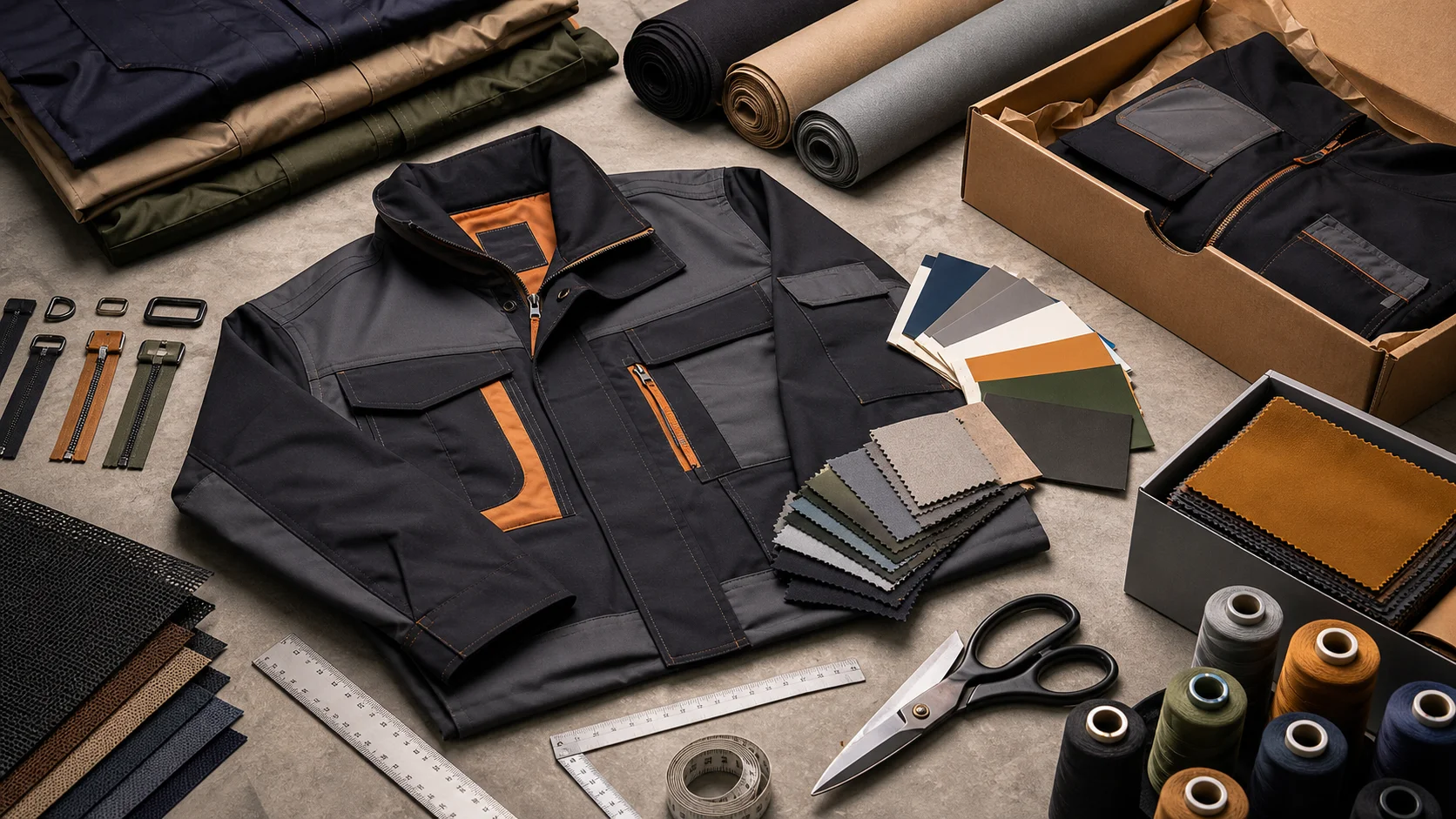
Custom Tissue Paper for Garments Buyer Checklist with checks for samples, fit, MOQ, QC evidence, pricing terms, and delivery risk.
Fast answer: Custom Tissue Paper for Garments Buyer Checklist: GSM, Ink, Fold Size, and MOQ should be judged by production evidence, not by a generic sourcing promise. The buyer needs sample proof, cost breakdowns, QC checkpoints, and delivery buffers in writing.
Ask for recent sample photos, measurement tolerances, fabric or print test assumptions, decoration test notes, packing examples, and a named inspection checkpoint. These details show whether the team can repeat an approved sample at bulk volume.
Separate garment cost, decoration, labels, packaging, sampling, testing, freight, and rush charges. When every cost line is visible, it becomes easier to reduce colorways, adjust size depth, or reserve more time for sampling.
The parcel opens, the tissue lifts, and before the garment is even touched, the customer has already decided whether the brand feels considered or careless. That is the power of custom tissue paper with logo for clothing brands. The first branded layer is often the tissue inside the mailer or shopping bag, not the garment itself — and that small reveal does more work than many founders expect. At Guangzhou's Baiyun district converter, where the line is audited annually for WRAP, BSCI, OEKO-TEX Standard 100, and GOTS compliance, the team treats tissue as carefully as the denim batch: the Voith OptiConcept wet press, Corona treatment, and 5-roll calendering stack are all tuned to keep moisture within ±1%, because the first sheet carries the same discipline as the garment.
On factory floors, tissue gets treated like a minor line item. In retail, it acts like a signal flare. Plain poly bag? Cost control. Branded sheet? Intent. I have seen refund anxiety drop when the package looks cared for, because the buyer assumes the product inside was handled with the same discipline. Mass market labels often use a single-color, 17 GSM sheet in a 500-sheet bundle. Mid-tier DTC brands lean toward 18-20 GSM with a 1- to 2-color repeat printed on Nilpeter FA-17 or Windmöller & Hölscher flexo presses before the Finishing Doizon packer folds each bundle. Premium labels usually specify 22-24 GSM, tighter fold tolerances, and 200 to 1,000 sheets per carton, and even the Istanbul converters running Heidelberg Speedmaster CX 75s will do a test fold on the Doizon 4+4 packer to verify fold memory.
Luxury cues matter at lower price points too. A $12 basics brand can borrow some of the visual language of a $220 blazer line without pretending to be something it is not. That is why custom tissue paper with logo for clothing brands can make a budget product feel more deliberate. The cost contribution is small, usually about 1% to 4% of total packaging spend, but the perceived value lift is often much larger. I have seen packaging budgets where tissue cost $0.03 to $0.12 per unit, while the mailer or carton cost $0.25 to $1.20. For runs that include foil, metallic ink, tactile spot varnish, or internal corded adhesive, converters in Istanbul told me the price jumps to $2.50-4.00 per unit at 500 MOQ before shipping, because the manual setup and laminating station slow the line down.
Smaller brands sometimes pay more per order than larger labels because they buy nonstandard sheet sizes in tiny runs. In Dhaka, a boutique label ordering 800 sheets of bamboo-recycled 19 GSM paper with one-color logo and hand-assembled bundles paid nearly twice the unit cost of a Guangzhou-based label ordering 20,000 sheets, even though both used the same base pulp and a 1-color logo. The larger buyer had standard dimensions, cleaner nesting, and fewer setup headaches; the Dhaka facility relied on manual bundling, which added labor more than the paper itself.
Counterintuitive, but common. Custom tissue is not just decoration. It is a low-friction way to signal consistency across mass market, mid-tier DTC, and premium positioning. It works because it is visible before the garment is touched. It works because it is tactile. And it works because shoppers still read packaging as a proxy for product discipline.
Paper grade changes everything. Virgin tissue, usually produced from bleached ECF pulp sourced from Guangdong or Guangxi mills, runs cleaner in appearance, with better opacity and a softer hand after going through the Voith low-consistency headbox and 750-mm calender stack. Recycled tissue can be excellent, especially when the mill has a GRS-certified chain-of-custody for pre-consumer cotton scraps, but I have seen wide variation in fiber consistency, surface smoothness, and tear resistance from mill to mill in Dhaka and Ho Chi Minh City. For apparel packaging, most buyers stay in the 17-24 GSM range because below 17 GSM, the sheet can feel flimsy around denim or hardware, and above 24 GSM, you gain body but add weight and freight cost without real packaging benefit.
Printing method matters just as much. Flexo is the workhorse for large repeats and 1-3 color logos, and converters in Guangzhou use Nilpeter or Windmöller & Hölscher presses with servo-driven aniloxes to keep ink film weights within ±0.5 g/m². Setup is more involved, but unit cost falls on bigger runs. Digital printing with Konica Minolta AccurioJet KM-1 or EFI Nozomi machines helps smaller orders, especially for 500 to 2,000 sheets, and it handles short lead times well; the digital operator in Ho Chi Minh City can ship sample reels in under 72 hours. Offset offers sharp registration and strong color fidelity, but the economics usually make sense only when order volume climbs. In factories I visited in Turkey and China, the difference was stark: higher labor-cost markets often used tighter quality control and more careful proofing, while lower-cost regions offered wider MOQ flexibility, sometimes 300 to 500 sheets, with more variation in print consistency.
Recycled tissue supports sustainability claims only when suppliers can verify fiber source and bleaching process. Data from Textile Exchange shows how quickly recycled-content claims can become murky without chain-of-custody documents, and that same problem appears in packaging. I ask for mill certificates, pulp origin, whether chlorine-free or elemental-chlorine-free processing is used, and if the pulp is certified by GRS or OEKO-TEX Standard 100. Without those details, “recycled” is just a word.
Richly inked designs can look less premium if the base tissue is too thin. Dark logos on 17 GSM stock often show through when folded, especially around black garments and deep-brand palettes. I have seen a charcoal monogram turn muddy once the sheet was wrapped around a knit set. Sample testing matters here. A design that looks crisp flat on a monitor can lose its edge when the tissue is crumpled, layered, and sealed inside a mailer. When a client layered multiple passes on a Heidelberg Speedmaster, we also added a Corona-treated primer layer to help the ink cling before running through the Doizon packer to prevent ink transfer onto garments.
Price swings come from five variables: sheet size, print colors, tissue grade, folded format, and shipping method. A 50 x 70 cm sheet costs less to print than a custom die-cut size that forces waste on the press. One color is cheaper than two. 17 GSM is cheaper than 22 GSM. Flat-packed sheets are easier to move than pre-folded or pre-kitted bundles. Freight can dwarf all of it if the carton volume is inflated by loose folding or overpacked pallets.
For boutique runs, I have seen pricing land around $0.08 to $0.22 per sheet at 500 to 1,000 sheets, depending on setup fees and print complexity. At 10,000 sheets, that can drop to roughly $0.02 to $0.06 per sheet. That gap is why MOQ matters so much. A 500-sheet run may look manageable until the plate fee, proof fee, and packaging carton costs are added. Then the “cheap” order can become the expensive one. Digital converters in Istanbul will quote as low as 300 sheets, but manual sample feed and pre-folded bundles create more touchpoints and risk miscounts.
Timelines also separate sharply by region. Domestic production can move in 5 to 10 business days after artwork approval, though specialty papers may take longer. Nearshore suppliers often sit in the 10 to 18 day range. Overseas mills and converters usually need 3 to 4 weeks, and that is before ocean freight. From Ho Chi Minh City to the Port of Los Angeles I usually plan 18-22 business days, including inland trucking, and I build the same buffer for Guangzhou-to-New York orders. Air freight shortens transit but can add 25% to 60% to landed cost. In one case I reviewed, a brand saved $180 on the quote and spent $420 more on expedited shipping after missing a launch date because the converter in Dhaka could not hit the revised ship date.
The lowest quote can become the highest total cost once plate fees, reprints, and transit delays are counted. I have seen a factory quote $310 for a small order, while a more expensive $480 quote from another supplier ended up cheaper after the first supplier misregistered the logo and had to rerun 2,000 sheets. The second factory had a stricter prepress review and fewer surprises because they ran a Heidelberg Speedmaster sample so any misalignment showed before full production.
If you already source private label clothing or coordinate cut and sew manufacturing, think of tissue the same way: tiny details, repeated thousands of times, compound into brand perception. I have seen brands save money by standardizing sheet sizes across 2 or 3 product lines instead of creating a different format for every collection.
Good tissue design respects fold lines. A logo printed too large can disappear once the sheet is wrapped around denim or a padded jacket. A repeat that is too tight can turn chaotic when the paper is crumpled. I usually advise brands to keep the logo readable at 30% of its flat-view size and to leave a margin of at least 10 to 15 mm around the sheet edge. For one- to two-color prints, the eye reads the mark quickly. For full-coverage designs, the surface can start to look busy fast.
Minimalist branding still requires engineering. When you run a repeat across a Voith calendered stock in Guangzhou, the line needs a consistent basis weight so the logo maintains the same opacity between the center and the fold; otherwise, the design twitches where the tension changes. Use spot colors with defined Pantone numbers, justify to the press operator, and lock the recipe in a digital PMS file so each repeat is identical. A corona-treated stock handles inks better, which is why converters in Istanbul and Ho Chi Minh City always ask whether the art will feature metallic ink or a matte varnish.
Texture and feel matter. A 17 GSM sheet with a soft-touch coating or a micro-embossed pattern can feel more premium than a plain 20 GSM stock. That said, keep the pattern subtle. Too much embossing changes how the logo reads, and it complicates folding since the sheet wants to spring back. When I design a full-coverage pattern, I build a mock-up in the Munkebo finishing cell and check it on the Doizon folding station to ensure that embossing lines up with the fold creases.
Test the tissue the same way you test fabric: wrap it, crease it, and see how the ink behaves. If you plan to include a perforation for pop-out stickers, a finishing die must be adjusted so the perforation line meets the fold without tearing the edge. When the line is planned, the finishing crew can run a mini trial on a Heidelberg Speedmaster with 48-sheet proxies before the full order hits the press. That way, any wrinkles appear in a few samples rather than thousands of sheets.
Buyers increasingly want to see certifications when a supplier mentions "responsibly sourced" tissue. GOTS-certified cotton content, OEKO-TEX Standard 100, GRS, WRAP, and BSCI are the most commonly requested marks, and they each cover different parts of the supply chain. A Guangzhou converter may display OEKO-TEX Standard 100 and WRAP, but if you're calling for GRS recycled pulp from Dhaka, request an up-to-date chain-of-custody certificate showing the bale numbers and proof that the mill is audited for GRS content. Without that, the claim cannot be substantiated.
Energy use, water treatment, and chemical inputs matter too. Ask whether the converter uses chlorine-free or elemental-chlorine-free bleaching and whether all inks and adhesives are water-based or soy-based to prevent a regulatory issue in your destination market. For example, a converter in Istanbul added a water-based adhesive lamination to keep bundles together, and its environmental report showed a 12% reduction in VOCs over the prior year thanks to the switch from solvent-based adhesives.
Traceability goes beyond the paper itself. Request a chemical inventory for coatings, adhesives for banding, and any surface treatments such as anti-slip or fragrance finishes. The same textile exchange that monitors GRS also publishes guidance on verifying recycled claims for packaging, so cross-referencing those reports can keep suppliers honest. If you see a claim that the tissue is “100% recycled” but the converter only holds OEKO-TEX Standard 100 and not GRS, ask for further documentation.
Start with an audit checklist. Visit the converter if you can—Guangzhou, Dhaka, Ho Chi Minh City, and Istanbul all have multi-line facilities that welcome vetted buyers. Walk the press floor, ask to see the Nilpeter flexo setup, and review the 2-3 sample runs they just pulled. Verify their certifications (GOTS, OEKO-TEX Standard 100, WRAP, BSCI, GRS) and confirm that the mill, not just the converter, holds those marks. If you cannot visit, insist on a live video tour with a QA manager and a digital copy of the most recent audit report.
Ask for proofs on your actual sheet size. The press operator should run a CMYK plus spot color for your logo across the eventual sheet dimensions, then show the sample after Corona treatment, through the Doizon folding cell, and inside the final carton. This is where you catch misregistration before 2,000 sheets ship. Confirm the MOQ, roll length, and whether they can handle pre-folded bundles or only flat sheets. If you require things like hot-foil stamping or laser-cut perforations, do they have the Heidelberg Speedmaster or a Nilpeter with a foil applicator?
Check their processes. Who manages the paper inventory? What is their moisture-control parameter for each GSM? How do they handle color-matching when a new ink line is introduced? Ask about the foiling machine, UV chamber, and oven temperature setpoints so you know how the sticker or foil placement will behave once the tissue is folded and stack-packed.
Finally, evaluate logistics. Confirm whether the factory has a bonded warehouse for pre-shipment inspection, and whether they have experience shipping to your hub via sea or air freight. Ask about their palletizing method so the paper does not crush in transit, and request photographs of the actual cartons and pallets. A converter might quote a fast turnaround, but if they rely on external trucking from Ho Chi Minh City to the port, you might hit another week of delay.
1. Confirm your sheet size, GSM, and print method and ask for a signed prepress approval so changes after production incur a known fee.
2. Request samples from converters in Guangzhou, Dhaka, or Istanbul to compare hand-feel, print fidelity, and fold quality; some suppliers ship 3-piece swatch kits for under $25.
3. Lock in your color recipe and production braces, build in a buffer for 18-22 business days if your goods come from Southeast Asia, and schedule a pre-shipment inspection to catch surprises.
4. When the order arrives, photograph the bundles, count the sheets, and log the moisture reading so you can compare against the mill certificate and raise any discrepancy immediately.