
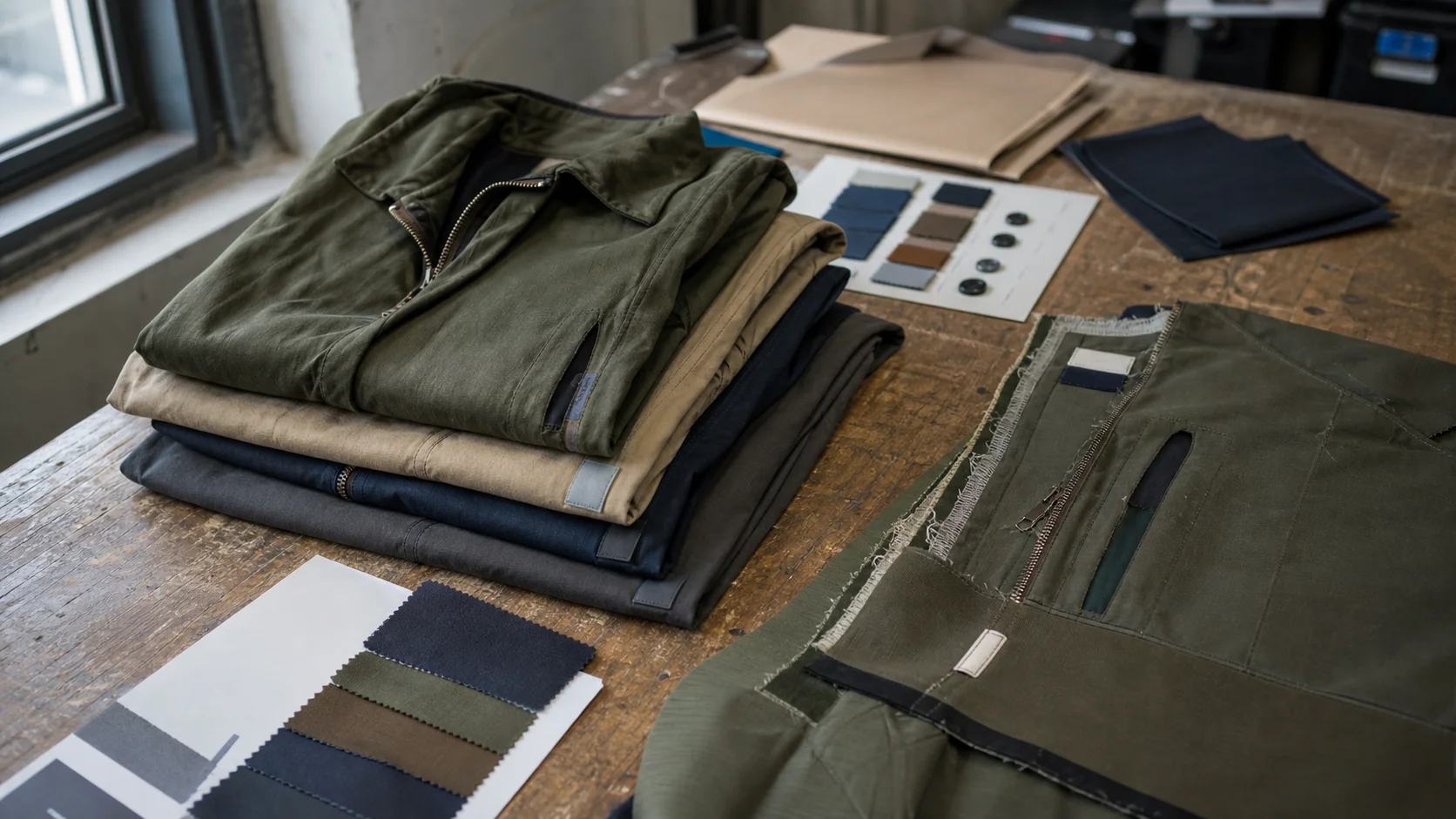
A practical SEO outline for outdoor teamwear retailers comparing the real cost drivers behind custom trim jackets, from trim specs and fabrication choices...
Custom Trim Jacket Sourcing Costs for Retailers - Fabrikn production reference
Retailers sourcing outdoor teamwear jackets often focus first on shell fabric and insulation. Trim is where margin gets lost quietly. Zippers, pullers, snaps, elastic, labels, drawcord tips, hangtags, heat transfers, reflective tape, seam tape, and packaging all add up, and custom trim usually introduces extra sampling, setup, and minimum order pressure. For buyers managing activewear and teamwear assortments, trim choices affect not only unit cost but also lead time, color consistency, brand presentation, and inspection risk.
This guide breaks down custom trim sourcing jackets cost for outdoor teamwear retailers in practical terms. The aim is simple: help buyers estimate where trim spend sits, what drives it up, and where a lower-cost spec can still meet commercial standards. The numbers below are typical sourcing ranges, not fixed quotes. Actual pricing depends on order volume, trim complexity, fabric finish, country of origin, and whether the jacket is built for lightweight promo use or hard-wearing outdoor teamwear.
Custom trim is any non-standard component that carries branding, fit function, or retail identity. On a jacket, that can include a branded zipper pull, debossed snap, custom woven label, printed neck tape, color-matched drawcord, branded heat transfer, sleeve badge, reflective trim, or custom packaging.
In outdoor teamwear, trim is rarely decorative only. It has to survive repeated use, weather exposure, and wash cycles. A coach jacket for field staff may need a durable nylon zipper with easy grip puller. A softshell for club members may call for a low-profile bonded label so the interior feels clean. A rain shell may require taped seams plus waterproof zipper trims, which pushes both cost and technical risk upward.
For many retailers, the trap is assuming trim cost is small because the unit pieces look tiny. The issue is not just the piece price. It is the sum of tooling, development, MOQs, QC checks, and any rework caused by mismatched colors or poor adhesion.
Jackets already carry a relatively heavy cost structure. Shell fabric, lining, insulation, and sewing hours are the core spend. Custom trim can then add a visible premium that is easy to underestimate during line planning. On lower-priced retail programs, a small trim increase can wipe out margin faster than buyers expect.
Typical trim-related cost pressure comes from four areas:
A practical buying rule: custom trim makes sense when it supports a clear brand promise, a retail price tier, or a team identity that customers will notice. It is harder to justify on low-margin basics where the buyer is selling primarily on price and availability.
Not all trims cost the same. A woven main label or heat transfer is usually inexpensive compared with a molded zipper pull or custom snap. Reflective tape, waterproof zipper systems, and bonded badge applications move the cost higher because they require more technical handling.
Trim Item Typical Cost Impact Commercial Note Woven label Low Common choice for retail branding Heat transfer Low to moderate Good for cleaner interiors, but durability must be tested Custom zipper puller Moderate Often requires tooling or separate branding setup Reflective tape Moderate to high Can affect compliance and placement tolerance Waterproof zipper High Strong performance value, but expensive and QC-sensitive Custom packaging Low to moderate Easy to overlook in landed costMOQ is one of the strongest pricing levers in jacket sourcing. Small runs absorb setup cost poorly. A retailer placing 300 to 500 units may see custom trim priced far higher per jacket than a program at 2,000 to 5,000 units. This matters especially when the jacket itself is already complex.
Typical sourcing pattern for custom trim jacket programs:
Buyers should also ask whether the supplier is quoting per style, per color, or per trim component. That detail changes the economics fast.
Trim cost is tied to base fabric choice. A lightweight woven shell handles labels and transfers differently from brushed fleece or bonded softshell. Some trims need heat tolerance, stronger stitch control, or special backing to avoid puckering. A more technical fabric package can demand more expensive trim materials and slower production handling.
Common jacket fabric specs that influence trim cost:
Color matching sounds minor until trim and body fabric fail to align. Retailers often ask for pantone-matched drawcords, zipper tapes, labels, and embroidery threads. Matching across multiple suppliers increases lead time and sample cost. If the product uses dyed fabric with slight shade variation, the trim tolerance must be set carefully or the garment can look inconsistent on the rack.
Teamwear jackets often ship with custom polybags, size stickers, barcode labels, or insert cards. These are not trim in the strictest garment-technical sense, but they belong in the same sourcing conversation because they affect brand presentation and total landed cost. For retail programs, packaging can matter almost as much as the garment finish.
MOQ expectations should be reviewed at three levels: garment, trim item, and colorway. A supplier may accept a 500-piece jacket order but still require 1,500 custom labels or 3,000 zipper pulls because those components come from a separate production line or outsourced trim vendor.
Retailers should treat the following as typical planning ranges, not promises:
Buyers should avoid mixing too many low-volume customizations in one style. A jacket that needs a custom zipper, a bespoke badge, a new woven label, and custom cartons will carry a higher development burden than a simpler program with one strong brand cue.
Custom trim jacket programs should move through a disciplined sample path. Skipping steps is one of the fastest ways to create avoidable cost at bulk stage.
A sensible sample sequence looks like this:
Cost control depends on locking decisions early. If the retailer changes a zipper color after trim approval, or asks for a different badge backing after the pre-production sample, the factory may need to re-source components and re-run approvals. That adds time and cost, and sometimes shifts the production slot.
Best practice is to approve trim specifications before bulk fabric confirmation. Once the factory commits to a fabric lot and a trim vendor, late changes are expensive and often slow.
Lead time on custom trim jackets is rarely driven by sewing alone. The longest item in the chain often decides the ship date. For outerwear programs, that is frequently the custom trim or special fabric mill order rather than the sewing line.
Typical lead-time dependencies include:
For standard teamwear jackets, a realistic overall timeline can range from 45 to 90 days after final approvals and deposit, with technical or fully customized programs running longer. If a buyer adds several custom trims from different suppliers, the timeline should be extended. Production planning should not assume that trim arrives just in time by default.
Zippers are one of the largest trim cost variables. Standard coil zippers are usually less costly than molded or waterproof versions. A branded zipper pull can be a modest upgrade, while fully custom sliders and tape colors increase both setup complexity and rejection risk.
Woven labels, printed neck labels, and heat transfers each serve a different retail purpose. Woven labels generally feel more premium. Printed labels may be cheaper and cleaner inside the garment. Badges can lift perceived value, but they introduce adhesion and alignment checks that need tighter QC.
If the jacket is aimed at outdoor training or low-light visibility, reflective elements may be required. These trims carry a functional benefit, yet they also create compliance questions. Buyers should confirm whether the reflective spec is purely decorative or expected to meet a stated performance standard.
These components seem low-cost until they are customized. Branded aglets, dyed cord colors, and special locking toggles increase unit cost and can complicate inventory if the supplier has to hold excess stock in each colorway.
Inspection risk rises when a jacket includes multiple trim elements with tight placement tolerances. Even a small issue can make a garment look off-brand or retail-unready.
Common inspection issues include:
Retailers should inspect first articles carefully, then insist on bulk checks against approved sample references. A supplier that can show clear trim control records is usually a better long-term partner than one offering only a low starting price.
Good sourcing is not about loading every jacket with custom detail. It is about choosing the few trim elements that strengthen the product in a visible way.
Practical cost-saving judgment usually looks like this:
For outdoor teamwear retailers, the best-value jacket is often the one that looks customized without requiring a dozen separate custom parts. A single well-executed label, one branded zipper pull, and a clean fit can sell better than a style overloaded with marginal decoration.
Before placing a custom trim jacket order, buyers should ask direct questions. That avoids vague quotes and makes it easier to compare suppliers on a like-for-like basis.
Clear answers here are worth more than a small price discount. A cheap quote with unclear trim ownership or weak sample control often becomes expensive later.
Retailers sourcing custom trim jackets for outdoor teamwear need a partner that understands both garment execution and the commercial pressure of seasonal buying. Fabrikn’s service pages are a useful starting point for buyers evaluating development support, sampling coordination, and production planning.
Review the company overview on About Us to understand the sourcing approach, then move to Services for development and manufacturing capabilities. For an actual project discussion, use Contact Us to share your spec, target quantity, trim requirements, and delivery window.
The useful test is simple: can the supplier quote the jacket cleanly, separate trim from base garment costs, explain the sample path, and flag the likely risk points before bulk begins? That is the level of clarity retailers need when planning teamwear margins.
Get a free quote from Fabrikn — your trusted B2B clothing manufacturer with 10+ years of experience. MOQ as low as 200 pieces.
Get a Free Quote →It depends on the trim mix, order quantity, and complexity. Basic custom labels may add very little per piece, while custom zipper systems, reflective trim, or branded hardware can push the cost materially higher. Small runs usually carry the highest uplift because setup is spread over fewer units.
Woven labels, printed care labels, simple heat transfers, and standard hangtags are usually the easiest to control. A single branded zipper pull can also work well if the retailer wants a visible premium cue without overcomplicating the program.
At minimum, retailers should approve the pre-production sample made with final fabric and final trims. That sample should confirm fit, trim placement, logo appearance, zipper function, and packaging. Earlier proto samples are useful, but they do not replace final approval.
Zippers, heat-applied graphics, reflective elements, and any color-matched trim create the most common problems. Failures usually show up as poor operation, visual mismatch, lifting, or misplacement. These are small defects that can still hurt sell-through.
Lock artwork early, reduce the number of custom components, reuse standard trim sizes where possible, and approve samples without delay. Lead time is often driven by trim procurement and re-sampling, not sewing alone.
There is no single threshold, but cost efficiency improves quickly once a program moves beyond low hundreds into the low thousands. If the style is repeatable and likely to reorder, custom trim becomes easier to justify. For one-off small programs, simpler trims often make more commercial sense.
Custom trim sourcing for jackets is mainly a margin and control exercise. The right trims can lift retail appeal, but they need disciplined approval, realistic MOQ planning, and tight inspection standards. Buyers who manage those details early usually end up with cleaner product, fewer delays, and a better landed cost profile.