
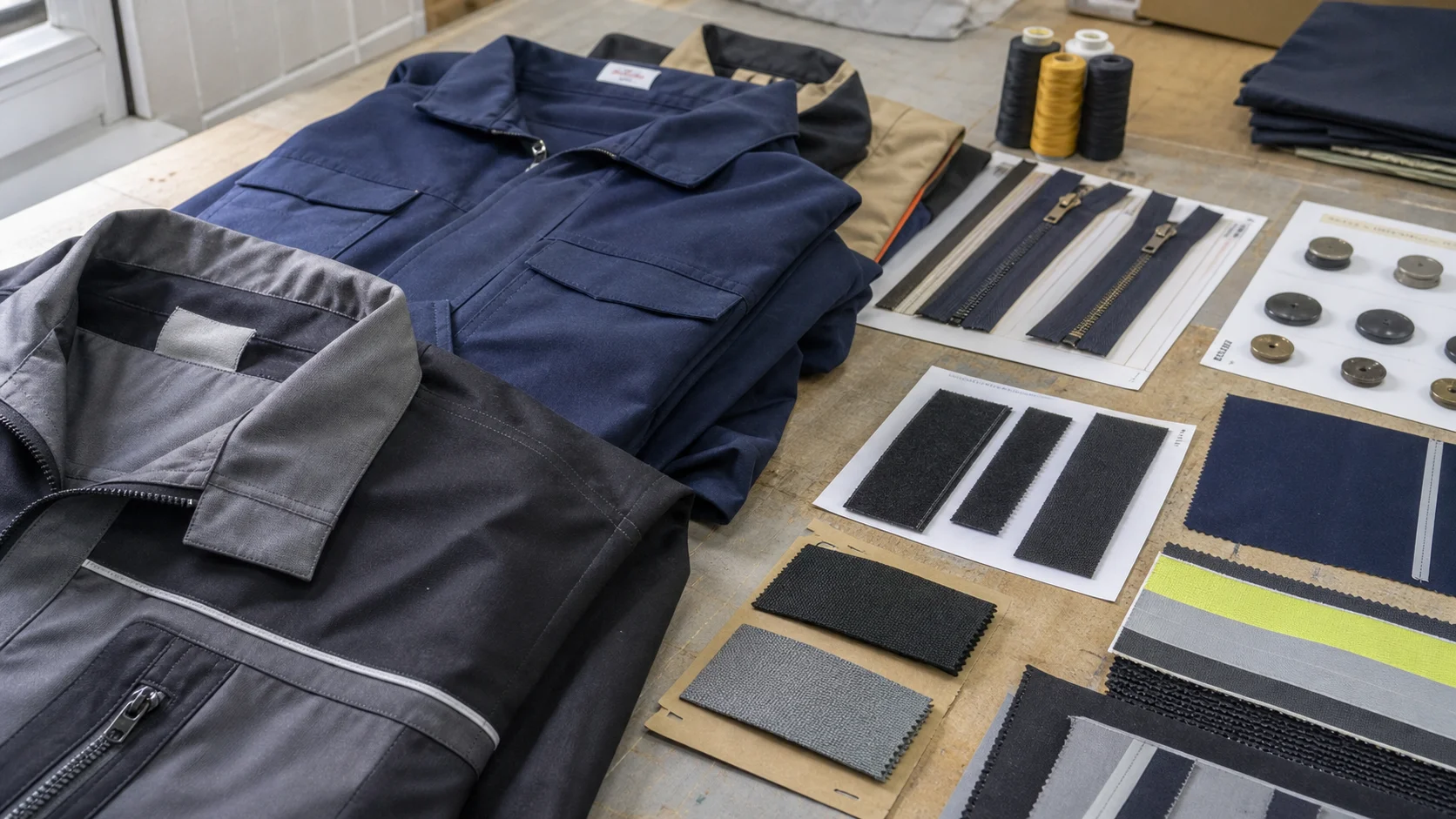
An SEO-focused outline for fitness brands sourcing custom trims for activewear sets, covering trim choices, performance specs, placement, compliance,...
Custom Trim Sourcing for Activewear Sets - Fabrikn production reference
Custom trim sourcing for activewear sets is one of those parts of product development that looks minor on a tech pack and ends up shaping the whole program. For fitness brands, trims influence fit consistency, branding, comfort, wash durability, retail presentation, and even how well a set survives repeat wear. The right trim package can make a collection feel sharper and more premium. The wrong one can create avoidable delays, returns, and quality complaints.
This matters even more in activewear sets, where tops and bottoms must work together as a system. Waistbands, elastic, drawcords, zippers, silicone grips, labels, heat transfers, logo tabs, and packaging elements all need to match the fabric, movement profile, and price point. A trim choice that works in a casual tee program may fail once it is stretched, sweat-tested, and laundered in a performance set.
For brands building fitness programs, trim sourcing should be treated as part of the commercial plan, not a late-stage decoration exercise. The earlier the trim spec is controlled, the easier it is to keep samples aligned, pricing stable, and production repeatable. For sourcing support and broader garment development coordination, see Fabrikn services, and for company background, review About Us.
Trims do more than finish a garment. In activewear sets, they define how the product performs under tension, movement, and laundering. A waistband elastic that is too weak can roll. A zipper that is too light can buckle. A heat transfer that is not matched to the fabric surface can crack early. These issues are not cosmetic only; they affect wearability and brand trust.
Fitness brand programs also depend on consistency across multiple styles and colorways. A set may include leggings, shorts, sports bras, jackets, or hoodies built around one visual language. Trim continuity helps create that system. The same puller shape, cord tip finish, logo application method, or label placement can keep a collection coherent without forcing every style to use the exact same construction.
There is a sourcing side to this as well. Trim choices affect minimums, vendor count, sample cycles, and lead times. A brand that specifies a custom zipper pull or proprietary elastic may gain a stronger identity, but it also adds dependency on a trim supplier. That is a rational tradeoff only when the volume and margin can support it.
Practical rule: the more visible and brand-defining the trim, the more it should be treated like a core component with its own approval path, not as an afterthought on the PO.
Elastic is one of the most important trims in activewear sets. It shows up in waistbands, cuffs, hems, and bra underbust structures. The spec needs to cover width, recovery, stretch percentage, compression feel, yarn content, and colorfastness. For performance bottoms, brands often look for stable elastic with strong recovery and low roll tendency. In some categories, brushed or covered elastic is preferred for comfort against skin.
Waistbands usually require closer testing than buyers expect. An elastic that feels acceptable in a hand sample can distort after heat, stretch, or repeated washing. Ask for stretch and recovery data, then confirm it with wear and wash testing before approval.
Drawcords are common in joggers, shorts, and some outerwear-style set pieces. They may be flat or round, with coated, rubberized, or metal tips. The choice is partly aesthetic and partly functional. Flat cords are often easier to manage and may suit a cleaner athletic look. Round cords can sit differently through a tunnel and may feel more traditional in sport styles.
Tip construction matters. Poorly sealed tips can fray. Low-grade metal tips can tarnish or corrode after sweat exposure. Rubberized or molded tips can improve branding, but they need proper die matching and color control. If a brand wants logo embossing on the tip, that should be locked early, since the tooling path can slow the first sample.
For jackets, half-zips, funnel necks, and some performance tops, zipper selection is a critical sourcing decision. The buyer needs to confirm tape type, tooth size, finish, puller shape, locking behavior, and whether the zipper is reversed or standard coil. In activewear, coil zippers are common because they are lighter and more flexible, though molded options may be used where a more rugged appearance is required.
Custom zipper pulls are a useful brand signal, but they can create tooling and MOQ issues. The safest path is to confirm that the supplier can hold dimensional consistency, then test the zipper under repeated open-close cycles and after laundering. A zipper that binds in a sample room can become a return issue in bulk production.
Woven labels, care labels, heat transfers, silicone patches, printed neck marks, and hangtags all fall within the trim conversation. For performance garments, printed neck labels or heat transfers are often used to reduce irritation. Woven labels still have a place on outerwear-style activewear sets where a more premium finish is wanted.
Branding application should match the use case. A large silicone patch can look strong on a jacket panel, but it may add stiffness to a stretch knit legging where flexibility matters more. Care labels need to stay legible and durable after washing. Print methods should be chosen with both abrasion and skin comfort in mind.
Snaps, hooks, cord locks, aglets, buckle hardware, and adjusters can all be part of an activewear set program. These are small components with outsized consequences. Metal hardware adds a premium feel, yet it can raise weight, corrosion risk, and cost. Plastic hardware is lighter and often better suited to low-profile athletic products, provided the resin and finish hold up through use.
When a program uses hardware, the spec should state plating, coating, salt-spray expectations where relevant, and dimensional tolerance. Inconsistent hardware sourcing is a common reason for shade and finish mismatch between samples and bulk.
A trim spec should leave as little room for interpretation as possible. Buyers sometimes focus heavily on the garment fabric and leave trims to shorthand notes. That creates friction later. The supplier needs clear information on material, finish, size, tolerances, color reference, test standards, and packing requirements.
For activewear sets, the minimum useful trim spec usually includes the following:
Color matching is often more sensitive than buyers expect. A black zipper tape may be matched differently from black body fabric, and that mismatch can read as sloppy even when technically acceptable. For branded trims, Pantone reference alone is not always enough. In practice, physical swatches and sealed approvals reduce confusion.
Fit-related trims deserve special attention. Waist elastics, underband elastic, and hem bindings interact with the garment shape. If the trim shrinks or stretches differently from the fabric, the product can twist or bunch. That is why trim approval should be linked to pattern and wash testing rather than handled as a separate admin step.
MOQ is one of the main commercial constraints in custom trim sourcing. Standard trims from stock suppliers can be flexible, sometimes available in low quantities. Custom trims almost always push the order into higher minimums, especially if tooling or private molds are involved.
Typical ranges vary by supplier and trim type, but a conservative planning view looks like this:
Trim Type Typical MOQ Range Lead-Time Consideration Standard woven labels 500 to 3,000 pieces Usually short if artwork is finalized Custom heat transfers 300 to 2,000 pieces Depends on artwork approval and test prints Custom zipper pulls 1,000 to 5,000 pieces Tooling and plating add time Custom elastic 1,000 to 5,000 meters or more Shade matching and weave setup matter Molded silicone patches 500 to 3,000 pieces Mold approval can extend developmentThese are planning ranges, not guarantees. Smaller programs can sometimes work through stock bases with custom finishing. Larger programs may justify tighter control and better pricing by ordering more volume upfront. A buyer should weigh the cost of excess trim inventory against the risk of stockouts and delayed replenishment.
Lead times depend on tooling, artwork finalization, material availability, and whether the trim supplier is separate from the garment factory. Coordinating across vendors usually takes longer. A simple label may be fast. A custom molded puller with plated finish can take several weeks before production is even ready to start. Trim approval should be scheduled early enough that garment sampling is not stalled by missing components.
Trim development should move through a disciplined sequence. Skipping steps usually costs more later.
The key judgment point is this: trim approval on a flat card is not enough for activewear. A label may look correct in isolation and still curl at the edge once sewn into a stretch body. A zipper pull may pass visual review and still create noise or snagging in use. The sample should be assessed in context.
Brands running fitness programs should also insist on version control. When trim specs change between proto, fit sample, and pre-production sample, the record needs to show what changed and why. That protects the buyer when a bulk issue appears later and the dispute comes down to which revision was approved.
Trim defects are easy to miss if the inspection focus stays only on garment measurements. That is a mistake. Trim problems often appear in bulk because they involve small parts, repeated motion, or finishing details that are hard to spot in one sample.
Common risks include shade variation across trim lots, poor heat-transfer adhesion, label curling, print cracking, zipper misalignment, weak stitching at trim attachment points, and inconsistent hardware plating. Elastic can lose recovery. Cord tips can split. Silicone logos can lift at the edges. Any of these can turn into a reject rate problem if they are not controlled early.
Inspection should look at both appearance and function. Pull tests, adhesion checks, open-close cycles, laundering, and seam stress review are all useful depending on the product type. A jacket zipper and a waistband tie do not need the same test, but both need a defined standard.
Another risk is substitution. In some supply chains, the factory may swap a trim component if the named item is unavailable. That may be acceptable only if the replacement is formally approved. Uncontrolled substitution can break brand consistency and create liability if a different material performs differently in wear.
Custom trims are often worth the cost when they improve sell-through, strengthen brand identity, or reduce returns. The challenge is knowing where the money goes. A visible, well-made puller or clean label package can justify a premium. A costly trim hidden inside a low-margin product may not.
The buyer should look at three commercial questions:
There is also a practical issue with nesting cost. When several custom trims are added to one set, each component may look affordable on its own. The combined impact can move the product into a higher retail bracket or compress margin more than expected. This is why trim sourcing should be reviewed alongside bill of materials pricing, not afterward.
For early-stage fitness brands, the better move is often to customize one or two high-visibility trims and keep the rest standard. That approach preserves brand distinction without tying up too much cash in tooling and minimums. More mature programs can justify deeper customization once sales data supports it.
The most reliable approach is to build a trim library by product family. That means defining approved options for leggings, sports bras, jackets, tees, shorts, and hybrid outerwear-style pieces. Once the library exists, new styles can be developed faster and with fewer surprises.
A good trim library should tell the factory what is standard, what is optional, and what requires separate approval. It should also document the approved vendor source where possible. That saves time during repeat orders and reduces the chance of accidental changes.
For brands that want broader development support, it is worth aligning trim sourcing with pattern, fabric, and packaging planning from the start. A sourcing partner such as Fabrikn contact can help coordinate early questions on trim feasibility, sample timing, and production constraints before the program is locked in.
One final judgment point: trims should support the product story, not compete with it. Activewear customers care about comfort, movement, durability, and finish. Strong trim sourcing makes those qualities easier to deliver. It should never force the garment into a more expensive or fragile build than the market can absorb.
Custom trim sourcing for activewear sets is a technical and commercial discipline. It affects aesthetics, function, speed, and margin in equal measure. Brands that treat trims as a controlled part of the product system usually get better sample alignment, fewer production surprises, and a cleaner retail result.
The sourcing standard is straightforward: specify clearly, sample in context, approve carefully, and judge every custom trim against real performance needs and MOQ realities. That is the practical way to build fitness brand programs that look consistent and hold up in use.
Get a free quote from Fabrikn — your trusted B2B clothing manufacturer with 10+ years of experience. MOQ as low as 200 pieces.
Get a Free Quote →Common custom trims include woven labels, heat transfers, zipper pulls, elastic waistbands, cord tips, silicone patches, and branded hardware. The right mix depends on whether the set is built around comfort, performance, or a more premium outerwear-style look.
MOQs vary by trim type. Small labels or transfers may start in the low hundreds, while custom elastic, zipper pulls, and molded hardware often require higher minimums. The safest approach is to request MOQ and overrun tolerance early, then match the trim plan to forecasted volume.
Trim sourcing should begin during early development, not after fit approval. Custom tooling, artwork revisions, color matching, and sample approvals can add weeks. Programs with multiple trims or separate vendors need even more time.
The most common mistake is treating trim approval as a visual check only. In activewear, trims must survive stretch, sweat, laundering, and repeated wear. A component that looks fine in sample form can still fail in bulk use.
No. Full customization is not always the best commercial choice. Many brands do better by customizing one or two visible trims and using standard components elsewhere. That keeps the program more manageable and reduces inventory risk.