
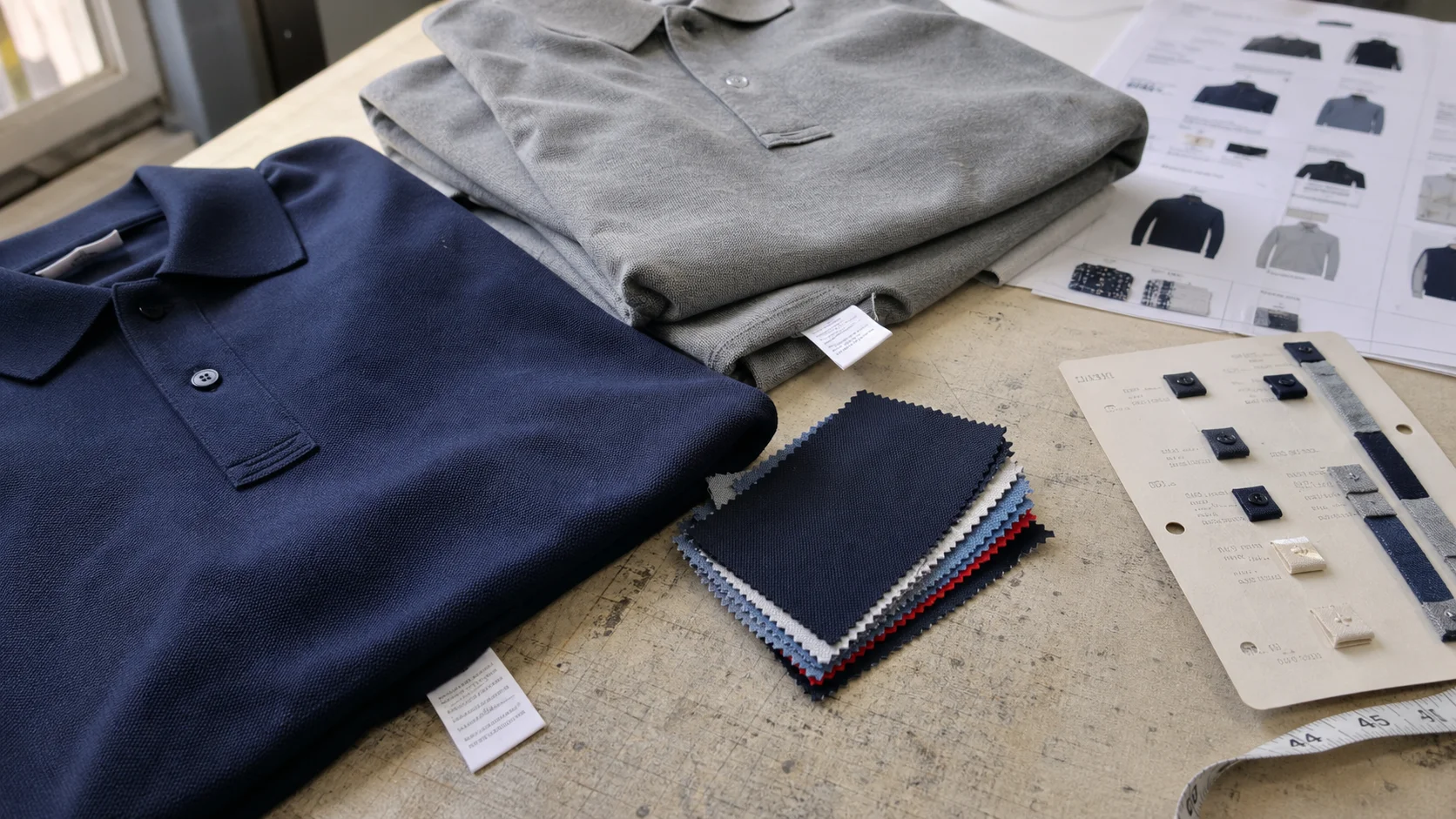
An SEO-focused outline for logistics buyers who need custom uniforms that hold up under heavy movement, repeated laundering, and real seam failure risks.
Custom Uniform Seam Strength Testing Buyers Guide - Fabrikn production reference
For logistics workforce buyers, seam strength is not a nice-to-have detail. It affects garment durability, worker confidence, replacement cycles, and the cost of quality after goods are already in circulation. Custom uniforms in warehousing, distribution, parcel handling, and fleet support see repeated bending, lifting, reaching, and abrasion. Weak seams show up early in stress points such as armholes, crotch seams, side seams, pocket openings, belt loops, and reinforced knees. Once a seam starts opening, the failure spreads faster than the fabric usually does.
This guide explains how seam strength testing fits into custom uniform sourcing, what test methods matter, how to read supplier claims, and where buyers need to be careful. The focus is activewear and teamwear used by logistics workforces, where movement, laundering, and long service life matter more than decorative finish.
Logistics uniforms are often judged first on fit and appearance, then on how long they survive. That is the wrong order for procurement. If a uniform cannot hold up to repeated load-bearing movement, the cost lands in replacements, altered inventory planning, and worker frustration. For buyers managing high-volume workforce programs, seam failure is not a cosmetic defect. It is a service-life problem.
Seam strength matters most in garments with stretch, dense wash cycles, or heavy pocket use. Polo shirts, work tees, joggers, cargo trousers, softshell jackets, and hi-vis layering pieces all carry different stress patterns. A garment can pass basic size and color checks and still fail under the load of real work. A supplier that understands seam construction will usually talk about thread type, stitch class, reinforcement points, and the interaction between fabric recovery and seam elongation. That is the conversation buyers should expect.
For logistics workforce programs, the cheapest uniform often becomes the most expensive one once seam failures and early replacements are counted.
Seam strength testing checks how much force a sewn seam can withstand before opening, slipping, or breaking. The purpose is not to prove that a garment is indestructible. The real job is to confirm that the construction is appropriate for the fabric, pattern, and use case. A strong fabric with a weak seam is still a weak uniform.
Buyers should distinguish between seam strength and fabric strength. Fabric tests may show the textile is durable, but the seam is where two or more layers, thread, stitch density, and seam allowance interact. That interaction creates failure points that do not appear in raw fabric testing. In procurement terms, the garment has to be tested as a system.
Relevant outcomes include seam slippage, seam breaking force, stitch integrity, needle damage, and skipped stitches after stress or laundering. For activewear and teamwear, seam recovery after stretch is also important because a seam that passes a single pull test may still deform after repeated movement.
Different labs and suppliers may reference different standards, but the buyer should focus on the type of result rather than the acronym alone. The useful question is simple: does this method reflect the garment’s real use?
This is the most direct measure. A test machine pulls a sewn sample until the seam fails. Buyers use this to compare construction options, thread choices, and fabric weights. It is helpful for side seams, shoulder seams, inseams, and high-load areas like pockets.
This test looks at yarn movement in woven fabrics near the seam. It matters when the fabric is slippery, tightly woven, or lightweight. If seam slippage is poor, the fabric can open up even if the thread itself has not broken. This is common in some woven shirts, light shell layers, and uniform trousers made for cleaner appearance rather than heavy duty.
Not every weakness shows up in a single tensile test. Repeated washing, drying, and industrial laundering can expose thread shrinkage, puckering, or stitch distortion. Buyers sourcing uniforms for long-term programs should ask for wash-cycle validation, not just fresh-from-production testing.
Some programs use wear simulation, stretch cycling, or combined abrasion and seam stress checks. This is especially relevant for activewear-style uniforms, where ergonomics and movement put more load on the garment than static workwear would.
Seam performance starts with material selection. Buyers often focus on fabric composition and overlook the smaller pieces that make the seam survive. That usually becomes a mistake during wear trials or post-delivery inspection.
Heavier fabrics usually tolerate higher seam loads, but weight alone does not guarantee performance. A 200 gsm knit with strong recovery can outperform a heavier fabric that stretches out or distorts. For logistics teamwear, common fabrics include polyester-cotton blends, polyester elastane knits, recycled polyester blends, and brushed fleece or interlock for layering pieces. The exact blend should match the job, not just the price point.
Stretch content matters. Higher elastane or spandex can improve comfort, but it also changes seam behavior. Suppliers need to balance stitch choice, seam allowance, and thread elasticity. Without that balance, seams can pop at the first hard reach or squat.
Thread selection is often under-specified in buyer briefs. That creates risk. Polyester core-spun thread is commonly used for strength and wash durability. The tex or ticket size should suit the fabric and expected load. Too fine, and the seam may fail early. Too heavy, and the garment can pucker or become uncomfortable.
Lockstitch, overlock, coverstitch, flatlock, and reinforced seam constructions each serve different purposes. Activewear and teamwear typically rely on stretch-compatible stitch structures in movable zones. A buyer should expect the supplier to explain where each seam type is used and why. Stitch density matters too, but more stitches are not automatically better. Excess density can damage stretch fabrics and reduce comfort.
Seam allowance should reflect the load and fabric behavior. Narrow allowances can be acceptable for lightweight garments, but they are not ideal in stress areas. Reinforcement through bar tacks, double stitching, taped seams, or flat-felled construction can improve durability, though each choice affects cost, comfort, and appearance.
Buyers do not need to write laboratory manuals. They do need a usable specification that reduces dispute later. The best spec tells the supplier what the garment is for, what failure looks like, and what evidence is required before bulk production.
A practical brief normally includes garment type, target user activity, expected wash frequency, fabric composition, seam type, and minimum acceptable test results. For logistics workforces, the spec should also reflect bending, lifting, frequent laundering, and friction from belts, carts, shelves, or seat contact. If uniforms are worn in heated environments, moisture management and repeated movement become even more relevant.
For procurement teams, a sensible approach is to require:
There is no universal pass mark that fits every uniform. Lightweight polo shirts and reinforced cargo pants will not share the same threshold. A buyer should compare the test target against the garment’s end use, not against a generic number offered by a supplier trying to close the order.
Uniform type Higher-risk seam areas Testing focus Polo shirts Shoulders, side seams, placket junctions Stretch recovery, stitch stability, wash durability Work tees Shoulder seams, armholes, hems Seam break force, thread strength, laundering performance Cargo trousers Crotch seams, pockets, knee panels Load-bearing seams, bar tacks, abrasion resistance Softshell jackets Armholes, shoulders, pocket edges Seam slippage, reinforcement, weather exposure effects Hi-vis layers Reflective tape attachment, side seams Attachment integrity, wash resistance, heat sensitivityGood seam testing starts before the first carton ships. Buyers should control the sample chain carefully, because many production problems are hidden by attractive prototypes.
A standard approval process usually runs through these stages: development sample, fit sample, pre-production sample, bulk production, and final inspection. Each stage serves a different purpose. Development samples test the idea. Fit samples test the pattern. Pre-production samples test the final material package and construction. Bulk production confirms the factory can repeat it.
For seam strength, the critical checkpoint is the pre-production sample. This is when the actual fabric, trims, thread, labels, and finishing process should match bulk intent. If the factory changes thread count, seam allowance, fabric mill, or wash process after approval, the earlier test data may no longer be valid.
Buyers should insist on clear sign-off language. The approved sample should be retained and referenced against bulk goods, especially when multiple sizes or colorways are involved. It is also sensible to request photos of stress points and seam details before cutting full production, since repairs after bulk cutting are expensive and time-consuming.
For sourcing support and program coordination, the service overview at Fabrikn services is a useful starting point. Buyers who need a direct production conversation can also use the contact page to brief requirements before sample work begins.
Seam testing itself is not usually the slowest part of the order. Lead time is more often driven by fabric sourcing, trim matching, sample approval delays, and factory capacity. Buyers should not assume that a strong testing plan means a fast order.
Typical MOQ ranges vary by garment type and factory setup. For custom logistics uniforms, a sensible working range is often 300 to 1,000 pieces per style or color for cut-and-sew programs, with lower or higher thresholds depending on decoration complexity, fabric stock, and size spread. Screen printing, embroidery, or reflective detailing can push the minimum up. Complex patterning, bonded seams, and specialist trims can do the same.
Lead time is affected by whether fabric is stock-supported or mill-ordered, whether colors need lab dips, whether trims are standard or custom, and whether the factory can run test batches before bulk. A normal development cycle may take several weeks before bulk cutting begins. Buyers with launch deadlines should build in time for a sample correction loop. One rejected seam result can add more delay than a full week of production capacity.
Any program that requires industrial laundering, high-visibility compliance, or specific performance standards should expect longer testing windows. Fast-tracking the order without protecting the testing stage is a false economy. It saves days and costs months later.
Many seam-related failures are not true surprises. They are process errors that show up in inspection if the buyer knows where to look. The problem is that teams often inspect color, logo placement, and general stitching appearance, then miss the construction details that carry the real risk.
Watch for these issues:
Final inspection should not rely on visual appearance alone. A seam can look neat and still be underbuilt. Buyers should ask for pull checks on selected units, especially when the garment includes pockets, stretch panels, or reinforced areas. For larger programs, random inspection across size ranges matters because seam stress often differs between smaller and larger grades.
Quality control support and manufacturing coordination are easier to manage when the supplier provides clear documentation. The company background at Fabrikn about us can help buyers understand the type of production support available before they issue a request for quote.
The best buyers ask for evidence early. They do not wait for the first shipment to discover construction weakness. A short but disciplined checklist reduces back-and-forth and protects the program budget.
For logistics workforce buyers, the right decision is usually the one that balances durability, comfort, and repeatability. Overbuilt seams can reduce comfort or raise cost without adding meaningful value. Underbuilt seams create replacements, claims, and disruption. The correct standard is fit for purpose, not maximum construction at any price.
Get a free quote from Fabrikn — your trusted B2B clothing manufacturer with 10+ years of experience. MOQ as low as 200 pieces.
Get a Free Quote →It is the process of checking whether sewn seams can withstand the force, movement, and laundering expected in use. For logistics uniforms, it helps confirm that the garment will survive active work rather than only looking good at handover.
Common weak points include shoulders, side seams, armholes, pockets, crotch seams, knee panels, and reinforcement points like bar tacks. These areas take the most load during bending, lifting, and repeated wear.
Ask for fabric composition, gsm, thread type, seam construction details, test results, and pre-production sample approval records. If the supplier cannot explain how the seam was built, that is a warning sign.
There is no single standard. Many cut-and-sew custom uniform orders fall in the 300 to 1,000 piece range per style or color, though fabric choice, decoration, and complexity can push that higher or lower.
It depends on the workflow. Lab testing itself may be quick, but sampling, correction, and re-approval can add meaningful time. Buyers should expect the full process to depend on fabric sourcing, trim availability, and how quickly sample feedback is returned.
No. A clean-looking seam can still fail under load or after washing. Visual inspection is useful, but it should sit alongside mechanical testing and wash validation.
Choose a supplier that can explain construction choices clearly, provide sample-backed testing, and repeat the same quality in bulk. That matters more than chasing the lowest initial quote.