
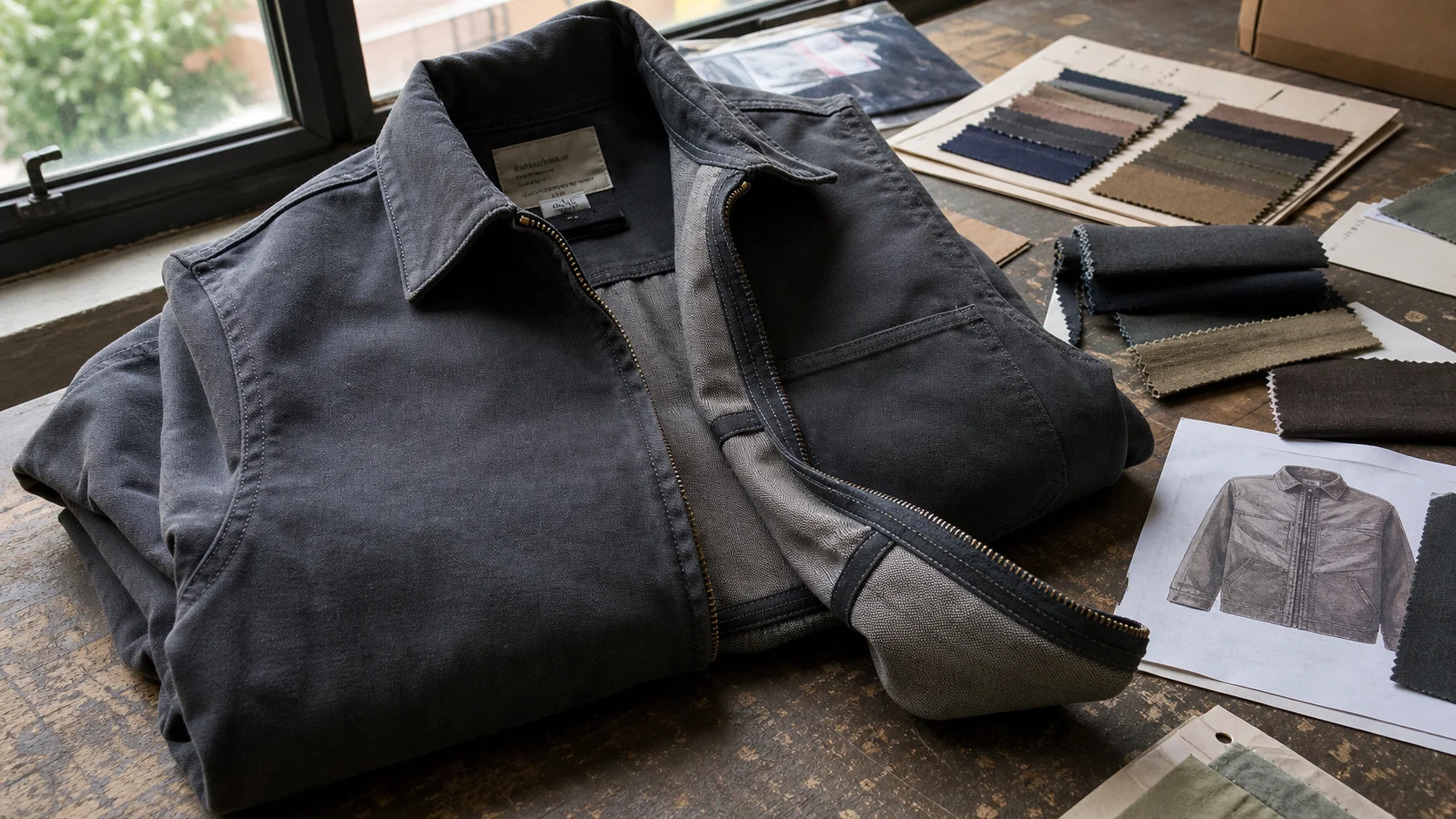
A practical outline for warehouse procurement teams planning custom workwear coat orders around MOQ, sizing runs, decoration methods, and replenishment timing.
Custom Workwear Coats MOQ Planning for Warehouses - Fabrikn production reference
MOQ planning for custom workwear coats is the process of matching order quantity, sizing needs, branding method, and delivery timing to what a factory can actually produce at a sensible cost. For warehouse procurement teams, this is not a branding exercise. It is a purchasing decision that affects inventory risk, labor comfort, replacement cycles, and compliance with site visibility rules.
Workwear coats sit in an awkward middle ground. They are more complex than a basic T-shirt, yet not as highly engineered as protective outerwear with advanced certifications. They usually involve heavier fabric, more stitching, lining choices, zippers or snaps, reflective trim in some cases, and print or embroidery requirements. Each detail can shift MOQ, lead time, and unit cost.
The right planning approach starts with one simple question: how many coats can the warehouse truly absorb across departments, seasons, and replacement needs without creating dead stock? That number is often lower than the supplier’s preferred production batch, but higher than the initial urge to “just test a few dozen.” The workable number usually sits somewhere between those extremes.
Warehouse workwear is replaced for practical reasons, not fashion cycles. Coats get worn out, contaminated, damaged by pallets and racks, or reassigned when staff changes. That creates a procurement pattern with uneven demand and recurring reorder needs. A warehouse may need a modest initial rollout, then a steady replenishment plan. Treating every coat order as a one-off custom project usually leads to poor cost control.
Procurement teams also carry a few realities that retail buyers do not. Sizing is broader. Branding may need to be restrained and durable. Department color coding may matter. The coats may need to work in colder dock areas, indoor ambient zones, or mixed indoor-outdoor environments. A coat that looks good in a sample room can still be a bad fit for a warehouse floor if the sleeves are too restrictive or the fabric traps too much heat.
MOQ planning is where purchasing discipline matters. A lower MOQ gives flexibility, but it often increases unit pricing, decoration setup charges, and sample pressure. A higher MOQ improves cost efficiency, but it ties up cash and raises the risk of size imbalance. For warehouses, the best answer is usually based on usage rate, headcount, and replacement assumptions rather than a single “minimum order” number from the factory.
Factories set MOQ based on material sourcing, cutting efficiency, decoration setup, and production scheduling. A custom workwear coat may use shell fabric, lining, interlining, reflective tape, thread, labels, zippers, snaps, and hangtags. If any of those components need special sourcing, the order threshold can rise quickly.
Decoration and printing also matter more than many buyers expect. A simple chest logo may be inexpensive, but a large back print, sleeve branding, or high-visibility positioning can require extra screens, transfer tests, or alignment checks. That is especially true on textured or coated surfaces where print adhesion is less forgiving.
MOQ varies by factory and garment specification, so any range should be treated as indicative rather than fixed. The figures below are practical planning ranges procurement teams often use when they begin supplier discussions.
Coat Type Typical MOQ Range What Pushes It Higher Basic unlined workwear coat 200 to 500 pcs Special fabric color, multiple logos, mixed trims Branded lined warehouse coat 300 to 800 pcs Lining sourcing, pocket complexity, size spread Heavy-duty insulated coat 500 to 1,000+ pcs Quilting, padding, high labor content, special closures High-visibility coat with decoration 300 to 1,000 pcs Reflective tape, compliant color requirements, testingThese are not promises from a supplier. They are a starting point for budget and timing conversations. A factory may accept a smaller order if you use stock fabric and a simple print application. The same factory may insist on a much higher MOQ if the fabric must be custom dyed, the trims are unique, or the decoration involves several positions.
Warehouse procurement teams should also separate factory MOQ from commercial MOQ. A supplier may be willing to make 150 pieces, but the unit price, sample charge recovery, and freight allocation may make that order uneconomical. The cheapest offer on paper is not always the best purchasing decision once setup, inspection, and landed cost are included.
Because this article sits in the Decoration & Printing category, decoration deserves a practical look. Workwear coats are not the easiest surface for branding. Thick fabrics, seams, zippers, padding, and weather-resistant coatings can complicate placement and durability. The decoration method should be chosen based on use, wash frequency, and visibility needs, not just price.
Procurement teams should ask for decoration placement drawings before sampling. A chest logo that sits well on a flat spec can look badly distorted once applied over pocket seams or quilted sections. Sleeve branding is another common source of problems because circumference changes by size. A good supplier will flag these issues early instead of waiting until bulk production.
Print size also affects MOQ. Large multi-color graphics often require more setup and testing. If the warehouse only needs discreet branding, a smaller left-chest logo or woven label may be the more sensible choice. That keeps the order simpler and reduces the chance of rejected samples or misaligned production runs.
For warehouse buyers, decoration should support identification and professionalism, not become the main cost driver. A clean, durable logo on the right surface is usually better purchasing than a more elaborate print that adds setup risk and delays approval.
Sampling is where many MOQ decisions become real. A supplier may quote a workable unit price, then discover that the approved garment requires a revised fabric weight, changed zipper, or a new logo position. That is normal. What matters is whether the approval process is controlled.
For workwear coats, sample approval should include a functional review. Can the coat be worn over a standard warehouse uniform? Do the sleeves allow lifting and reaching? Do pockets stay usable with gloves? Is the collar comfortable in a cold dock environment? These are not cosmetic details. They affect wear rate, complaints, and replacement spend.
Factories sometimes quote shorter lead times before the sample is approved. That estimate is only reliable if fabric is in stock, trims are standard, and decoration is straightforward. If any part of the order depends on a custom-dyed fabric or a special closure, the sample stage should be treated as part of the production timeline, not a separate administrative step.
Lead time for custom workwear coats is often driven by the slowest component, not the sewing line itself. A coat can be stitched quickly if all materials are ready. Delays usually happen earlier in the chain.
Typical production lead times for simpler coat programs may fall in the 30 to 60 day range after sample approval and material confirmation. More complex coats, especially those with insulation, compliance requirements, or custom materials, can run longer. Freight time sits outside production time and should be treated separately in procurement planning.
The better buying practice is to set an internal deadline before the supplier’s deadline. Procurement teams that work backward from the warehouse need date, rather than from the quote date, are less likely to get trapped by unfinished samples or material shortages.
A clean spec sheet is one of the cheapest ways to control MOQ and reduce production mistakes. If a coat specification is vague, the factory has to fill in gaps. That usually means more sample rounds, more questions, and more chances for discrepancy between expectation and bulk output.
Fabric and trim specs deserve special attention. A warehouse coat that is too light may fail to hold up under daily use. One that is too heavy can cause overheating and reduced wear compliance. The fabric weight should match the job, not just the catalog image. Trim quality matters too. A weak zipper or low-grade snap can turn a cost-saving order into a repeat replacement problem.
Color matching is another source of avoidable disputes. Procurement teams should ask for reference standards, not verbal color names. If the coat requires company branding colors, supply a Pantone reference or approved master sample where possible. This is especially useful when a logo print has to sit cleanly against a shell color with limited contrast.
Even when the garment spec is clear, inspection risk remains. Workwear coats are often checked for stitching quality, logo placement, measurement accuracy, and trim consistency. Outerwear construction carries more defect points than many buyers expect.
Inspection should not be treated as a late-stage formality. If the first approved sample differs from bulk due to a material substitution, the risk is not only visual. It can affect fit, wash behavior, and wear life. For warehouse programs, that becomes a cost issue quickly because underperforming coats need replacement sooner than planned.
Third-party inspection can be useful when order value is material or when the supplier is new. It is not a cure-all. The inspection checklist must match the garment type, decoration method, and required use case. A generic apparel checklist may miss practical issues such as pocket function, cuff wear, or logo durability.
Good MOQ planning is not about guessing the factory’s ideal number. It is about building a small but realistic demand model. Start with current headcount, planned hires, expected replacement rate, and any seasonal requirements. Then decide how much inventory the warehouse can carry without straining cash or storage.
This approach usually produces a more sensible first order than buying to the supplier’s maximum break point. For example, if 180 staff need coats and the site expects turnover and replacements, an initial order of 220 to 260 units may be more practical than 500 units. That said, if the supplier pricing drops sharply at 500 pieces and the coat is likely to remain stable for several seasons, the higher order may be defensible. The judgment depends on wear cycle and storage capacity.
Split programs can also work. One standard coat can cover the main warehouse population, while a smaller premium version handles supervisors or cold-zone staff. That reduces the need to force one coat spec to fit every use case. It may also keep MOQ manageable by separating the base program from the niche one.
A lower MOQ makes sense when the program is still being tested, when headcount is unstable, or when the coat design is new enough that fit and decoration need real-world feedback. It also makes sense if the warehouse has multiple sites with different temperature conditions or branding rules. In those cases, flexibility can be worth more than unit savings.
Lower MOQ is also a reasonable choice when the decoration is likely to change. If branding guidelines are still being finalized, committing to a large order can create obsolete stock. The same is true when compliance requirements may shift. Paying a bit more for a smaller first run may be better than holding unusable inventory later.
The tradeoff is straightforward. Small runs cost more per unit and often reduce supplier leverage on fabric pricing. That premium is not a mistake; it is the price of caution. Procurement teams should recognize that as part of risk management, not as a negotiation failure.
Supplier selection should focus on capability, responsiveness, and evidence of control. A polished quotation is not enough. For custom workwear coats, the supplier needs to understand decoration placement, trim sourcing, fit consistency, and the realities of warehouse use. A vendor that only sells generic outerwear may struggle with the detail level needed for a controlled procurement program.
Ask for information on standard lead times, sample stages, size tolerance practice, and decoration method compatibility. Clarify whether the quoted MOQ assumes stock materials or custom materials. Request a cost breakdown if possible so you can see where price pressure is coming from. That makes negotiation more grounded and reduces hidden assumptions.
Useful supplier pages can support this early-stage review. The service overview at /services/ helps frame what capabilities are available. Company background on /about-us/ can help assess fit and operating style. For a direct quotation or technical discussion, /contact-us/ is the sensible next step.
Get a free quote from Fabrikn — your trusted B2B clothing manufacturer with 10+ years of experience. MOQ as low as 200 pieces.
Get a Free Quote →For simple workwear coats, a common range is 200 to 500 pieces. More complex lined, insulated, or high-visibility coats often need 300 to 1,000 pieces or more. The final MOQ depends on fabric, trims, decoration, and whether the supplier is using stock materials or custom sourcing.
It can, especially if the embroidery is large, multi-position, or requires detailed digitizing. Small chest embroidery is usually easier to support than big back designs or sleeve branding. MOQ pressure often comes from setup time and production efficiency rather than the stitching itself.
Most controlled programs go through at least two rounds: a first prototype and a revised sample, followed by a pre-production sample when needed. Simple projects may need less. More technical coats, or coats with decoration and special trims, may need more than two rounds before approval is solid.
That depends on the environment. Polyester-cotton twill, oxford cloth, and other durable woven fabrics are common starting points. The right choice depends on abrasion resistance, comfort, warmth, wash durability, and whether the coat needs weather protection or visibility features.
Custom fabric, trim sourcing, decoration approval, and compliance checks are the usual bottlenecks. Sewing time is often not the problem. If the materials are not locked in early, the production schedule can slip even when the supplier appears ready to start.
Not by default. The lowest MOQ can be useful for trials, but it often comes with higher unit cost. For stable warehouse programs, the better choice is the MOQ that balances price, cash exposure, storage space, and the risk of size or design changes.
Use a clear spec sheet, approve fabric and trim swatches early, keep decoration simple where possible, and order only what the site can realistically use within the planned replacement cycle. A measured first order is usually better than overcommitting to a large batch with uncertain demand.