
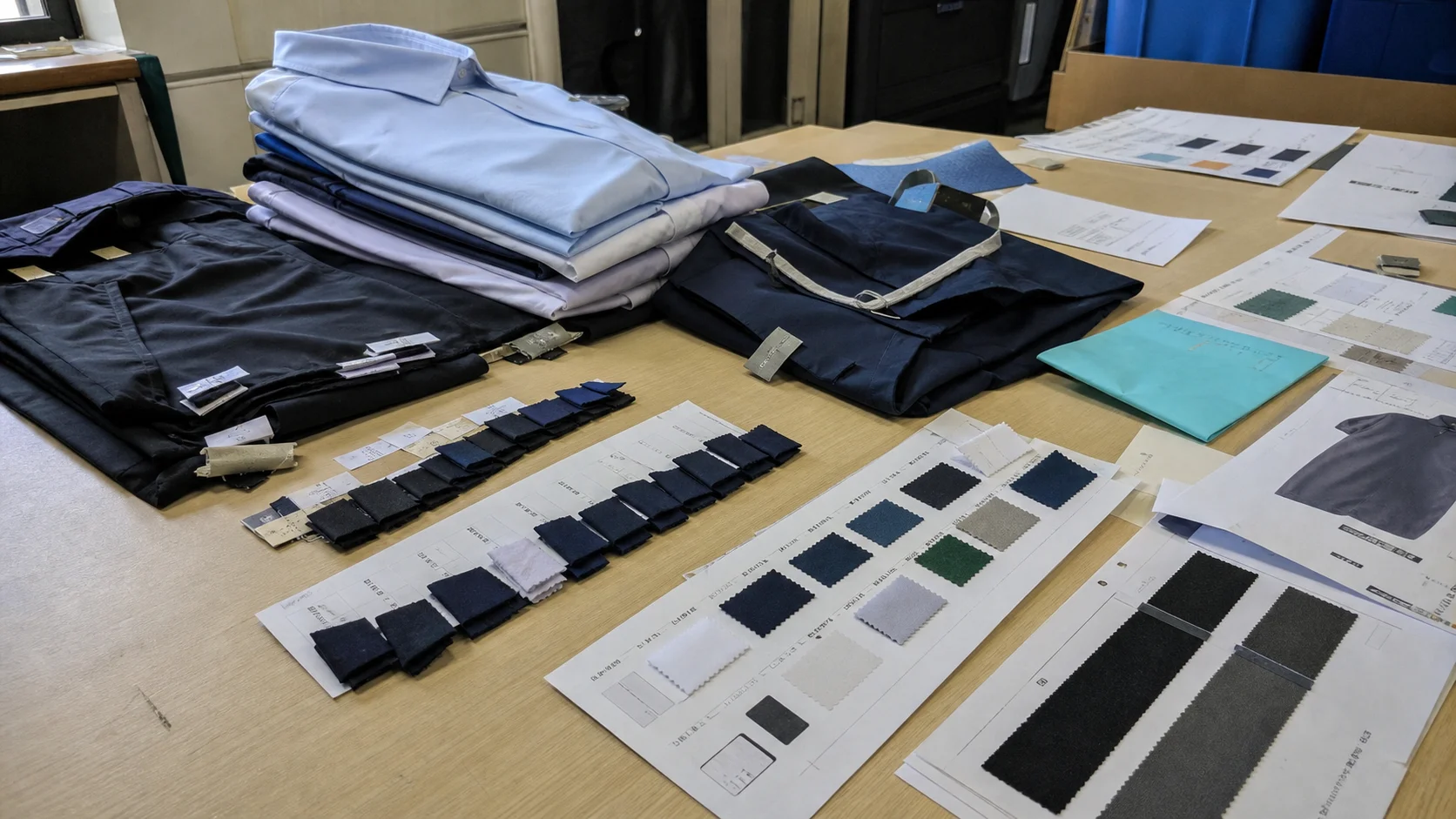
A practical buying-focused outline for clinic purchasing teams evaluating custom woven origin tabs, with a focus on colorfastness testing, compliance...
For clinic purchasing teams, a custom woven origin tab is a small detail with outsized sourcing risk. It sits on garments, uniforms, scrubs, lab coats, patient apparel, and branded support wear as a visible proof point of origin, compliance, and brand control. When the tab color bleeds, fades, or shifts after wash testing, the item can fail both appearance standards and internal approval. That is why a custom woven origin tab colorfastness audit deserves the same discipline as a fabric or print review.
This guide explains how clinic buyers can audit colorfastness on woven origin tabs before bulk approval, what test methods matter, which specifications to request, and where the common failure points appear. It also covers practical sourcing judgments: when a tighter spec is worth the extra cost, where a cheaper trim can create hidden rework, and how to build a more reliable approval process with suppliers. For broader support on decoration and printing programs, see Fabrikn services, or reach out through contact us. Company background is available on about us.
Custom Woven Origin Tab Colorfastness Audit - Fabrikn production reference
A woven origin tab is a narrow, woven identification label attached to a garment seam, hem, side seam, pocket edge, or inside neck area. In clinic programs, the tab may indicate country of origin, brand identity, hospital network, department ownership, or private-label positioning. Some buyers use it for compliance marking, while others use it as a subtle branding device in place of a larger logo.
Unlike a printed label, a woven tab builds color through dyed yarns interlaced on a loom. That structure gives a cleaner edge and a more premium look, but it also creates a different risk profile. Colorfastness depends on the yarn dyeing method, fiber type, weave density, finishing process, and the way the trim responds to laundering, heat, bleach exposure, and abrasion.
For clinic wardrobes, this matters because the end use is not decorative only. Garments are washed often, sometimes at higher temperatures, and may face disinfecting chemicals, hot tumble drying, and industrial laundering. A tab that looks stable at delivery can still fade quickly once it enters a real wash cycle.
Clinic purchasing teams are typically balancing several requirements at once: appearance, durability, compliance, hygiene, and budget. A woven origin tab can appear minor on a spec sheet, yet a failure can trigger broader quality issues. Faded origin tabs may create a poor visual standard across a uniform program. Color migration can stain adjacent fabric panels. Poorly fixed dyes can release during washing and compromise other components in the garment.
The purchasing risk is not only cosmetic. Rework on large clinic programs can be expensive because the trim is sewn into finished goods. If the tab fails after garment assembly, removal and replacement are rarely efficient. That means the real control point is pre-production approval, followed by lab and wash testing before bulk release.
Healthcare buyers should also note that a stable appearance helps standardize product identity across departments and reorder cycles. If one production lot of origin tabs is slightly off-shade, the discrepancy can become visible across mixed inventory. That creates avoidable variation in a setting where consistency matters.
A trim audit should be treated as a production gate, not a paperwork step. If the origin tab is part of the garment identity, it needs the same review discipline as the base fabric and main label.
A practical audit starts with a clear specification. Buyers should not rely on “match sample” language alone. The sample itself should be identified, dated, and tied to an approved color reference. The audit then checks whether the tab can survive expected laundering and handling without unacceptable change.
Begin by confirming how the garment will be cleaned. Clinic programs may face domestic laundering, commercial laundry, or industrial wash cycles. Water temperature, detergent chemistry, drying method, and potential bleach exposure all affect colorfastness. A tab approved for mild home washing may not be acceptable for a scrub program washed aggressively every week.
Request a lab-dip or woven strike-off for each origin tab color. If the design uses more than one yarn color, each yarn should be referenced separately. Approve against physical standards under daylight or a controlled light box. Digital images are useful for recordkeeping, but they should not replace a physical standard.
Buyers should know whether the tab uses polyester, cotton, recycled polyester, nylon, or a blend. Polyester generally gives better wash durability than many natural fibers, while cotton can feel softer and may suit some heritage branding programs. Fiber choice affects not just colorfastness but also shrinkage, fraying, and heat resistance.
Before bulk sewing begins, the supplier should test the woven tab for wash fastness, rub fastness, and any relevant chemical exposure. If the program is strict, ask for testing on the exact production lot, not a previous batch. This is especially important if the supplier changed yarn source, dye house, or finishing method.
Even a good tab can fail when it is attached poorly. Tight stitching, edge tension, needle damage, and seam placement can increase wear and fraying. If the tab sits in a high-abrasion area, such as near a pocket opening or side seam, build that into the audit. The trim may pass lab tests yet still degrade in actual use if the garment construction is too harsh.
Request wash-cycle samples after the agreed number of washes. Compare the post-wash tab against the approved standard under the same lighting. Look for tone loss, bleeding, edge distortion, puckering, or color transfer to adjacent fabric. The acceptance standard should state what level of change is acceptable and what constitutes a rejection.
A good sourcing file should define the trim with enough precision that the supplier can reproduce it consistently. For a custom woven origin tab, the following items deserve attention:
For clinic buyers, the width tolerance and edge finish are often underestimated. A narrow tab with poor edge control can fray or curl after laundering, which makes a passing color test less useful in practice. The trim should stay legible, flat, and structurally sound after washing, not merely keep its original color on paper.
Thread matching also matters. If the tab is sewn with a contrasting thread, that thread can become the first visible failure point. If the supplier uses a weak sewing thread or an unstable thread dye, the tab may pass while the stitch line degrades. The audit should cover the entire sewn assembly, not only the woven label panel.
Different buyers use different testing frameworks depending on end use, market, and quality system. The right method depends on the garment program and the supplier’s lab capability. The following are common references in trim and textile sourcing:
Test area What it checks Why it matters for clinic programs Wash fastness Color change and staining after washing Shows whether the origin tab survives repeated laundering Rubbing fastness Dry and wet rub transfer Important when tabs touch other garment panels or packaging Light fastness Fade resistance under light exposure Relevant for stock kept in bright storage or retail display Heat resistance Stability under pressing and drying Useful for hospitality-style clinic laundry and finishing Chemical resistance Reaction to detergents, bleach, or disinfectants Critical for healthcare wash environmentsResults should be interpreted carefully. A high score in one category does not cancel out a low score in another. A tab that handles rubbing well may still bleed during washing. A design that is stable in light may still fade in chlorine-based conditions. Buyers should ask the supplier to test against the full use case, not just the easiest benchmark.
If the supplier provides third-party testing, confirm the sample identification, lot reference, and date. A generic test report on a similar trim is useful only as background. It does not prove that the specific production run will perform the same way. That distinction often decides whether a trim passes audit or becomes a rejection later.
Woven origin tab issues usually come from a short list of causes. The challenge is that the defect may only appear after garment assembly or wash cycles, when it is more expensive to correct.
The most common sourcing mistake is approving based on appearance alone. Color may look accurate in a sample room, yet the real question is retention. Buyers should also be alert to “over-specifying” a very bright or highly saturated tab color that is difficult to hold in a healthcare wash environment. A slightly more stable shade may be the better commercial choice if the brand guidelines allow it.
Minimum order quantities vary by supplier, construction complexity, and whether the woven origin tab is custom dyed or uses stock yarns. Typical MOQ ranges for custom woven trims often fall between 1,000 and 5,000 pieces per color or design, though some suppliers may accept lower test runs at a higher unit cost. For clinics with smaller uniform programs, that difference can matter.
Sampling usually follows a sequence:
Lead time depends on more than loom capacity. Yarn sourcing, dye availability, test turnaround, and shipping all affect the schedule. A simple trim may move quickly if colors are standard and testing is already established. A fully custom origin tab with special colors, narrow dimensions, and strict performance targets can take longer, especially if the supplier needs to revise the first sample.
Clinic purchasing teams should build time for one correction cycle. Tight calendars often push buyers to approve too early, especially when garment launch dates are fixed. That is a poor tradeoff. A one-week delay before bulk sewing is usually less costly than a finished-goods rejection after all the garments are cut and assembled.
To keep the audit practical, buyers should ask direct questions and request evidence. The goal is not to burden the supplier with paperwork for its own sake. The goal is to reduce ambiguity before mass production.
Strong suppliers answer these questions with specifics. Weak suppliers answer with general assurances. For purchasing teams, that difference is meaningful. Trim quality problems usually emerge where the process is vague. If the supplier cannot explain the color control method, the buyer should assume repeat-order risk is higher.
An audit should end with clear acceptance criteria. These criteria must be written before bulk production starts, not after a problem appears. Useful criteria for a custom woven origin tab include:
Inspection should include both in-process and final-goods checks. In-process review helps catch a bad lot before it is sewn into hundreds of garments. Final inspection confirms that the sewn-in application has not damaged the tab. If the trim is small, the inspection team needs good lighting and a magnified view, because tiny color shifts are easy to miss at normal table distance.
For clinic programs, the acceptance rule should be conservative. Uniforms and patient-facing garments are judged visually every day. A minor wash shade issue may be technically tolerable in another apparel segment, yet still unacceptable in healthcare. The standard should reflect use, not just laboratory convenience.
Buyers often compare a lower-cost woven tab with a slightly higher-cost version that carries better color control. The cheaper option can look attractive on paper, but the tradeoff is usually in control and repeatability. If the program is large, highly visible, or requires multiple replenishment cycles, a more stable construction is often the better value.
There are situations where a simpler tab is sensible. If the origin marking is small, the brand color is neutral, and the garment is not exposed to aggressive washing, a standard woven trim may be sufficient. If the color is vivid, the order volume is high, and the wash schedule is demanding, the buyer should lean toward a more robust yarn and a stricter test plan.
One practical rule applies: the more the origin tab functions as brand identity, the more it deserves control. If the label is only a compliance marker hidden inside the garment, a lower-cost spec may be acceptable. If it sits in a visible location and reinforces the clinic’s private-label identity, quality loss becomes more expensive than the trim itself.
In clinic sourcing, the right question is not “Can the tab be made cheaper?” It is “How much failure can this program tolerate after washing, reorders, and handling?”
A custom woven origin tab colorfastness audit is a small process with large downstream impact. It protects appearance, reduces rework risk, and helps clinic purchasing teams approve trims with confidence. The audit should cover fiber content, yarn dye stability, wash and rub performance, attachment quality, and production consistency. It should also account for the real laundering conditions the garments will face.
When the supplier file is clear, the sample approval steps are disciplined, and the acceptance criteria are written in advance, the risk drops significantly. That is the practical standard clinic buyers should aim for. If you need support on decoration and printing programs, explore services, review about us, or use contact us to discuss your sourcing needs.
Get a free quote from Fabrikn — your trusted B2B clothing manufacturer with 10+ years of experience. MOQ as low as 200 pieces.
Get a Free Quote →At minimum, request wash fastness and rub fastness testing on the exact production lot, plus a visual comparison against the approved standard after the expected wash cycle.
Polyester often performs better in wash durability and color retention, but the best choice depends on brand feel, garment use, and sewing performance. Cotton can be acceptable if the program does not face aggressive laundering.
A similar trim is useful as a reference, but it should not replace testing the actual production item. Lot changes in yarn, dye, or finishing can affect performance.
Typical MOQs often range from 1,000 to 5,000 pieces per design or color, though this varies by supplier and complexity. Custom colors and special finishes may increase the minimum.
Because sewing can damage the trim, distort the edges, or create wear points. A tab that passes standalone testing may still fail once attached to the garment.
Keep the approved physical standard, test report, and production reference on file. Repeat orders should be matched to the same color standard and, where possible, the same material and finishing process.