
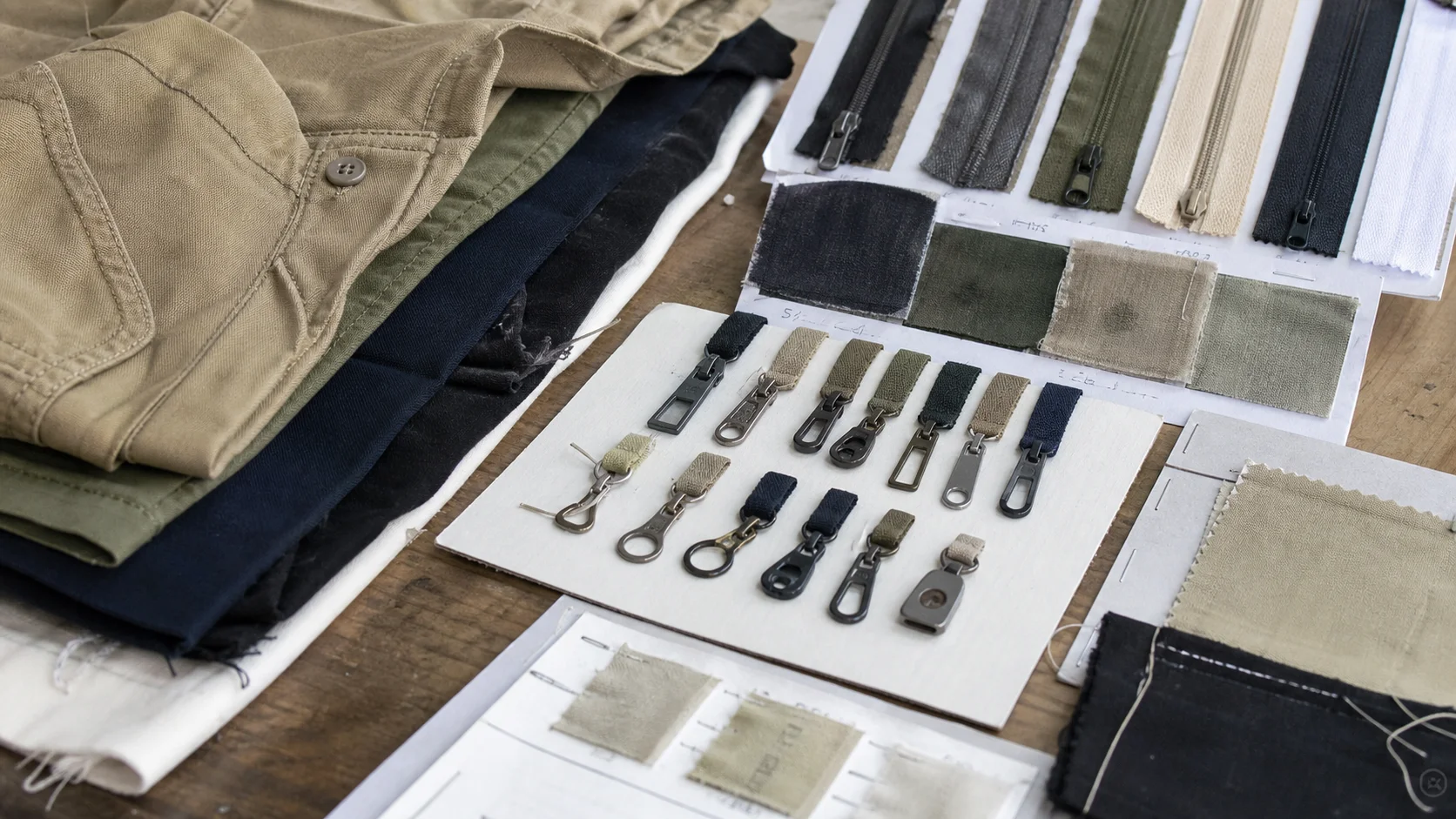
A distributor-focused checklist for verifying whether custom zip puller charms keep their color through abrasion, sweat, wash, light exposure, and transit...
Custom zip puller charm colorfastness audit is a small line item on paper and a large risk in practice. For distributor buyers, the real issue is not whether a charm looks right on day one. It is whether the color stays acceptable after handling, packaging friction, transit, and customer use. In Decoration & Printing work, that matters because a puller is touched repeatedly, rubbed against other parts in a carton, and often used as a visible branding point.
When buyers source custom zip puller charms, they are usually balancing three things at once: appearance, unit cost, and repeatability. Colorfastness sits across all three. A finish that looks sharp but scuffs quickly becomes a complaint. A highly durable finish that pushes cost or MOQ too high may not fit distributor programs. A careful audit makes those tradeoffs visible before mass production starts.
For supplier alignment and service scope, it helps to review the core offering at /services/, the company background at /about-us/, and the inquiry path at /contact-us/.
Custom Zip Puller Charm Colorfastness Audit for Buyers - Decoration & Printing manufacturing guide
A real audit starts with the product construction, not with a generic color test. A zip puller charm may be made from zinc alloy, brass, stainless steel, silicone, PVC, woven tape, PU, or a mixed construction with a metal body and printed or coated decoration. Each substrate carries a different failure mode. A plated metal charm can lose color at edges first. A printed charm can fade, smear, or crack. A soft PVC charm may look stable in storage and then discolor after contact with oils or heat.
The audit should identify every visible color zone and every process step that can affect it. That usually includes the base substrate, primer, plating, coating, print layer, overcoat, and any attachment hardware. If the charm uses multiple colors, each one needs a reference standard. If the product includes a logo, letters, or small details, edge definition and registration are part of the audit because poor print alignment is often mistaken for color failure after the first wear cycle.
Buyers should ask for a defined approval target. A vague note such as “color must be stable” is not enough. A better standard is to define the approved sample, the allowed shade tolerance, the expected rub resistance, the acceptable change after exposure, and the inspection condition. If the customer will judge the product under retail lighting, that should be stated. If the item is expected to survive outdoor use or repeated wash contact, the test method should reflect that reality.
A charm that only passes a visual check in the sample room has not yet passed a buying audit. The question is not whether the first piece looks good. The question is whether the same look survives production, packing, transport, and handling.
Distributor buyers carry a different risk profile from one-off retail buyers. A distributor order is often intended for resellers, corporate programs, promotional channels, or repeated replenishment. That means a small color shift can affect multiple downstream customers at once. One bad lot can create returns, rework costs, and delay claims across a network, not just one end user.
Colorfastness also influences brand consistency. A custom zip puller charm is rarely the main product, but it is often the visible detail that makes the whole item feel finished. If the charm color drifts from batch to batch, the change becomes obvious against zippers, garments, bags, or packaging elements that remain stable. That mismatch weakens perceived quality even when the core product is functional.
For distributor programs, another issue is mixed handling. Goods may be packed, unpacked, re-packed, labeled, and redistributed before final sale. Each handling step introduces abrasion. A finish that passes a casual glance can still fail under carton friction or warehouse sorting. This is why an audit should not stop at “does it match the sample?” It should also ask “what happens after repeated contact?”
Metal charms are popular because they feel substantial and can carry fine details. The color layer may come from electroplating, vacuum coating, spray paint, baked enamel, epoxy, or a combination. The strongest visual weakness is usually edge wear. Raised edges, engraved lines, and contact points lose finish first. If the buyer wants a premium look, this construction can work well, but only when the coating system is matched to the expected use.
These products often use molded color or surface print. Colorfastness risks include pigment migration, surface tackiness, staining from packaging materials, and a dulling effect after heat exposure. Soft goods can be forgiving on shape but less forgiving on color consistency because batch-to-batch pigment control matters more than many buyers expect. A small shift in formulation can change the final tone noticeably.
Some puller charms are built with webbing, cord, woven labels, or printed tabs. In these cases, colorfastness is tied to the dye system, print method, and top treatment. Woven or printed textiles may be comfortable and lightweight, but they can show fading faster than metal if the wrong ink or yarn is chosen. They also tend to absorb moisture and oils differently, which can change appearance after use.
Mixed constructions are common in custom programs. A metal body may carry a printed insert, or a soft charm may be attached to a plated ring and cord. These designs are attractive and flexible, but they multiply failure points. The buyer needs to inspect each visible surface and also the transition points, since color mismatch often appears where one material meets another.
There is no single test that proves a zip puller charm will remain perfect in all conditions. A practical audit uses a small set of tests that reflect how the item will actually be handled. The aim is to reduce surprises, not to create a lab report for its own sake.
Test What it checks Buyer note Common risk Visual comparison under standard light Shade match against the approved sample Use the same lighting condition for every check Looks acceptable in one room and off-tone in another Dry rub test Surface transfer and early abrasion Useful for printed or coated finishes Ink rubs off before first use Wet rub test Stability when moisture is present Important for outdoor, sports, or cleaning exposure Color bleeds or clouds when damp Heat exposure check Color shift, softening, or tackiness Relevant for transport and storage in warm conditions Soft surfaces yellow or deform Light exposure review Fade resistance over time Useful for retail display and outdoor use Bright colors dull faster than expected Packaging friction simulation Wear from carton contact and rubbing Often overlooked in early approval Edges scuff during shipment even if the finish is durable in handFor distributor buyers, the most useful testing is the kind that matches the final use case. A puller attached to a child product, a travel bag, a promotional pouch, or a fashion accessory will not face the same exposure. The audit should be proportional to the end use. Over-testing can raise cost without improving buying confidence. Under-testing leaves the buyer exposed to avoidable claims.
Rub tests deserve special attention. Many failures are not dramatic. They start as slight transfer to a white cloth, a dulling of one corner, or a small edge wear pattern that only shows up under angled light. Buyers should define what counts as acceptable transfer, what counts as a defect, and whether the result is evaluated by appearance, mass loss, or both. A clear rule removes arguments after production.
Lightfastness matters when the charm is intended for display or long retail cycles. Bright reds, blues, and fluorescents are often more vulnerable than neutral tones. The audit should ask whether the supplier is relying on pigment quality, protective coating, or both. If the answer is vague, the buyer should expect more batch variation than desired.
A practical spec sheet is the fastest way to reduce color disputes. It should identify the exact item, the visual reference, the material stack, the finish, the attachment hardware, and the test expectations. A buyer does not need unnecessary theory. The supplier needs enough precision to produce repeatable work and enough clarity to know what gets rejected.
Include the base material first. For metal, specify the alloy if known, the plating or coating system, and whether the finish must be nickel-free, matte, glossy, antique, or high-shine. For soft goods, specify the substrate, color standard, print method, and whether there is a protective coating. If the charm includes text or logo elements, the artwork version and orientation should be locked before sample approval.
Color references should be practical. Pantone references can be useful, but they are not enough on their own because substrate, finish, and lighting all affect appearance. A physical master sample is usually more reliable for buying decisions. If a shade tolerance is allowed, write it clearly. If the charm must match a companion product, state which one is the master and which one must follow.
Also define the acceptance condition for the first article. A good buyer checklist will state whether the sample is judged before or after rub testing, whether edge wear is acceptable, and whether gloss variation is allowed. That detail is useful because some finishes look clean when new but change fast once handled. Buyers save time when the approval target is measurable.
Custom zip puller charm projects often move through several sample stages. A first sample usually confirms structure, mold quality, and general color direction. A revised sample corrects the most visible issues. A pre-production sample should then reflect the exact material, finish, and packaging plan that will be used in mass production. Skipping one of these steps saves time on paper and costs more when the order is underway.
MOQ depends on construction. Simple printed or standard-stock solutions can support lower quantities, while custom molds, multiple colors, and special plating usually push the minimum higher. For many distributor programs, a realistic range is often a few hundred pieces for simpler items and into the low thousands for more complex custom builds. That range is not a promise. It changes with tooling, finish complexity, and packing requirements. A buyer should ask for MOQ by finish, not just by shape.
Lead time follows the same pattern. Sample production can take about one to several weeks depending on the process and revision count. Mass production may run from roughly three to six weeks after sample approval, with more time needed for tooling changes, plating queues, or test repeats. Colorfastness issues add hidden delay because rework is usually slower than first-pass production. A buyer who adds a durability test late in the cycle should plan for a schedule buffer.
One practical rule is to avoid approving based on rush samples if the charm uses a finish that is known to be sensitive. It is better to spend an extra week on sample validation than to absorb a whole shipment of slightly off-color pulls. In distributor work, timing matters, but repeatability matters more.
Color failure is not always a pigment problem. In many cases, the actual issue is process control. Poor surface preparation can prevent coating adhesion. Residual oil can affect print adhesion. Inconsistent curing can change gloss and shade. Packaging material can transfer odor or chemical residue that alters the finish. Each of these problems shows up as a color complaint even if the root cause is elsewhere.
Batch variation is another common problem. A charm may be approved from one sample lot and then drift in the next run because the supplier changed paint batch, plating bath conditions, or drying time. That is why buyers should ask whether the supplier retains master references and whether incoming materials are checked against a standard. A consistent process is more valuable than a one-time perfect sample.
Inspection teams should pay attention to edges, high points, and recessed areas. These are the spots where coating thickness changes first. A charm can look uniform front-on and still fail around corners or inside engraved lines. If the design includes multiple color fill areas, the inspector should check for bleed, overflow, and incomplete fill. Fine details often become the first casualty of cost-saving shortcuts.
Another overlooked risk is carton abrasion. Pieces packed too tightly can scuff each other even before leaving the warehouse. Polybags, trays, tissue, and dividers all affect the final appearance. Packaging is part of the colorfastness strategy because a finish that survives production but fails in transit is still a failed product.
Distributor buyers should think in terms of expected wear, not ideal appearance. If the product is a promotional item with short service life, the buyer may accept a simpler finish and focus on visual sharpness. If the charm will be sold as a premium accessory or attached to a branded bag, abrasion resistance and shade consistency deserve more weight. The right decision depends on how the item will be used and how visible the failure will be.
There is a useful tradeoff between visual complexity and finish durability. A highly detailed multicolor design can look stronger in a sample room, but each additional color layer creates another chance for misregistration or wear. A cleaner design with fewer color breaks may be more stable in production and easier to audit. If the brand can accept a simpler artwork structure, the buyer often gets better consistency at lower risk.
Matte finishes hide fingerprints and minor scratches better than glossy surfaces, but they can also show unevenness if the coating is inconsistent. Glossy coatings can look richer at first glance, yet they reveal edge wear more quickly. Buyers should pick the surface character based on the user environment, not just the marketing image.
For some programs, the best answer is to specify a functional finish rather than a decorative one. A higher-adherence coating, a more stable pigment system, or a protected topcoat can improve durability even when the color palette is limited. That is a sensible trade if the charm is meant to survive repeated handling. Decoration should support use, not fight it.
Supplier control is part of the audit. A buyer should ask what process the supplier uses to track approved samples, what happens when raw material lots change, and how production is checked before packing. If the supplier cannot explain how color is held from sample to bulk order, the buyer should treat the project as higher risk.
It also helps to keep communication simple. Send one technical brief, one approved visual reference, and one clear acceptance standard. Many disputes come from mixed instructions rather than poor manufacturing alone. If the buyer changes shade targets, hardware, or packaging after sample approval, the audit loses value. The best suppliers can manage change, but they need one stable target to work against.
If a buyer is screening suppliers, it is reasonable to ask about service coverage, response speed, and technical support before quoting. The pages at /services/, /about-us/, and /contact-us/ are the basic starting points, but the more useful proof is how clearly the supplier handles spec confirmation, sample feedback, and quality checkpoints.
Custom zip puller charm colorfastness is not a decorative afterthought. It is a quality-control issue that affects the appearance, brand value, and resale confidence of the entire item. Distributor buyers should treat it as a specification problem, a sampling problem, and a packing problem. The best results come from clear color references, realistic testing, and a process that locks the approved sample before mass production begins.
The safest buying approach is usually the simplest one that still meets the brand brief. Choose materials that fit the use case, define the finish in plain terms, and test for the kind of wear the charm will actually see. That discipline keeps the order grounded in commercial reality. It also reduces the chance that a small decorative part becomes a large claims problem later.
Get a free quote from Fabrikn — your trusted B2B clothing manufacturer with 10+ years of experience. MOQ as low as 200 pieces.
Get a Free Quote →The main purpose is to confirm that the charm keeps an acceptable color after handling, rubbing, moisture exposure, heat, and packing friction. For distributor buyers, the audit reduces the risk of batch variation and post-shipment complaints.
Dry rub, wet rub, standard-light visual comparison, heat exposure, and packaging friction checks are the most practical tests. Light exposure matters when the product will sit in display conditions or be used outdoors.
MOQ varies by material and process. Simpler designs may support a few hundred pieces, while custom molded, plated, or multi-color constructions often move into the low thousands. The final MOQ depends on tooling, finish complexity, and packing requirements.
Most custom programs need at least a first sample, a revised sample if changes are required, and a pre-production sample that matches the intended bulk specification. Complex finishes or color-sensitive designs may need more than one revision.
Common causes include weak coating adhesion, poor curing, inconsistent raw materials, abrasion during packing, and finish systems that are not suited to the intended use. Batch drift is also common when the approved sample is not tightly controlled.
Use a written spec sheet, keep one master sample, define the test method, inspect packed goods, and confirm that the supplier can repeat the same finish across bulk production. Clear instructions prevent most avoidable disputes.