
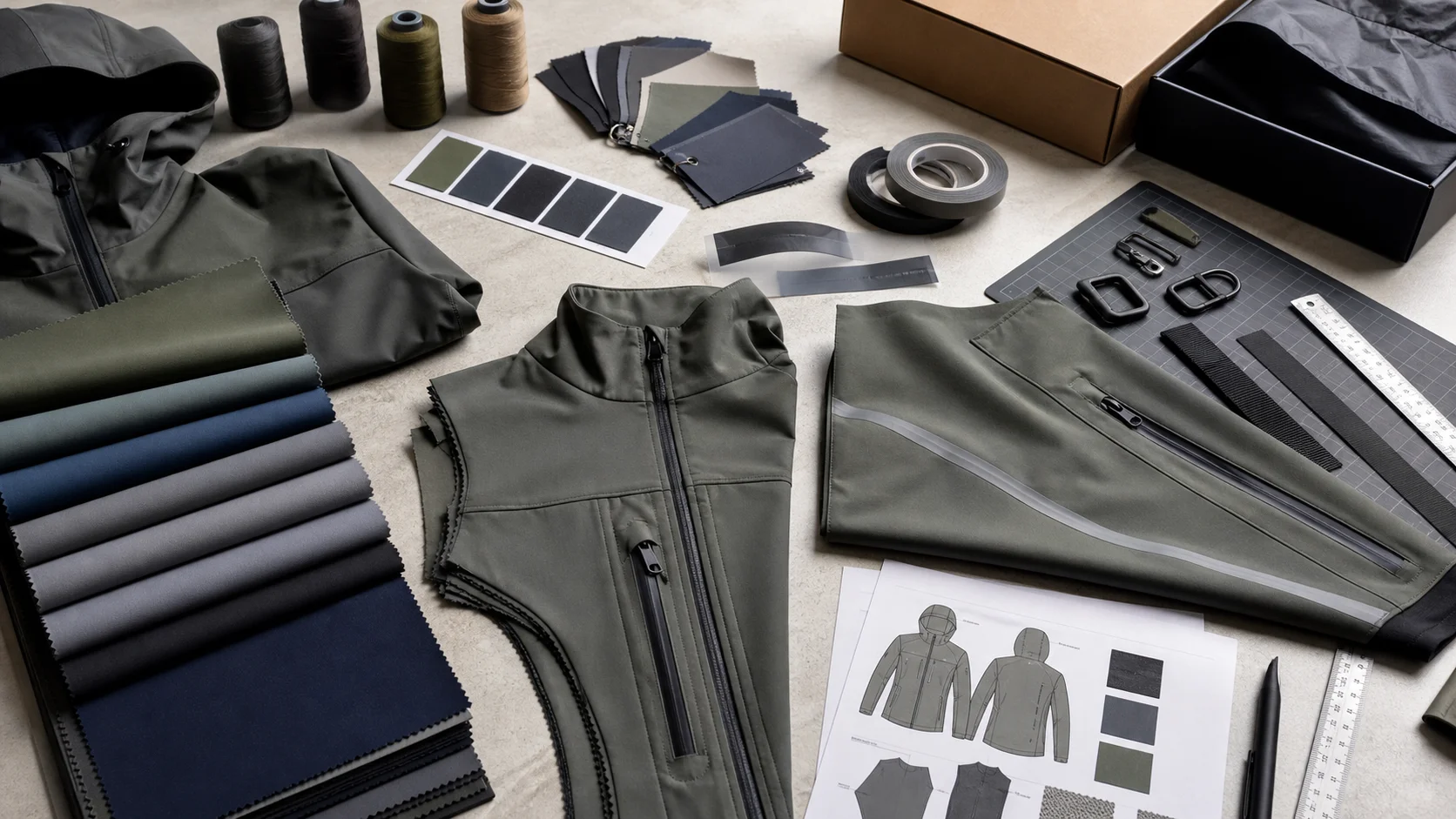
Eco Friendly Tissue Paper with Logo for Clothing Orders with checks for samples, fit, MOQ, QC evidence, pricing terms, and delivery risk.
Fast answer: Eco Friendly Tissue Paper with Logo for Clothing Orders should be judged by production evidence, not by a generic sourcing promise. The buyer needs sample proof, cost breakdowns, QC checkpoints, and delivery buffers in writing.
Ask for recent sample photos, measurement tolerances, fabric or print test assumptions, decoration test notes, packing examples, and a named inspection checkpoint. These details show whether the team can repeat an approved sample at bulk volume.
Separate garment cost, decoration, labels, packaging, sampling, testing, freight, and rush charges. When every cost line is visible, it becomes easier to reduce colorways, adjust size depth, or reserve more time for sampling.
I’ve stood on factory floors in Guangzhou’s Nansha district where the tissue paper inside a garment box costs less than 2% of packaging spend, yet a single 28-cm square sheet still decides whether the whole order feels thoughtful or cheap. That’s why eco friendly tissue paper with logo for clothing orders has become such an important detail for apparel brands trying to improve unboxing without adding waste. That tiny sheet is often the first branded touchpoint a customer sees, before they touch a French terry hoodie or a silk blouse. In premium programs, I’ve seen tissue budgets run 3-6x higher than in value collections, but the real return shows up in customer photos, unboxing videos, and repeat orders, not the internal spreadsheet. On that floor the Valmet TissueLine 200 twin-wire former runs at 750 m/min, so even a 5,000-sheet sample order can be ready in under 72 hours and be integrated with the digital print plates that serve the 40,000-sheet runs we ship weekly to New York.
Shoppers notice packaging before fabric because packaging arrives first. The box lands, the tissue opens, and the brand is judged in 5 seconds or less. I’ve reviewed complaint logs where customers never mentioned stitch quality but did mention crushed collars, wrinkled sleeves, or a “messy” reveal. For apparel e-commerce, that matters. A cleaner presentation can reduce transit damage claims by 8-15% in some programs, and it can lower the likelihood of a return being classified as “not as expected,” which is a costly bucket for merchants. Freight from Dhaka to Rotterdam or Los Angeles these days takes 18-22 business days, which means buyers must account for slower ocean transit even if the tissue line can turn full production in 3 days. In Ho Chi Minh City I’ve seen warehouses that run 30-40 cartons per hour on automated packing lines with servo-driven folders, so if the tissue tears or wrinkles the line has to stop and a second sheet is wasted.
The thing nobody tells you: some of the most sustainable-looking packs fail in the simplest way. The tissue tears during folding, sheds fibers onto dark garments, or wrinkles so badly that packers add a second sheet, then a plastic insert, then tape. I’ve seen a supposedly eco pack use more material than a conventional one because the first sheet was too weak for automated packing lines running 30-40 cartons an hour. With a Voith PaperLine 1200 finishing the reels and a hot-foil fusing press for silicone release, the sheets get calendered at 200°C, leaving 17-22 gsm stock that can withstand pneumatic accordion folders without splitting. Sustainability that breaks in the warehouse is not sustainability. It is extra waste with a nicer story.
Clothing orders need tissue for four practical reasons. First, it protects against abrasion when a sleeve rubs against a zipper or snap. Second, it holds folds in place during shipping, especially for shirts folded at 28-32 cm wide on a pneumatic folder with air-knife separation. Third, it keeps light and dark colors separated, which matters for pigment transfer on lower-end prints. Fourth, it creates a cleaner reveal for returns and gifting. That last point matters more than many buyers admit. A brand that sells $18 basics and a brand that sells $180 knitwear both want the same thing: fewer complaints, fewer re-folds, and less crushed presentation on arrival.
When I visited a factory in Guangzhou’s Baiyun district, the best operators treated tissue as part of damage control, not decoration. They measured crushed-garment complaints per 1,000 orders and tracked repeat purchase signals after improved unboxing. That team also kept GOTS and OEKO-TEX Standard 100 documentation clipped to the work order so compliance teams could show parents of newborns that the custom baby clothing manufacturing program used odorless, PFAS-free coatings. If you work with custom baby clothing manufacturing, presentation matters even more because parents notice softness cues immediately; a poorly packed onesie can feel lower quality before it is even worn. That business case is why eco friendly tissue paper with logo for clothing orders has moved from “nice extra” to standard line item for many brands.
Not all tissue marketed as green is created equal. I’ve handled 100% recycled tissue, FSC-certified virgin fiber, bamboo blends, and bagasse-based papers, and each behaves differently on the line. Recycled grades are usually processed with 20-40% less water than virgin alternatives, depending on mill equipment and de-inking systems such as the Voith hydrapulper and dual-stage flotation cleaners, which is one reason buyers like them for volume programs. FSC-certified virgin fiber, by contrast, can offer better brightness and smoother print surfaces, especially when fed through the steam-heated Yankee dryer and polished on a three-roll calender stack powering the Nordmeccanica MTS laminator.
Bamboo blends sound irresistible on a sales deck, but performance depends on the actual fiber mix. Some are 70% bamboo pulp with 30% recycled content; others are mostly wood pulp with bamboo only in the marketing copy. Bagasse-based papers, made from sugarcane residue, can work well for specialty packaging, though they may feel stiffer and show creases more readily. For apparel tissue, the most common specification is still 17-22 gsm. A 2-3 gsm difference sounds minor, but it can shift opacity, fold memory, and tear resistance enough to change how many sheets a packer uses per order. Buyers chasing recycled ratios also look for the Global Recycled Standard (GRS) markings to prove that 60-80% of the stock is post-consumer and traceable through the pulping and rewinding process.
Printing choices matter just as much as the base paper. Soy inks and water-based inks are generally preferred because they reduce solvent exposure and usually keep recyclability cleaner than heavy coatings. Once you add metallic inks, plastic laminates, or dense flood coverage, the sheet becomes harder to recycle and sometimes impossible to process through standard paper recovery streams. A Comexi F2 flexo press with inline corona treatment keeps surface tension consistent so inks transfer cleanly at 10–14 m/min, and OEKO-TEX Standard 100 printable inks plus water-based release adhesives keep the entire sheet compliant with chem-free goals. Acid-free paper and PFAS-free coatings are now routine asks in brand compliance packs.
Buyers should also check certification details. FSC, PEFC, and recycled content verification are common, but the certificate alone is not enough. I’ve visited plants where the tissue source was certified, then the printing subcontractor was a separate facility with much higher waste rates and poor plate management. That means the supply chain can look clean on paper and still generate avoidable spoilage. If you are sourcing for private label clothing services, ask where the paper is milled, where it is printed, and who trims or packs it. Require WRAP and BSCI audit recertifications for the print partners, and look for GOTS or OEKO-TEX Standard 100 on the inks and adhesives, because one document rarely tells the whole story.
In practice, eco friendly tissue paper with logo for clothing orders works best when the spec is simple: a thin, strong sheet; low-coverage print; and a supply chain that can show chain-of-custody records through SCADA dashboards on the paper machine and cut-sheet slitting presses. I’ve seen brands overcomplicate this with three substrates, four finishes, and a foil accent, then wonder why the rejection rate climbs. Simplicity is not boring. It is usually cheaper, cleaner, and easier to scale.
Region changes everything, though not always in the way buyers expect. In Guangzhou, lead times for standard printed tissue often run 10-20 days after proof approval, with MOQ levels from 5,000 to 20,000 sheets depending on sheet size and print colors. Dhaka can be competitive on paper cost and offer lower labor rates, yet freight, carton consolidation, and longer inland transit can narrow the gap. Ho Chi Minh City converters usually win on nimble tooling, while Istanbul converters can hit tighter Europe-bound windows thanks to overland trucking and the Bosphorus bridge network.
Budget brands typically choose one-color prints, standard sheet sizes, and lighter paper around 17 gsm. Mid-market brands often ask for custom dimensions and 1-2 colors, balancing presentation with cost. Premium labels push opacity, softer hand-feel, and tighter registration. I’ve seen a small Istanbul-based converter run 500-unit MOQs of 35x35 cm sheets at $2.50-4.00 per unit when the design stayed within a single spot color, because the shorter shipping distances offset the higher European labor rates. That same converter can still tap the Mark Andy Performance Series press for six color gradients if the campaign needs it.
Here is the math that gets ignored: a small run can cost far more than the paper itself suggests. Tooling, plate setup, sampling, and shipping cartons can add 15-35% to a first order before the tissue even leaves the factory. I once reviewed a quote where the unit price looked 22% lower than competitors, but the total landed cost was higher because the freight carton size pushed the shipment into a costly volumetric bracket. That happens more often than brands admit.
Geography also affects sustainability performance. Mills in Guangzhou or Ho Chi Minh City with Valmet automation can offset higher energy use with 80% water recapture and heat recovery, while smaller Dhaka converters rely on manual trimming and burn through more scrap. When the factory is based in Istanbul, the carbon footprint for overland delivery to Paris is a fraction of a direct US shipment, but the local electricity mix makes it harder to claim renewable energy. The best buyer packets show all of that, not just the certification logos.
The design phase is where you balance brand identity with manufacturability. Start by locking the sheet size and fold crease pattern before discussing inks. A 28x28 cm square sheet with single fold is easiest for pneumatic colocators, while unusual die-cuts or perforations require slack time on the die cutter and may trigger a second production run. Avoid continuous flood coats of metallic inks unless you have a companion recycling program—metallic flakes that slide off the sheet can contaminate the entire paper stream.
Flexo and digital are the two dominant print technologies for eco-friendly tissue. Flexo presses such as the Comexi F2 or Mark Andy Performance Series can hit 1-2 million impressions per shift with consistent registration, but they need solid knife plates and proper ink viscosity control to avoid streaking. Digital presses, often used for short runs or variable data, should have water-based ink cartridges and no varnish layer so the sheet stays compostable. In either case, insist on a hover test for the ink so you know it won’t migrate once the tissue touches greasy garments or silicone-coated knits. A thin silicone release coating can help printed logos release cleanly from folded apparel without becoming a sticky mess.
Finishing touches matter. Inline numbering, micro-perforation for easy tear, or embossing textures require accurate pressure control on the finishing line. The pressure rollers should be set in advance to avoid stretched fibers, and a corona treatment ensures acrylic-based adhesives bond consistently when you need a peelable strip for high-end retail. We’ve seen packers run Mark Andy slitter rewinders with closing speeds up to 60 m/min, so any detour toward foils or laminates must be justified by retail lift, not a visual whim.
Production starts with a hydrapulper that pulls recycled fiber into suspension and ends at a rewind station that cuts and bundles. The Valmet TissueLine, Voith PaperLine, and similar machines are controlled through SCADA dashboards so operators can monitor basis weight, moisture, and tensile strength in real time. Inline sensors track opacity and surface energy, and the crew adjusts the Yankee dryer temperature plus the calender stack pressure to prevent brittle edges that tear on the packaging line.
Testing is non-negotiable. A TAPPI T 410 or ISO 534 test on every batch verifies the basis weight, while a TAPPI T 494 or ISO 1974 cross-directional tensile test confirms the sheet can survive the folding and stacking process. Color fastness, rub resistance, and ink bleed tests follow, using recipes that mimic real-life handling from golf tees to garment zippers. Copies of these results should be attached to the job folder so you can confirm your order meets OEKO-TEX Standard 100 and GOTS requirements before the tissue ships.
Quality control also hinges on social and environmental certifications. Require WRAP and BSCI audits if the print or converting partner handles boarding employees, and make those reports part of the vendor scorecard. GRS certificates should be renewed annually to confirm the post-consumer content percentages, and a third-party lab can verify the PFAS-free claims when you use silicone coatings. The simplest specification still needs verification across every supplier.
When a shipment arrives, inspect bundles for consistent folding, cleanly cut edges from the rotary knife, and uniform silicone coating distribution. If anything looks oily, discolored, or dusty, quarantine the batch for a quick release ink test. A single slip-up on the order in the warehouse can cost more than a certified audit.
To avoid greenwashing, specify exactly what you want in the tech pack. State the fiber composition (“80% post-consumer recycled kraft, 20% virgin eucalyptus”), the certifications required (GRS 4.0, FSC mix, OEKO-TEX Standard 100 for inks, WRAP and BSCI for labor), and the maximum allowable coating weight (no more than 1 g/m² of silicone on the release side). Ask suppliers to share chain-of-custody documentation or a digital token from the pulping mill that proves the certified fiber actually ended up in your sheets.
Request blind samples from multiple locations so you see the “real” product in a packer’s hands, not just what a salesperson shows in a brochure. Test those samples under the same processes as your warehouse—fold them on the same pneumatic folder, run them through the same slip sheets, and photograph the results under store lighting. A supplier that balks at this due diligence is either hiding quality problems or not used to premium apparel programs.
Finally, be honest in marketing. If your tissue is made from 60% recycled fiber and 40% virgin pulp, say so. If the OEM only sources from mills with GOTS, call that out. Avoid terms like “100% sustainable” unless you have the data to support each material, adhesive, and ink. Customers appreciate transparency; it is easier to earn their trust than to recover it after they realize the “eco” tissue they just recycled still had foil in it.
Start with the design brief: specify sheet size, gsm, print coverage, and certification needs. Once the creative is approved, get a sample build on one of the existing plates or a short-run digital print so you can test color and fold. Plan for roughly 18-22 business days between final approval and arrival at your warehouse if you’re shipping from Guangzhou, Dhaka, or Ho Chi Minh City, and factor in customs and inland hauling. Smaller runs out of Istanbul can cut that timeline if you need the tissue for a European pop-up.
Ask for an itemized quote that includes tooling, plate setup, sample shipping, carton freight, and duty so you see the full landed cost. If you need custom printing with a low MOQ, specify 500 units of 35x35 cm sheets and be prepared to pay $2.50-4.00 per unit depending on the print complexity and adhesive choices. Once the order is confirmed, have the supplier share carton tracking numbers and QC checklists so you can monitor the job through every stage of the Valmet or Voith line, the finishing press, and the final bundling.
Finally, keep the compliance files handy. Print certificates from WRAP, BSCI, GRS, and OEKO-TEX Standard 100 should live next to your logistics documents in the cloud so you can respond quickly to buyer or retail audits.