
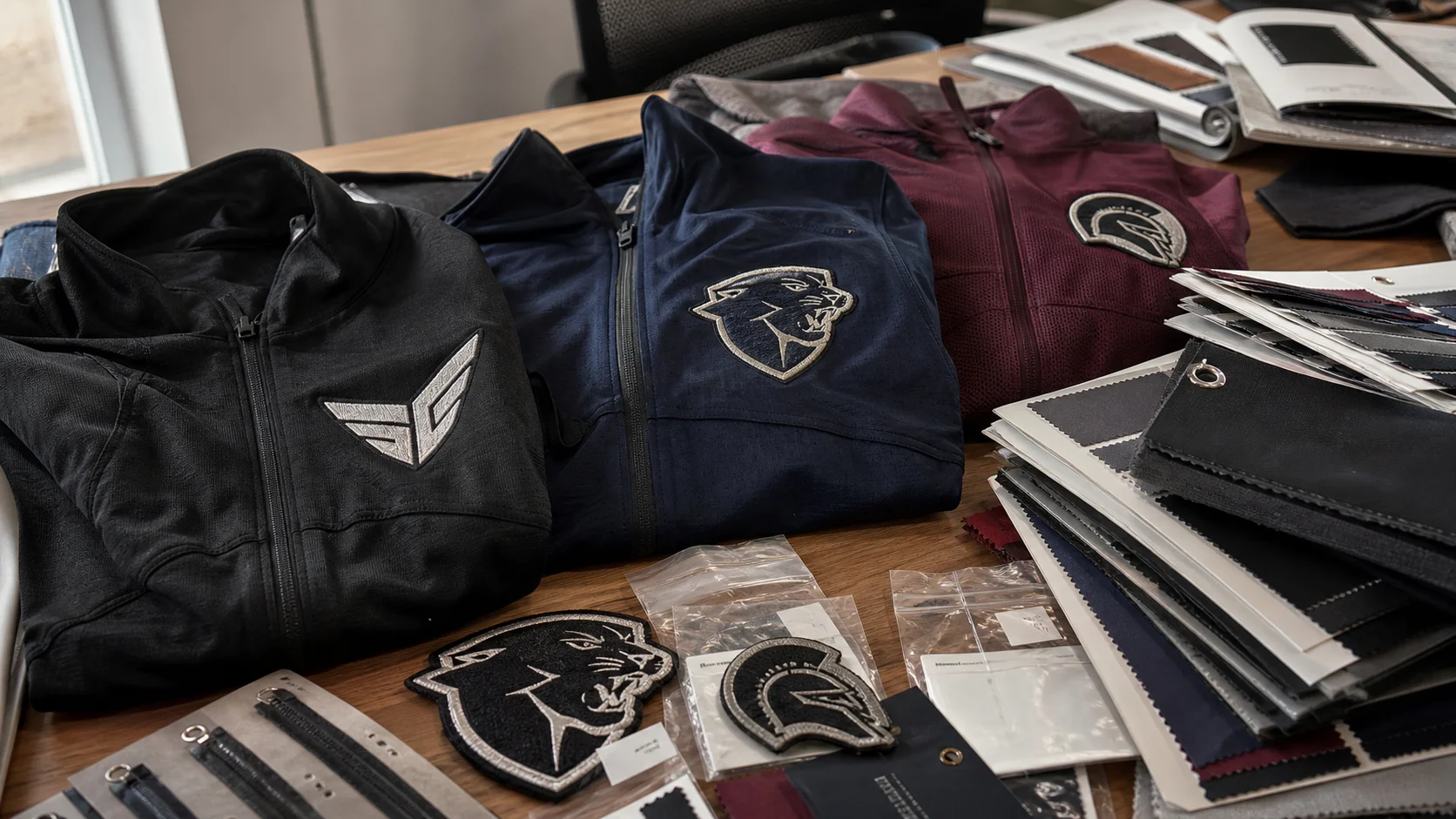
A product-specific scorecard gym program buyers can use to evaluate embroidered jacket patch suppliers by patch construction, backing, edge finish, logo...
Gym programs buy patches for reasons that go beyond decoration. A jacket patch has to survive repeated wear, laundering, heat, movement, and close inspection from members who notice weak stitching fast. A supplier that can make a nice sample is not always the right supplier for a multi-location gym program, especially when the same patch must work across staff jackets, member apparel, coaches’ outerwear, and seasonal runs. The practical question is not whether the patch looks good in a photograph. The question is whether the supplier can repeat that result at scale, on time, with the right materials and enough control to keep reorders consistent.
This scorecard is written for embroidered jacket patch supplier selection in gym programs. It focuses on the variables that actually affect buying decisions: stitch quality, backing choice, MOQ, sample approval, thread and twill specs, lead times, inspection risk, and the cost of getting a detail wrong. For broader decoration sourcing support, review [services](/services/), [about us](/about-us/), or [contact us](/contact-us/) if you need a quoting conversation.
Embroidered Jacket Patch Scorecard for Gym Buyers - Decoration & Printing manufacturing guide
Gym apparel is not fashion apparel. The decoration has to keep its shape through friction, sweat, folding, stretching, and repeated washing. Patches on jackets are often exposed to abrasion at sleeves, shoulders, cuffs, and side panels. A patch that looks crisp in the first delivery can still fail in the field if the edge stitch is weak, the adhesive is wrong, or the backing is incompatible with the jacket fabric.
A scorecard helps buyers avoid vague supplier comparisons. It forces the conversation toward measurable factors: thread count, edge finish, dye consistency, backing type, sample turnaround, production capacity, and inspection behavior. That matters because the cost of a weak supplier is not limited to a replacement order. It can mean inconsistent appearance across locations, delays to staff uniforms, and rework when the patch does not attach cleanly to the jacket style selected by the program.
Gym buyers should score suppliers on repeatability first, appearance second. A patch that can be reproduced consistently is worth more than a better-looking one that only works on a sample run.
A practical supplier scorecard for embroidered jacket patch work should use a weighted system. The weights can change by program, but the core criteria usually stay the same. For gym buyers, decoration durability and delivery control should weigh more heavily than low unit price.
Criterion What to check Typical weight Patch construction Twill base, stitch density, edge finish, backing choice 20% Artwork handling Digitizing quality, logo accuracy, small detail control 15% Material specification Thread type, twill weight, adhesive, merrow or laser cut edge 15% Sample process Proof timing, revision control, approval discipline 10% MOQ and pricing Minimums, price breaks, reorder economics 10% Lead time Production capacity, shipment reliability, rush options 10% Quality control Inspection method, defect rate, consistency across lots 15% Communication Responsiveness, clarity, ownership of issues 5%Some buyers add sustainability or compliance points. That is reasonable if the program has internal requirements. In the patch category, though, suppliers often oversell broad claims and underspecify the actual decoration process. If a supplier cannot explain stitch counts, backing options, and approval steps in plain language, the score should drop.
Not all embroidered patches are built the same way. For jacket applications, the base material, thread selection, border method, and attachment method should all be aligned with the garment type. Gym programs usually need a patch that looks sharp on outerwear without becoming stiff or bulky.
Most embroidered jacket patches use a twill or felt base. Twill is the safer default for structured logos and cleaner production consistency. Felt can work for some vintage or collegiate looks, but it is usually less precise on small lettering and can show wear differently over time. Buyers should ask for the base fabric weight, weave density, and whether the supplier uses a stable backing before embroidery begins. That is especially important when the logo includes thin outlines or repeated text.
Polyester thread is often the practical choice for gym programs because it handles laundering and outdoor wear better than cotton alternatives. It is also more color stable. Buyers should ask whether the supplier uses standard polyester embroidery thread, what thread brand or equivalent specification is being used, and how they control color matching across reorders. If a patch contains multiple brand colors, request the thread chart or a clear Pantone-to-thread conversion note before approval.
Patch edges are one of the first places quality problems show up. Merrowed borders are common for thicker shapes and can give a cleaner framed look. Laser-cut or heat-cut edges are better for complex outlines or detailed shapes where a merrowed border would obscure the design. The right option depends on the artwork. For very small patches, a thick border can overwhelm the logo. For larger chest or sleeve patches, a weak edge can fray or curl.
Backing choice should match the garment and application method. Sew-on backing is durable and flexible, which makes it a safe option for most jackets. Iron-on or heat-seal backing can be convenient, but it is not always reliable on coated shells, nylon outerwear, waterproof fabrics, or textured blends. Hook-and-loop backing has a place in some tactical or modular programs, though it adds bulk and is rarely the right choice for standard gym jackets. Buyers should not assume backing compatibility without testing on the actual garment fabric.
The sample stage is where many patch orders go wrong. Buyers often approve a picture too early, then discover the delivered goods differ in thickness, color, border width, or size. A supplier scorecard should reward suppliers that use a disciplined sample process and penalize those who rush the decision.
A strong process usually includes three steps: artwork proof, physical sample, and pre-production reference. The artwork proof should confirm size, stitch direction, border method, thread colors, and backing. The physical sample should confirm tactile quality and appearance on a real jacket or jacket swatch. The pre-production reference should lock the approved version for the bulk run so later changes do not drift.
Buyers should ask whether revisions are included and how many are standard. One or two rounds are common for custom work. If a supplier cannot tolerate a reasonable revision cycle, the program may be better off elsewhere. Fast approval matters, but unverified approval is expensive.
Approval should be based on the patch attached to the actual garment whenever possible. A loose sample on a table is not enough to judge drape, stiffness, or how the border sits on the jacket.
For gym programs, it is worth checking the patch against the same jacket fabric planned for the full order. A patch that looks correct on cotton twill may behave differently on polyester shell fabric or a lined softshell. Small production changes in garment material can affect how the patch sits, especially when the backing relies on heat activation.
MOQ is not just a commercial detail. It shapes how much design risk the buyer can afford and whether the supplier is a fit for recurring gym runs. In the embroidered patch market, typical MOQs vary widely by size, complexity, and attachment method. Small custom programs may see minimums in the low hundreds, while more standardized or factory-direct orders can support larger volume thresholds. Buyers should ask for MOQ by style, not just by order.
Pricing should be reviewed on a landed basis, not just unit cost. A low unit price can become expensive if the supplier charges heavily for digitizing, revisions, sample shipping, or split-color versions. The right comparison includes the cost of first sample, approval revisions, packing format, shipment timing, and reorder pricing. A program with multiple gym locations should also confirm whether the supplier can hold the same spec for future replenishment.
Lead times depend on artwork complexity, thread availability, backing choice, and current production load. A straightforward patch may move quickly, but a custom shape with multiple colors and a special backing will take longer. Buyers should expect sample lead times and production lead times to differ. A supplier promising unusually fast bulk delivery without clarifying approval gates usually deserves more scrutiny. Realistic lead times are better than optimistic ones that fail at shipment.
When ordering for gym launches, championship events, or seasonal staff outfitting, build in buffer time. Production risk is rarely caused by embroidery alone. It is often the combination of late artwork, delayed approvals, packaging changes, and shipping issues. A supplier that flags these dependencies early is typically more useful than one that simply says yes.
Patch quality problems usually show up in a few predictable ways. Buyers should know these before the order is placed because they are easier to prevent than to reject after shipment.
Quality control should include visual inspection, dimensional check, stitch density review, and attachment testing on the actual garment if possible. Buyers should ask the supplier what AQL or internal inspection method is used, but they should not treat any stated standard as proof of quality. The key is whether the supplier can describe how defects are caught before shipment, not whether they use the right vocabulary.
For gym programs, sweat and wash testing matter. A patch can pass a visual inspection and still fail after repeated laundering. If the order is meant for long-term staff wear, ask about wash resistance and whether the backing or adhesive has been tested on the target fabric type. For outerwear used outdoors or in humid climates, edge durability and colorfastness deserve extra attention.
A scorecard works only if the scoring criteria are consistent. The buyer should avoid overrating impressive communication while underrating weak process control. A polished email style is not the same thing as reliable production.
A practical method is to score each line item from 1 to 5, then multiply by weight. Reserve the highest scores for suppliers that can prove consistent output across sample and bulk, explain material choices clearly, and show willingness to correct problems without debate. Use lower scores for vague responses, hidden fees, or unclear backing recommendations.
This style of scoring is useful because it pushes the conversation toward tradeoffs. A supplier may be excellent on embroidery detail but weak on attachment compatibility. Another may offer better prices but only at a high minimum. The scorecard makes those tradeoffs visible before the purchase order is issued.
Gym buyers should also separate must-haves from preferences. If a patch is for staff outerwear and must survive heavy use, durability and attachment compatibility are non-negotiable. If the patch is for a limited-run promotional jacket, styling flexibility may matter more than absolute wash endurance. The right supplier depends on the program objective.
Some issues should reduce supplier confidence immediately. These are not small preferences. They often predict rework, delays, or inconsistent bulk production.
Another warning sign is a supplier that treats all jacket patches as interchangeable. Gym buyers need a partner who understands that a softshell jacket, varsity-style jacket, nylon shell, and insulated outerwear each create different decoration challenges. One backing method will not fit every application. A good supplier explains those differences clearly and recommends the right compromise instead of defaulting to the cheapest path.
Buyers should be careful with unusually low prices on complex logos. A simple patch can be produced economically, but fine lettering, multiple colors, and custom border shapes all add labor. If the quote looks too low for the artwork complexity, the likely tradeoff is hidden in stitch density, edge cleanup, or quality consistency. Low price can be acceptable. Low price without explanation is not.
The most reliable buying sequence is straightforward. Start with the actual jacket style. Confirm the logo size and placement. Request the supplier’s recommended construction. Approve a physical sample on the real garment whenever possible. Lock the reference sample and spec sheet before release. Inspect the first bulk shipment with attention to size, color, edge finish, and attachment performance.
For larger programs, it is sensible to keep a short spec pack that includes artwork, patch dimensions, thread colors, edge method, backing type, packaging requirements, and reorder notes. This reduces drift when the same patch is reordered months later. It also gives the supplier a clean reference and makes it easier to compare one vendor against another.
If the order includes multiple departments or gyms, standardization matters. Small variations in border style or thread shade can make the program look fragmented. A supplier with disciplined repeat-run control is often worth more than a vendor that can shave a small amount from the first order but cannot maintain the approved spec over time.
For buyers that want broader decoration support or help aligning patch sourcing with garment procurement, [services](/services/) is a reasonable starting point. For quote requests or program questions, [contact us](/contact-us/) is the direct path. For background on the company structure and approach, review [about us](/about-us/).
An embroidered jacket patch scorecard is useful only if it reflects how gym programs actually buy. The supplier must understand material compatibility, sample discipline, repeatability, and realistic lead times. A visually strong sample is not enough. The better choice is the supplier that can prove consistent construction, explain tradeoffs clearly, and deliver repeatable patches that perform on the intended jacket.
For gym buyers, the safest decision is usually the one that prioritizes construction control, approval discipline, and reorder stability over short-term unit cost. That approach reduces risk, protects the brand appearance, and keeps the uniform program manageable over time.
Get a free quote from Fabrikn — your trusted B2B clothing manufacturer with 10+ years of experience. MOQ as low as 200 pieces.
Get a Free Quote →It depends on the design and attachment method, but many custom runs start in the low hundreds. Simpler repeat orders can sometimes go lower, while highly detailed or specialized patches may require higher minimums. Buyers should ask for MOQ by style and by reorder.
Sew-on is usually the safer default for outerwear and long-term use. Heat-applied backing can be convenient, but it may not bond reliably to coated, waterproof, or textured jacket fabrics. The final choice should be tested on the actual garment.
Ask for a physical sample or approved pre-production sample, not just a digital proof. The physical piece should be checked for size, border, color, texture, and how it sits on the jacket fabric.
Timelines vary with artwork complexity, approval speed, and current factory load. A straightforward patch can move faster, but buyers should build in time for proofing, revisions, and shipping. Any quote should clearly separate sample time from bulk production time.
Color mismatch, loose stitching, poor border finish, size variation, and attachment failure matter most. These issues affect the appearance and durability of the program, especially on jackets worn repeatedly and washed often.
Because the wrong backing can fail even when the embroidery looks good. Jacket fabric type, coating, stretch, and heat tolerance all affect whether a patch bonds correctly or should be sewn on instead.