
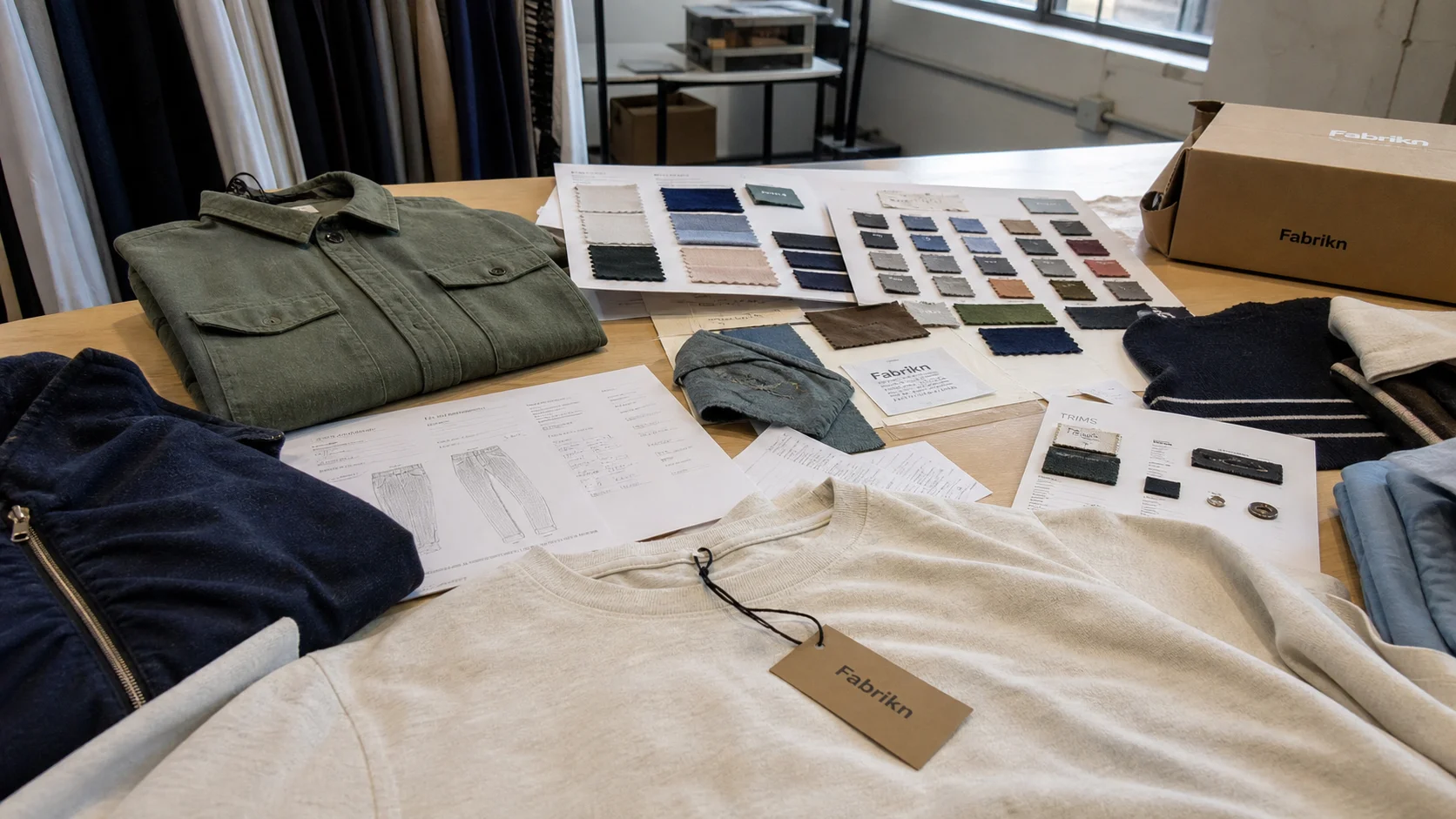
Ethical Clothing Manufacturing in Asia compared by sample evidence, fabric or trim specs, MOQ, AQL terms, cost lines, delivery timing, and rework...
Fast answer: Ethical Clothing Manufacturing in Asia: Tech Pack, Sample Gate, MOQ, and QC Terms should be judged by production evidence, not by a generic sourcing promise. The buyer needs sample proof, cost breakdowns, QC checkpoints, and delivery buffers in writing.
Ask for recent sample photos, measurement tolerances, fabric or print test assumptions, decoration test notes, packing examples, and a named inspection checkpoint. These details show whether the team can repeat an approved sample at bulk volume.
Separate garment cost, decoration, labels, packaging, sampling, testing, freight, and rush charges. Clear cost lines make it easier to reduce colorways, adjust size depth, or reserve more time for sampling.
Ethical clothing manufacturing is the practice of producing apparel in a way that respects people, protects the environment, and promotes long-term business responsibility. In today’s fashion industry, ethical production is no longer a niche concern. It has become a core expectation for brands, retailers, and consumers who want transparency and accountability in every stage of the supply chain.
When people search for ethical clothing manufacturing Asia, they are often looking for trusted partners who can balance cost, quality, scale, and sustainability. Asia remains one of the world’s most important apparel manufacturing regions, but not all factories operate the same way. Ethical manufacturing means choosing suppliers that uphold fair labor standards, safe working conditions, responsible sourcing, and environmentally conscious production methods.
For brands building a sustainable fashion identity, ethical manufacturing is not only about avoiding harm. It is also about creating value. It supports stronger brand trust, better product quality, lower supply chain risk, and more resilient long-term partnerships.
Asia has long been a global hub for apparel production because of its skilled labor force, advanced textile infrastructure, and ability to support large-scale manufacturing. Cities such as Guangzhou and Ho Chi Minh City lead in full-package knitwear, while Dhaka specializes in woven shirting and Istanbul offers fast delivery for outerwear. These hubs combine expertise in cut-and-sew production, knitting, dyeing, embroidery, sourcing, and full-package garment services. This makes Asia a strategic choice for both emerging brands and established labels.
However, the size and diversity of the region mean that brands must take a thoughtful approach. Ethical clothing manufacturing in Asia is about identifying factories and supply chain partners that meet high standards, rather than assuming every supplier is equally responsible. The best manufacturers invest in worker welfare, environmental management, and compliance systems that support sustainable growth.
For fashion businesses, sourcing from Asia can offer several advantages:
At the same time, responsible sourcing requires clear communication, due diligence, and regular monitoring. Brands that want to build ethical collections should look beyond price alone and evaluate factories based on their labor practices, environmental standards, and transparency.
Ethical clothing manufacturing rests on a few essential principles. These principles help ensure that fashion production supports people and the planet while maintaining commercial viability.
Fair labor is the foundation of ethical manufacturing. Workers should be paid fairly, work reasonable hours, and be treated with dignity. Factories should prohibit forced labor, child labor, discrimination, and unsafe or abusive conditions. Ethical manufacturers also encourage open communication and grievance procedures so workers can raise concerns without fear. Brands sourcing from Dhaka or Istanbul often request documented wage policies showing payment above local minimums and transparent records for overtime.
A responsible factory invests in workplace safety, adequate ventilation, proper equipment maintenance, fire protection, and training. Safety is especially important in apparel production, where cutting tools, sewing equipment, dyes, and finishing processes can create hazards if not managed carefully. Certified facilities (WRAP, BSCI) in Guangzhou and Ho Chi Minh City routinely calibrate machines such as Juki lockstitch models, Yamato overlocks, and Gerber automated spreaders to minimize accidents.
Sustainable fashion depends on reducing environmental harm. Ethical manufacturers focus on minimizing waste, conserving water and energy, managing chemicals responsibly, and reducing emissions. They may also implement recycling programs, low-impact dyeing, and optimized cutting processes to lower material waste. Facilities holding OEKO-TEX Standard 100 and GRS certifications typically pair compact densification recycling lines (e.g., Autefa fiber reclaimers) with laser-guided cutting tables to maximize material yield and reuse of offcuts.
Trustworthy suppliers are open about where materials come from, how garments are made, and which subcontractors are involved. Traceability gives brands visibility into the supply chain and helps them verify claims around sustainability and ethics. Factories in Guangzhou’s textile districts can trace organic cotton back to farms in Xinjiang, while mills in Dhaka document GOTS-certified spinning batches delivered to the sewing floor.
Ethical manufacturing is not a one-time certification. It is a commitment to ongoing improvement. The best factories review performance, update systems, train teams, and adopt better technologies to improve outcomes over time. Continuous improvement programs often include monthly safety audits, six-month lean manufacturing initiatives centered on Kaizen events, and sustainability reporting aligned with Higg Index metrics.
Choosing the right production partner is one of the most important decisions a brand can make. Whether you are developing a new collection or scaling an existing line, the evaluation process should go beyond samples and pricing. If you are searching for ethical clothing manufacturing Asia, here are the key factors to assess.
Certifications can provide helpful indicators of a manufacturer’s commitment to sustainability and social responsibility. Depending on your product category and goals, you may want to ask about relevant certifications such as GOTS, OEKO-TEX Standard 100, WRAP, BSCI, or GRS. Certifications do not replace due diligence, but they can help validate a factory’s claims. Some Guangzhou-based factories combine WRAP and BSCI audits for dual compliance with social responsibility benchmarks.
A responsible supplier should be able to explain its policies on wages, working hours, overtime, grievance handling, and worker safety. Ask how the factory recruits workers, how it trains staff, and how it ensures fair treatment. Ethical clothing manufacturing is built on human dignity, so labor practices should be clearly documented and consistently applied. In Dhaka, for example, factories often share copies of collective bargaining agreements and worker welfare committees.
If possible, visit the factory or request a virtual tour. Review how garments are cut, sewn, finished, packed, and stored. Pay attention to cleanliness, organization, ventilation, equipment condition, and overall workflow. Efficient processes often correlate with better quality control and lower waste. Look for advanced machinery such as Lectra Vector cutting tables, LKG automatic spreading systems, and computerized inspection tables with iPads tracking quality defects.
Materials have a major impact on sustainability. Ask where fabrics, trims, and packaging come from. Look for suppliers who offer organic cotton, recycled polyester, low-impact dyes, or other lower-impact alternatives. A reliable manufacturer should be able to explain the origin and performance of the materials it uses. Suppliers in Ho Chi Minh City often provide lab reports on GRS-certified recycled yarns and WRAP-compliant trim vendors.
Clear communication is essential for ethical and successful production. A good manufacturer should respond promptly, provide realistic timelines, and be transparent about risks or limitations. Ethical partnerships are built on honesty, not overpromising. Ask for a production schedule outlining key milestones such as pattern approval, first sample review, inline inspections, and final QC, with realistic lead times like 18-22 business days for most repeat orders.
Responsible manufacturing includes strong quality systems that reduce defects, returns, and unnecessary waste. Ask how the factory handles inspections, tolerances, testing, and approval stages. Better quality control supports both sustainability and business performance. Facilities often utilize SAP-driven tracking for quality issues and maintain inspection checkpoints after every sewing line, with final audits covering seam strength, colorfastness, and shrinkage.
Ethical clothing manufacturing in Asia is closely linked to the materials and production methods used to create garments. Sustainable fashion brands are increasingly selecting fabrics and processes that reduce environmental impact while still meeting design and performance requirements.
Some of the most common sustainable material choices include:
The right material depends on the garment type, target customer, and performance needs. A knowledgeable manufacturer can help brands balance hand feel, durability, cost, and sustainability. For example, a Ho Chi Minh City factory may recommend a 160-180 GSM organic cotton jersey for casual wear, while an Istanbul partner could suggest a GRS-certified recycled polyester hardshell for outerwear.
Dyeing and finishing can be resource-intensive parts of apparel production. Ethical manufacturers may use water-saving dyeing techniques, safer chemistry, and improved wastewater treatment systems. They may also reduce the use of harmful substances and choose finishes that support longer garment life. Guangzhou dye houses often deploy eFlow zero-water dyeing machines and use Dystar Masterbatches approved under OEKO-TEX Standard 100.
Fabric waste is a major issue in the apparel industry. Sustainable factories work to improve pattern efficiency, optimize marker planning, and leverage laser cutting or Gerber XLC 2 automated cutters to minimize offcuts. Some facilities implement circular waste programs, collecting leftover fibers for recycled yarn lines and sending trimmings to local composting partners.
Advanced sewing processes, such as automated pocket insertion, bar tack machines, and computerized buttonhole units, reduce errors and ensure consistent quality. Factories that invest in these technologies can often offer prices around $2.50-4.00 per unit at 500 MOQ for plain T-shirts while maintaining ethical standards. Finishing lines may also include ozone washing for denim, digital heat transfer, or laser etching to limit chemical use.
Even with the best intentions, sourcing ethically in Asia involves challenges. Common issues include fluctuating raw material costs, capacity constraints, and communication hurdles across time zones. Brands can overcome these by building long-term relationships, scheduling regular check-ins, and sharing production forecasts six months in advance.
Transparency may require third-party audits or real-time visibility tools like shared ERP systems. Manufacturers with certifications such as BSCI or WRAP typically welcome third-party inspections and can supply audit reports showing compliance with worker welfare standards. When factories face capacity bursts, having a dual sourcing strategy between Guangzhou and Dhaka, for example, helps maintain continuity.
Supply chain disruption is another concern. Responsible brands often plan for lead times like 18-22 business days for bulk orders, allowing buffer for inspections and shipment booking. Clear lead-time expectations reduce stress for both sides and ensure ethical practices are not compromised for speed.
Fabrikn partners with factories in Guangzhou, Dhaka, Ho Chi Minh City, and Istanbul that hold recognized certifications and demonstrate ethical production practices. We assist brands in qualifying partners with GOTS, OEKO-TEX Standard 100, WRAP, BSCI, and GRS certifications, ensuring materials and processes meet sustainability goals.
Our team provides detailed factory profiles, sample tracking, machine capability assessments (including CAD/CAM cutting systems and robotic finishing cells), and regular compliance updates. Fabrikn also offers peer benchmarking so brands can compare their suppliers on lead time, efficiency, and worker satisfaction. We track cost per unit and MOQ considerations, such as staying within the $2.50-4.00 per unit range for basic styles at 500 MOQ, while balancing ethical requirements.
Use these adjacent sourcing guides to compare supplier capability, costing, and production planning before you brief a factory.
For production planning, review Fabrikn services or contact the team through the sourcing brief form.
Look for certifications that match your goals: GOTS for organic textiles, OEKO-TEX Standard 100 for chemical safety, GRS for recycled content, and WRAP or BSCI for social compliance. Combining multiple certifications provides stronger assurance.
Request copies of certificates, audit reports, and material traceability records. If feasible, conduct in-person or virtual factory visits, and use independent auditors to validate claims. Regular check-ins also help maintain standards.
Most ethical factories in the region commit to 18-22 business days for established styles, assuming materials are ready and the order is within agreed MOQs. New styles may require additional sampling phases.
Yes, several factories in Guangzhou, Ho Chi Minh City, and Istanbul support small batches, though unit costs may increase. Fabrikn can help negotiate pricing that reflects ethical oversight while keeping batches manageable.
Ask for lab reports, certificates, and traceability documentation. Some materials come with QR codes or blockchain records linking back to farms or recycling partners. Manufacturers should be able to explain the process and share third-party verification.