
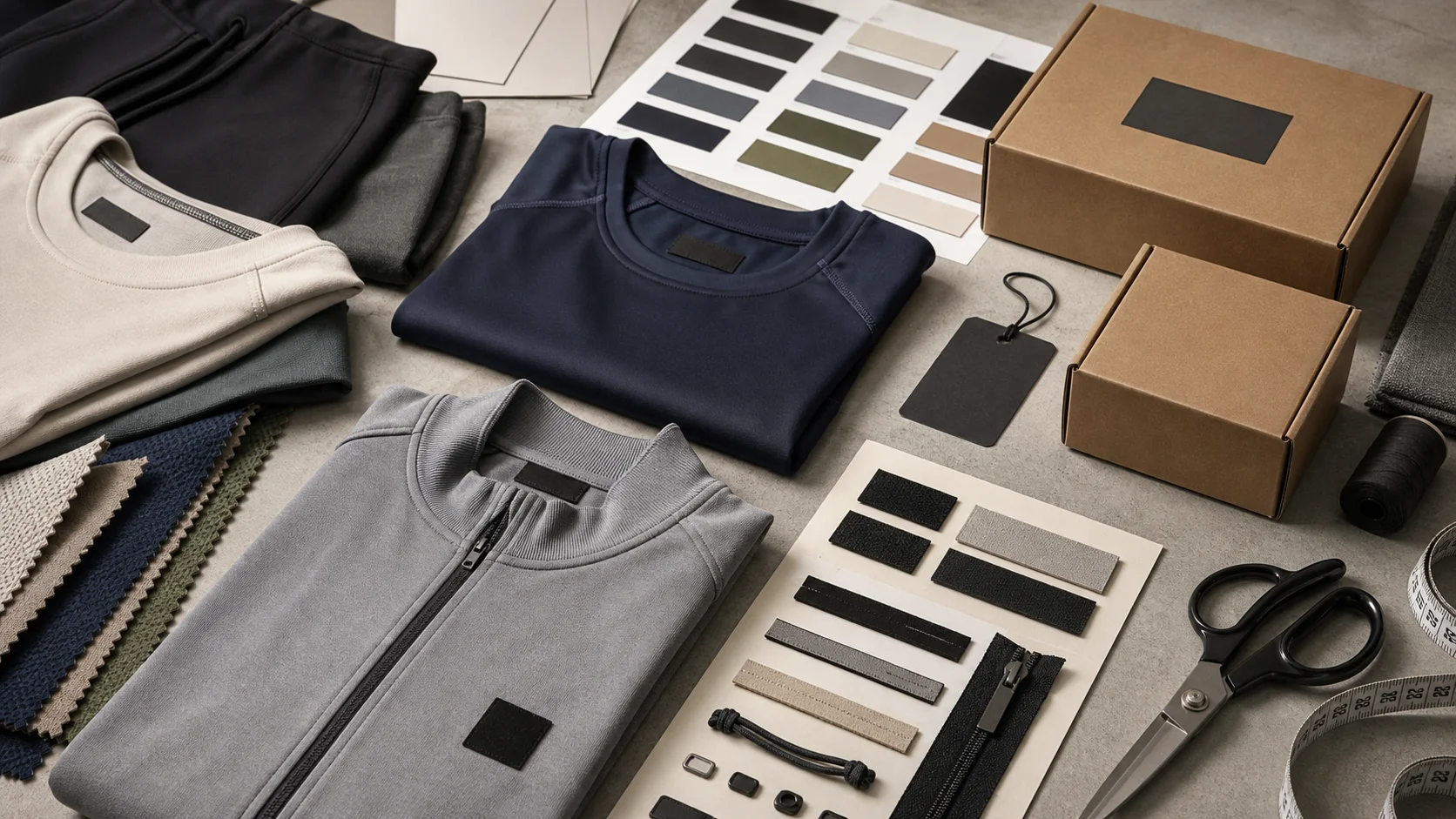
Ethical Garment Production Audit Checklist with checks for samples, fit, MOQ, QC evidence, pricing terms, and delivery risk.
Fast answer: Ethical Garment Production Audit Checklist: A Practical should be judged by production evidence, not by a generic sourcing promise. The buyer needs sample proof, cost breakdowns, QC checkpoints, and delivery buffers in writing.
Ask for recent sample photos, measurement tolerances, fabric or print test assumptions, decoration test notes, packing examples, and a named inspection checkpoint. These details show whether the team can repeat an approved sample at bulk volume.
Separate garment cost, decoration, labels, packaging, sampling, testing, freight, and rush charges. When every cost line is visible, it becomes easier to reduce colorways, adjust size depth, or reserve more time for sampling.
For sustainable fashion brands, ethics cannot stop at design, materials, or marketing claims. True responsibility runs through the entire supply chain, especially garment production. That is where labor conditions, environmental impact, safety practices, sourcing integrity, and quality control come together. An ethical garment production audit checklist gives brands a practical way to assess factories, verify standards, and build a more transparent and resilient supply chain.
This guide explains what to include in an ethical production audit, why it matters, how to use it, and what to look for when choosing a manufacturing partner. Whether you are launching a responsible clothing line or improving an existing supply chain, this article will help you evaluate garment factories with confidence. In real sourcing conversations, that can mean comparing a Guangzhou cut-and-sew facility with a Dhaka knitwear supplier, a Ho Chi Minh City sportswear factory, or an Istanbul private-label workshop, each with different strengths, costs, and lead times.
Sustainable fashion brands are increasingly judged not only by the products they sell, but by how those products are made. Consumers, retailers, and regulators want evidence that garment production is safe, fair, and environmentally responsible. Without an audit process, even well-intentioned brands may overlook problems hidden deep in the supply chain.
An ethical garment production audit helps you:
For brands that want to build long-term credibility, auditing is not optional. It is part of the foundation of responsible sourcing. A factory that can show current compliance documents, worker payroll records, wastewater treatment logs, and product testing reports is far easier to trust than one relying on verbal assurances alone.
An ethical garment production audit checklist is a structured tool used to review a factory's practices against social, environmental, and operational standards. It can be used during factory selection, onboarding, routine compliance reviews, or ongoing supplier management.
The checklist should cover three major questions:
Unlike a general factory inspection, an ethical audit focuses on the wider impact of garment production. It looks beyond output and pricing to assess how garments are made, who makes them, and under what conditions. For example, a factory offering a basic T-shirt at $2.50-4.00 per unit at 500 MOQ may be attractive on cost alone, but the audit should still verify whether that price includes compliant payroll, safe machinery, and proper waste handling.
A complete audit checklist should cover multiple dimensions of factory performance. Below are the essential categories every sustainable fashion brand should review.
Labor practices are the heart of any ethical audit. A factory may look efficient on paper, but if workers are underpaid, overworked, or unsafe, the production system is not ethical.
Check for the following:
In practice, this means reviewing attendance sheets, payroll summaries, age verification documents, and overtime approvals from the last 3 to 6 months. If the factory is BSCI or WRAP certified, ask for the current certificate, audit summary, and corrective action history rather than relying on a logo alone.
Garment factories can present serious risks if safety is neglected. Poor ventilation, overcrowded production floors, inadequate lighting, and unsafe machinery can all endanger workers.
Review the factory for:
Look closely at the production floor itself: overlock machines, coverstitch machines, flatlock machines, bartack machines, and automatic cutting tables should have guards, maintenance tags, and operator training records. In larger facilities, a Gerber or Lectra CAD/CAM cutting system, automatic fabric spreader, needle detector, and steam pressing line can improve consistency, but only if they are maintained and operated safely.
Sustainable fashion brands must consider the environmental footprint of manufacturing. Ethical garment production includes responsible resource use, pollution control, and waste reduction.
Audit environmental practices such as:
This is where material choices matter. Ask whether the factory can handle GOTS organic cotton, recycled polyester certified to GRS, OEKO-TEX Standard 100 approved trims, or lower-impact fibers like TENCEL Lyocell, hemp, and modal. A reliable mill should also be able to provide lab dips, strike-offs, shade bands, shrinkage testing, and colorfastness reports before bulk production begins.
It is not enough to audit only the final factory. Ethical production depends on visibility across the broader supply chain, including fabric mills, dye houses, trims suppliers, and subcontractors.
Look for:
A transparent factory should be able to tell you whether jersey knit fabric came from a mill in Guangzhou, a dye house near Dhaka, or a cut-and-sew partner in Ho Chi Minh City, and whether buttons, zippers, thread, and labels were sourced from approved vendors. If a supplier cannot explain where the fabric was knitted, dyed, finished, and cut, that is a warning sign.
Transparent payroll and attendance records are essential. Ethical claims should be backed by documentation, not verbal assurance alone.
Review:
When possible, reconcile the paper trail with on-site worker interviews. If a factory says workers receive meal allowances, transportation support, or performance bonuses, those benefits should appear consistently in payroll records. For export-focused factories, ask whether the payroll system is audited and whether records are retained for at least 12 months.
Ethical manufacturing also includes reliability. A factory that cuts corners in quality may create more waste, returns, and supply chain stress. Sustainable brands need production partners who balance ethical standards with repeatable quality.
Inspect:
Ask how the factory manages pre-production samples, size set samples, seal samples, and top-of-production approval. A strong partner will use clear specs, grading rules, and quality checkpoints such as AQL 2.5 final inspection, fabric relaxation before cutting, 100 percent needle detection for certain product categories, and wash tests for shrinkage and color bleeding.
Strong ethical factories usually have clear systems for training, documentation, and internal accountability. These systems make compliance more sustainable over time.
Check whether the factory has:
Good management systems often include monthly fire drills, machine maintenance logs, chemical inventory registers, and training sessions on PPE, lockout procedures, and emergency response. If the factory has GRS, WRAP, or BSCI documentation, confirm that the scope covers the specific site and product category you are sourcing.
Below is a practical audit checklist you can use when evaluating a garment factory. You can adapt it depending on your product type, market requirements, and compliance goals.
A checklist is only useful if it becomes part of a structured review process. Start by sending the checklist and supporting document request before the factory visit. Ask for certificates, a facility profile, machine list, recent inspection reports, and sample payroll records at least 7 to 10 business days in advance.
During the visit, walk the production floor from fabric receipt to cutting, sewing, finishing, packing, and dispatch. If the factory is located in Guangzhou, Dhaka, Ho Chi Minh City, or Istanbul, compare the same checkpoints across each site so you can make an apples-to-apples decision. A factory in Istanbul may offer shorter transit times into Europe, while a Dhaka partner may provide stronger knitwear pricing for larger orders, and a Guangzhou supplier may excel at faster sampling and trim sourcing.
When reviewing cost and speed, ask for a full landed production picture, not just the sewing price. A simple cut-and-sew T-shirt might quote at $2.50-4.00 per unit at 500 MOQ, but the true cost can change once you add washing, embroidery, printing, custom packaging, lab testing, freight, and duties. Standard repeat production is often quoted at 18-22 business days after fabric approval, but more complex garments can take longer.
Use the audit to score each section and compare suppliers consistently. A factory that scores well on ethics but poorly on quality control may still create risk. Likewise, a low-cost supplier with weak compliance documentation can become expensive if defects, delays, or labor issues appear later.
Some warning signs are easy to miss unless you know what to look for. If you encounter any of the following, slow down and investigate before placing an order.
If a supplier cannot explain how a product moves from pattern making to cutting, sewing, finishing, and final inspection, or cannot show the machines and people involved, the factory may be hiding weak practices behind polished sales language.
The right manufacturer is not always the cheapest or the biggest. It is the one that fits your product, volume, compliance needs, and growth plan. For example, a startup producing organic cotton jersey basics may need a smaller, flexible factory with GOTS and OEKO-TEX Standard 100 documentation, while a larger brand sourcing recycled activewear may prioritize GRS-certified production, flatlock construction, and reliable bulk dyeing capacity.
When comparing partners, evaluate:
Location can strongly affect your supply chain. Guangzhou often works well for fast development and access to a dense trim ecosystem. Dhaka is a major knitwear and basics hub with strong large-scale capacity. Ho Chi Minh City is often competitive for sportswear, woven shirts, and technical garments. Istanbul can be attractive for nearshore replenishment into Europe, especially when you need smaller runs and faster transit.
Ask for a transparent quote that breaks out fabric, trims, sewing, embellishment, washing, testing, packaging, and freight. A good partner will explain why a hoodie with brushed fleece, screen print, rib trims, and enzyme wash costs more than a basic jersey tee, and will show how those costs relate to labor, machine time, and raw materials.
A consistent audit process protects more than your brand image. It can improve every stage of production and create a better working relationship with suppliers.
Brands that audit well often find that the same factory becomes a better partner over time. As communication improves and corrective actions are tracked, sampling gets faster, defect rates fall, and production planning becomes more predictable.
Use these adjacent sourcing guides to compare supplier capability, costing, and production planning before you brief a factory.
For production planning, review Fabrikn services or contact the team through the sourcing brief form.
How often should a garment factory be audited?Most brands should audit new suppliers before placing production, then repeat audits annually or when there is a major change in ownership, location, product category, or subcontracting setup.
Which certifications matter most?It depends on the product. GOTS is important for organic cotton, OEKO-TEX Standard 100 for chemical safety, WRAP and BSCI for social compliance, and GRS for recycled materials such as recycled polyester or recycled nylon.
Can a factory be ethical without certification?Yes, but the brand should verify actual practices with documents, worker interviews, and on-site observation. Certification is helpful, but it does not replace a full audit.
What should a first-time brand ask a factory for?Request the factory profile, business license, machine list, capacity by product type, current certifications, sample lead times, pricing at your MOQ, and examples of recent inspection or testing reports.
What is a realistic production timeline?For many repeat styles, 18-22 business days after approvals is a common target, but new development, specialty washing, embroidery, or complex sourcing can extend the timeline.
Ethical garment production is not built on promises alone. It is built on documented systems, clear standards, transparent pricing, and factories that can prove what they say on the floor. With the right checklist, brands can source more responsibly and build supply chains that are safer, stronger, and more resilient.