
Evaluate Product Consistency Across Repeat Orders compared by sample evidence, fabric or trim specs, MOQ, AQL terms, cost lines, delivery timing, and...
Fast answer: Evaluate Product Consistency Across Repeat Orders: Tech Pack, Sample Gate, MOQ, and QC Terms should be judged by production evidence, not by a generic sourcing promise. The buyer needs sample proof, cost breakdowns, QC checkpoints, and delivery buffers in writing.
Ask for recent sample photos, measurement tolerances, fabric or print test assumptions, decoration test notes, packing examples, and a named inspection checkpoint. These details show whether the team can repeat an approved sample at bulk volume.
Separate garment cost, decoration, labels, packaging, sampling, testing, freight, and rush charges. Clear cost lines make it easier to reduce colorways, adjust size depth, or reserve more time for sampling.
Welcome to Fabrikn's Business Tips series, where we look at actionable strategies for brands and sourcing professionals who work with garment factories. One of the most critical challenges for any apparel business is ensuring product consistency across repeat orders. When customers expect the same fit, fabric, color, and quality every season, any deviation damages brand trust and repeat purchases. This article explores how to evaluate product consistency effectively, drawing on industry best practices, technology, and collaborative factory relationships. Whether you manage a single private label collection or oversee multi-factory production, a consistent evaluation framework is essential.
Product consistency involves more than delivering the same style. It encompasses repeatable fit, construction, fabric touch and appearance, color matching, labeling, packaging, and even the emotional cues your product communicates. Consistency goes beyond the first order; it must persist across every production run, across factories, and across seasons. Evaluating product consistency starts with understanding the key dimensions that influence the finished item:
By evaluating each dimension through standardized protocols, you build a holistic understanding of whether your production remains true to spec.
Consistency begins with precise standards. Before placing any repeat order, your technical package should define every measurable detail so factories know exactly what to reproduce. Here’s how to establish and document quantifiable standards:
A master tech pack serves as your single source of truth. Include:
When a garment goes through multiple production cycles, the master tech pack ensures each iteration references the same blueprint.
Quantifiable tolerances turn expectations into measurable outcomes. Set specific allowances (e.g., ±0.5 cm for chest width) and communicate them to factories and QA teams. Use a structured format to avoid misinterpretation:
This classification helps QA inspectors prioritize issues and allows factories to understand where flexibility exists without sacrificing fit or performance.
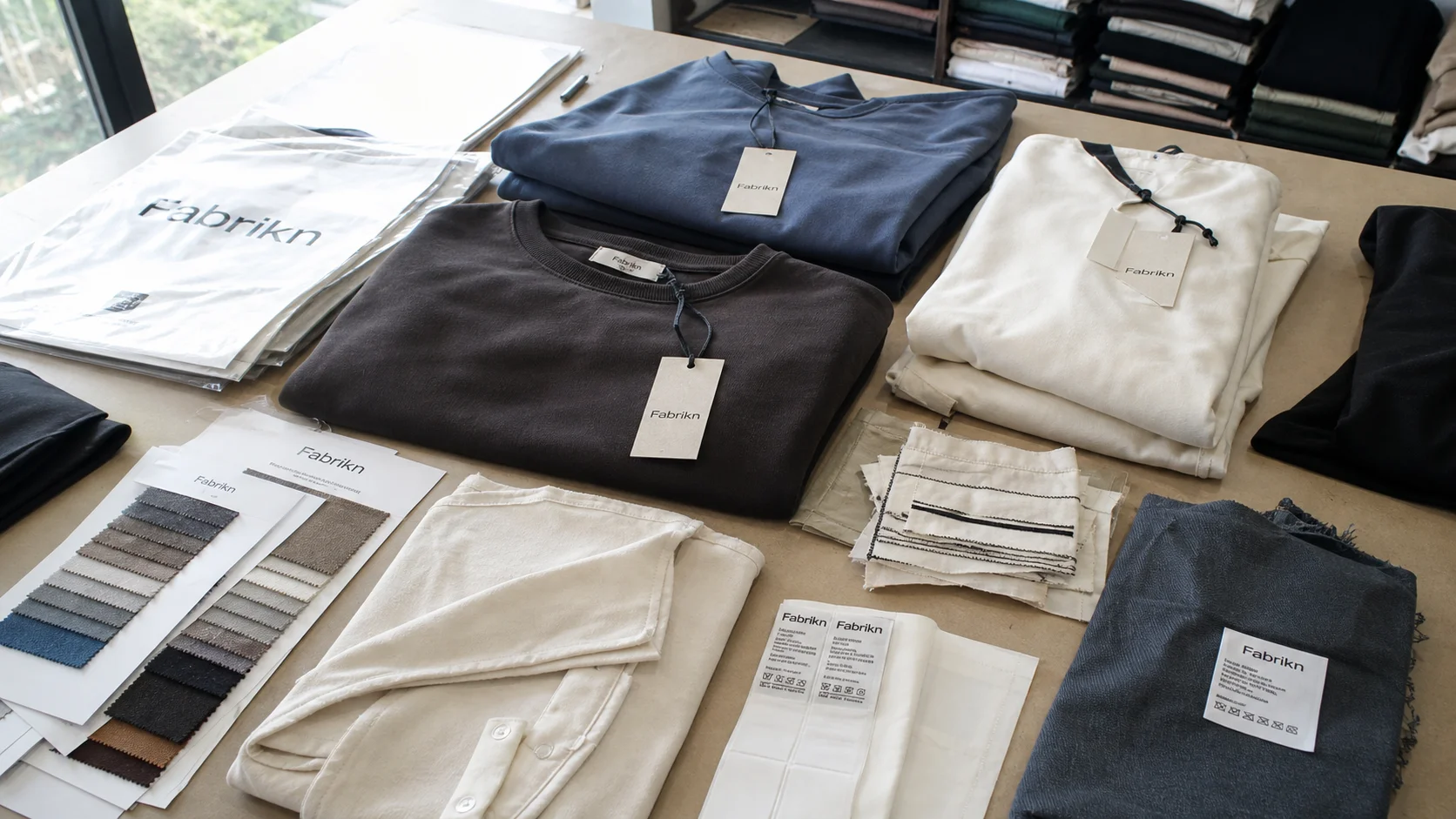
Reference garments—often called golden samples—act as tactile standards. They provide QA teams and factories with physical examples of how the garment should look, feel, and fit. Store and document golden samples to compare against future batches. When a repeat order is issued, request the factory to recreate or benchmark against that sample during production.
Ensuring consistency begins well before cutting. Pre-production protocols set the stage for a successful repeat order:
Fabric consistency is often the root of variation. Even when ordering from the same supplier, dye lots change over time. Request physical swatches from the factory and compare them to the previously approved fabric using color measurement tools such as spectrophotometers. Document dye lot numbers, fabric inspection reports, and supplier information to maintain traceability.
Every production run generates valuable data. Before issuing a repeat order, review:
Use this historical insight to adjust specifications, provide targeted coaching to the factory, and pinpoint areas that require extra attention.
Always produce a pre-production sample (PPS) for each repeat order. Carefully document feedback and ensure adjustments are reflected in revised spec sheets. Include simplified visual comparisons to the golden sample or previous order for clarity. Once the PPS receives approval, use it as a reference for inline inspections.
During production, real-time monitoring mitigates drifts that often cause inconsistent outcomes.
Perform inspections at critical milestones such as fabric inspection, pre-cut inspection, after sewing, and before final finishing. Use standardized checklists for each stage to ensure nothing falls through the cracks. Some key checkpoints include:
Document findings through inspection reports, and use photos to compare against golden samples.
Identify critical measurement points that have historically varied or influence fit most. Train inspectors to measure these consistently and include them in inline QA reporting. For example, for a jacket, the sleeve length, shoulder width, and chest circumference often have the greatest impact on fit perception.
Consistency across repeat orders is easier when factory workers understand your expectations. Include training sessions on your brand standards, provide visual guides, and highlight common pitfalls experienced in earlier runs. Consider developing a production manual specific to your brand that addresses:
Regularly revisit training materials, especially when you introduce new styles or materials.
After finishing the run, rigorous evaluation ensures that only garments meeting your consistency criteria move forward.
Final inspections should score garments based on your pre-defined acceptance categories. Use a digital or paper-based scoring system that includes:
Acceptable scores must align with your tolerance levels. Rejects should be documented with specific notes and photos.
Even within a single production run, consistency can vary between lots. Perform lot-by-lot sampling during post-production to catch any outliers before shipment. Combine sampling with statistical process control, ensuring any trends pointing toward inconsistency are addressed immediately.
For attributes like colorfastness, shrinkage, or pilling resistance, rely on third-party labs to evaluate each batch. Record test results and compare them to previous runs to verify technical consistency. Share test certificates with internal stakeholders to maintain traceability.
Technology significantly elevates your ability to monitor product consistency across repeat orders.
Platforms like Fabrikn’s production modules allow you to upload tech packs, inspection checklists, and critical measurement data. Suppliers can input inspection results, attach photos, and mark deviations. Your team receives alerts when thresholds are exceeded, enabling swift corrective actions.
Use spectrophotometers for precise color comparisons. Digital color data is far more reliable than subjective visual checks. Pair this with color management software that stores historical color information for each SKU, making comparisons fast during repeat orders.
Advanced CAD tools simulate garments on 3D models, allowing you to detect fit issues before factory sewing. Use these simulations to communicate fit expectations to factories and to verify whether changes over time alter the garment’s silhouette.
Keep your master data—including tech packs, updated measurement charts, and golden sample photos—organized in the cloud. When placing a repeat order, share the exact same documents with the factory to eliminate versioning errors.
Consistency improves when factories truly understand and align with your brand’s quality ethos.
Deploy technical designers or quality engineers to work directly with your factory partners. These individuals serve as your brand’s eyes and ears on the floor, ensuring each stage mirrors the standards outlined in the tech pack.
Review factory performance after each order. Use a performance scorecard covering:
Share scorecards with factories, celebrate wins, and collaborate on improvement areas. Transparency reinforces accountability and strengthens partnerships.
If inconsistencies emerge repeatedly, co-create improvement plans with your factories. Outline the issue, root cause, corrective action, and verification step. When factories feel involved in problem-solving, they are more committed to lasting change.
Brands that consistently produce high-quality garments embrace continuous improvement. This cyclical approach ensures lessons from each order inform the next.
Create an order review document that captures:
This living document becomes invaluable for data-driven decision-making when planning repeat orders.
Apply SQC tools to monitor defect rates over time. Plot data on control charts to detect trends, shifts, or spikes. When a process moves out of control limits, pause and investigate before shipping.
Your end customers are the ultimate judges of consistency. Monitor returns, customer reviews, and wear-test feedback. Bridge insights with factory data to attribute product issues accurately and refine your evaluation process accordingly.
Real-world examples demonstrate how systematic evaluation preserves consistency over time:
A brand working with multiple factories faced inconsistent sleeve lengths across the same shirt style. By implementing digital measurement capture during inline inspections, they identified that different machines were calibrated differently. Standardizing machine settings and documenting them in the tech pack ensured the sleeves matched across future runs. The result: a 60% reduction in sleeve-related rework.
A knitwear line experienced color variation with every new dye lot. Fabrikn helped them implement a color measurement protocol using spectral data and introduced a lab-certified dye recipe log. With these controls, they maintained color consistency across five seasons, earning praise from retailers for reliable shade matching.
Get a free quote from Fabrikn — your trusted B2B clothing manufacturer with 10+ years of experience. MOQ as low as 200 pieces.
Get a Free Quote →A strong brief makes the supplier's job narrower and the quote more reliable. For evaluate product consistency across repeat orders, include the target customer, sales channel, expected order quantity, size range, decoration needs, packaging requirements, and delivery market. Then call out the details most likely to affect the result, especially fit intent, material source, and trim selection.
The brief should also explain what cannot change. Some brands care most about hand feel, some about price, some about launch timing, and some about retail compliance. When those priorities are not written down, suppliers tend to optimize for whatever is easiest to quote. Clear priorities help the factory make better tradeoffs before the first sample is cut or printed.
Ask the supplier to respond with assumptions, not just a price. A useful reply states MOQ, sample route, production capacity, inspection plan, packing method, and freight handoff. If the answer is vague, the project may still work, but it needs a tighter pre-production stage before money and calendar pressure build up.
The best time to catch problems is before the pre-production sample is approved. Check measurements, color, placement, material behavior, shrinkage, construction, labels, and packaging in the same review instead of approving each item in isolation. Many bulk issues are not caused by one dramatic mistake; they come from several small unchecked assumptions.
For evaluate product consistency across repeat orders, pay special attention to sample review, bulk inspection, and shipping plan. These details often look minor in an email but become expensive once cutting, printing, sewing, packing, or shipping begins. A simple checklist with owner, due date, and approval status keeps the brand team and factory aligned.
Bulk production should not start until the supplier can explain how the approved sample becomes a repeatable production standard. That means reference sample storage, line instructions, inline checks, final inspection, and defect handling. A factory that can describe this process clearly is usually safer than one that only promises speed.
Price differences are useful only when the quotes cover the same work. Compare sample cost, material source, trims, decoration, packaging, testing, inspection, and freight assumptions. A low unit price can become expensive if it excludes items the brand needs before launch.
Timeline promises deserve the same scrutiny. Ask what happens if the first sample needs revision, whether materials are in stock, when the production slot is reserved, and how export packing is handled. The most reliable supplier is often the one that gives a realistic calendar instead of the fastest optimistic answer.
Inline inspections should occur at critical milestones such as fabric receipt, cutting, sewing, and finishing. Supplement these with final inspections and lot-by-lot sampling. The frequency depends on the complexity of the garment and your historical quality performance.
Technology facilitates standardized inspections, accurate color matching, and real-time data sharing. By using digital QA platforms, spectrophotometers, and cloud-based tech pack management, brands can compare current production against historical benchmarks efficiently.
Define tolerance levels for major and minor specifications from the outset. For minor issues outside the tolerance, document them, assess their impact on fit or appearance, and decide whether to accept with a note or request rework. Continuous monitoring helps reduce minor deviations over time.
Golden samples provide a tangible reference for fit, fabric, color, and construction. Factories can measure against this physical prototype to confirm each batch matches the intended outcome. Keeping the golden sample updated and easily accessible is essential for repeat evaluations.
Assign technical teams, schedule regular performance reviews, share inspection data, and involve factories in improvement plans. Transparent communication and joint problem-solving foster stronger partnerships, leading to more consistent production.
For further guidance on streamlining production consistency or to connect with Fabrikn’s experts, explore our services, learn more about us, or reach out via our contact us page.