
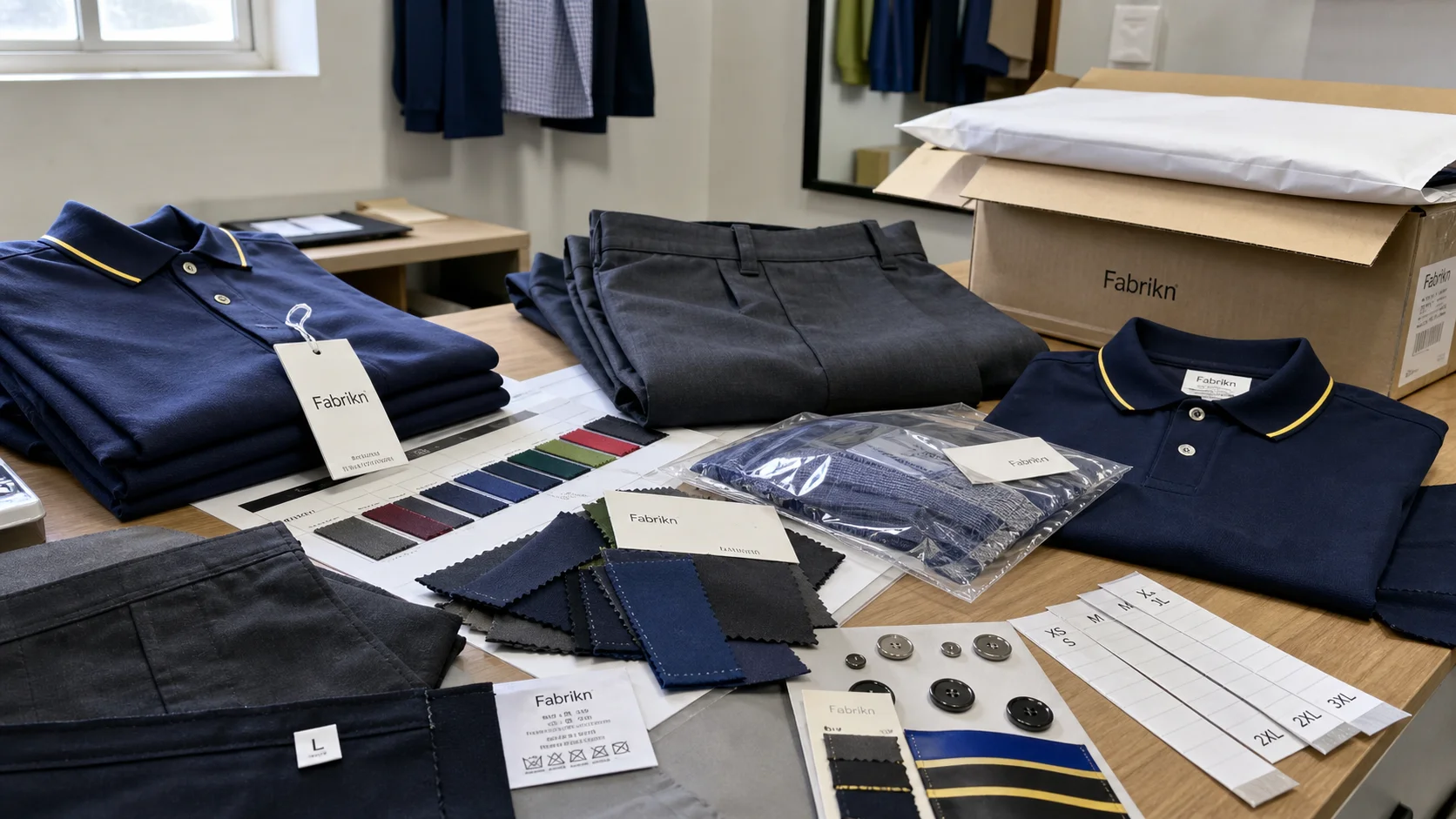
Evaluate Supplier Reliability for Wholesale Clothing compared by sample evidence, fabric or trim specs, MOQ, AQL terms, cost lines, delivery timing, and...
Fast answer: Evaluate Supplier Reliability for Wholesale Clothing: Tech Pack, Sample Gate, MOQ, and QC Terms should be judged by production evidence, not by a generic sourcing promise. The buyer needs sample proof, cost breakdowns, QC checkpoints, and delivery buffers in writing.
Ask for recent sample photos, measurement tolerances, fabric or print test assumptions, decoration test notes, packing examples, and a named inspection checkpoint. These details show whether the team can repeat an approved sample at bulk volume.
Separate garment cost, decoration, labels, packaging, sampling, testing, freight, and rush charges. Clear cost lines make it easier to reduce colorways, adjust size depth, or reserve more time for sampling.
When managing or growing a wholesale clothing operation, supplier reliability is the cornerstone of success. Reliable suppliers ensure consistent quality, timely delivery, and predictable costs—elements that directly influence customer satisfaction, brand reputation, and profitability. Without a reliable supply chain, wholesale buyers risk stockouts, increased returns, damaged branding, and operational chaos. Therefore, learning how to evaluate supplier reliability is not just helpful but essential.
Supplier reliability encompasses multiple dimensions: production capacity, quality control, communication responsiveness, ethical practices, and financial health. It also reflects how well a supplier aligns with your business goals and resilience strategies. In this article, we dive deep into the nuanced process of evaluating supplier reliability specifically for wholesale clothing procurement, providing practical steps and best practices you can implement today.
Before approaching prospective suppliers, set a transparent, structured evaluation framework tailored to your business needs. This clarity helps you measure each supplier against the same benchmarks and ensures consistency in decision-making. A strong evaluation framework typically includes the following categories:
Make sure this evaluation criteria is documented and shared with purchasing teams for consistent application. Including key stakeholders—merchandisers, quality assurance, logistics, and sustainability—ensures you assess reliability holistically.
Due diligence allows you to verify the claims a supplier makes before you commit to an order. This process includes onboarding questionnaires, reference checks, and background research. When evaluating supplier reliability for wholesale clothing procurement, consider the following steps:
Due diligence is not a one-time activity but an ongoing commitment, especially when you plan to place large orders. Establish checkpoints throughout the relationship to ensure the supplier’s performance remains consistent and aligns with your evolving standards.
Your wholesale clothing brand depends on high-quality garments that meet the expectations of your buyers or retail partners. Consequently, evaluating the supplier’s quality and production capabilities is essential in determining reliability.
Key aspects to assess include:
Using performance data gathered from sample orders provides tangible metrics to quantify reliability. Track defect rates, turnaround times, and inspection scores to create a comparative baseline used during future procurement.
Today’s buyers expect transparency in supply chains, and sustainable production practices can be a proxy for supplier reliability. Ethical operations often reflect disciplined management, which is crucial for predictability and consistency. When evaluating suppliers, focus on the following:
Perform audits or request independent audit reports to ensure compliance. Ethical reliability is not only about doing the right thing but also about predictable quality and minimized supply chain disruptions due to compliance issues.
Supplier reliability is heavily influenced by financial stability. A financially unhealthy supplier is more susceptible to production delays, quality lapses, or outright shutdowns. To evaluate financial reliability:
Incorporate financial risk assessments into your sourcing playbooks. Continually monitor news or credit rating changes for key suppliers to preemptively address potential disruptions.
Reliable suppliers communicate clearly, respond promptly, and proactively manage expectations. Communication forms the foundation for troubleshooting and collaboration in a fast-paced wholesale environment. Here’s how to gauge this aspect:
Consider conducting a “trial run” with a small purchase order to observe their project management skills. Pay attention to whether they provide production timelines, regular updates, and transparent reporting.
Technology can amplify reliability when used correctly. Suppliers invested in modern systems usually deliver greater transparency and efficiency. Here is how to evaluate and leverage technology within your partnership:
Integrating technology into procurement workflows creates a shared record of commitments and performance. Suppliers who adopt automation, communication tools, and reporting dashboards typically demonstrate higher reliability levels due to structured processes.
Reliability is not solely determined before entering a partnership—it is cultivated over time. Establishing a strong relationship with suppliers fosters loyalty, mutual understanding, and improved performance. To nurture reliability:
Strong partnerships hinge on shared goals. Document expected service levels in contracts or service agreements and address any discrepancies constructively. When issues arise, transparent conversations and collaborative problem-solving cultivate resilience.
Once you have a framework in place, evaluate how these criteria apply to your existing supplier portfolio and any new prospects. Remember that the right supplier doesn’t just meet cost targets—it aligns with your brand’s quality expectations, sustainability goals, and strategic growth roadmap. For further assistance in configuring reliable supplier networks or addressing specific sourcing challenges, explore our comprehensive list of services designed for global wholesale brands.
If you’re ready to discuss your procurement priorities and want expert guidance, reach out through our contact form or learn more about our manufacturing ethos on the about us page. Our team at Fabrikn blends industry know-how with strategic sourcing methodologies to help you build dependable supply chains.
Get a free quote from Fabrikn — your trusted B2B clothing manufacturer with 10+ years of experience. MOQ as low as 200 pieces.
Get a Free Quote →A strong brief makes the supplier's job narrower and the quote more reliable. For evaluate supplier reliability for wholesale clothing, include the target customer, sales channel, expected order quantity, size range, decoration needs, packaging requirements, and delivery market. Then call out the details most likely to affect the result, especially MOQ, line capacity, and pattern control.
The brief should also explain what cannot change. Some brands care most about hand feel, some about price, some about launch timing, and some about retail compliance. When those priorities are not written down, suppliers tend to optimize for whatever is easiest to quote. Clear priorities help the factory make better tradeoffs before the first sample is cut or printed.
Ask the supplier to respond with assumptions, not just a price. A useful reply states MOQ, sample route, production capacity, inspection plan, packing method, and freight handoff. If the answer is vague, the project may still work, but it needs a tighter pre-production stage before money and calendar pressure build up.
The best time to catch problems is before the pre-production sample is approved. Check measurements, color, placement, material behavior, shrinkage, construction, labels, and packaging in the same review instead of approving each item in isolation. Many bulk issues are not caused by one dramatic mistake; they come from several small unchecked assumptions.
For evaluate supplier reliability for wholesale clothing, pay special attention to QC checkpoint, export packing, and communication rhythm. These details often look minor in an email but become expensive once cutting, printing, sewing, packing, or shipping begins. A simple checklist with owner, due date, and approval status keeps the brand team and factory aligned.
Bulk production should not start until the supplier can explain how the approved sample becomes a repeatable production standard. That means reference sample storage, line instructions, inline checks, final inspection, and defect handling. A factory that can describe this process clearly is usually safer than one that only promises speed.
Price differences are useful only when the quotes cover the same work. Compare sample cost, material source, trims, decoration, packaging, testing, inspection, and freight assumptions. A low unit price can become expensive if it excludes items the brand needs before launch.
Timeline promises deserve the same scrutiny. Ask what happens if the first sample needs revision, whether materials are in stock, when the production slot is reserved, and how export packing is handled. The most reliable supplier is often the one that gives a realistic calendar instead of the fastest optimistic answer.
Begin with defining your quality, delivery, cost, ethical, and communication standards. Conduct due diligence through references, factory visits, and sample testing before committing to a larger order. Score each potential supplier against your established criteria to guarantee objective comparisons.
Look for evidence of steady investment in facilities, timely payments to vendors, transparent financial sharing (when possible), diversified clientele, and a clean bill of compliance with trade regulations.
Use KPIs such as delivery punctuality, defect rates, response times, and adherence to forecast projections. Implement regular performance reviews, leverage shared data portals, and sustain open communication to proactively address issues.
Yes. Systems like ERP, PLM, order-tracking dashboards, and digital proofing tools increase transparency and enable data-backed decision-making. Suppliers who embrace these technologies are often more organized and adaptable.
Suppliers committed to ethical labor, compliance, and sustainability typically demonstrate structured operations and accountability. These factors reduce the risk of disruptions due to regulatory penalties or reputational harm, thereby improving reliability.