
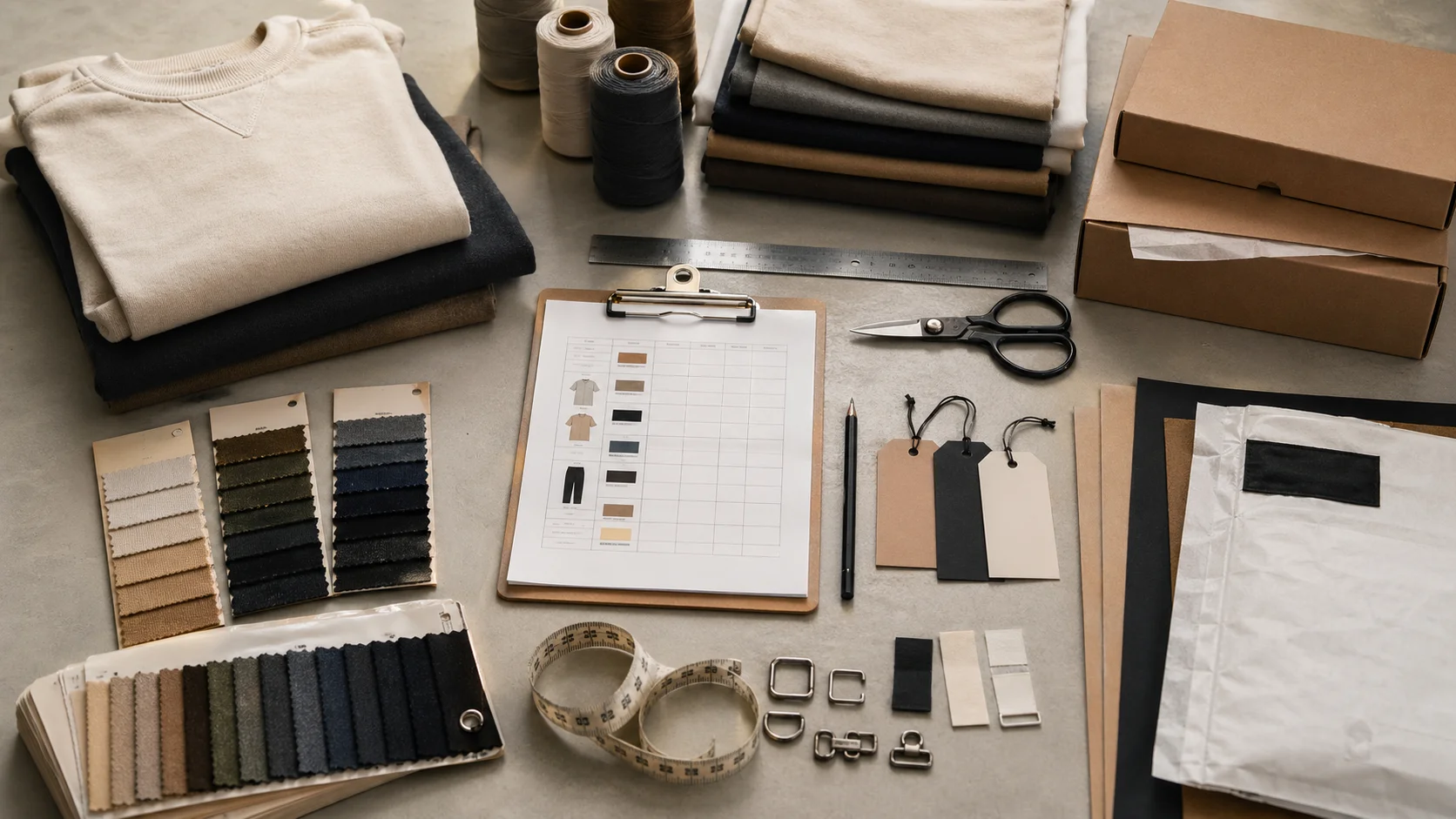
Fair Trade Apparel Sourcing compared by sample evidence, fabric or trim specs, MOQ, AQL terms, cost lines, delivery timing, and rework responsibility.
Fast answer: Fair Trade Apparel Sourcing: Tech Pack, Sample Gate, MOQ, and QC Terms should be judged by production evidence, not by a generic sourcing promise. The buyer needs sample proof, cost breakdowns, QC checkpoints, and delivery buffers in writing.
Ask for recent sample photos, measurement tolerances, fabric or print test assumptions, decoration test notes, packing examples, and a named inspection checkpoint. These details show whether the team can repeat an approved sample at bulk volume.
Separate garment cost, decoration, labels, packaging, sampling, testing, freight, and rush charges. Clear cost lines make it easier to reduce colorways, adjust size depth, or reserve more time for sampling.
Fair trade apparel sourcing is no longer a niche concern for a small group of values-driven brands. It has become a core business strategy for companies that want to reduce supply chain risk, meet rising consumer expectations, and build long-term trust. For fashion brands, retailers, and private label businesses, sourcing ethically is about more than choosing organic fabrics. It requires a thoughtful approach to labor rights, supplier transparency, environmental responsibility, and product quality at every stage of production.
This fair trade apparel sourcing guide explains what fair trade means in the clothing industry, why it matters, and how to source sustainable clothing ethically without compromising on performance, cost, or scalability. Whether you are launching a new apparel line or improving an existing supply chain, this guide will help you make more informed sourcing decisions.
Fair trade apparel sourcing refers to the process of selecting and working with clothing suppliers that follow ethical labor practices, pay fair wages, and maintain safe working conditions while also supporting environmentally responsible production. In practical terms, it means sourcing garments from manufacturers and partners that treat workers fairly, respect human rights, and operate with transparency.
In the fashion industry, “fair trade” often overlaps with broader concepts such as ethical sourcing, responsible manufacturing, and sustainable fashion. While standards can vary by certification and region, the core idea is consistent: apparel should be made in a way that does not exploit people or harm the planet.
For brands, fair trade sourcing is not only a moral choice. It is also a strategic one. Consumers increasingly expect to know where their clothes come from, who made them, and under what conditions. Retailers, corporate buyers, and e-commerce brands are under greater pressure to provide proof of responsible sourcing. A fair trade apparel sourcing guide helps businesses navigate those expectations with confidence.
Fair trade matters because the apparel industry has historically been associated with labor exploitation, unsafe factories, low wages, and environmental damage. As global supply chains grow more complex, the risk of hidden issues increases. Brands that rely on the lowest-cost production alone may face serious reputational, legal, and operational consequences.
Ethical sourcing creates value in several ways:
Protects workers: Fair trade standards help reduce exploitation by supporting safe conditions, reasonable working hours, and wages that better reflect the value of labor.
Strengthens brand trust: Consumers are more likely to buy from brands that demonstrate clear commitment to sustainability and ethical production.
Improves supply chain resilience: Suppliers that invest in better labor and environmental practices are often more stable and reliable long term.
Reduces compliance risk: Transparent sourcing makes it easier to meet evolving regulations and buyer expectations.
Supports market differentiation: Ethical products stand out in crowded categories, especially in sustainable fashion, premium basics, and lifestyle apparel.
As sustainability becomes a standard business requirement rather than a marketing bonus, fair trade sourcing gives apparel companies a foundation for responsible growth.
To source sustainable clothing ethically, it helps to understand the principles that define fair trade and responsible manufacturing. These principles should shape your supplier selection, product development, and quality control processes.
Workers should receive fair compensation for their labor and should not be subjected to forced overtime, unsafe quotas, or unfair deductions. Ethical sourcing begins with respect for the people making the garments.
Factories should maintain clean, secure, and compliant working environments. This includes proper ventilation, fire safety, protective equipment, and access to rest areas and sanitation.
A trustworthy supplier should be able to explain where raw materials come from, where production takes place, and what standards are enforced. Transparency helps brands verify claims and avoid greenwashing.
Fair trade apparel sourcing should also consider the environmental impact of production. Responsible use of water, energy, dyes, chemicals, and waste management all contribute to sustainability.
Ethical suppliers should support freedom of association, non-discrimination, and humane treatment. They should not tolerate child labor, harassment, or abuse in any form.
Fair trade sourcing is strongest when brands build stable relationships with suppliers instead of switching factories frequently to chase the lowest price. Long-term partnerships make quality, consistency, and accountability easier to achieve.
If you are building or improving a clothing line, the sourcing process should be intentional from the start. Ethical apparel sourcing is not a single decision; it is a set of steps that help you evaluate partners, choose materials, and maintain standards over time.
Before you contact suppliers, decide what matters most to your brand. Are you focusing on organic materials, fair labor, low-impact dyes, local production, or full supply chain transparency? The clearer your priorities, the easier it will be to assess partners.
For example, a premium basics brand may prioritize certified organic cotton and verified labor practices. A corporate uniform program may focus on durability, traceability, and factory compliance. A sustainable startup may need a supplier that can support smaller MOQs while still meeting ethical requirements.
Not all “ethical” or “sustainable” suppliers are the same. Review their websites, certifications, case studies, and product range. Look for evidence of real compliance rather than vague promises. Ask questions about manufacturing location, labor standards, material sourcing, and auditing practices.
When possible, choose suppliers with a proven track record in responsible production. You can learn more about Fabrikn’s approach to manufacturing and sourcing on our About Us page or explore our Services page for production support.
Reliable suppliers should be able to provide supporting documentation. Depending on your product category, this might include factory audits, material certifications, environmental compliance records, and social responsibility policies.
Do not rely on labels alone. Ask for specifics, such as:
Factory address and production locations
Certification numbers and scope
Material composition and origin
Labor and safety compliance records
Testing reports for chemicals or performance standards
Ethical sourcing should not come at the expense of garment quality. When evaluating samples, consider stitching, fit, fabric feel, color consistency, shrinkage, and durability. A responsible supplier should be able to deliver both quality and compliance.
It is important to remember that sustainability includes product longevity. Clothing that wears out too quickly contributes to waste, even if it is made from eco-friendly materials.
Fair trade apparel cannot always be the cheapest option, and that is part of the point. Responsible production has real costs. If your sourcing strategy is based only on the lowest price, it may be impossible to uphold fair wages and better environmental practices.
Instead, focus on total value. A slightly higher unit cost may be justified by better quality, lower defect rates, fewer delays, stronger brand positioning, and more loyal customers.
Before committing to large production runs, test your supplier with a smaller order. This lets you evaluate communication, lead times, consistency, packaging, and fulfillment quality. It also helps you identify potential issues early and improve your spec sheets or product requirements.
Ethical sourcing is an ongoing process. Conduct periodic reviews of supplier performance, communication, quality, and compliance. Ask for updated certifications and keep records of all sourcing decisions.
Long-term accountability is one of the best ways to ensure your fair trade apparel sourcing guide becomes a living strategy, not just a one-time project.
Choosing the right supplier is one of the most important decisions in ethical apparel sourcing. The best partner should align with your product goals, brand values, and operational requirements.
A credible supplier should be transparent about labor conditions, environmental impact, and quality controls. Be cautious of suppliers that use broad terms like “green,” “ethical,” or “eco-friendly” without proof.
Strong communication is often a sign of strong internal management. Ethical sourcing depends on clear expectations, fast answers, and a willingness to discuss challenges openly.
If you are developing private label clothing, you need a supplier who can handle garment construction, trims, labeling, packaging, and specification requirements while staying aligned with your ethical standards.
Fair trade suppliers should be able to scale responsibly. If your brand grows, your manufacturer needs the capacity to support larger orders without sacrificing worker welfare or quality.
Can the supplier trace raw materials back to the source? Can they identify subcontractors? Can they explain their quality checks? The more traceable the supply chain, the easier it is to trust the process.
Material selection plays a major role in sustainable clothing sourcing. While no fabric is perfect in every scenario, certain materials are commonly used in fair trade and sustainable apparel because they offer lower impact and better traceability.
Organic cotton: Grown with fewer synthetic chemicals and often used in basics, tees, and loungewear.
Recycled polyester: Helps reduce dependence on virgin fossil-based fibers, especially for activewear and outerwear.
Hemp: Durable, breathable, and naturally resilient, making it a strong option for ethical clothing lines.
Lyocell/Tencel: Known for softness and lower-impact processing when sourced responsibly.
Recycled cotton blends: Useful for reducing waste, though quality and performance should be carefully tested.
Certifications can support your sourcing claims, but they should be treated as part of a broader due diligence process. Some widely recognized certifications include:
Fairtrade International: Focuses on fair terms of trade and social sustainability.
GOTS (Global Organic Textile Standard): Covers organic fiber content and processing standards.
OEKO-TEX Standard 100: Tests for harmful substances in finished textiles.
SA8000: Addresses social accountability and labor conditions.
GRS (Global Recycled Standard): Applies to recycled material content and chain of custody.
Certifications are helpful, but they do not replace supplier conversations, sample reviews, or factory audits. A strong sourcing strategy combines documentation with active oversight.
Brands new to ethical apparel sourcing often make a few predictable mistakes. Avoiding these can save time, money, and reputational risk.
The cheapest supplier may cut corners in labor, compliance, or quality. Sustainable sourcing requires a more balanced view of cost and value.
Terms like “eco,” “green,” and “ethical” are easy to use but hard to prove. Always ask for evidence.
Even if a factory meets high standards, your sourcing may still be compromised if raw materials or subcontracted steps are not traceable.
Clothing that fails quickly is not truly sustainable. Ethical sourcing should support garments that last.
Some brands assume smaller production runs do not require the same level of review. In reality, every order should meet your ethical standards.
Fair trade apparel sourcing should be treated as a long-term business capability. The brands that succeed in sustainable fashion are those that integrate ethics into product development, supplier relationships, and customer communication.
To build a lasting strategy:
Create a written sourcing policy
Define approved materials and supplier criteria
Track compliance and certification renewals
Train your team on ethical sourcing standards
Review supplier performance regularly
Communicate honestly with customers about your progress
Over time, ethical sourcing can become a competitive advantage. It helps brands create products that customers can feel good about buying while supporting healthier relationships across the supply chain.
If you are looking for a manufacturing partner that understands the demands of sustainable fashion, Fabrikn can support your apparel sourcing goals with a practical, quality-driven approach. From product development to production support, the right partner can help you balance ethics, quality, and scalability.
Learn more about our manufacturing capabilities on our Services page, explore our company values on the About Us page, or reach out directly through our Contact Us page to discuss your project.
Whether you are developing sustainable basics, private label apparel, or a new ethical fashion line, sourcing is easier when you work with a partner that values transparency and reliability.
Get a free quote from Fabrikn — your trusted B2B clothing manufacturer with 10+ years of experience. MOQ as low as 200 pieces.
Get a Free Quote →Fair trade apparel sourcing is the practice of selecting clothing suppliers that provide fair wages, safe working conditions, and transparent, responsible manufacturing processes.
Fair trade focuses primarily on labor rights and ethical trade conditions, while sustainable fashion includes broader environmental and social considerations. The two concepts often overlap in apparel sourcing.
Common certifications include Fairtrade International, GOTS, OEKO-TEX, SA8000, and GRS. The right certification depends on your product type and sourcing goals.
Often, yes. Fair trade clothing may cost more because it supports fair wages, safer conditions, and better production standards. However, it can also deliver stronger long-term value through better quality and brand trust.
Ask for documentation, certifications, factory information, audit reports, and material traceability. You should also review samples, communication quality, and production consistency.
Yes. Small brands can source ethically by starting with clear priorities, requesting documentation, and choosing suppliers that support smaller runs and transparent production.
Transparency helps brands verify ethical claims, reduce risk, and build customer trust. It also makes it easier to maintain consistent standards over time.
Fair trade apparel sourcing is one of the most effective ways to build a more responsible fashion business. By prioritizing fair labor, sustainable materials, transparent suppliers, and long-term partnerships, brands can create clothing that performs well and reflects strong values. Ethical sourcing is not just good practice; it is a foundation for resilient, future-focused growth in sustainable fashion.