
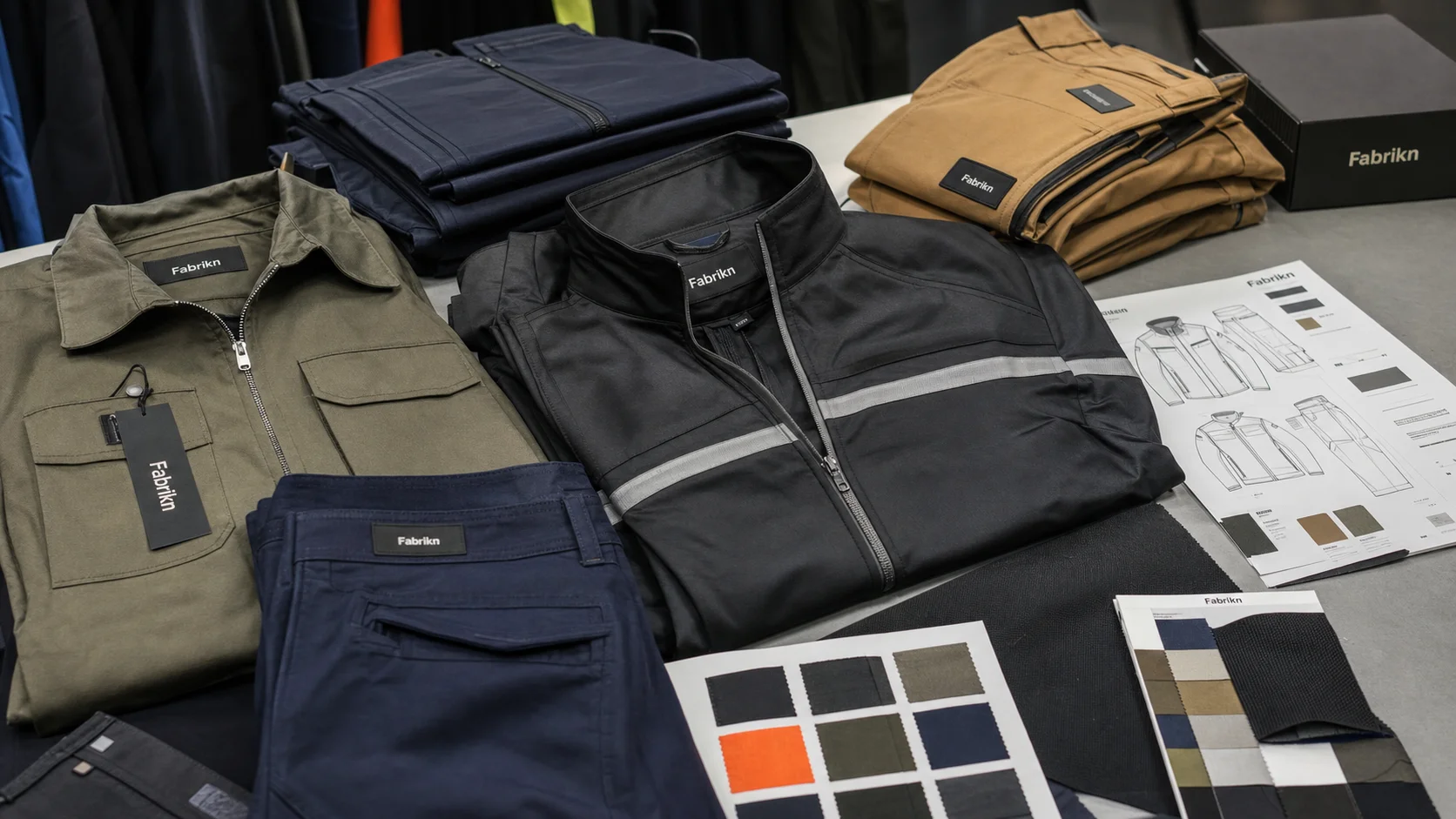
Fashion Brand Factory Audit Checklist China with checks for samples, fit, MOQ, QC evidence, pricing terms, and delivery risk.
Fast answer: Fashion Brand Factory Audit Checklist China: Samples, MOQ, QC, and Lead Time should be judged by production evidence, not by a generic sourcing promise. The buyer needs sample proof, cost breakdowns, QC checkpoints, and delivery buffers in writing.
Ask for recent sample photos, measurement tolerances, fabric or print test assumptions, decoration test notes, packing examples, and a named inspection checkpoint. These details show whether the team can repeat an approved sample at bulk volume.
Separate garment cost, decoration, labels, packaging, sampling, testing, freight, and rush charges. When every cost line is visible, it becomes easier to reduce colorways, adjust size depth, or reserve more time for sampling.
If you are sourcing apparel in China, a factory audit is one of the most important steps before placing a serious production order. A strong audit helps fashion brands reduce quality risks, protect timelines, verify compliance, and build better supplier relationships. For brands working on private label collections, seasonal drops, uniforms, or scaled retail programs, a structured fashion brand factory audit checklist China buyers can rely on is essential (and yes, it saves a lot of painful back-and-forth later). In practical terms, many mid-size apparel orders in China still land around $2.50-4.00 per unit at 500 MOQ for basic tees or simple woven styles, while more complex washed, embroidered, or technical garments can move far above that depending on fabric and trim package.
This guide explains what to inspect during a factory audit, why each checkpoint matters, and how to use the results to make smarter sourcing decisions. Whether you are evaluating a new vendor or re-auditing an existing partner, this practical business tips article will help you approach factory assessment with confidence. In my experience, the best audits are the ones that tell you what the factory is really like, not just what they want you to see on the day. It also helps to know the realistic production window up front: sample approval to bulk delivery often takes 18-22 business days for simple cut-and-sew programs, but 30-45 business days is more typical once you add custom dyeing, embroidery, washing, or complex packaging.
A factory audit is more than a box-checking exercise. It is a practical risk management tool that gives your brand visibility into how a supplier actually operates. On paper, many factories can look similar. In reality, the difference between a reliable production partner and a risky one often shows up in labor practices, process controls, technical capability, communication speed, and consistency across orders. I have seen factories with great sales decks and polished samples fall apart the moment production starts (usually right when the timeline gets tight). The strongest partners are usually the ones with repeatable systems, not just impressive showrooms in Guangzhou or a sales office that looks polished on WeChat.
For fashion businesses, the stakes are especially high. Apparel products are sensitive to fabric quality, stitching accuracy, trim consistency, fit standards, and finishing details. A small issue at the factory level can lead to large-scale returns, damaged brand reputation, and lost sales. That is why a factory audit is not just for large retailers. It is equally valuable for growing brands that need dependable production partners in China. Honestly, this approach works better because it catches problems when they are still cheap to fix. Brands comparing suppliers in Guangzhou, Dhaka, Ho Chi Minh City, or Istanbul often find similar price points on quotes, but very different results once they inspect QC systems, machine maintenance, and compliance documents.
A well-structured audit can help you:
Not every sourcing situation needs the same level of inspection, but there are several moments when an audit is especially important.
If you are working with a new supplier, audit before placing a production order. This is the best way to validate whether the factory is suitable for your product line. For example, a factory that can make 3,000-8,000 units per month of basic T-shirts may not be the right fit for a 1,500-piece jacket program requiring bonded seams, waterproof zippers, and heat-sealed tape.
A factory that produces knitwear may not be ideal for tailored garments, performance wear, or children’s clothing. If your collection changes, audit again to confirm technical capability. Ask whether they work with 180-260 GSM cotton jersey, 10-14 oz denim, 120-160 GSM viscose woven, or recycled polyester knits, and whether they have the right machines for each category.
If you have already experienced defects, late delivery, inconsistent sizing, or communication problems, a re-audit can show whether the factory has improved.
Once a brand moves from small runs to repeat orders or larger programs, factory capacity and process control become even more important. If your MOQ grows from 500 pieces to 5,000 pieces, you need to confirm line balancing, operator training, and whether the factory has enough lockstitch, overlock, flatlock, bartack, and buttonhole machines to keep pace.
Even long-term partners should be reviewed periodically. Business conditions, personnel, and processes can change over time (more often than people like to admit).
The following checklist can be used during an onsite visit, third-party audit, or remote supplier evaluation. It is designed for fashion brands sourcing in China and can be adapted for different product types and business sizes. I have seen factories where everything looked fine until you asked for records, and suddenly the room got very quiet. A well-run supplier should be able to show batch records, inspection logs, and a production calendar without scrambling for paperwork.
Start with the basics. Confirm the factory is a legally registered business and that the company name matches the entity used for quotations, contracts, and bank payments. This protects you from trading with a middleman who is not the actual manufacturer.
Not all apparel factories are equal. A strong factory audit should verify that the supplier has direct experience with your fabric type, construction method, embellishment style, and quality standards. If your product uses 100% organic cotton jersey, recycled polyester fleece, or rayon-linen blends, ask for past orders, fabric mill references, and finished goods photos from similar programs.
Capacity is a critical factor, especially for brands that run seasonal launches or time-sensitive drops. Ask how many lines, operators, and machines are available, and whether the factory has the flexibility to handle your forecast. A typical 1-line workshop may handle 800-1,500 basic pieces per day, while a 5-10 line factory with good layout and trained operators may support 20,000-50,000 pieces per month depending on product mix.
Inspect whether the factory has the proper equipment for your garments. The right machines improve efficiency and reduce defects. Outdated or poorly maintained equipment can slow down production and affect quality. For apparel, common equipment may include Juki or Brother lockstitch machines, overlock sergers, flatlock machines for activewear, Kansai waistband machines, bartack machines for reinforcement, automatic pocket setters, digital fabric cutters, heat presses, and steam ironing tables.
For fashion brands, fabric and trim control is often where problems begin. Audit the factory’s material receiving and inspection process to make sure goods are checked before production starts. In my experience, this is where a lot of “minor” issues quietly become major ones. Look for shade band control, roll mapping, needle detection for finished goods, and lot-based traceability for fabrics, zippers, interlinings, and prints.
A professional factory should have a clear sample development workflow. This stage affects communication, lead times, and whether the final bulk product matches the approved sample. Ask how they handle first samples, fit samples, PPS, and TOP samples, and whether they can turnaround a basic sample in 5-7 business days or a more complex sample in 10-14 business days.
A reliable fashion factory should not depend only on final inspection. Quality should be checked throughout the production process to catch issues early. Honestly, this is one of those areas where a factory either has a system or just has hope (and hope is not a process). Strong operations usually include inline checks at cutting, sewing, finishing, metal detection, and packing, plus a final AQL inspection before shipment.
Quality in apparel is often about consistency rather than perfection in one sample. During a factory audit, inspect stitching, seam integrity, finishing, pressing, and trimming across multiple garments. For denim, check topstitch tension and wash consistency; for knits, check seam waviness and shrinkage; for woven shirts, inspect collar points, placket alignment, and button spacing.
Fashion brands must pay close attention to size variation. Even a factory with strong manufacturing skills can fail if it does not manage grading and measurement control properly. Confirm that the factory keeps measurement charts at each stage and has trained QC staff using calibrated tape measures, spec sheets, and size tolerance limits.
Packaging affects both brand presentation and product protection. A factory audit should confirm that labels, hangtags, polybags, cartons, and shipping marks follow your specifications exactly. Check whether they can handle barcode stickers, size stickers, tissue paper, folding standards, and carton drop protection for e-commerce or retail requirements.
Compliance is not a marketing extra; it is a core sourcing requirement. Your audit should verify both legal compliance and any certifications the factory claims to hold. If a supplier says they are certified, ask to see the certificate number, scope, validity dates, and issuing body. Real documentation matters more than verbal assurances. Common third-party standards in apparel include GOTS for organic textiles, OEKO-TEX Standard 100 for harmful substance testing, WRAP for socially compliant production, BSCI for supply chain social audits, and GRS for recycled materials. A factory producing organic cotton T-shirts in Guangzhou, for example, should be able to show GOTS scope details if they are truly certified, not just mention the logo on a brochure.
Look beyond polished interview answers. Assess whether the factory appears safe, organized, and well-managed. Check fire exits, ventilation, lighting, sanitation, machine guarding, overtime records, and dormitory conditions if applicable. Brands sourcing from China should also compare standards with other production hubs such as Dhaka, Ho Chi Minh City, or Istanbul, where labor compliance expectations may differ by program and market, but the same core checks still apply.
Environmental management is increasingly important for fashion brands, especially those using dyed fabrics, washed denim, or synthetic blends. Ask how wastewater, chemical storage, fabric waste, and packaging scrap are handled. If the factory works with recycled polyester, nylon, or cotton recycling inputs, ask for GRS documentation and input-output traceability records.
Do not treat certifications as a substitute for a real audit, but do use them as part of the overall evaluation. Verify that the certification matches the factory location and product scope. A supplier in China may carry OEKO-TEX Standard 100 for certain materials, while a knitwear partner in Istanbul or a denim specialist in Dhaka may also hold WRAP, BSCI, or GRS depending on their export setup and customer base.
Good factories communicate clearly and quickly. During an audit, assess how the factory handles questions, document requests, and problem-solving. A supplier that gives precise answers about needle counts, shrinkage rates, or packing specs is usually more reliable than one that only says “no problem” to everything. The best teams reply within 24 hours, provide updated production photos, and can explain why a delay happened instead of pretending it did not.
Measure how quickly the factory responds to emails, samples, artwork changes, and production issues. Clear communication is a strong indicator of operational discipline.
Factories that are serious about doing business should be willing to show production records, inspection logs, and compliance documents. If the response is evasive, take note.
Some warning signs are easy to miss if you only look at samples. Watch for missing records, inconsistent answers, dirty production areas, untagged fabric rolls, or workers unable to explain the process. If a factory refuses to clarify who owns the machines, where the sewing happens, or whether any work is subcontracted, that is a sign to pause.
To compare suppliers fairly, use a scoring system. You can assign points across categories such as legal status, capacity, quality control, compliance, communication, machinery, and lead time reliability. A simple 100-point checklist often works well, with weights adjusted to your brand priorities. For instance, a premium fashion label might give 25 points to workmanship and finishing, while a volume basics brand may care more about cost, lead time, and repeatability.
Example scoring areas:
When comparing factories, do not choose based on price alone. A quote that is $0.30 lower per unit can become much more expensive if it comes with poor defect rates, missed delivery windows, or rework charges. A stronger supplier in Guangzhou may quote slightly higher than one in a secondary district, but if they have stable sewing lines, proper inline QC, and reliable final inspection, the total landed cost is often lower.
Here are a few practical tips that can make your sourcing program smoother:
It also helps to benchmark across regions. Guangzhou is often strong for speed and broad category coverage, Dhaka is widely used for large-volume knit and woven programs, Ho Chi Minh City is known for certain garment categories with export discipline, and Istanbul is often chosen for faster access to European markets and shorter transit times. If you are comparing suppliers across these locations, check the same criteria: machinery, QC systems, certifications, and true capacity—not just the sample room.
Many fashion brands prefer to work with a professional manufacturing partner or sourcing team because it shortens the learning curve. A good partner can help evaluate factories, translate technical requirements, negotiate realistic MOQs, and manage audit findings. This is especially useful when you are sourcing from multiple regions or managing different product types such as jersey basics, woven blouses, activewear, or outerwear.
A strong partner also helps with practical details like fabric testing, trim sourcing, wash approvals, and pre-shipment inspection. If you are coordinating production across Guangzhou, Dhaka, Ho Chi Minh City, or Istanbul, having one process for audit scoring and one standard for compliance review keeps your sourcing program far more organized.
Use these adjacent sourcing guides to compare supplier capability, costing, and production planning before you brief a factory.
For production planning, review Fabrikn services or contact the team through the sourcing brief form.
A strong checklist should include legal status, product expertise, capacity, machinery, material control, sampling, quality systems, compliance, communication, and certification verification.
For simple programs, 18-22 business days is possible after sample approval and material readiness. More complex styles, larger orders, or special finishing can take 30-45 business days or longer.
Common apparel certifications include GOTS, OEKO-TEX Standard 100, WRAP, BSCI, and GRS. Always verify the certificate scope, validity, and factory name.
Depending on the product, look for lockstitch, overlock, flatlock, bartack, buttonhole, button-sew, coverstitch, automatic cutting, heat press, embroidery, and finishing equipment.
Trustworthy factories are transparent, document-driven, responsive, and consistent. They can explain their process, show records, and back up claims with real evidence.