
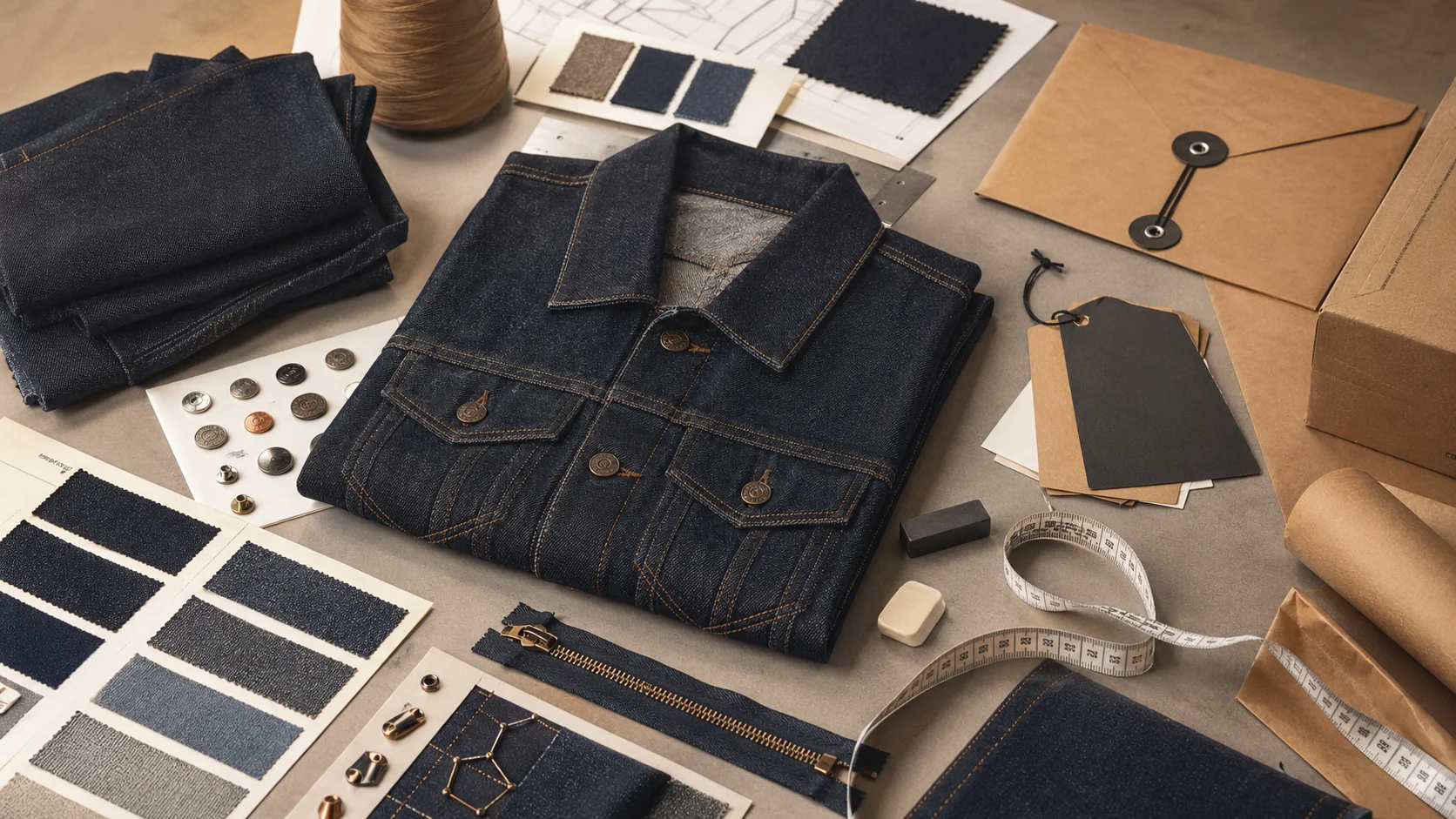
Fashion Brand Product Assortment Planning compared by sample evidence, fabric or trim specs, MOQ, AQL terms, cost lines, delivery timing, and rework...
Fast answer: Fashion Brand Product Assortment Planning: Tech Pack, Sample Gate, MOQ, and QC Terms should be judged by production evidence, not by a generic sourcing promise. The buyer needs sample proof, cost breakdowns, QC checkpoints, and delivery buffers in writing.
Ask for recent sample photos, measurement tolerances, fabric or print test assumptions, decoration test notes, packing examples, and a named inspection checkpoint. These details show whether the team can repeat an approved sample at bulk volume.
Separate garment cost, decoration, labels, packaging, sampling, testing, freight, and rush charges. Clear cost lines make it easier to reduce colorways, adjust size depth, or reserve more time for sampling.
If you run a fashion brand, one of the most important decisions you make every season is what products to offer, in what quantities, and in which styles, sizes, colors, and price points. That process is called fashion brand product assortment planning, and it has a direct impact on sell-through, margin, brand positioning, inventory health, and customer loyalty.
A strong assortment does more than fill a collection. It creates a balanced offering that gives customers clear reasons to buy, supports your brand identity, and makes your business easier to manage. A weak assortment, on the other hand, can leave you with too many similar products, poor stock allocation, and missed revenue opportunities.
In this guide, we’ll break down how fashion brands can build a winning product mix, from understanding customer demand to balancing core and trend items. Whether you are launching a new label or refining an established line, this article will help you approach assortment planning with more confidence and strategy.
Fashion brand product assortment planning is the process of deciding which products a brand will sell within a defined period, market, or sales channel. It includes decisions about product categories, silhouettes, colors, sizes, materials, price tiers, and volume allocation.
In practical terms, assortment planning answers questions like:
For fashion brands, assortment planning is not only about maximizing choice. It is about creating the right choice. Too many options can overwhelm customers and inflate inventory risk. Too few options can limit your appeal and reduce basket size. The goal is to design a collection that feels complete, coherent, and commercially strong.
Fashion is a fast-moving industry where consumer preferences shift quickly. Trends rise and fall, seasons change, and customer expectations continue to evolve. That makes assortment planning one of the most strategic parts of brand management.
A thoughtful product assortment can help your business in several ways:
For growing fashion labels, assortment planning also affects production efficiency. If the line is too fragmented, manufacturing can become expensive and complex. If the line is too narrow, you may miss opportunities to reach different customer segments. The best assortment is one that reflects both market demand and operational reality.
To build a strong assortment, fashion brands need to think beyond individual products and focus on the structure of the entire offering. A winning mix usually includes the following components.
Core products are the items customers expect from your brand season after season. These may include staple t-shirts, classic trousers, everyday dresses, or signature outerwear silhouettes. Core styles provide consistency and often drive repeat purchases.
These products usually have several advantages:
Trend items bring freshness and excitement to the collection. They may be inspired by runway directions, social media trends, cultural moments, or seasonal fashion movements. Trend-led products help attract attention and create urgency.
Because trends are less predictable, they should usually be planned in controlled quantities. They are important for generating buzz, but they should not overwhelm the assortment or weaken your core offer.
A healthy assortment often includes products across multiple price tiers. Entry-level items can help bring new customers into the brand. Mid-range products often represent the bulk of sales. Premium or elevated pieces can support margin and strengthen brand perception.
This pricing structure allows customers to trade up within the brand and gives you flexibility in serving different spending levels.
Fashion brands should make sure categories are balanced according to customer demand. For example, a womenswear brand may need a mix of tops, bottoms, dresses, knitwear, and outerwear. A menswear brand may need a balanced spread of tees, shirts, trousers, layering pieces, and accessories.
Category balance prevents overreliance on one product type and helps create a more complete shopping experience.
A strong assortment is not only about style count. It also depends on color strategy and size distribution. A collection may have too many similar colorways or too few options in high-demand sizes. Both can hurt sales.
Brands should use sales data, customer feedback, and fit knowledge to refine these choices season by season.
Fabric affects comfort, quality, price, and production lead times. A good assortment includes the right mix of materials for the season and the customer. For example, lightweight breathable fabrics may be important for summer, while heavier knits and structured materials matter in colder periods.
If you need support developing materials that align with your product mix, explore Fabrikn’s services to see how production planning and manufacturing support can help.
Building a winning assortment requires both creative thinking and commercial discipline. Here is a practical step-by-step process fashion brands can follow.
Your assortment should express what your brand stands for. Before deciding on styles, clarify your positioning. Are you premium minimal, streetwear-driven, contemporary casual, performance-focused, sustainable, or occasion-led?
Your product mix should reinforce that positioning at every touchpoint. A clear brand identity makes assortment planning much easier because it narrows the range of suitable products.
Assortment planning should always start with customer insight. Look at who buys from you, what they buy, when they buy, and what they are still looking for. Segment your audience by age, lifestyle, location, spending habits, and purchase frequency.
Useful customer questions include:
The more clearly you understand your customer, the easier it becomes to build a relevant assortment.
Past performance is one of the most valuable tools in assortment planning. Review sales by style, color, size, category, and channel. Look for top sellers, slow movers, return patterns, and markdown-heavy products.
This analysis helps you identify which products should be repeated, refined, expanded, or retired. However, do not rely only on past sales. Fashion brands must also leave room for innovation and trend response.
Assortment architecture is the framework that organizes your collection. It defines how many styles to include in each category, how much depth each style gets, and how your products are distributed across price tiers and seasons.
For example, a collection may include:
This is not a fixed formula. The ideal balance depends on your brand, customer, and market position. The key is to make decisions intentionally rather than by habit.
Once the overall structure is set, move into category-level planning. Decide how many styles, colors, and sizes each category should contain. Then translate those decisions into SKU-level planning.
This is where assortment planning becomes operational. Each SKU should have a clear role in the line. If a style does not contribute to customer needs, brand direction, or financial goals, it may not belong in the collection.
Not every product should be sold everywhere. A style that works well in e-commerce may not be ideal for wholesale. A premium capsule may perform better through direct-to-consumer channels than in a broad retail environment.
Channel-specific assortment planning helps improve efficiency and reduce channel conflict. It also allows you to tailor your product mix to each audience.
Fashion markets can change quickly, so your assortment should not be completely rigid. Leave room for replenishment, late-stage adjustments, and fast-turn responses to demand signals.
Brands that maintain some flexibility are better positioned to react to best sellers, replace weak styles, and capture emerging opportunities.
Even the best assortment strategy can fail if it is too complicated to manufacture. Production planning should be realistic, especially for small and mid-sized fashion brands. Consider minimum order quantities, lead times, fabric availability, sampling complexity, and factory capabilities.
If you are still shaping your production roadmap, it may help to speak with a manufacturer early in the process. You can contact us to discuss how assortment planning and production alignment can support your next collection.
Many fashion brands struggle with assortment planning because they focus too much on individual designs and not enough on the total mix. Here are some of the most common mistakes to avoid.
Repeating nearly identical silhouettes in different colors or details can create internal competition. Instead of expanding choice, it often confuses customers and dilutes sell-through.
Assortments built purely on creative intuition can miss the mark commercially. Successful planning combines creativity with evidence.
Trying to serve every customer can make a collection too broad and unfocused. A more curated assortment usually performs better than an overly large one.
If the most demanded sizes are understocked, even a strong design can underperform. Accurate size planning is critical to sales performance.
Brands often struggle with the balance between dependable core items and exciting trend pieces. Too many basics can feel boring. Too many trends can feel unstable. The best assortment usually combines both.
A product may look great on paper but still hurt profitability if production costs are too high. Assortment planning should always include margin analysis.
Data should guide, not replace, brand judgment. When used well, it makes assortment planning more accurate and repeatable.
Important data points include:
Data can reveal which styles deserve deeper investment and which ones should be adjusted. It can also show whether a product is popular because of its silhouette, fabric, price, or color. These insights make assortment planning more strategic over time.
For growing brands, even a simple data process can make a major difference. Start by reviewing season performance after each launch and build a repeatable review framework for future collections.
Assortment planning and manufacturing are closely connected. A great line plan is only effective if it can be produced efficiently, on time, and at the expected quality level.
Working with the right manufacturing partner can help you:
Manufacturing support is especially important when your assortment includes multiple fabrics, fits, or construction methods. Early collaboration can prevent costly design changes later in the process.
If you want to understand how Fabrikn supports fashion brands through development and production, visit our about us page for more context on our approach.
Assortment planning changes depending on season and sales channel. A winter collection has different needs than a summer collection. A wholesale assortment may require different depth than a direct-to-consumer launch.
Each season should reflect both climate and consumer intent. For example:
Seasonal assortment planning also helps you coordinate launch timing, sample readiness, and inventory flow.
Different channels serve different shopping behaviors. E-commerce may reward novelty and breadth. Wholesale may prioritize commercial reliability. Retail may need a tight, visually balanced edit. A strong assortment respects these differences instead of applying a one-size-fits-all model.
Fashion brand product assortment planning is both an art and a science. It requires creative vision, customer understanding, financial discipline, and production awareness. When done well, it helps a brand become more relevant, more profitable, and more scalable.
The most successful fashion assortments are not the largest. They are the most intentional. They give customers a clear reason to engage, buy, and return. They create harmony between core products and newness, between brand identity and market demand, and between design ambition and manufacturing reality.
As you refine your next collection, focus on clarity, balance, and flexibility. Build from customer data, but leave space for innovation. Protect your core, but make room for excitement. And always make sure your product mix supports the business you want to grow.
Get a free quote from Fabrikn — your trusted B2B clothing manufacturer with 10+ years of experience. MOQ as low as 200 pieces.
Get a Free Quote →It is the process of choosing which products, categories, sizes, colors, and price points a fashion brand will offer in a collection or selling period.
It helps brands improve sell-through, reduce inventory risk, support margin, and create a more consistent customer experience.
There is no universal number. The right size depends on brand positioning, customer demand, production capacity, and sales channels.
Core products are repeatable, dependable items customers expect from the brand. Trend products are seasonal or fashion-forward styles designed to create excitement and attract attention.
Data helps brands understand which styles, categories, colors, and sizes perform best, making future collection decisions more accurate and profitable.
Manufacturing capabilities, lead times, costs, and minimum order quantities all affect what can realistically be included in a collection.
Yes. Fabrikn works with fashion brands to support manufacturing and production planning. Learn more on our services page or contact us to discuss your needs.