
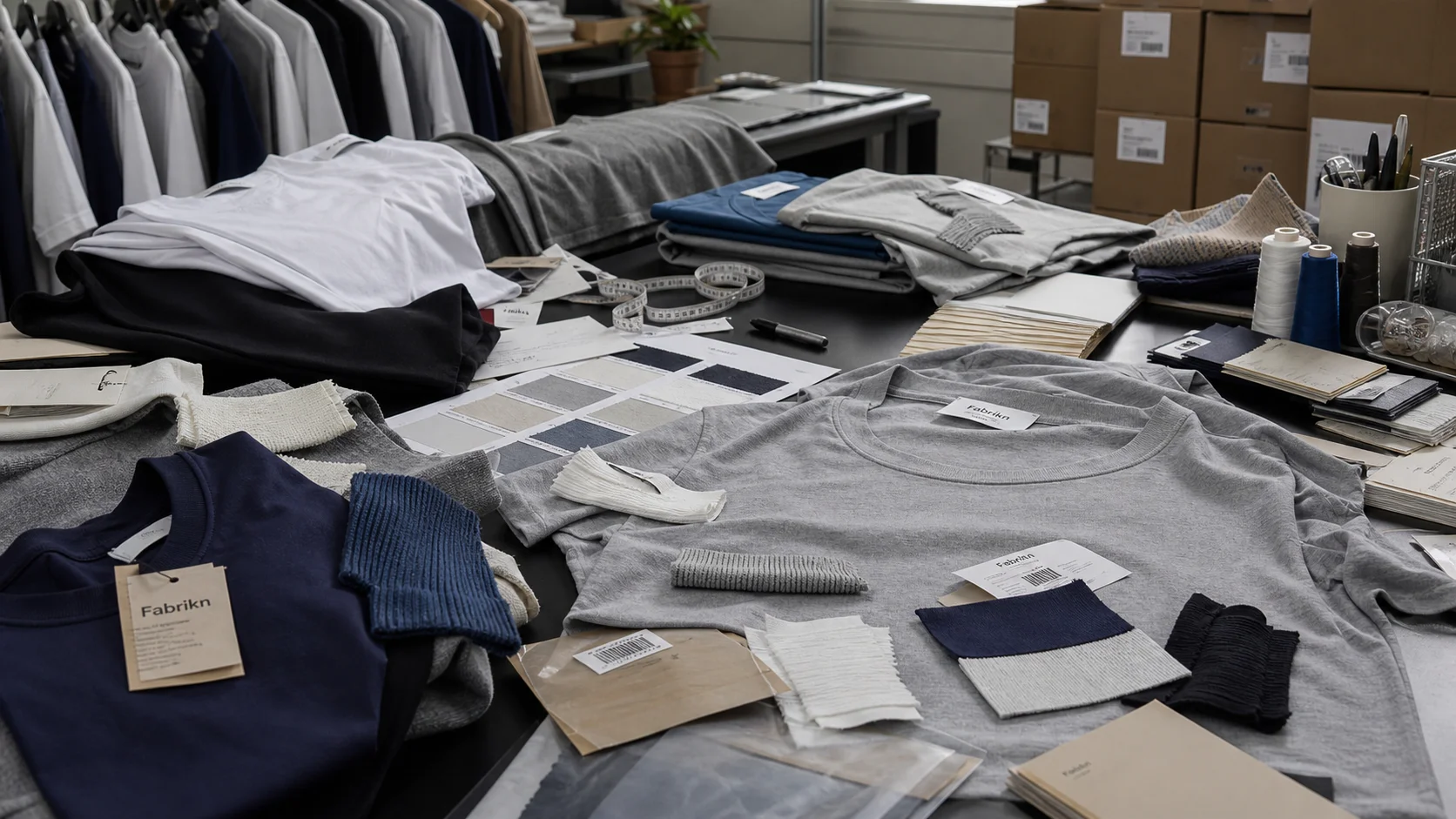
Fashion Brand Supplier Due Diligence Checklist with checks for samples, fit, MOQ, QC evidence, pricing terms, and delivery risk.
Fast answer: Fashion Brand Supplier Due Diligence Checklist: Samples, Cost Lines, QC, and Delivery Risk should be judged by production evidence, not by a generic sourcing promise. The buyer needs sample proof, cost breakdowns, QC checkpoints, and delivery buffers in writing.
Ask for recent sample photos, measurement tolerances, fabric or print test assumptions, decoration test notes, packing examples, and a named inspection checkpoint. These details show whether the team can repeat an approved sample at bulk volume.
Separate garment cost, decoration, labels, packaging, sampling, testing, freight, and rush charges. When every cost line is visible, it becomes easier to reduce colorways, adjust size depth, or reserve more time for sampling.
Choosing the right supplier can make or break a fashion brand. A strong partner helps you protect product quality, delivery timelines, margins, brand reputation, and compliance. A weak one can trigger missed launches, inconsistent sizing, customer complaints, hidden costs, and long-term operational risk. That is why a structured fashion brand supplier due diligence checklist is essential before you commit to production.
For growing fashion brands, due diligence is not just a procurement exercise. It is a strategic process for evaluating whether a manufacturer can support your design vision, production needs, ethical standards, and business goals. Whether you are launching a new label, scaling an established collection, or switching factories, a disciplined approach reduces risk and helps you build safer, more sustainable partnerships.
Fashion is fast, seasonal, and highly visible. A single supplier failure can affect the entire brand experience, from sampling and fit approval to final delivery and post-launch customer satisfaction. Due diligence helps you avoid surprises by assessing a supplier’s reliability before you place an order.
In practice, due diligence protects you from several common risks:
For a fashion brand, the supplier relationship is not transactional. It is operationally critical. The more complex your products, the more important it becomes to evaluate a supplier’s systems, people, and processes in detail.
If you are building a long-term manufacturing strategy, you may also want to explore Fabrikn’s services to understand how a professional manufacturing partner supports end-to-end production needs.
Before you send tech packs or request samples, define what the supplier must be able to do. This includes the product categories they handle, the production volume you need, your quality expectations, and the markets you sell into.
A useful supplier evaluation should cover these areas:
Not every supplier will be perfect in every category, but the right one should meet your priorities without exposing your business to avoidable risk.
Start with the basics. Confirm that the supplier is a legitimate business with a registered name, physical address, tax documentation, and a working website or business profile. Ask for company registration details and compare them against public records where available.
Why this matters: you need to know that the entity you are dealing with is real, traceable, and capable of entering into a formal business relationship.
Experience matters, but not only in years. A supplier may have been operating for a long time yet still be weak in your product category. Review their portfolio to see whether they have produced similar garments, fabrics, trims, or construction methods.
Ask about:
If your brand produces premium streetwear, tailored apparel, activewear, or sustainable collections, you need a supplier with relevant category experience, not just general sewing capability.
Your supplier should be able to handle both current order sizes and future growth. Capacity is not only about how many units they can make, but also whether they can maintain consistency when volume increases.
Evaluate:
Ask for a realistic capacity statement. If a factory promises everything with no details, that can be a warning sign. Good manufacturers know their limits and communicate them clearly.
Sampling is one of the most important stages in supplier due diligence. A sample shows you more than a product; it reveals the supplier’s attention to detail, pattern accuracy, sewing quality, fabric handling, and interpretation of your design requirements.
When reviewing samples, check:
If the sample misses key specifications, ask whether the issue came from materials, technical understanding, or execution. This helps you determine whether the supplier can improve or whether the problem is systemic.
Reliable quality control is essential for fashion brands. You should understand how the supplier inspects raw materials, monitors production, and checks finished garments before shipment.
Strong quality systems may include:
Ask who owns quality control inside the factory. Is there a dedicated QA team? Are inspections documented? Are rejected goods reworked or replaced? The answers can reveal how seriously the supplier takes consistency.
Compliance is a growing priority for fashion brands, especially those selling into regulated markets or working with conscious consumers. Your supplier should be able to demonstrate responsible labor practices, safe working conditions, and compliance with applicable standards.
Depending on your market and product type, this may include:
Never assume compliance. Ask for documentation. If you sell branded apparel internationally, compliance failures can damage both sales and reputation.
Many supplier problems are actually communication problems. A factory may have good equipment and fair pricing but still create delays because updates are slow, unclear, or inconsistent.
Watch for these indicators:
A supplier that communicates clearly during the inquiry stage is more likely to support you effectively during production.
Pricing should be transparent and detailed. A good quote should explain what is included, what is excluded, and how changes in materials, order quantity, or design complexity may affect cost.
Review:
Be cautious with unusually low prices. In fashion manufacturing, a price that looks too good may signal compromises in quality, materials, labor standards, or reliability.
Timelines are one of the most important parts of supplier due diligence. A delayed production run can hurt your launch and create downstream losses from missed retail windows, marketing spend, and inventory issues.
Ask for:
Reliable suppliers build realistic schedules and include contingency time. If a supplier always guarantees unusually fast turnaround, ask how they achieve it.
Fabric and trim sourcing can make a major difference to product quality, margin, and lead time. Some suppliers can source materials in-house, while others rely on outside vendors. Either model can work, as long as sourcing is controlled and consistent.
Evaluate:
Ask whether the supplier can handle your chosen fabric weight, texture, finish, and performance requirements. The wrong material can undermine an otherwise strong design.
Fashion brands invest heavily in original concepts, graphics, cuts, and product development. Your supplier should respect confidentiality and understand the value of protecting your intellectual property.
Before sharing detailed designs, ask about:
A trustworthy supplier will not hesitate to discuss confidentiality. If they avoid the topic, that is worth noting.
Your relationship should not end when the garments leave the factory. Good suppliers support issue resolution, replacement planning, and future order adjustments. This is especially important if you are working through your first production run.
Look for support with:
Long-term partnership value comes from a supplier that is willing to learn your standards and improve over time.
Due diligence is strongest when you do not rely on promises alone. Verification should be built into the process.
Use these methods:
If you are unable to visit the factory, ask for a virtual walkthrough. Video tours of production floors, storage areas, and quality control stations can help you assess whether the operation is aligned with your expectations.
Even when a supplier sounds impressive, certain warning signs should slow you down. These red flags do not always mean you should walk away immediately, but they do mean you should investigate further.
Trust your process. The purpose of due diligence is to reduce avoidable risk before it becomes expensive.
Once you have shortlisted potential suppliers, compare them using a scorecard. This prevents you from choosing based on price alone or being influenced by a polished presentation that does not translate into production reliability.
Create a simple scoring model across key criteria such as:
Score each supplier from one to five and then add comments for context. This makes the decision clearer and helps internal teams align on why one partner is stronger than another.
Asking the right questions can reveal more than a brochure or quote ever will. Use these questions during meetings, calls, or email exchanges:
Good suppliers answer clearly and confidently. They do not hide complexity; they explain it.
At Fabrikn, we understand that fashion brands need more than a vendor. They need a manufacturing partner that can help reduce risk, improve consistency, and support growth. Strong supplier due diligence is the foundation of every dependable production relationship.
If you are currently evaluating a manufacturing partner, our team can help you move from idea to production with more confidence. Learn more about our manufacturing support on the services page, or reach out through our contact-us page to start a conversation about your project.
You can also explore our about-us page to learn more about Fabrikn’s approach, values, and commitment to helping fashion brands build reliable supply chains.
The best supplier partnerships are built on clarity, verification, and shared standards. A thorough fashion brand supplier due diligence checklist helps you choose partners that can deliver quality products on time, communicate effectively, and grow with your business.
When you evaluate suppliers carefully, you protect not only your current order but your brand’s future. The time you spend on due diligence upfront can save months of production headaches later. It also creates a stronger base for more efficient sampling, better forecasting, fewer disputes, and healthier margins.
In an industry where reputation matters, safer partnerships are a competitive advantage. A well-chosen supplier gives you the confidence to focus on design, marketing, and sales while knowing the production side is in capable hands.
Get a free quote from Fabrikn — your trusted B2B clothing manufacturer with 10+ years of experience. MOQ as low as 200 pieces.
Get a Free Quote →It is a structured list of checks used to evaluate a supplier’s legitimacy, production capability, quality control, compliance, communication, pricing, and reliability before entering a manufacturing partnership.
It reduces the risk of poor quality, delays, hidden costs, compliance failures, and communication issues that can damage product launches and brand reputation.
Look for business registration details, relevant production experience, clear communication, documented quality control processes, verifiable compliance credentials, and consistent sample quality.
If possible, yes. A factory visit or virtual walkthrough can help you confirm capacity, workflow, working conditions, and quality systems. If you cannot visit, request documentation and video evidence.
Major red flags include vague answers, no documentation, unusually low pricing, slow communication, poor sample quality, refusal to sign agreements, and unclear production capacity.
Yes. The process can be scaled to fit your budget and order size, but the core checks should remain the same because risk exists at every business stage.
Most brands benefit from comparing at least three suppliers. This gives you enough data to assess quality, pricing, communication, and fit objectively.
Ask about their experience, sampling process, minimums, lead times, quality control, compliance, confidentiality policies, and whether they have handled similar garments before.