
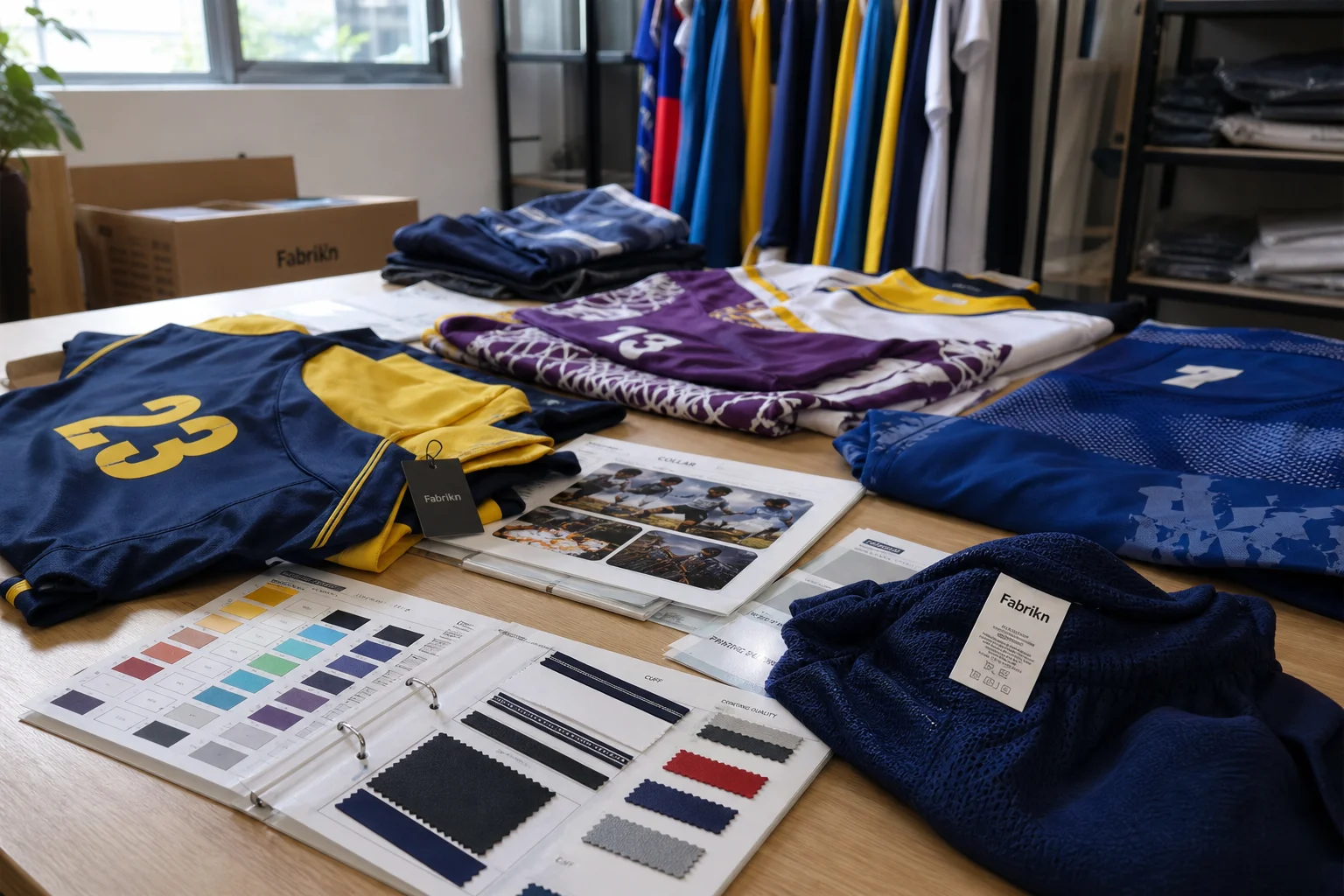
Fashion Ecommerce Retention Marketing Ideas with checks for samples, fit, MOQ, QC evidence, pricing terms, and delivery risk.
Fast answer: Fashion Ecommerce Retention Marketing Ideas: Proven Ways should be judged by production evidence, not by a generic sourcing promise. The buyer needs sample proof, cost breakdowns, QC checkpoints, and delivery buffers in writing.
Ask for recent sample photos, measurement tolerances, fabric or print test assumptions, decoration test notes, packing examples, and a named inspection checkpoint. These details show whether the team can repeat an approved sample at bulk volume.
Separate garment cost, decoration, labels, packaging, sampling, testing, freight, and rush charges. When every cost line is visible, it becomes easier to reduce colorways, adjust size depth, or reserve more time for sampling.
Fashion ecommerce retention marketing ideas matter for any brand that wants to grow sustainably in a crowded and highly competitive market. Acquiring new customers matters, but keeping existing customers engaged, satisfied, and purchasing again is often far more profitable. In fashion ecommerce, repeat buyers are especially valuable because they already know your brand, trust your product quality, and are more likely to respond to personalized offers and new collection launches.
Retention marketing is not just about sending a few discount emails after a purchase. It is a complete strategy that includes customer segmentation, personalized communication, loyalty programs, post-purchase follow-up, community building, and support experiences that encourage long-term loyalty. For fashion brands, this matters even more because style preferences, seasonal demand, fit, and trend cycles all influence buying behavior. I have seen factories where teams obsess over the product side and then treat retention like an afterthought (which, honestly, is how you end up leaving money on the table).
This article explores practical and proven fashion ecommerce retention marketing ideas that can help you increase repeat purchases, improve customer lifetime value, and turn first-time shoppers into loyal brand advocates. Whether you run a boutique clothing label, a DTC fashion startup, or a growing apparel ecommerce business, these strategies can help you keep customers coming back. In my experience, the brands that win are the ones that stay useful after the first sale. For brands sourcing production in Guangzhou, Dhaka, Ho Chi Minh City, or Istanbul, that same logic applies: the product may cost $2.50-4.00 per unit at 500 MOQ for a basic tee or $8.00-14.00 for a washed hoodie, but retention is what turns that first order into a repeat customer.
Retention marketing is the process of encouraging existing customers to buy again, stay engaged with your brand, and develop long-term loyalty. In fashion ecommerce, retention is especially valuable because customer acquisition costs are rising across digital advertising channels. Brands that rely only on paid traffic often face shrinking margins and inconsistent growth.
Repeat customers usually spend more over time, convert faster, and are less expensive to market to than new shoppers. They also provide valuable word-of-mouth marketing, reviews, and social proof, which can influence future buyers. A strong retention strategy helps fashion brands stabilize revenue, reduce dependency on ads, and build a loyal customer base that supports sustainable growth. Honestly, this approach works better because it compounds quietly in the background instead of forcing you to chase every new click like it is a fire drill.
Fashion also has a natural advantage for retention. Customers often return for seasonal refreshes, event-based purchases, wardrobe updates, accessories, and new launches. If your brand consistently creates a positive shopping experience, customers are more likely to return when they need something new. In production terms, that means delivering consistent fabric quality, stable shade matching, and reliable lead times like 18-22 business days for repeat seasonal reorder programs instead of scrambling with last-minute inline fixes.
One of the most effective fashion ecommerce retention marketing ideas is building a thoughtful post-purchase email sequence. The customer journey should continue after checkout, not end there. A strong sequence can include order confirmation, shipping updates, product care tips, styling suggestions, review requests, and cross-sell recommendations.
For example, if someone buys a jacket, you can follow up with emails featuring matching pants, seasonal layering ideas, or care instructions to extend product life. This not only improves the customer experience but also introduces additional products in a helpful, non-pushy way. Brands that make garments from ring-spun cotton jersey, brushed fleece, or 12 oz denim often win retention by sharing wash instructions, pilling-prevention tips, and fit guidance right after purchase.
Personalized recommendations are one of the most powerful ways to drive repeat purchases. Fashion shoppers are more likely to return when they see products that match their previous purchases, browsing behavior, or style profile. You can use ecommerce data to recommend complementary items, new arrivals in the same category, or products based on color, fit, or occasion.
For fashion brands, personalization can be applied across email, SMS, on-site banners, and even customer accounts. The more relevant the recommendations, the higher the chance of conversion. And yes, that means fewer random “you might also like” suggestions that make no sense (we have all seen those). On the manufacturing side, this works best when the assortment is built around repeatable blocks like 180 GSM combed-cotton tees, 320 GSM French terry hoodies, or nylon-spandex activewear sets cut on programmable automatic spreading and CNC cutting machines for size consistency.
While fashion items are not always replenishable in the same way as beauty or consumables, some categories benefit from reminders. Socks, activewear, basics, undergarments, shapewear, and seasonal essentials can all be promoted with strategic reorder campaigns. You can also trigger reminders around seasonal wardrobe refreshes, holiday events, or special occasions.
These reminders help customers buy again at the right time, increasing retention without requiring heavy discounting. For replenishable basics, a 60-90 day reminder window can perform well, especially when supported by inventory planning, pre-shrunk jersey fabric, and consistent overlock or coverstitch construction that makes the product feel dependable on repeat purchase.
Loyalty programs are a classic retention tool, but they work especially well in fashion ecommerce when structured around behavior and brand engagement. Customers can earn points for purchases, reviews, referrals, social shares, and account signups. Those points can be redeemed for discounts, early access, free shipping, or exclusive products.
To make a loyalty program successful, it should feel rewarding and easy to understand. Fashion shoppers often respond well to tiered programs that unlock better perks as they spend more. This encourages repeat purchases and increases average order value over time. It is similar to how factories incentivize better planning with lower defect rates: the system works when the reward is clear and the process is predictable.
Fashion customers love exclusivity. VIP retention campaigns can include early access to new collections, private sales, limited-edition drops, or birthday-only offers. These campaigns make returning customers feel valued and create urgency to shop again.
If your brand releases seasonal collections or trend-driven drops, offering early access to loyal customers can be a powerful incentive. It also reinforces the idea that repeat buyers receive special treatment, which strengthens emotional loyalty. Premium programs are especially effective for brands using certified production partners with GOTS cotton, OEKO-TEX Standard 100 trims, or GRS recycled polyester, because shoppers perceive the product and the experience as more trustworthy.
Not every customer should receive the same retention message. Segmentation allows you to tailor marketing based on purchase history, frequency, order value, category preference, lifecycle stage, and engagement level. This is one of the most important fashion ecommerce retention marketing ideas because fashion shoppers have very different needs.
By segmenting your audience, you reduce irrelevant messaging and improve response rates. This makes your retention marketing more efficient and more profitable. In my experience, the brands that skip segmentation end up blasting everyone with the same message and wondering why engagement tanks. The same segmentation logic applies in sourcing: a supplier in Dhaka may be ideal for cut-and-sew basics at $2.50-4.00 per unit at 500 MOQ, while an Istanbul workshop might be better for small-batch knits, premium tailoring, and quicker development samples.
A well-designed loyalty program can significantly improve customer retention in fashion ecommerce. The key is to make the rewards feel meaningful and aligned with customer behavior. In fashion, customers are often motivated by style, exclusivity, and status, not just discounts. That means your loyalty program should go beyond basic coupons.
Consider offering benefits like early product drops, free alterations, free shipping thresholds, birthday gifts, invite-only events, or styling consultations. For premium fashion brands, a tiered loyalty model can be especially effective because it creates a sense of progression and achievement.
You can also tie loyalty rewards to social actions such as leaving a review, sharing content, or referring a friend. This deepens customer engagement while increasing brand visibility. If you work with certified factories, you can even build loyalty around transparency: cite WRAP-compliant stitching lines, BSCI-audited facilities, or OEKO-TEX Standard 100 certified fabrics in customer-facing stories to strengthen trust.
Email and SMS remain two of the most effective retention channels for fashion ecommerce. They allow you to communicate directly with your audience and send timely offers, reminders, and content. The best campaigns are relevant, concise, and visually strong.
Use email for richer storytelling such as new collection launches, styling guides, customer spotlights, and seasonal lookbooks. Use SMS for time-sensitive messages like flash sales, restock alerts, abandoned cart reminders, and VIP drops. A good rule of thumb is to keep SMS highly targeted so customers do not feel over-messaged.
Fashion brands can also use automated flows such as browse abandonment, cart abandonment, win-back campaigns, and reorder prompts. These automation sequences work best when they are aligned with actual buying cycles and not sent randomly. For example, a 10-ounce brushed fleece sweatshirt may need fewer reminders than a 95/5 cotton-elastane rib tank, which can be replenished more frequently.
Personalization is one of the strongest retention levers in ecommerce because it makes the shopping experience feel more relevant. Fashion shoppers want curated products, not generic promotions. That means your recommendation engine should take into account category, size, color, seasonality, and previous purchases.
On-site personalization can include recently viewed products, “complete the look” bundles, size-specific suggestions, and localized merchandising. Email personalization can include dynamic product blocks, tailored discounts, and recommendations based on past browsing behavior.
If you sell basics or wardrobe staples, personalization can also highlight fabric and fit preferences such as organic cotton, modal, recycled polyester, relaxed fit, or slim fit. A strong product data structure makes this easier, especially when your catalog includes consistent construction details like flatlock seams, twin-needle hems, YKK zippers, and heat-transfer labels instead of scratchy sewn-in tags.
The post-purchase experience is one of the most overlooked fashion ecommerce retention marketing ideas, yet it can have a huge impact on repeat purchases. Customers remember how a brand makes them feel after the order is placed. Fast shipping, clear communication, attractive packaging, and helpful follow-up content all contribute to retention.
Consider including care cards, fit guides, return instructions, and styling inserts in the package. If a garment requires special treatment, mention it clearly: cold wash, inside-out laundering, low tumble dry, or flat drying for knitwear. This reduces complaints and helps customers get more value from the product.
Brands can also use post-purchase surveys to collect feedback on fit, quality, and style. This not only improves future marketing but also helps with product development. For example, if multiple customers say a blazer runs tight in the shoulders, that insight can be used to adjust the next sample and prevent costly returns.
User-generated content is powerful because it provides authentic social proof. Fashion shoppers want to see how products look on real people, not just models or studio shots. Encouraging customers to share photos, reviews, and styling videos can improve trust and inspire future purchases.
You can create a branded hashtag, feature customers on your website or social media, or run a monthly styling contest. Community-building campaigns work especially well for fashion because they tap into identity, self-expression, and belonging.
This strategy is even stronger when the brand story includes responsible manufacturing details. For example, a collection made with GOTS-certified organic cotton, GRS recycled polyester, and OEKO-TEX Standard 100 approved dyes can give customers a concrete reason to share and advocate for the brand.
Returns and exchanges are a critical part of fashion ecommerce retention. A poor returns experience can turn a one-time buyer into a lost customer, while a smooth and fair process can build trust. Because fit and preference are so important in fashion, customers expect flexibility.
Make your return policy easy to find and easy to understand. Offer exchanges when possible, especially for size and color swaps. If the customer service team responds quickly and resolves issues without friction, customers are far more likely to shop again.
You should also analyze return reasons to identify recurring product issues. If a dress is frequently returned for fit problems, it may indicate a pattern-making issue, grading inconsistency, or fabric behavior problem. In manufacturing, that can mean re-checking the sewing line, confirming specs on the lockstitch and overlock machines, or tightening QC at inline and final inspection.
To improve retention, you need to measure it accurately. Key metrics include repeat purchase rate, customer lifetime value, average order value, email revenue, SMS conversion rate, churn rate, and time between purchases.
Fashion brands should also monitor cohort performance so they can compare how customer groups behave over time. For example, customers acquired during a holiday campaign may retain differently from those acquired through organic social media or influencer partnerships.
Good retention marketing should lead to measurable improvements in revenue efficiency and customer engagement. If you are working with suppliers in Guangzhou, Ho Chi Minh City, Dhaka, or Istanbul, you can also track operational metrics like on-time sample delivery, fabric approval turnaround, and defect rates alongside customer retention, because product consistency and customer loyalty are closely linked. A well-run factory may hold an AQL 2.5 final inspection standard and still fail retention if the handfeel, fit, or trim quality changes between reorders.
One common mistake is over-discounting. While discounts can help stimulate repeat purchases, relying on them too heavily can train customers to wait for sales. Another mistake is sending too many generic messages that are not relevant to the customer’s behavior or preferences.
Brands also make the mistake of ignoring post-purchase engagement. If the customer hears from you only when you want another sale, the relationship feels transactional. Retention works best when it includes education, inspiration, and service.
Finally, some brands do not connect product quality to retention. In fashion, a great retention strategy cannot fully compensate for poor stitching, inconsistent sizing, weak elastics, or fabrics that fail after a few washes. If you want customers to come back, the garment needs to perform as well as the marketing promises.
Fabrikn can support fashion brands that want to improve retention by building better products and more reliable sourcing systems behind the scenes. That includes helping teams source from factories in Guangzhou, Dhaka, Ho Chi Minh City, and Istanbul; comparing pricing structures like $2.50-4.00 per unit at 500 MOQ for basic tees or $12.00-18.00 per unit for premium outerwear; and aligning production with the right certifications such as GOTS, OEKO-TEX Standard 100, WRAP, BSCI, and GRS.
We also help brands match the right materials and processes to the right product category, whether that means organic cotton jersey, recycled polyester tricot, brushed French terry, rib knit, viscose blends, or stretch woven fabrics. On the factory floor, details like automatic cutting machines, computer-controlled spreading, flatlock and overlock sewing, bar-tacking, embroidery, screen printing, heat transfer, and garment washing can make a real difference in fit, handfeel, and repeat purchase satisfaction.
In other words, if your customers love the product, retention marketing has a much better chance of working. Good emails can bring people back once, but good manufacturing brings them back repeatedly.
Use these adjacent sourcing guides to compare supplier capability, costing, and production planning before you brief a factory.
For production planning, review Fabrikn services or contact the team through the sourcing brief form.
What is fashion ecommerce retention marketing?It is the set of strategies used to encourage existing customers to return, buy again, and stay connected with your brand over time.
Which retention channels work best for fashion brands?Email, SMS, loyalty programs, post-purchase follow-up, and personalized product recommendations are among the most effective channels.
How often should fashion brands send retention messages?It depends on the customer segment, but most brands see better results when messages are timely, relevant, and tied to real shopping behavior rather than a fixed blast schedule.
Can retention improve profitability?Yes. Repeat customers usually cost less to market to, spend more over time, and help increase customer lifetime value.
What manufacturing factors influence retention?Fit consistency, fabric quality, reliable stitching, clear care instructions, and on-time delivery all affect whether customers come back for another purchase.