
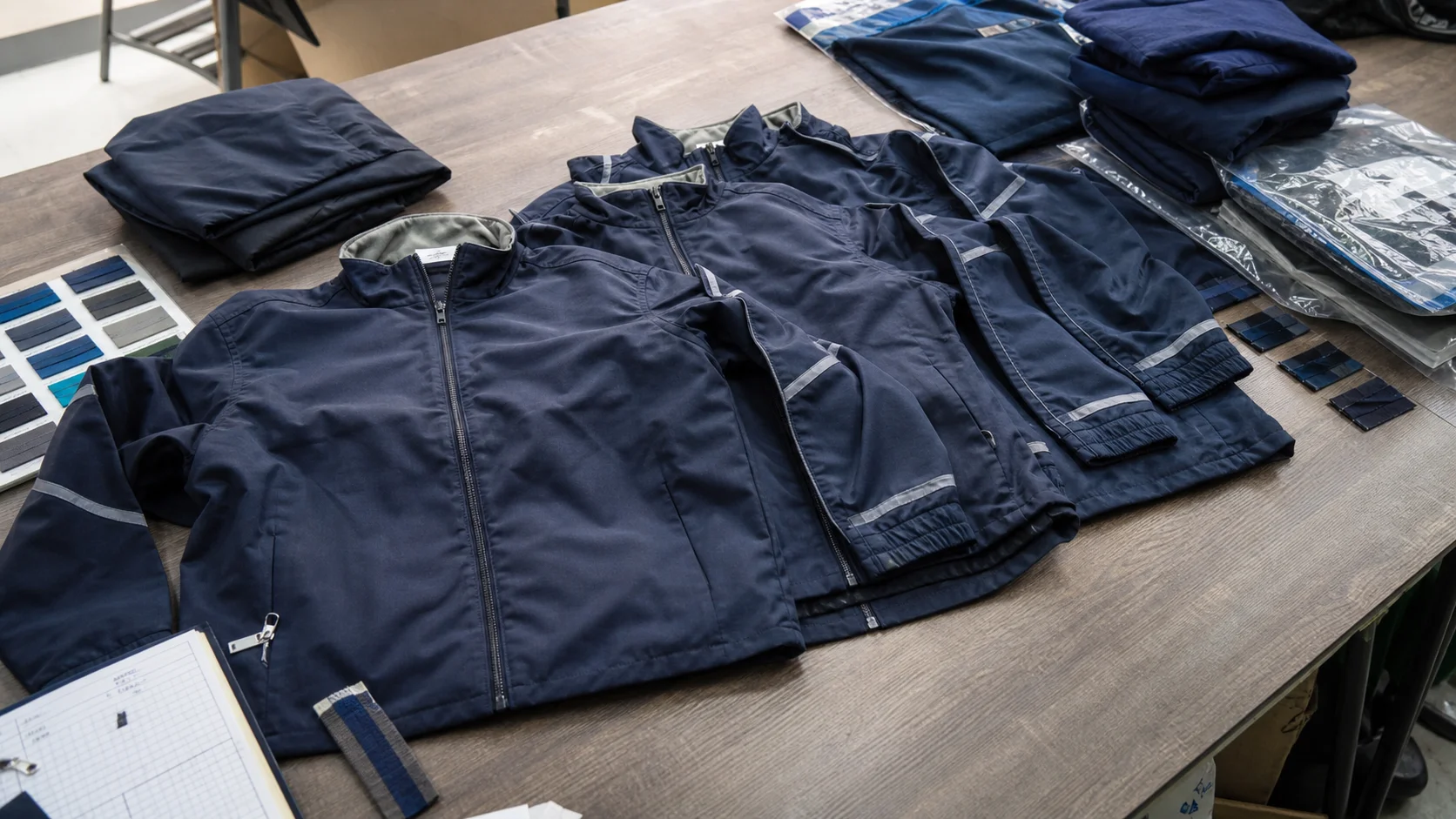
A focused outline for resort uniform buyers evaluating field jacket order size grading, fit consistency, and production review points before placing bulk...
For resort uniform programs, field jacket size grading is not just a technical pattern question. It affects guest-facing appearance, staff comfort, replacement efficiency, and overall uniform consistency across a team that may include different body types, departments, and climate needs. Buyers who treat grading as a simple S/M/L extension often run into avoidable fit problems, high exchange rates, and uneven brand presentation.
This review is written for sourcing teams, uniform buyers, and procurement managers evaluating field jacket order size grading for resort use. The focus is practical: how grading should be reviewed, what affects fit and cost, where the risks sit, and what to ask before confirming production. If you are building a resort outerwear program, the grading chart deserves the same attention as the shell fabric, zipper spec, and trim package.
Field Jacket Size Grading Review for Buyers - Fabrikn production reference
Size grading is the process of increasing or decreasing a base pattern to create a full range of sizes while keeping the jacket’s proportions balanced. In a field jacket, that means more than body width. The grader has to manage chest circumference, shoulder width, sleeve length, bicep ease, body length, hem sweep, collar balance, pocket placement, and the way the jacket sits when zipped or layered.
A good grading plan keeps the silhouette consistent across sizes. A weak one can make small sizes look oversized, large sizes feel restricted, or medium sizes fit well while the rest of the run becomes problematic. For resort uniforms, this is especially important because outerwear often sits over shirts, polos, or lightweight knitwear and still needs to look polished.
Buyers should treat grading as a commercial decision as much as a technical one. A size range that is too narrow creates stock issues. A range that is too broad can raise sampling complexity, increase cutting waste, and lead to fit inconsistency if the factory does not have a disciplined grading standard.
Resort uniform programs are different from retail programs in one key respect: fit tolerance is usually lower for presentation and comfort, but expectations are broad because staff bodies vary widely across departments and seasons. A field jacket may be worn by concierge teams, security staff, transport staff, activity teams, or outdoor service personnel. The fit needs to look neat, allow movement, and layer comfortably without appearing bulky.
Temperature variation matters as well. In resort operations, a jacket may be worn in early mornings, on windy evenings, or in air-conditioned service zones. That means a buyer should review grading with the intended use in mind. A jacket that grades well for a slim fashion fit may not work for operational uniform use if the underarm and sleeve ease are too tight.
There is also the issue of replacement. Uniform programs usually need reorders over time. If the original grading is inconsistent, a later replenishment order may not match the first delivery well enough for staff continuity. That becomes a real problem when departments mix old and new stock across multiple seasons.
A practical grading review should start with the base size and the intended size range. Most buyers will begin with a men's or unisex block, then adapt it to the staff profile. In some cases, a women’s-specific block is better, especially when the uniform is fitted at the waist and hip. The base block determines how the grade will behave through the run.
These factors usually have the biggest impact:
Each of these changes the grade equation. A jacket with a structured shell and multiple pockets will behave differently from a lightweight unlined field jacket. Buyers should not assume that the same grade rules used for a softshell or bomber jacket will work here without revision.
Most field jacket programs use a conventional size range such as XS to 3XL, though some resort programs may use a narrower or broader run depending on staff demographics and budget. The correct spread depends on the intended wearers and whether the program is standardized across male and female staff or split into separate blocks.
A basic grade rule is often built around chest and body length increments, with sleeve length and shoulder width adjusted in smaller steps. In many cases, a size jump of 1 inch or 2.5 cm in width and 0.5 inch to 0.75 inch in length is a starting point, but this is not universal. The exact increments depend on the fit target, country of manufacture, and supplier pattern library.
Area Typical grading focus Buyer watchout Chest Overall circumference and ease Too tight over layers or too boxy on smaller sizes Shoulder Frame balance and sleeve hang Shoulder drift can change the whole silhouette Sleeve Length and bicep room Long sleeves or cramped upper arms lead to complaints Body length Coverage and proportion Large sizes may look too short if not adjusted properly Hem sweep Movement and layering Hem can flare unnaturally when grade is too aggressive Collar and neck Comfort and balance Neck opening must not choke or gapFor resort buyers, it is often worth reviewing the full size chart rather than focusing only on the middle size. Medium is usually the sample anchor, but the grading success of XS, XL, and 2XL tells you more about how stable the pattern really is.
A fit sample should be checked on body, over the intended underlayer, and with the intended closure method fully tested. This sounds basic, yet many buyers only inspect the garment flat on a table. A field jacket can look correct in flat measurement and still fail in wear because the shoulder angle, sleeve pitch, or armhole depth is wrong.
Focus on these points during review:
Photographs alone do not replace wear testing. A resort team often needs to reach, drive carts, bend, carry, or stand outdoors. Those movements expose fit flaws quickly. If a sample only passes a static try-on, the production risk is still high.
Buyer judgment: the best grading review is not about making every size look identical. It is about keeping proportion, comfort, and brand appearance stable enough that staff can wear the jacket with confidence across the full size run.
Fabric choice changes how the size grade behaves. A tightly woven cotton twill, brushed polyester-cotton blend, or water-resistant shell will not respond the same way as a stretch canvas or lightweight ripstop. Stiffer fabrics often need a little more functional ease, while fabrics with mechanical stretch may allow a cleaner silhouette with less extra room.
Shrinkage is another critical factor. If the fabric has not been properly pre-shrunk or tested, the grading chart may be technically correct but the delivered garment may still shift after washing. That is especially relevant for resort uniforms, where repeated laundering is normal.
Lining and trim packages also affect fit. A quilted lining adds bulk. A zipper tape with a stiff edge can change the center front balance. Elasticated cuffs can make sleeves feel shorter if the grading does not account for wrist tension. Pocket bags, storm flaps, snaps, and drawcord systems all add layers that can alter the way the jacket sits on the wearer.
Buyers should ask the supplier for the following before approving size grading:
If your resort uniform program includes embroidered logos, badge patches, or reflective elements, confirm whether those additions affect fit. Decoration position can interfere with pocket placement or reduce fabric flexibility in key areas.
MOQ for field jackets can vary widely depending on fabric, lining, and trim complexity. For custom outerwear programs, a practical range may start around 300 to 500 pieces per color or style, with some suppliers requiring higher volumes for more complex construction. Small runs are possible, but they often come with a higher unit price and fewer options for size or color customization.
Sample approval should usually move through several stages:
Lead time depends on fabric sourcing, sample revisions, and whether the factory already has a proven block for this type of jacket. A simple order may move faster if materials are in stock. A custom shell with specialized trims, special colors, or imported components will extend the timeline. Buyers should not lock opening dates or staff rollouts until the size set has been reviewed and approved.
In practical terms, grading revisions can add time. If the first fit sample is off in the shoulders or the sleeve balance is wrong, the pattern may need correction before the production size run is frozen. That delay is normal, and it is better than forcing an untested chart into bulk.
For buyers looking into supplier support, review the company’s production process and service scope at Fabrikn services, or use the contact page to discuss a specific uniform program. Background information on the company can also be checked on the about page.
Size grading problems often show up as quality issues later in the process. A jacket can pass a basic measurement audit and still create complaints after wear if the grade was poorly managed. This is why buyers should connect fit review with inspection planning.
Common risks include:
Inspection should include flat measurement checks, workmanship checks, and, where possible, wear verification on key sizes. A size set review is especially useful if the buyer is placing a larger volume order. This helps identify whether the grading formula holds at the ends of the range before full production is released.
Buyers should also watch for fabric lot variation. A change in fabric hand or shrinkage from one dye lot to another can affect the feel of the same graded size. That is a common source of confusion when multiple production rounds are involved.
A strong field jacket order starts with a clear technical brief. The more ambiguity in the spec sheet, the more likely the supplier will apply its own assumptions. That can work in your favor if the factory already understands uniform outerwear, but it can also produce inconsistent results if the order is not tightly controlled.
Before confirming the order, make sure you have:
It is also wise to think beyond the first delivery. Resort uniform buyers often need repeat orders, replacements, and size top-ups. If the grading is stable, replenishment is simple. If not, every reorder becomes a new fitting project.
Grading revisions should be treated as part of the development cycle, not as a sign of failure. A competent supplier will expect some adjustment after the first sample. The important point is whether the supplier can explain the reason for the revision and apply it consistently across the full size range.
Good communication usually includes clear measurement comments, marked-up sample photos, and a revised spec sheet. Vague notes such as “make it better” are not useful. If the chest is acceptable but the sleeve pitch is off, say so directly. If the jacket feels too short over the hip when worn, identify that point instead of asking for a general looseness change.
For complex resort programs, it can help to request a size run review before bulk approval. This is particularly valuable if the uniform will be worn by a mixed workforce or if the jacket includes multiple functional details. The extra step adds time, but it often saves money by reducing claims and replacements later.
When comparing suppliers, do not judge on price alone. A slightly higher unit cost may be justified if the factory provides better grading discipline, more reliable fit sampling, and tighter measurement control. For outerwear, those differences often matter more than the first quote suggests.
Get a free quote from Fabrikn — your trusted B2B clothing manufacturer with 10+ years of experience. MOQ as low as 200 pieces.
Get a Free Quote →Chest and shoulder balance usually matter most, because they affect both comfort and appearance. Sleeve length and armhole shape are close behind, especially for operational wear.
That depends on your staff profile and the required fit. Unisex sizing is simpler to manage, but women’s-specific or men’s-specific blocks often fit better when the workforce is clearly segmented. A mixed team may need a dual-block strategy.
MOQ often starts around 300 to 500 pieces per style or color, though it varies by supplier, fabric, and construction. More complex outerwear can require higher quantities.
Bulk failures can happen because of grading drift, fabric variation, shrinkage, or inconsistent trim placement. A fit sample only proves the sample itself works; it does not guarantee production consistency unless the full specification is locked.
Many programs need at least a proto or fit sample, then a corrected sample, and finally a pre-production sample. Some orders also need a size set sample for the smallest and largest sizes.
Yes. Embroidery, patches, and reflective elements can stiffen areas of the garment and sometimes affect pocket placement or movement. Decoration should be planned early in the grading review.
Ask for the tech pack, size chart, approved sample comments, fabric and trim specifications, tolerance limits, and a clear production approval stage. If needed, use the supplier’s contact page to clarify technical details before release.
Field jacket size grading is one of those details that only looks minor until the order is in wear. For resort uniform buyers, a disciplined grading review protects fit, reduces exchanges, and supports a cleaner staff presentation across the full size run. The best approach is simple: test the sample properly, verify the grading logic, and confirm that the production spec matches the way the garment will actually be worn.