
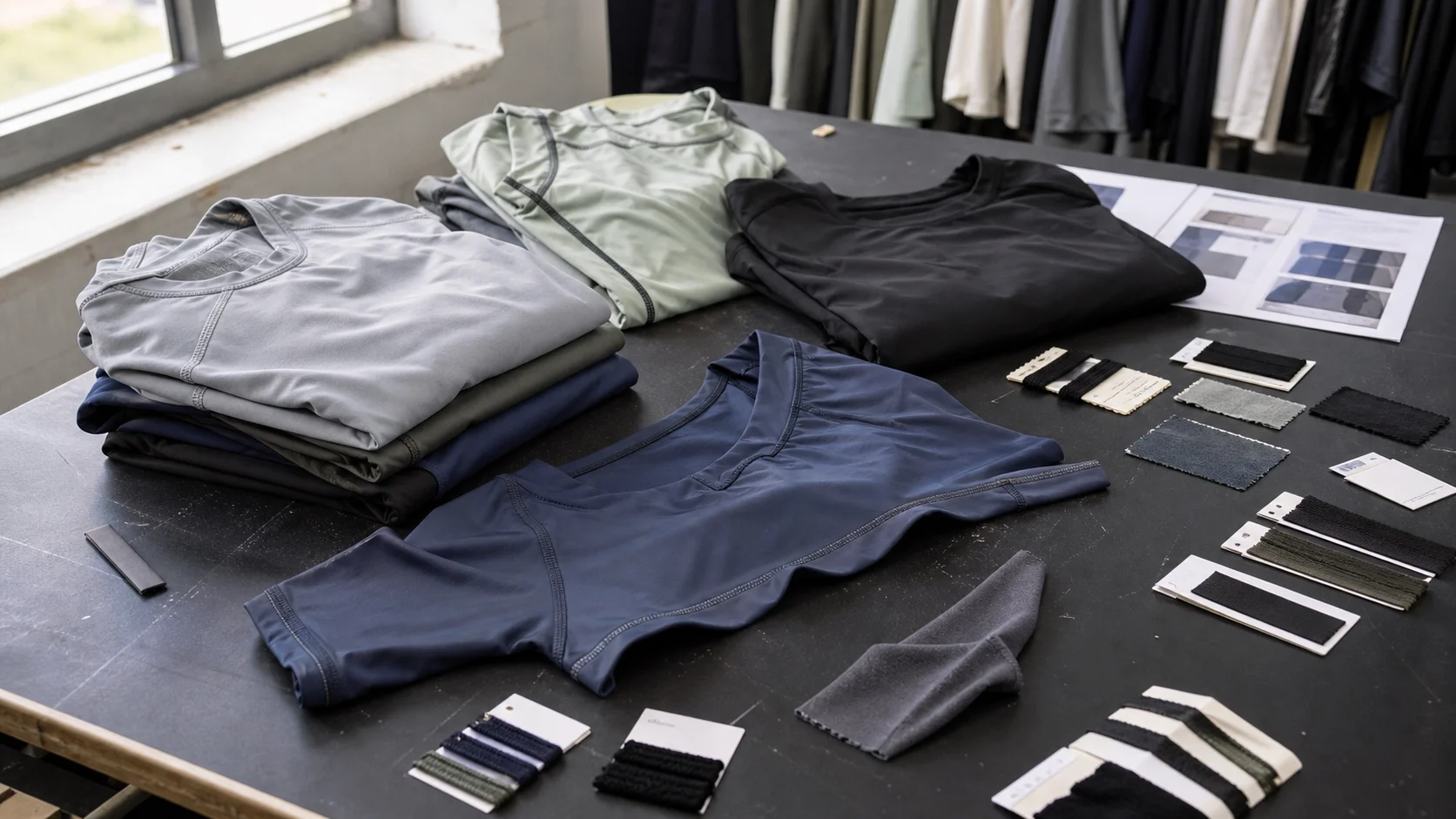
A buyer-focused outline for calculating rash guard landed costs for field service teams, including fabric specs, decoration choices, duty exposure, freight...
Rash Guard Landed Cost Guide for Field Teams - Activewear & Teamwear manufacturing guide
Field service teams buy rash guards for practical reasons: sun protection, moisture management, consistent branding, and long shift comfort. The garment may look simple on a quote sheet, but the real purchase decision is not the unit price alone. A field service teams rash guard landed cost guide should help buyers understand what the product costs once fabric, decoration, freight, duties, packaging, inspection, and delivery are included.
For activewear and teamwear buyers, this matters because field uniforms are used harder than retail promotional apparel. A technician, outdoor crew, marine service worker, landscaping supervisor, or event operations team member may wear the same garment through heat, sweat, abrasion, repeated washing, and customer-facing appointments. If the rash guard pills quickly, fades at the logo, shrinks unevenly, or feels too tight across the shoulders, the cost of replacement can exceed any savings from a cheap first order.
The right sourcing target is not “lowest FOB price.” It is the lowest reliable landed cost for a garment that meets the team’s working conditions. That requires a clear specification, realistic MOQ planning, disciplined sample approval, and an inspection plan that checks the risks most likely to affect field use.
Purchasing judgment: if the rash guard is part of a daily uniform program, treat it as workwear with activewear performance requirements, not as a giveaway shirt. A low quote can become expensive if the fabric loses recovery, the logo cracks, or sizing creates complaints across the field team.
This guide breaks down the landed cost structure for custom rash guards used by field service teams and gives buyers a practical way to compare suppliers. For brands or operators developing a wider uniform program, reviewing manufacturing support through Fabrikn services can also help frame what should be specified before supplier quotations are compared.
Landed cost is the full cost of getting finished rash guards into the buyer’s hands and ready for issue to the team. It usually includes more than the quoted garment price. The specific line items vary by country, incoterm, order size, and whether the buyer is importing directly or buying through a domestic supplier.
Cost Component What It Covers Buyer Risk Garment unit price Fabric, trims, cutting, sewing, decoration, basic packing, and factory margin Low quotes may exclude performance fabric, proper stitching, or durable decoration Sampling cost Development samples, size set samples, print strike-offs, and shipping Skipping samples increases fit, color, and logo placement risk Testing cost Colorfastness, shrinkage, UPF, fabric composition, and wash performance testing where required Untested claims can create compliance and performance disputes Freight Air, sea, courier, truck, or domestic delivery Bulky packaging and urgent timelines can sharply raise cost Duties and taxes Import duty, VAT/GST, customs processing, and brokerage fees Incorrect HS classification or undervalued paperwork can delay clearance Inspection Pre-shipment quality checks, measurement audits, carton checks, and AQL inspection Uninspected bulk goods can arrive with defects that are expensive to correct Warehousing and distribution Receiving, sorting by size, kitting, and shipping to branches or technicians Poor size allocation creates shortages in common sizesA supplier may quote EXW, FOB, CIF, DDP, or another commercial term. Buyers should not compare these as if they are the same. EXW pricing may look attractive because it excludes export handling and freight. DDP pricing may look higher because it includes delivery, duties, and clearance. The correct comparison is the final cost per usable garment delivered to the required location.
For smaller field teams, a domestic or regional supplier may provide a higher unit cost but lower coordination risk. For larger recurring programs, direct manufacturing may reduce long-term cost if the buyer can manage development, quality control, import planning, and reorder forecasting.
Rash guard costing begins with the product specification. A vague request such as “long sleeve rash guard with logo” will produce quotes that are difficult to compare. Factories may assume different fabric weights, yarns, seam types, neck constructions, print methods, and packaging standards. That makes the lowest quote unreliable.
Common rash guard fabrics include polyester-spandex and nylon-spandex blends. Polyester is often selected for sublimation printing, quick drying, and value. Nylon can feel smoother and more premium, but it may cost more and requires different decoration planning. A typical blend could be 82% polyester / 18% spandex, 88% polyester / 12% spandex, or 80% nylon / 20% spandex. The exact blend should be chosen around stretch, recovery, hand feel, print method, and durability.
For field service teams, polyester-spandex is often the practical first choice when all-over branding, color consistency, and cost control matter. Nylon-spandex can be justified when the hand feel or abrasion resistance is important, but buyers should verify decoration compatibility before committing.
Rash guard fabric commonly falls around 160-220 gsm, though heavier or lighter options exist. A lighter fabric may feel cooler and reduce unit cost, but it can become sheer when stretched, especially in pale colors. A heavier fabric can improve durability and opacity, but it may feel warmer during outdoor shifts.
For field teams working in heat, a mid-weight fabric around 180-200 gsm is often a balanced starting point. Buyers should request stretch opacity checks, especially across the chest, shoulders, and elbows. White or light grey rash guards need extra caution because transparency complaints are common when the fabric is stretched or wet.
Many field teams want UPF-rated garments. UPF 30 or UPF 50 claims should be supported by testing, not just marketing language. Fabric weight, knit structure, color, and stretch all affect sun protection. A dark, dense fabric generally performs better than a light, thin one, but testing is the only reliable basis for a claim.
If UPF labeling is part of the uniform program, build testing cost and lead time into the landed cost model. For regulated or safety-sensitive sectors, unsupported sun protection claims are not worth the savings.
Seam type matters. Flatlock seams are common in rash guards because they reduce bulk and improve comfort against the skin. Overlock seams may be cheaper, but they can rub during long wear or feel less premium. Coverstitching at cuffs and hems should be neat, elastic, and secure.
Field service buyers should specify reinforced stress points where relevant. Shoulder seams, underarm seams, cuff openings, and necklines take repeated strain. A rash guard that looks fine on a table may fail after several weeks if seam stretch and thread quality are poor.
Rash guards can be compression fit, athletic fit, or relaxed fit. Field service teams usually need movement and comfort rather than tight sports compression. If technicians wear the rash guard under a vest, harness, tool belt, or outer shirt, the fit should avoid excess fabric. If it is worn as the main visible uniform layer, the fit should still allow shoulder movement and bending.
A practical field team fit often uses a slightly relaxed athletic pattern. It should not balloon at the waist, but it should not restrict the chest, upper arms, or back. Buyers should test the sample on several body types before approving bulk production.
Trims are small cost items that can create user complaints. Neck labels can scratch. Heat transfer labels can peel if applied poorly. Hangtags may be unnecessary for internal uniform distribution. Polybags may be useful for size sorting, but excessive packaging adds cost and waste.
Specify the following clearly:
MOQ, or minimum order quantity, affects landed cost more than many buyers expect. Rash guards have fabric MOQ, color MOQ, print setup considerations, and cutting efficiency issues. A supplier may accept a small order, but the unit price will usually rise because development, setup, and production handling are spread over fewer pieces.
Typical MOQ ranges depend on the supplier model and product complexity:
Order Type Typical MOQ Range Best Use Case Stock blank with logo 25-100 pieces Small teams, urgent needs, limited customization Cut-and-sew with standard fabric 100-300 pieces per style/color Growing teams needing better fit and branding Custom color fabric 300-800 pieces per color Brand programs requiring exact color control All-over sublimation 100-500 pieces depending on supplier High-visibility branding and complex graphics Performance fabric development 500-1,500+ pieces Large recurring programs with specific technical requirementsThese ranges are not guarantees. Actual MOQ depends on factory capacity, fabric availability, dye lot minimums, print method, season, and whether the buyer can accept shared standard materials. For field service programs, order planning should start with the team size, expected turnover, damage replacement rate, seasonal needs, and size curve.
A common mistake is ordering exactly one garment per employee. That often leads to emergency reorders at higher cost. Field teams need backup stock because uniforms get damaged, lost, stained, or assigned to new hires. A practical first order often includes active headcount plus 10-20% buffer stock, with more depth in the most common sizes.
Small teams should be cautious with too many colors or logo variations. Splitting 150 units across five departments, two sleeve lengths, and men’s/women’s fits can push each variant below efficient production levels. A more cost-effective strategy is to standardize the base garment and use sleeve print, chest logo, or heat transfer identifiers for team differences.
Sampling is not a formality. It is the buyer’s chance to catch fit, decoration, color, and construction issues before hundreds or thousands of garments are made. Skipping sampling may save a few weeks, but it increases the risk of receiving bulk goods that do not work in the field.
The buyer should prepare a basic tech pack or specification sheet before requesting quotes. It should include fabric composition, weight, stretch requirement, color references, logo artwork, placement measurements, fit notes, size range, seam type, label requirements, packaging, and target delivery location.
A complete tech pack improves quote accuracy. It also reduces the chance that a supplier uses a cheaper substitute fabric or construction method without the buyer noticing until production is finished.
If the rash guard uses custom-dyed fabric, request lab dips before sample approval. If the design uses sublimation, request a print strike-off on the actual base fabric. Digital mockups are useful for layout, but they do not prove fabric color, print brightness, or hand feel.
Color should be reviewed under consistent lighting. Brand colors can shift on stretch fabrics because the yarn, knit structure, and stretch level affect appearance. Dark navy, black, safety orange, and bright blue can vary significantly between suppliers.
A fit sample checks the pattern, length, neck opening, sleeve length, shoulder width, and movement. For field teams, test the sample in realistic positions: reaching overhead, kneeling, bending, driving, carrying equipment, and wearing tool belts or safety vests where applicable.
Do not approve a rash guard only because it looks good on a flat table. Activewear fit should be evaluated on bodies and in movement.
For larger orders, a size set sample is worth the cost. It checks grading across sizes, not just the medium sample. Common problems include sleeves becoming too long in larger sizes, torso length not increasing enough, neck openings grading poorly, or compression becoming uncomfortable in plus sizes.
If the field team has a broad size range, the size set is especially important. A poor size curve can create morale problems and additional reorder cost.
The pre-production sample should use approved bulk fabric, final trims, final decoration, and final construction. This is the reference sample for production and inspection. Approval should be written, with comments recorded clearly.
Buyers should keep one approved sample and make sure the supplier keeps one as well. The inspector should compare bulk goods against this approved sample, not against a digital image or earlier prototype.
Rash guard lead time depends on the sourcing route, customization level, material availability, and logistics method. A stock blank with a simple logo can move quickly. A cut-and-sew program with custom fabric, all-over print, size set approval, and import shipping takes longer.
Stage Typical Timing What Can Delay It Quote and specification review 2-7 days Incomplete artwork, unclear fabric spec, missing size range Development sample 7-21 days Custom fabric, complex print, trim sourcing Lab dip or print strike-off 5-14 days Color matching difficulty, artwork revisions Bulk production 20-45 days Fabric knitting, dyeing, factory capacity, decoration queue Inspection and packing 2-5 days Failed inspection, measurement rework, carton relabeling Freight and delivery 3-10 days by air or 25-45+ days by sea Customs delays, port congestion, incorrect documentsFor a custom rash guard program, buyers should usually plan 8-14 weeks from specification to delivery if importing and using sea freight. Air freight can shorten transit but may damage the landed cost target. Domestic production or stock decoration can be faster, but unit costs may be higher and fabric choices may be narrower.
Peak seasons also matter. Activewear capacity can tighten before spring and summer uniform rollouts. If the garments are needed before a seasonal service period, place orders early enough to allow sample corrections. A schedule with no room for sample revisions is not a production plan; it is a gamble.
A useful landed cost model does not need to be complicated. It needs to include all predictable costs and separate one-time development costs from repeat production costs.
Use this structure when comparing suppliers:
Line Item Example Calculation Method Garment cost Unit price multiplied by order quantity Decoration setup Screen setup, print setup, sublimation artwork setup, or heat transfer setup Sample and development Total sample charges plus sample freight Testing UPF, wash, colorfastness, fiber content, or other required tests Inspection Third-party or buyer inspection cost Export and freight Origin handling, freight, insurance where applicable Import costs Duty, taxes, customs broker, clearance fees Domestic distribution Receiving, warehousing, sorting, and final deliveryThe landed cost per garment is the total of these costs divided by the number of usable garments received. The word “usable” matters. If 3% of garments fail inspection or arrive with defects, the real cost of the accepted garments rises.
Assume two suppliers quote a 500-piece long sleeve rash guard order. Supplier A offers a lower garment price but excludes inspection, testing, and delivery. Supplier B offers a higher unit price but includes better fabric, pre-production sample support, and DDP delivery.
Cost Factor Supplier A Supplier B Quoted unit price Lower Higher Fabric detail Basic polyester-spandex, limited test data Specified gsm, stretch, and UPF testing option Decoration Logo included, unclear durability Decoration method confirmed with wash guidance Sampling One sample only Fit sample and pre-production sample Freight Not included Included to delivery address Quality risk Higher Lower if inspection is properly executedThe better purchase is not automatically Supplier B, but Supplier A’s missing costs must be added before comparison. If Supplier A’s landed cost remains lower after freight, duty, inspection, and defect allowance, it may be viable. If the difference is small, the better-controlled supplier is usually the safer choice for field uniforms.
Purchasing judgment: for recurring uniform programs, a supplier that asks detailed questions about fabric, size grading, and inspection may be more valuable than one that sends the fastest low quote. Technical clarification before production is usually cheaper than defect negotiation after delivery.
Branding is one of the main reasons teams order custom rash guards. It is also a common source of quality problems. The correct decoration method depends on artwork complexity, fabric type, stretch level, order size, and desired lifespan.
Sublimation works well on polyester and allows full-body graphics, gradient designs, sleeve branding, and high-visibility color blocking. It can be cost-effective for complex designs because the artwork is printed into the fabric rather than layered on top. It is commonly used for teamwear and performance apparel.
The tradeoff is fabric limitation. Sublimation is best on polyester-rich fabrics and usually performs poorly on cotton or nylon. White base fabric is often required for bright colors. Buyers should check print sharpness, color migration, and stretch appearance before bulk approval.
Screen printing can be suitable for simple logos and larger runs. On stretch fabrics, the ink system must be compatible with movement. Poor ink choice can crack, feel heavy, or restrict stretch. Screen setup costs can make small multi-color orders less efficient.
For field service rash guards, screen printing should be tested through wash and stretch cycles before approval. A logo that looks fine when new may crack after repeated wear if the ink is not matched to the fabric.
Heat transfers can be useful for names, departments, reflective marks, and smaller orders. They allow flexible customization without large print setup. Quality varies widely. Low-grade transfers may peel, wrinkle, or feel plastic-like on performance fabric.
Ask for transfer type, application temperature, pressure, dwell time, wash limitations, and durability expectation. Field teams that launder garments frequently need better transfers, not just cheaper ones.
Embroidery is less common on rash guards because it can reduce stretch and irritate the wearer. It may work for small logos on thicker fabric, but it is usually not the first choice for close-to-skin activewear. If embroidery is required for brand consistency, test it on the actual fabric and placement before approval.
Freight can make or break landed cost. Rash guards are not as bulky as outerwear, but they still occupy carton space, especially when individually polybagged. A last-minute switch from sea freight to air freight can erase savings from offshore production.
Buyers should request carton dimensions, gross weight, net weight, pieces per carton, and packing method before booking freight. These details help estimate volumetric weight for air shipments and storage requirements for receiving.
Air freight is faster and useful for urgent launches, sample shipments, or partial deliveries. It is expensive compared with sea freight, especially when carton volume is high. A mixed strategy can work: ship a small urgent portion by air for immediate team needs and send the balance by sea.
Sea freight is often better for planned bulk orders. It lowers cost per garment but requires longer planning and more tolerance for transit variability. Buyers should consider port congestion, customs clearance, and inland delivery time. Sea freight is not suitable when the uniform rollout date is fixed and the purchase order is already late.
DDP delivery can simplify purchasing because the supplier handles duties and delivery to the buyer’s address. The price may be higher, but it reduces administrative burden. Buyer-managed import can be more cost-effective for experienced importers with freight partners, but it requires control over classification, documents, customs broker coordination, and tax handling.
For teams without import infrastructure, DDP or domestic sourcing may be worth the premium. For companies with recurring volume and established logistics, buyer-managed import can provide better visibility and cost control.
Rash guard inspection should focus on the defects that affect wearability, brand appearance, and long-term use. A standard visual inspection is useful, but field service garments also need attention to measurement, stretch, seam strength, and decoration durability.
Buyers should agree on measurement tolerances before production. Activewear tolerances need to account for stretch fabric behavior, but that does not mean anything is acceptable. A garment that is too short in the body or too tight in the upper arm may be rejected by field staff even if the fabric stretches.
Many buyers use AQL inspection standards for bulk apparel. AQL helps define how many units are checked and what defect levels are acceptable. The exact AQL level depends on order size, buyer risk tolerance, and product purpose. For field uniforms, critical defects should include unsafe trims, incorrect branding, major measurement failures, and severe decoration defects.
Inspection should happen before final payment or before goods leave the factory where possible. Once defective goods are imported and distributed to branches, sorting and replacement costs rise quickly.
Wash testing is a practical safeguard. At minimum, buyers should wash approved samples according to the care instructions and check shrinkage, twisting, pilling, logo durability, and hand feel. For larger programs, third-party lab testing may be justified.
Field teams often wash uniforms more aggressively than care labels recommend. That does not mean the garment must survive every misuse, but the buyer should understand how it performs after repeated laundering.
No sourcing route is perfect. The right choice depends on order size, deadline, customization needs, and the buyer’s ability to manage risk. A landed cost guide should make the tradeoffs visible rather than hide them behind a single unit price.
Stock blanks are fastest and simplest. They are suitable for small field teams, pilots, emergency replenishment, and companies that do not need a unique garment pattern. The downside is limited fabric control, inconsistent availability, and less differentiation. A stock blank may also change without notice if the supplier updates its product line.
Use this route when speed matters more than perfect specification. Keep decoration simple and test logo durability before ordering a large batch.
Custom cut-and-sew gives better control over fit, fabric, color, trim, and branding. It is usually the stronger choice for recurring field uniform programs. It also requires more lead time, higher MOQ, and disciplined approvals.
Use this route when the rash guard is part of a long-term brand or operations program. Build a repeatable spec so reorders are easier and cost becomes more predictable.
Domestic production can reduce communication gaps, shorten transit, and simplify compliance. Unit costs are often higher, and fabric options may be limited depending on the local supply chain. It can be a good option for urgent orders, smaller quantities, or buyers who need close oversight.
Offshore production may reduce unit cost and expand fabric and decoration options. It also adds freight, import, sampling, communication, and inspection complexity. Offshore sourcing works best when the buyer has enough volume and enough time to manage the process properly.
For most field service teams, the best approach is staged. Start with a controlled pilot order using a clear spec and real wear testing. Collect feedback from field staff on fit, heat comfort, sleeve length, logo placement, and laundering. Then lock the spec and negotiate larger production quantities.
This avoids committing to a full annual program before the garment is proven. It also gives the buyer better data for size curves and reorder planning.
If the buyer needs help translating a uniform idea into a production-ready specification, a conversation through Fabrikn contact can clarify fabric, MOQ, and development expectations before quotations are requested. Buyers who want to understand the company background can also review Fabrikn about us.
Before approving a purchase order, use a checklist that forces every cost and risk into the open. This is especially important when multiple departments are involved: procurement, operations, safety, marketing, and finance may each care about different outcomes.
Checklist Item What to Confirm Why It Matters Fabric Composition, gsm, stretch, recovery, opacity, and UPF claim Determines comfort, durability, and compliance risk Fit Compression, athletic, or relaxed; approved size chart Controls wearer acceptance and replacement requests Decoration Method, placement, artwork files, colors, durability expectation Protects brand appearance after washing and wear MOQ Minimum by style, color, size, and decoration version Prevents hidden cost from fragmented orders Samples Fit sample, strike-off, size set, and pre-production sample Reduces bulk production risk Lead time Development, production, inspection, freight, customs, delivery Keeps rollout dates realistic Inspection AQL level, measurement tolerances, defect classifications Defines acceptance before goods ship Landed cost All costs through final delivery and distribution Allows fair supplier comparisonThe strongest purchasing files are boring in the best way: clear spec, approved sample, confirmed packing list, documented inspection criteria, and a landed cost sheet that finance can understand. Rash guards are not technically complicated compared with outerwear or safety gear, but poor assumptions still create expensive problems.
A rash guard for a field service team must do several jobs at once. It has to protect against sun exposure, manage sweat, move with the body, carry the brand, survive laundering, and arrive within budget. Landed cost is the tool that keeps those requirements tied to real purchasing decisions.
The best buyers compare suppliers on total delivered value. They do not ignore unit price, but they also do not let it dominate the decision. Fabric quality, decoration durability, size accuracy, inspection discipline, and logistics reliability all affect the final cost of the uniform program.
For a small team, the right answer may be a decorated stock rash guard with quick delivery. For a larger field organization, the better choice may be a custom cut-and-sew program with tested UPF fabric, approved size grading, and planned replenishment stock. The difference is not just volume. It is the cost of failure. When a uniform is worn in front of customers every day, defects are visible, operationally disruptive, and expensive to correct.
A practical landed cost guide turns a rash guard order from a price-shopping exercise into a controlled sourcing decision. That is the better way to buy activewear and teamwear for field service teams.
Get a free quote from Fabrikn — your trusted B2B clothing manufacturer with 10+ years of experience. MOQ as low as 200 pieces.
Get a Free Quote →Landed cost is the total cost of receiving usable rash guards at the buyer’s required location. It includes garment price, sampling, decoration setup, testing, inspection, freight, duties, taxes, customs clearance, warehousing, and final distribution where applicable.
Typical MOQs range from 25-100 pieces for stock blanks with logos, 100-300 pieces for cut-and-sew using standard fabric, and 300-800 pieces or more for custom colors. Performance fabric development may require 500-1,500+ pieces depending on the supplier and material.
Polyester-spandex is often the most practical choice for field teams because it supports sublimation printing, dries quickly, and can be cost-effective. Nylon-spandex can offer a smoother hand feel, but it may cost more and needs careful decoration testing.
UPF testing is recommended if sun protection is part of the product claim or safety requirement. UPF performance depends on fabric weight, knit density, color, and stretch. Buyers should avoid relying on unsupported supplier claims for uniform programs.
A custom imported rash guard program often takes 8-14 weeks from specification to delivery, depending on sampling, fabric availability, production capacity, inspection, and freight method. Stock decorated products can be much faster, but they offer less control.
Common issues include incorrect measurements, poor logo placement, print cracking, shade variation, loose stitching, twisted seams, wrong labels, and packing errors. Stretch fabrics should also be checked for opacity, recovery, and seam performance.
Air freight is useful for urgent launches or partial emergency shipments, but it raises landed cost. For planned bulk orders, sea freight is usually more cost-effective. A split shipment can work when part of the order is needed quickly and the balance can arrive later.
Buyers can reduce landed cost by standardizing fabric, limiting color variations, consolidating order quantities, approving samples carefully, using realistic lead times, and avoiding urgent freight. Cutting inspection or testing may save money upfront but can increase replacement and dispute costs later.