
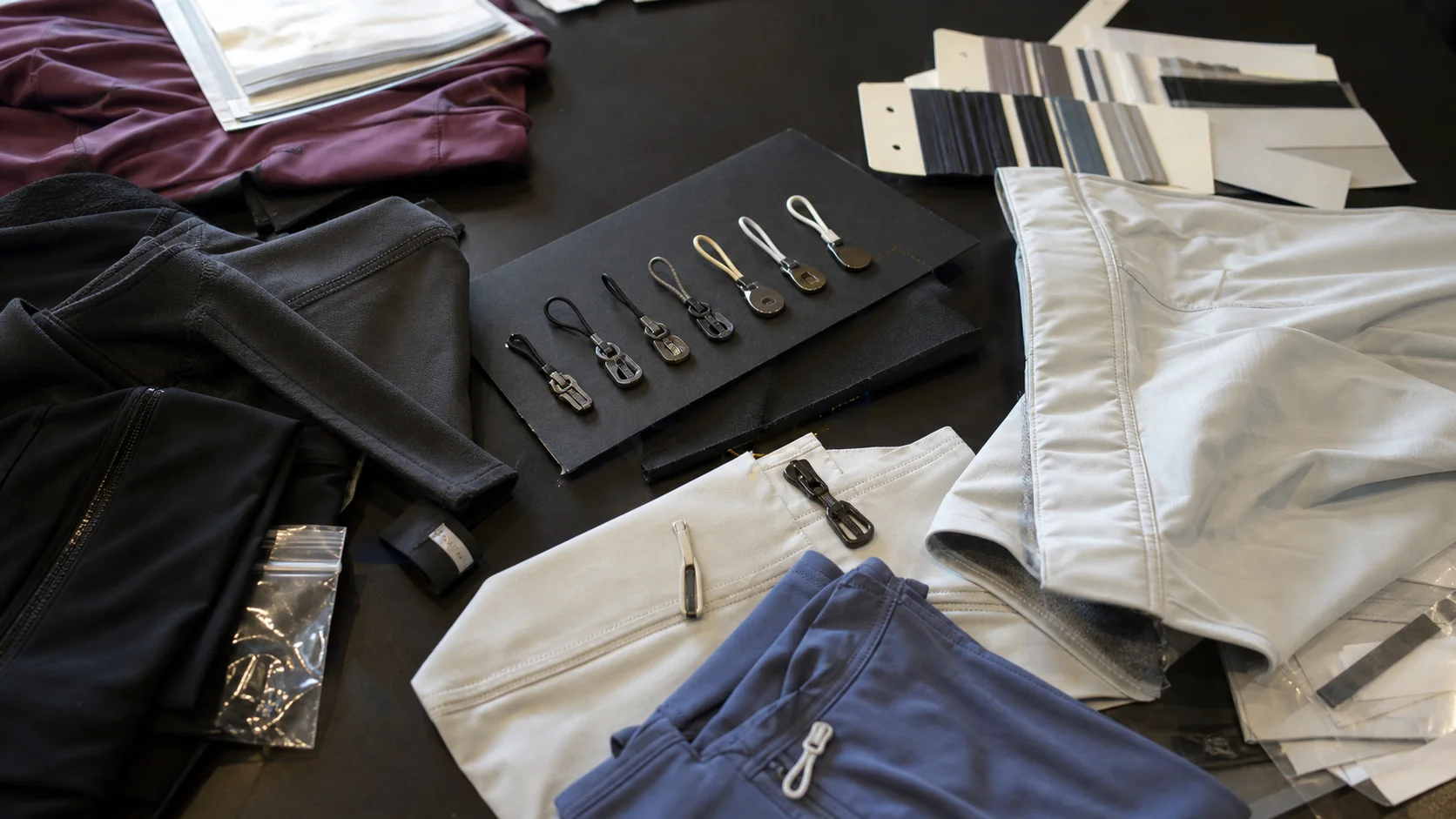
A buyer-focused review of zip puller charm size grading for fitness clubs, covering charm dimensions, attachment fit, branding visibility, safety,...
Zip Puller Charm Size Grading Review for Fitness Clubs - Decoration & Printing manufacturing guide
Fitness club buyers often treat zip puller charms as small decoration items, but the size grading decision affects branding, member comfort, garment usability, production cost, and long-term durability. A zip puller charm that looks sharp on a retail hoodie may feel oversized on a lightweight training jacket. A charm that works on a duffel bag may be too heavy for a women’s performance vest. The buying decision is not just “which shape looks good.” It is a specification exercise.
This zip puller charm size grading review is written for fitness club buyers sourcing branded apparel, gym bags, staff uniforms, event merchandise, and member retail products. The focus is practical: how to define charm sizes, how to grade them across product categories, what materials to specify, what samples to approve, and where inspection problems usually appear.
For decoration and printing programs, zip puller charms sit between branding trim and functional hardware. They are often ordered alongside heat transfers, woven labels, silicone patches, embroidery, or screen-printed garments. Buyers planning a larger apparel program can review related manufacturing support through Fabrikn’s services page, especially when coordinating trims, garment production, and decoration methods under one sourcing brief.
Zip puller charm size grading means assigning different charm dimensions, thicknesses, weights, or attachment styles based on garment size, product type, zipper type, or end-user need. In fitness club sourcing, this matters because products are used hard. Members pull zippers with sweaty hands, staff wash uniforms frequently, and bags are loaded into lockers, cars, and changing rooms. A charm must carry the club identity without becoming a nuisance.
The most common buying mistake is using one charm size for every item in the collection. That can work for simple programs, but it often creates imbalance. A 35 mm rubber charm may look premium on a gym bag, yet it can swing awkwardly on a slim-fit running jacket. A 15 mm metal charm may look clean on a lightweight vest, yet it may be too small for a cold-weather hoodie where the wearer needs grip.
Size grading is a way to protect both brand presentation and product performance. For fitness clubs, the charm should help members identify club merchandise, support grip, and reinforce the brand without adding snag points or unnecessary weight.
Purchasing judgment: if the charm interferes with the zipper function, it is not a branding upgrade. It is a quality complaint waiting to happen.
Fitness clubs use zip puller charms across several product categories. Each category has different size and durability needs. A buyer should not approve the charm based only on a flat artwork render. The charm must be reviewed on the actual garment or bag.
Staff jackets usually need a clean, professional trim rather than a novelty decoration. The charm should be easy to grip during daily wear but not so bold that it looks like retail merchandise. For staff uniforms, a mid-size puller between 20 mm and 28 mm often works well, depending on fabric weight and zipper gauge.
Retail-style hoodies can carry stronger branding. A silicone, PVC, or woven-rubber charm in the 25 mm to 35 mm range may suit a casual gym hoodie. For track tops and fitted warm-up jackets, a smaller charm often looks more balanced.
Lightweight garments need lighter trims. Oversized rubber or metal charms may cause zipper tape distortion or visible bouncing during movement. For performance garments, buyers should consider 15 mm to 25 mm charms, flat pull tabs, or soft TPU styles.
Bags can handle larger and heavier pullers. A 30 mm to 50 mm charm can improve grip and visibility, especially on black or dark-colored bags. The attachment point must be stronger because bag zippers face more force than apparel zippers.
Fitness challenges, opening events, anniversary collections, and branded race merchandise often use charms as a promotional detail. Buyers may accept more visual impact here, but the charm still needs to pass pull strength and colorfastness checks.
Size ranges vary by supplier, material, and mold process. The ranges below are typical working references rather than fixed standards. Buyers should confirm exact feasibility with the trim supplier before locking artwork.
Product Type Suggested Charm Size Common Material Buying Note Lightweight training jacket 15 mm to 25 mm TPU, silicone, soft PVC, coated cord tab Keep weight low to avoid bounce and zipper drag. Performance vest 12 mm to 22 mm TPU, rubberized tab, small metal charm Use a slim profile and avoid sharp edges. Staff softshell jacket 20 mm to 30 mm Rubber, metal, woven label tab Balance professional appearance with grip. Retail hoodie 25 mm to 35 mm Silicone, PVC, metal, leather-look PU Good category for stronger logo visibility. Gym bag or backpack 30 mm to 50 mm PVC, silicone, metal, cord with molded end Attachment strength is more important than charm size alone. Kids or youth apparel 10 mm to 20 mm Soft rubber, TPU, fabric tab Review safety, choking risk, and sharp-edge concerns carefully.For most fitness club apparel programs, two charm sizes are enough: one smaller size for performance apparel and one larger size for hoodies or bags. Three sizes may be useful when the program includes youth products, staff uniforms, and premium retail bags. More than three sizes can create avoidable complexity unless the order volume is high enough to justify separate molds, inventory control, and inspection standards.
A good grading system starts with the zipper, not the logo. The zipper gauge, slider hole, garment weight, user activity, and washing method should determine the charm specification. Once those technical points are clear, the logo artwork can be adapted.
Grade A pullers are best for lightweight activewear, fitted jackets, compression-adjacent outer layers, and warm-weather apparel. These charms usually range from 12 mm to 22 mm. They should be thin, flexible, and low-profile. Soft TPU, silicone, or fabric-based pull tabs are often more practical than chunky metal.
The tradeoff is branding visibility. Small pullers do not show detailed logos well. Fitness clubs with complex crests, small text, or multi-color marks should simplify the artwork for this grade. Use an icon, initials, or a single-color symbol instead of forcing the full brand mark into a tiny trim.
Grade B pullers suit staff jackets, fleece hoodies, warm-up tops, and casual retail apparel. The typical range is 20 mm to 32 mm. This grade gives enough room for a logo while remaining usable on most adult garments.
This is usually the safest choice for clubs ordering one charm size across several apparel styles. It is not perfect for every product, but it reduces mold cost, sampling time, and stock management. If the club’s order volume is modest, a well-designed Grade B charm may be the most cost-effective option.
Grade C pullers are larger, usually 30 mm to 50 mm. They work on gym bags, backpacks, shoe bags, and promotional accessories. They can carry more detailed branding, bolder color blocking, and novelty shapes.
The risk is overuse. Buyers sometimes approve a large bag charm and then apply it to hoodies to save development cost. That decision can make apparel feel cheap or uncomfortable. Bag pullers should stay on bags unless wear testing proves they work on garments.
Material selection affects size grading because each material behaves differently at small and large dimensions. A 20 mm metal charm feels different from a 20 mm silicone charm. Buyers should compare weight, edge finish, color accuracy, mold cost, durability, and washing performance.
Silicone is flexible, soft, and comfortable on apparel. It works well for gym products because it has a sporty hand feel and can be molded into clean shapes. It is suitable for 15 mm to 40 mm pullers, depending on thickness and logo detail.
The main tradeoff is detail sharpness. Very small text may not reproduce cleanly, especially if the artwork includes fine outlines. Silicone can also attract lint depending on surface finish. For fitness clubs, matte silicone often looks better than glossy silicone, but it should be checked against garment fabric and brand standards.
Soft PVC is common for colorful molded charms. It can handle layered colors and raised details better than some silicone options. It is widely used for promotional pullers, youth merchandise, and gym bags.
The tradeoff is perception and compliance. Some buyers avoid PVC for sustainability or chemical policy reasons. If PVC is selected, specify phthalate restrictions and request applicable compliance documentation based on the target market. Do not assume all promotional PVC trims meet apparel retail requirements.
TPU is useful for lightweight performance apparel. It can be flexible, thin, and cleaner-looking than bulky rubber. It is a good option for small Grade A pullers where movement and comfort matter.
The limitation is visual impact. TPU pullers may not deliver the same molded depth or color richness as PVC or silicone. They work best when the club wants a technical, understated look rather than a bold promotional charm.
Metal charms look premium when properly finished. Zinc alloy, stainless steel, or plated metal can be used for higher-end apparel and accessories. Metal works especially well for simple logos, initials, or small emblem shapes.
The tradeoff is weight and noise. Metal charms can hit zipper sliders, create sound during movement, and feel cold or hard against the body. Plating quality is also a concern. Poor plating may tarnish, chip, or discolor after sweat exposure and washing.
Woven pull tabs are practical for apparel programs that already use woven labels or jacquard trims. They are lightweight, washable, and comfortable. A fabric tab can be a smart choice for performance jackets where a molded charm feels too heavy.
The tradeoff is less dimensional branding. Fabric tabs may fray if edges are not sealed correctly. They also need careful color matching because woven thread colors may not match printed brand colors exactly.
PU pullers can give a lifestyle look for boutique fitness clubs, yoga studios, and premium retail hoodies. They can be embossed, debossed, or printed.
The risk is wash durability. PU trims can crack, peel, or curl if the material grade is poor or if the garment is washed frequently. For staff uniforms and high-rotation gym apparel, PU should be tested before bulk approval.
A zip puller charm is only as good as its attachment. Buyers should check the zipper slider hole, cord loop, metal ring, molded connector, and pull strength. Many quality issues come from mismatched attachment hardware rather than the charm body itself.
Direct loop attachment uses a cord, rubber loop, or flexible connector through the zipper slider. It is lightweight and common on sportswear. It can work well when the slider has enough clearance.
The buyer should check whether the loop rubs against sharp slider edges. Abrasion can cause the puller to break after repeated use. For high-use staff jackets, request a pull test and repeated open-close test.
Split rings are common on bags and heavier pullers. They are strong and easy to attach, but they can look bulky on apparel. They may also scratch plated sliders or create noise.
Split rings are better for gym bags than lightweight jackets. If used on apparel, the ring diameter should be small and the finish should match the zipper hardware.
Some pullers are molded as an extension rather than a separate dangling charm. This can be cleaner and more stable for activewear. It reduces swinging and snag risk.
The limitation is flexibility in production. Molded extension pullers may require closer coordination with the zipper supplier and can have higher MOQ requirements. They are worth considering for larger club retail programs where consistency matters.
Most apparel zippers in fitness programs may use lighter gauges than bags. A small coil zipper on a running jacket cannot carry the same charm as a heavy molded zipper on a backpack. Buyers should request the zipper gauge, slider type, and puller hole dimensions before approving charm tooling.
Zipper Application Typical Puller Concern Preferred Charm Direction Light coil zipper Low slider strength and small hole Small TPU or fabric pull tab Standard apparel zipper Balance between grip and weight Mid-size silicone or rubber puller Water-resistant zipper Clearance and sealing interference Low-profile pull tab Bag zipper High pulling force and abrasion Larger charm with strong ring or cordFitness club branding often includes bold typography, icons, metallic tones, neon accent colors, or black-on-black premium looks. Zip puller charms can support that identity, but the artwork must be adapted to the size.
A full club logo may not work on a 15 mm charm. Small text can fill in, edges can blur, and multi-color artwork can look crowded. Buyers should create simplified trim artwork for each grade. This may mean using only the club initials, a monogram, a dumbbell icon, a flame mark, or a short symbol from the main brand system.
For Grade A performance pullers, the safest artwork is a single-color raised or debossed icon. For Grade B apparel pullers, a short wordmark or compact logo may work. For Grade C bag charms, more detailed event branding is possible.
Color matching on charms is not identical to fabric printing. Silicone, PVC, TPU, metal plating, embroidery thread, and screen ink all reflect light differently. A Pantone reference helps, but buyers should still approve physical samples.
For black fitness apparel, consider whether the charm should blend in or stand out. Black-on-black debossed silicone can look premium but may be hard to see in product photos. A contrast color improves visibility but may feel promotional. The right choice depends on whether the product is for staff, retail, or event giveaways.
Matte finishes usually fit fitness apparel better than high-gloss finishes because they look more technical and show fewer scratches. Glossy PVC can be effective for youth programs or event merchandise. Metal finishes need extra caution because sweat and cleaning products can affect plating.
Zip puller charms should not be reviewed separately from the rest of the decoration package. The buyer should compare the charm with chest logos, sleeve prints, woven labels, neck labels, heat transfers, and packaging. A charm may look good alone but clash with the garment’s main decoration method.
When building a full branded apparel package, fitness club buyers can coordinate trim, decoration, and garment specifications through manufacturing partners that understand both apparel construction and branding. Fabrikn provides broader apparel sourcing context through its about us page, which may help buyers understand supplier role and production scope before sending a brief.
MOQ depends on material, tooling, color count, supplier setup, and whether the charm is custom molded or adapted from an existing puller shape. Buyers should expect different MOQ levels for custom charms than for standard zipper pulls.
Charm Type Typical MOQ Range Cost Driver Best Buying Use Standard pull tab with printed logo 300 to 1,000 pcs Print setup and trim availability Small staff uniform orders Custom silicone charm 500 to 2,000 pcs Mold, color, size, thickness Club retail apparel Custom soft PVC charm 500 to 3,000 pcs Mold and color layers Bags, events, promotional goods Metal charm 300 to 1,500 pcs Tooling, plating, polishing Premium jackets and accessories Woven fabric pull tab 1,000 to 3,000 pcs Loom setup, yarn color, cutting Performance and uniform programsThese MOQ ranges are typical sourcing references, not guaranteed factory terms. A supplier may accept lower quantities if the buyer uses a standard shape, fewer colors, or combines production with other trims. Custom tooling usually pushes MOQ higher, especially when several size grades are required.
Unit cost is not the only cost to review. Buyers should include mold charges, sample charges, color matching fees, courier charges, packaging, attachment labor, inspection time, and replacement allowance for defects. A low-cost charm can become expensive if it slows sewing lines or causes rework.
Purchasing judgment: for orders under 500 garments, a standard pull tab with a clean logo application may be wiser than a fully custom molded charm.
Sample approval should be structured. A charm may pass visual approval but fail during wear, washing, or zipper operation. Fitness clubs should request samples in stages, especially when the charm is custom molded or used across several garment types.
Start with scaled artwork. Review the charm at actual size, not only enlarged on screen. Print the artwork at 100% scale and place it next to the zipper area. This simple check prevents many over-detailed logo mistakes.
For graded charms, prepare separate artwork for each size. Do not assume the same logo file can be reduced from 35 mm to 15 mm without losing clarity.
Before opening a custom mold, review similar existing samples from the supplier. Check flexibility, thickness, edge finish, surface texture, and color quality. This step is useful because digital renders rarely show weight or hand feel accurately.
A prototype should show the actual size, material, color, logo relief, attachment method, and approximate finish. For molded charms, this may be called a strike-off or pre-production trim sample.
Buyers should check logo legibility, color matching, edge smoothness, hole placement, connector strength, and whether the charm sits correctly on the zipper. If the charm twists, blocks the slider, or catches on seams, revise before bulk production.
Approve the charm on the actual product. This is essential. A puller that looks balanced in hand may look too large on a jacket or too small on a bag. The buyer should check the full product hanging, worn, zipped, unzipped, packed, and photographed.
For apparel, wash testing is important. Review whether the charm changes color, stains fabric, cracks, peels, detaches, or damages the zipper. For gym bags, test repeated pulling and abrasion against other hardware.
The pre-production sample should represent final materials, final zipper, final attachment, final garment construction, and final packaging. Buyers should sign off only after confirming that all size grades match the purchase specification.
Zip puller charm lead time depends on design complexity and whether tooling is required. Buyers should build trim development into the production calendar rather than treating it as a last-minute decoration decision.
Stage Typical Time Range Key Dependency Artwork confirmation 1 to 5 working days Logo readiness and size grading decisions Material and color review 3 to 10 working days Availability of swatches and Pantone references Tooling or mold setup 5 to 15 working days Material, size, supplier capacity Prototype or strike-off 5 to 12 working days Color count, shape complexity, finish Bulk trim production 7 to 25 working days Order quantity, number of grades, quality checks Attachment to garments Depends on garment production Sewing schedule, zipper arrival, packing methodCustom charms can become a bottleneck when buyers delay artwork approval or change the logo after mold development. Each size grade may need separate tooling. If the program uses three charm sizes and two colorways, the trim calendar becomes more complicated.
For seasonal fitness club launches, buyers should confirm charm specifications before bulk fabric cutting where possible. Late trim changes may delay final assembly, packing, and shipment. If the club has a fixed launch date, standard trims may be safer than custom molded pullers.
Inspection should cover both trim quality and finished-product performance. Zip puller charms are small, so defects are easy to miss during bulk production. They are also highly visible once the customer uses the product.
Size should be measured against approved samples. Minor variation may be acceptable depending on material, but large inconsistency makes the product look uncontrolled. For graded pullers, inspectors should check that the correct size is attached to the correct garment or bag style.
Raised, debossed, printed, or molded logos should remain legible. Common issues include filled-in letters, uneven relief, ink spread, poor embossing depth, and off-center placement. Small charms need stricter artwork simplification to avoid these defects.
Color lots can vary, especially in molded materials and dyed cords. Buyers should approve a tolerance standard. A slight variation may be acceptable for internal staff uniforms, but retail goods need tighter consistency across sizes and shipments.
Inspect for sharp metal edges, rough rubber flash, bubbles, scratches, dents, excess glue, and plating marks. These defects can affect both appearance and safety. Rough edges are a bigger concern on apparel worn close to the neck or face.
The attachment must withstand repeated use. Inspection should include manual pull checks or formal pull testing based on the product risk level. Bag pullers need stronger attachment than jacket pullers because users apply more force when bags are full.
Each charm should allow smooth zipper movement. Inspectors should open and close zippers after attachment. A charm that blocks the slider, twists into the teeth, or catches on binding tape should be rejected or corrected.
Fitness apparel is exposed to sweat, deodorant, detergent, and frequent washing. Poor materials may discolor, bleed, crack, or transfer residue. For staff uniforms, repeated wash performance is especially important because garments may be laundered more often than retail hoodies.
Large or hard charms can leave pressure marks during packing. Metal charms can scratch fabric or other trims if garments are compressed. Buyers should check folded samples with final packaging, especially for e-commerce shipments.
Fitness club buyers should decide whether zip puller charms are meant to be functional, decorative, promotional, or premium. The answer affects size grading and material choice.
Use a standard zipper pull or small branded fabric tab. Avoid custom molds unless the order volume supports the setup cost. Keep the design simple and durable. Staff uniforms should look consistent and withstand frequent washing.
Consider a custom silicone, TPU, or metal charm with a refined logo. Use one size for apparel and a larger size for bags if the collection includes both. Keep the color palette controlled. A premium trim should feel intentional, not oversized.
Use a larger puller with strong attachment. A 35 mm to 50 mm charm can work if the bag zipper is strong enough. Prioritize pull strength, abrasion resistance, and ease of grip. Bags are the best place for bold branding.
Use smaller, lighter pullers. A flat TPU or fabric tab may outperform a molded charm. Avoid heavy metal and thick rubber unless wear testing supports the choice. Comfort should lead the decision.
Soft PVC or silicone charms can deliver strong visual branding at manageable cost. Keep expectations realistic. Promotional trims may not meet the same durability requirements as premium retail apparel unless specified and tested accordingly.
Purchasing judgment: the best default for mixed fitness club apparel is a 22 mm to 28 mm soft rubber or silicone puller with simplified branding, plus a larger 35 mm to 45 mm version only for bags.
A clear specification reduces sampling delays and bulk defects. Fitness club buyers should include the following details in the trim brief:
Buyers who are ready to discuss a branded apparel or trim program can use the Fabrikn contact page to start a sourcing conversation with clearer specifications. A stronger brief usually leads to fewer sample rounds and more accurate pricing.
Every trim decision has a cost and operational impact. A custom charm can lift the product presentation, but it can also add mold charges, sample time, inspection points, and replacement risk. For small orders, standard trims may be more practical. For larger club programs, custom grading can strengthen brand consistency across apparel and accessories.
One charm size is cheaper and easier to manage. It reduces tooling, simplifies stock control, and speeds up approval. The downside is imperfect fit across different products.
Multiple sizes improve product balance. A small puller can be used for performance apparel, while a larger charm can be used for bags. The downside is more development time, more inspection complexity, and higher minimum quantities.
A custom mold gives stronger brand identity. It can match the club logo or create a unique retail detail. The downside is tooling cost and longer lead time.
A standard shape with printed or debossed branding is faster and usually cheaper. It may be the right choice for pilot orders, staff uniforms, or short-deadline programs.
Large charms photograph well and make bags easier to identify. They can also feel awkward on fitted garments. Small charms are more wearable but less visible. Buyers should decide which products deserve bold branding and which need subtle functionality.
A zip puller charm size grading review should end with physical approval, not only artwork approval. The buyer should hold the charm, use the zipper, wear the garment, test the bag, and check the product after washing or repeated pulling. Small trim decisions influence the member’s perception of quality.
For most fitness club buyers, the best approach is controlled grading. Use a small, lightweight puller for performance items. Use a mid-size puller for general apparel. Use a larger, stronger puller for bags. Keep artwork simple at small sizes and reserve detailed branding for larger accessories.
The right zip puller charm does not need to be complicated. It needs to be proportionate, durable, brand-accurate, and compatible with the zipper. When buyers specify those points clearly, the charm becomes a useful detail rather than a production risk.
Get a free quote from Fabrikn — your trusted B2B clothing manufacturer with 10+ years of experience. MOQ as low as 200 pieces.
Get a Free Quote →For most adult fitness club apparel, a 20 mm to 32 mm charm is a practical range. Lightweight performance garments may need 12 mm to 22 mm pullers, while hoodies and casual jackets can often handle 25 mm to 35 mm pullers.
Using the same charm can reduce cost, but it is not always the best choice. Bags usually need larger and stronger pullers, while apparel needs lighter and more comfortable trims. A two-size system is often better for mixed programs.
Silicone and TPU are strong choices for apparel because they are flexible and sporty. Soft PVC works well for colorful promotional charms and bags. Metal can look premium, but buyers should check weight, plating quality, and sweat resistance.
Typical MOQs range from 500 to 3,000 pieces for custom molded silicone or PVC charms. Standard pull tabs with logo application may start around 300 to 1,000 pieces, depending on supplier terms and trim availability.
Buyers should approve actual-size artwork, review material samples, check a prototype, attach it to the real garment or bag, test zipper movement, run wash or use testing, and confirm the pre-production sample before bulk production.
Detailed logos usually do not work well below 20 mm. Small charms should use simplified artwork such as initials, an icon, or a single-color symbol. Larger bag charms can carry more detail.
Common risks include wrong size attachment, poor logo clarity, color variation, rough edges, weak loops, zipper interference, plating defects, wash damage, and packaging scratches. Inspection should check both the trim and the finished product.
They can be used, but buyers should be cautious. Small detachable parts, sharp edges, and choking risks need careful review. Soft, secure, low-profile pullers are usually safer than hard or oversized charms.