
A product-specific SEO outline for facilities managers evaluating fitness jacket trim sourcing, with a focus on closure hardware, elastic bindings,...
Facilities managers rarely get credit for the small parts that keep fitness jackets functional, durable, and consistent across a site. Trim looks minor on a tech pack, but in activewear and teamwear it can decide whether a garment holds up through repeated wear, washing, and daily handling. For facilities managers responsible for uniforms, staff issue, or branded sports apparel, a fitness jacket trim sourcing review is not just a purchasing exercise. It is a risk check on quality, lead time, replacement stability, and long-term cost.
This review focuses on the practical sourcing questions that matter most: which trims are worth specifying, where failures usually happen, how to compare supplier options, and what approval steps reduce avoidable mistakes. It is written for facilities managers who need reliable garments, not just attractive samples. The key is to balance appearance, performance, and supply continuity without over-specifying parts that add cost but not value.
Fitness Jacket Trim Sourcing Review for Facilities Managers - Fabrikn production reference
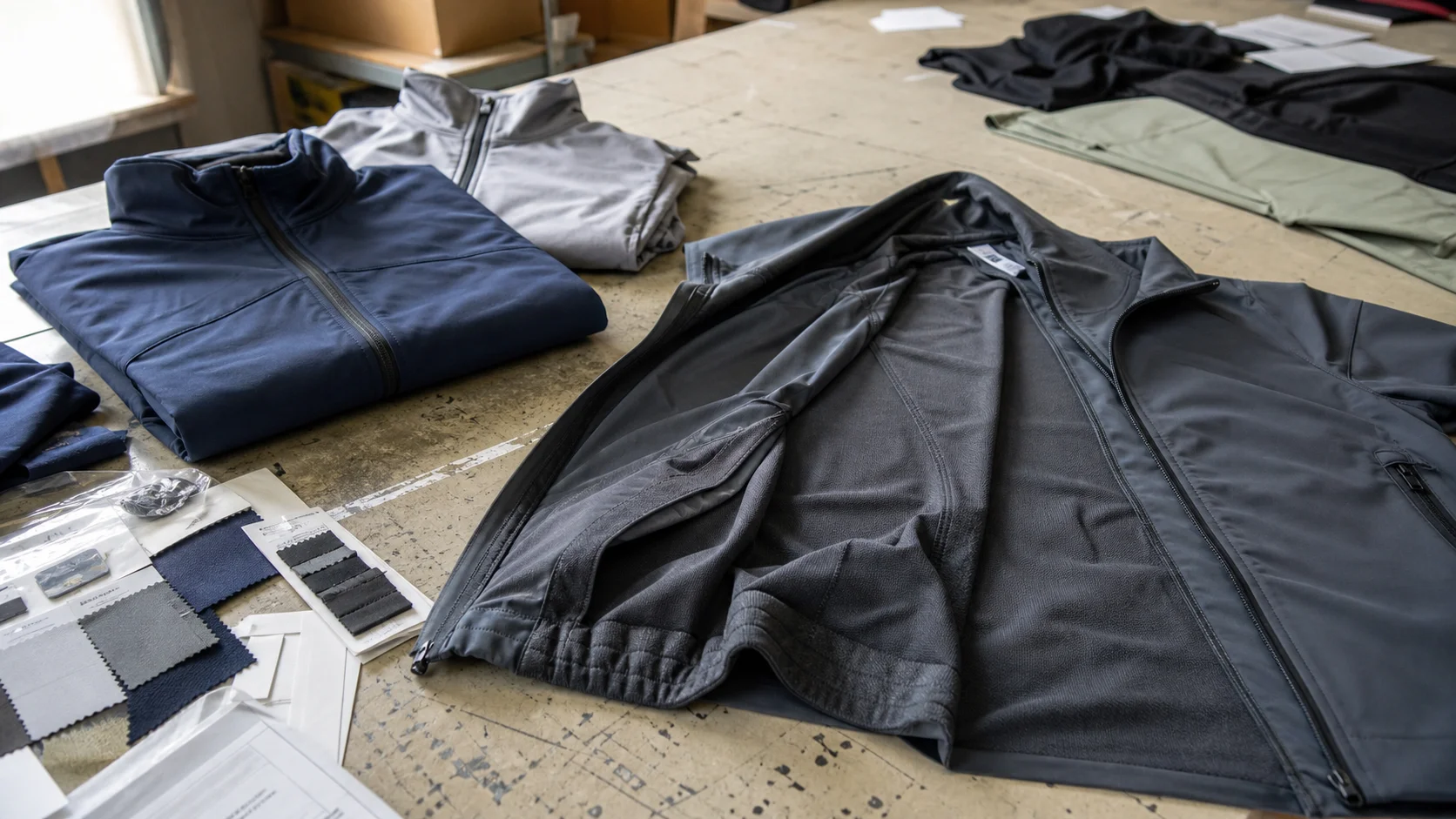
Trim is the collection of non-fabric components that make a jacket usable and finish the product properly. Zippers, pullers, elastic, drawcords, toggles, snaps, labels, heat transfers, binding, tape, and reflective elements all fall into this category. If one of these parts fails, the garment can be uncomfortable, unattractive, or unusable even when the shell fabric is fine.
For facilities managers, this matters because activewear and teamwear are often bought in quantity and replaced in batches. A trim mismatch can create visual inconsistency across staff uniforms. A weak zipper or poor-quality elastic can generate complaints, returns, and unplanned reorders. When the garment is branded, a trim issue can also affect presentation standards in front of clients, members, or visitors.
Trim sourcing also affects continuity. Many clothing programs fail when the buyer approves a sample without confirming that the supplier can keep the same zipper brand, cord finish, or reflective tape spec in later runs. A low-risk jacket program is one where the trims are documented clearly enough that reorders stay close to the approved reference.
Fitness jackets use different trims depending on the design intent, performance level, and price point. The most common parts are straightforward, but each one still needs a spec.
Simple trims are not automatically low risk. Elastic can lose recovery, cords can fray, and labels can irritate skin if the finish is rough. A facilities manager should treat every component as part of the product specification, not decoration.
A useful sourcing review starts with the end use of the garment. Is the jacket for staff uniforms, gym personnel, outdoor training, or branded member merchandise? The answer changes the trim priority. A back-of-house team may need durability and wash performance. A front-of-house team may need clean branding and consistent color. A training jacket may need stretch and moisture resistance more than a formal appearance.
The next step is separating essential trims from optional upgrades. For example, a YKK-type zipper or equivalent may be justified on high-use garments where reliability matters. A branded metal puller might look premium, but if the program is price-sensitive, the premium may not deliver enough operational value. That judgment should be made in commercial terms, not style terms alone.
Facilities managers should also check whether the trim spec is stable across reorder cycles. If the initial order depends on a special zipper tape color, a custom molded puller, or a seasonal reflective tape, the buyer should confirm whether the supplier can repeat it after stock changes. Replacement risk is often more expensive than the first purchase price.
Trim item Typical sourcing concern Buying judgment Zipper Breakage, snagging, color match Worth paying more for dependable use Elastic Recovery loss after wash Specify width, stretch, and recovery clearly Reflective tape Wash durability and certification Use only when visibility is truly needed Labels Skin comfort and branding clarity Low cost, but easy to get wrongWhen reviewing suppliers, it helps to ask for component traceability. That does not always mean a formal audit file. It means the supplier can identify the trim source, key specification, and any substitution risk. For a facilities team, that is often enough to make a better buying decision.
Trim sourcing is shaped by minimum order quantity, sample approval steps, and the time needed to secure materials. These factors rarely appear serious until they delay a launch or a uniform rollout.
Typical MOQ ranges vary by trim type and customization level. Standard zippers or off-the-shelf cords may be available in lower quantities, while custom branded pullers, special reflective tapes, or dyed-to-match elastic usually require higher commitments. In many supply chains, a practical MOQ for basic trims may sit in the low hundreds per color or size run, while customized trims can move into the low thousands depending on complexity and supplier setup. Those are not fixed rules, so the supplier should confirm the actual minimum before the garment order is released.
Sample approval is best handled in stages. First, review trim swatches or trim cards to confirm color and finish. Second, approve a garment proto or fit sample with the actual trim components installed. Third, sign off on a pre-production sample if the order is large or the trims are unusual. Skipping one of these steps can save time upfront and cost more later if the trim looks different in bulk.
Lead times depend on whether the trims are standard stock or custom-made. Stock zippers and labels can be relatively quick, but custom pulls, matching dye lots, or reflective prints may add weeks. Lead time also depends on the supplier’s trim mill relationships and whether they already have approved material on hand. For facilities managers, the safe approach is to ask for lead times by component, not just by the full jacket.
A clean trim approval process usually costs less than one correction shipment.
Good trim sourcing begins with a usable specification. A trim spec should state material type, color reference, size, finish, function, and any performance requirement. For zippers, that might include chain type, tape width, puller style, and closure test expectations. For elastic, it should include width, elongation, recovery, and whether the elastic is exposed or enclosed. For labels and badges, it should note backing type, print method, thickness, and positioning.
Testing requirements should match the use case. Fitness jackets are subject to stretching, repeated washing, sweat, and frequent handling. Trims should be checked for colorfastness, abrasion resistance, and functional performance after laundering. If the jacket is for outdoor use or high-visibility environments, reflective components may need additional verification. It is better to define the test standard upfront than to discover a problem after distribution.
Approval controls also matter. A facilities manager should insist that the approved sample is clearly marked, photographed, and referenced in the purchase order or tech pack. If the supplier later proposes a substitution, the change should be reviewed before bulk production starts. Small substitutions can create large problems when they affect appearance, hand feel, or wash performance.
One practical rule is to limit uncontrolled variation. If the jacket uses a black reverse coil zipper, black drawcord ends, and a black transfer label, each of those items should be tied to an approved reference. Loose descriptions such as “matching trim” create unnecessary room for error.
Inspection on fitness jackets should focus on the parts most likely to fail in use. Zipper function is the obvious one, but it is not the only one. Elastic can twist inside a casing, drawcord tips can open or split, reflective tape can peel, and labels can delaminate. If the garment uses heat transfer branding, poor adhesion is a common issue after washing or stretching.
Color variation is another frequent problem. Trim color can look acceptable in a showroom but fail under different lighting or against the jacket shell fabric. The risk grows when the project relies on multiple suppliers or rush sourcing. Buyers should be especially careful when the trim is supposed to match a corporate or team color exactly.
Inspection should also check sewing interactions. A strong trim can still be compromised by poor attachment. Zippers can pucker if the seam allowance is unstable. Elastic can distort if the stitch pattern is incorrect. Binding can ripple when the operator stretches it too much during application. These are manufacturing issues, but the trim choice influences how visible the defects become.
Facilities managers often focus on the garment shell because it is the visible part of the jacket. That is understandable, but trim failures can create more complaints than fabric failures because they are touched every time the jacket is worn.
A sourcing review should distinguish between must-have performance and nice-to-have refinement. A premium zipper may be worthwhile if the jacket is used daily or by a large staff group. Custom molded pulls may not be worthwhile if the brand cannot justify the extra cost. Reflective trims may be necessary for safety, but unnecessary if the garment is only used indoors.
There is also a tradeoff between consistency and flexibility. Locking every trim to a single branded source can improve uniformity, but it may create supply vulnerability if that source goes out of stock. Allowing an approved equivalent can reduce risk, but only if the equivalence is defined clearly. Facilities managers should prefer equivalence rules that are technical, not vague.
Budget planning should include the cost of rework risk. A cheaper trim that causes a high reject rate is not really cheaper. The right buying decision is often the one that reduces total cost over the life of the program, even if the initial unit price is slightly higher.
For organizations with repeated ordering needs, it is worth discussing how the supplier manages trim continuity. That includes color retention, stock availability, re-ordering windows, and the ability to source the same component after a season changes. Trim consistency is a procurement issue as much as a product issue.
Supplier communication should be structured around the trim list. Send the full technical brief early, including photos where useful, and ask the supplier to identify any components that are custom, long-lead, or substitution-sensitive. That approach reduces back-and-forth and helps the supplier price the order more accurately.
Facilities managers can also ask for a trim risk summary before sample approval. A good supplier will flag components with low stock, unstable color availability, or complex application steps. That is not a sign of weakness. It is useful sourcing discipline.
If a supplier offers a service page or company background, review it for process clarity rather than marketing language. Useful information usually includes sampling support, production coordination, and contact responsiveness. Fabrikn’s services page is a sensible place to start if you want to understand the range of sourcing support available, while the about us page helps frame the company’s approach and capabilities. For direct questions or a project brief, the contact us page is the fastest route to get a sourcing conversation moving.
The best supplier conversations are specific. Ask which trim items are stocked, which need custom production, what the MOQ is by component, and what substitutions might be proposed if lead time slips. A supplier that answers clearly is usually easier to manage during the production run as well.
A fitness jacket trim sourcing review for facilities managers should be practical, cautious, and detail-oriented. The trim package is small in physical size but large in operational impact. The right components help a jacket stay functional, presentable, and repeatable across multiple orders. The wrong components create complaints, delays, and avoidable cost.
The strongest sourcing approach is simple: specify trims clearly, approve samples in stages, confirm MOQ and lead time by component, and inspect the failure points that matter most. When the buyer treats trim as a controlled part of the product rather than a cosmetic afterthought, the entire jacket program becomes easier to manage.
For activewear and teamwear programs, that discipline pays off. Consistent trim sourcing supports brand presentation, user comfort, and long-term supply stability. Those are the outcomes facilities managers are usually measured on, even if the trim itself never gets noticed.
Get a free quote from Fabrikn — your trusted B2B clothing manufacturer with 10+ years of experience. MOQ as low as 200 pieces.
Get a Free Quote →Prioritize zipper reliability, elastic recovery, color consistency, wash performance, and reorder stability. Those factors usually matter more than decorative trim features.
It varies by supplier and customization level. Stock trims can sometimes be ordered in the low hundreds, while custom branded or dyed components often require higher quantities, sometimes into the low thousands.
For many programs, three checkpoints work well: trim swatch approval, proto sample approval, and pre-production sample approval. Smaller orders may use fewer steps, but the risk is higher if trims are unusual.
Zippers that snag or break, elastic that loses recovery, labels that irritate skin, and reflective or printed trims that peel after washing are common failure points.
Only if the equivalent is defined clearly in writing. Equivalent should mean equal or better in function, appearance, and durability, not simply “similar enough.”
Ask for component-level lead times, confirm which trims are stock versus custom, and avoid late changes after sample approval. A locked trim spec is the simplest way to protect schedule.