
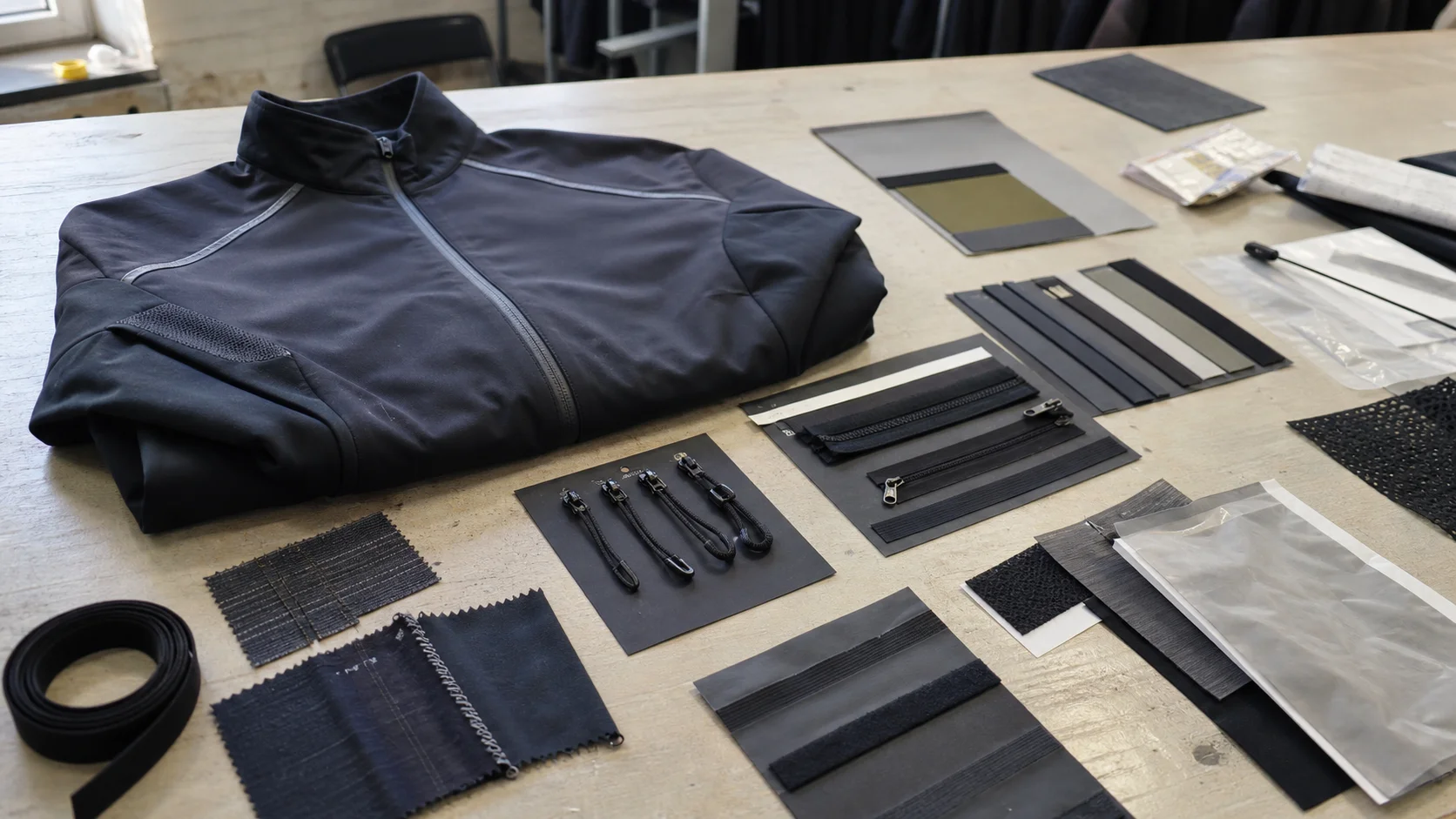
A product-specific sourcing review outline for security contractors evaluating custom fitness jacket trims, from reflective tape and zipper pulls to badge...
Fitness Jacket Trim Sourcing Review for Security Teams - Activewear & Teamwear manufacturing guide
Custom fitness jacket trim sourcing for security contractors is not just a decoration exercise. The trims on a jacket can affect visibility, movement, durability, identification, laundering performance, and how professional a team looks during patrol, transport, event security, or mobile response work. For buyers managing activewear and teamwear programs, trims are often where cost overruns, approval delays, and quality problems appear late in the production process.
This review is written for procurement teams, uniform managers, private security contractors, event security suppliers, and B2B apparel buyers comparing trim options for custom fitness jackets. It covers the practical choices: zippers, pullers, reflective tape, badges, heat transfers, woven labels, elastic binding, drawcords, hook-and-loop patches, silicone branding, and packaging trims. The goal is to help buyers specify what matters before sampling, not after bulk production has started.
Security jackets sit between activewear and uniform apparel. They need stretch and comfort, but they also need authority, easy identification, and reliable performance in repeated use. A fitness jacket used by a gym staff team may prioritize style and breathability. A jacket used by a security contractor also needs to support operational clarity: who is staff, what role they hold, and whether they are visible in low light.
Trim sourcing becomes important because many of those functions are not handled by the main fabric. Reflective tape improves visibility. Zippers affect daily usability. Badge patches support identification. Heat transfers and screen prints communicate the company name or “SECURITY” marking. Elastic cuffs and binding influence fit and comfort. Even zipper pullers can matter when staff wear gloves or need quick access during cold-weather shifts.
The wrong trim choice can create avoidable problems. Reflective tape can crack after washing. A cheap zipper can fail before the garment body wears out. A heat transfer can peel around seams. A woven patch can feel too stiff on a stretch jacket. A black-on-black logo can look premium in a showroom but disappear during night deployment.
For security teamwear, trims should be reviewed as functional components first and branding elements second. A clean look matters, but the jacket must survive shift work, laundering, and movement.
When reviewing custom fitness jacket trim sourcing, the buyer should start with the use case. A jacket for indoor concierge security has different trim needs from an outdoor patrol jacket. Event teams may need high visibility and fast size replenishment. Executive protection teams may prefer subtle identification and low-profile branding. The trim package should match the operational setting, not just the design board.
Most custom fitness jackets for security contractors use a repeatable trim set. The exact combination depends on budget, branding requirements, and the garment’s technical level. The following components are the usual sourcing priorities.
The zipper is one of the highest-risk trims on a fitness jacket because it is used constantly. Common options include coil zippers, molded plastic zippers, and water-resistant coated zippers. Coil zippers are flexible and suitable for lightweight stretch jackets. Molded zippers feel more rugged but can be heavier. Water-resistant zippers look technical, though they add cost and may not be necessary unless the jacket is designed for wet-weather use.
For security contractors, zipper color should be considered carefully. Matching black zippers on black jackets give a clean uniform look. Contrast zippers can support team color coding but may reduce the professional appearance if overused. Reverse coil zippers are common for a smoother exterior finish.
Zipper pullers can be standard metal, molded rubber, corded, reflective, or custom-branded. For security jackets, a longer puller may help staff operate pockets while wearing gloves. Custom pullers add branding but usually increase MOQ and tooling cost if a unique mold is required.
A practical compromise is to use a standard zipper with a custom cord puller or rubber tab in the brand color. This keeps cost more manageable while giving the garment a custom finish. Buyers should confirm puller attachment strength because weak pullers are a common nuisance defect.
Reflective trims are important for mobile patrol, parking security, event security, and outdoor night work. Options include heat-applied reflective tape, sewn reflective tape, segmented reflective tape, reflective piping, and reflective print. Each has a different hand feel and durability profile.
Sewn reflective tape can be durable but may reduce stretch and create seam stiffness. Heat-applied reflective tape looks smooth, yet adhesion depends on fabric surface, heat press settings, and laundering conditions. Segmented reflective tape is better for stretch panels because it moves with the fabric. Reflective printing can provide clean graphics, but buyers should test reflectivity and wash performance before committing to bulk.
Reflective Trim Type Best Use Tradeoff Sewn reflective tape Durable visibility zones, chest, back, sleeves Can feel stiff and may limit stretch Heat-applied reflective tape Clean technical appearance Adhesion must be tested on the exact fabric Segmented reflective tape Stretch jackets and active movement Higher cost than basic tape Reflective print Logos, word marks, low-profile graphics Reflective performance varies by ink and processSecurity contractors often need clear identification. This can be done with woven patches, embroidered patches, PVC patches, hook-and-loop removable patches, or heat transfer badges. The choice depends on whether the garment needs fixed branding or role flexibility.
Hook-and-loop patches are useful when the same jacket style is used across roles, sites, or departments. For example, removable patches can identify “SECURITY,” “SUPERVISOR,” “EVENT STAFF,” or a company name. The drawback is that hook-and-loop panels can collect lint, look less refined over time, and add stiffness to lightweight jackets.
Woven patches provide clean detail and are suitable for logos with small text. Embroidered patches have a more traditional uniform look but can feel bulky on performance fabric. PVC patches are durable and modern, though they may look too tactical for some client-facing environments.
Heat transfers are widely used on activewear because they keep the garment lightweight. They are suitable for chest logos, back markings, sleeve text, and reflective brand elements. The key risk is adhesion. A transfer that works on cotton fleece may not work on a slick polyester-spandex jacket.
Buyers should confirm whether the transfer is designed for stretch fabric. A security fitness jacket often uses polyester, nylon, elastane, or bonded softshell materials. Transfers need enough elasticity to move with the garment without cracking. For large back prints, stretch and breathability should be considered because a heavy transfer film can make the jacket less comfortable.
Elastic trims help the jacket fit securely during movement. They may appear at cuffs, hems, hood openings, or pocket edges. Binding width, recovery, and colorfastness should be reviewed. Poor elastic can lose recovery after repeated wear, leading to wavy cuffs or stretched-out hems.
For security jackets, elastic trims should not be too tight. Staff may wear the jacket over a polo, base layer, or light body armor depending on the role. A clean fit is useful, but overly athletic sizing can reduce comfort during long shifts.
Drawcords are common on hooded fitness jackets and lightweight softshells. Security teamwear should use drawcords carefully. Long exposed cords can create snagging risks and may look untidy. Internal drawcord systems or short cord ends with secure stoppers are more professional.
Metal cord tips look premium but can add cost and may chip after laundering. Plastic tips are lighter and practical. Heat-sealed cord ends are economical, though they can look basic on a higher-end jacket.
Labels are easy to overlook but important for B2B fulfillment. Neck labels, size tabs, care labels, hangtags, polybags, carton labels, and barcode stickers all affect distribution. Contractors managing multi-site teams need accurate size identification and packing clarity.
For custom programs, a private label or co-branded label can support professionalism. The care label should include correct fiber content and washing instructions based on the fabric and trims used. If reflective trims, heat transfers, or waterproof coatings are included, the care label should reflect those limitations.
Security apparel must balance visibility and professionalism. A jacket may need large “SECURITY” lettering on the back, a company logo on the chest, and reflective strips on sleeves. At the same time, some contracts require a discreet appearance, especially in corporate, hospitality, residential, or executive settings.
Buyers should define the visual hierarchy before trim sourcing begins. The first question is what must be seen from distance. The second is what only needs to be visible up close. Large back markings can be printed, heat transferred, or applied as a removable patch. Chest branding can be woven, embroidered, printed, or transferred. Sleeve or shoulder trims can identify rank, department, or function.
Compliance requirements vary by market, contract, and work environment. Buyers should avoid assuming that generic reflective tape automatically meets a required visibility standard. If a contract calls for a specific visibility performance, test documentation and certification should be requested from the trim supplier or garment manufacturer.
A practical purchasing approach is to create two or three trim packages: standard, high-visibility, and premium low-profile. This gives sales or operations teams flexibility without forcing a completely new garment for every contract.
Trim sourcing cannot be separated from fabric sourcing. A trim may perform well on one material and fail on another. Security fitness jackets often use polyester interlock, nylon stretch woven, polyester-spandex knit, bonded softshell, fleece-backed stretch fabric, or lightweight ripstop. Each fabric reacts differently to heat, sewing, and washing.
Heat transfers require close attention. A high-heat application can damage delicate stretch fabric or create shine marks. A low-temperature adhesive may be safer, but it must still bond properly. Bonded softshell fabrics can be tricky because the outer face, membrane, and backing may respond differently to heat and pressure.
Sewn trims create another set of issues. Reflective tape and patches add needle holes. On stretch fabric, this can cause puckering if the stitch type, thread, and tension are wrong. On coated or water-resistant fabrics, stitching can reduce water resistance unless seam sealing is used. For most security fitness jackets, full waterproofing is not the goal, but the buyer should understand the compromise.
Fabric Type Compatible Trim Direction Risk to Check Polyester-spandex knit Stretch heat transfers, segmented reflective tape, flexible zippers Cracking prints, zipper waviness, poor recovery around patches Stretch woven nylon Reverse coil zippers, low-profile transfers, elastic binding Heat sensitivity and seam puckering Bonded softshell Durable zippers, woven patches, reflective tape Adhesion inconsistency and bulk at seams Polyester fleece-back fabric Embroidered patches, heat transfers, standard zippers Transfer edge lifting and fabric compression marksThread should also be specified. Polyester thread is typical for activewear because it has strength and wash resistance. Thread color matching matters on black, navy, charcoal, and high-visibility colorways. Poor thread matching makes even a functional garment look cheap.
MOQ is one of the first practical constraints in custom fitness jacket trim sourcing. The jacket factory may accept a lower garment MOQ, while specific trims require higher minimums. Custom zipper pullers, dyed-to-match zippers, woven patches, branded elastic, and reflective transfers can each have separate MOQ rules.
Typical MOQ ranges vary by supplier and region, but buyers often see the following patterns:
For small security contractors, it is usually better to avoid too many fully custom trims on the first order. A practical first production might use stock zippers, standard pullers, custom heat transfers, and a woven chest patch. For larger uniform programs, custom pullers, role-specific patches, reflective trims, and private labels may be justified because the cost spreads across more units.
Typical garment MOQs for custom activewear jackets may start around 100 to 300 pieces for simpler customization, while more developed cut-and-sew programs often sit closer to 300 to 1000 pieces or more. Trim MOQs can exceed garment quantities, which means leftover trims may need to be stored for replenishment orders. That is not automatically a problem if the contractor expects repeat purchasing. It becomes wasteful if the design changes after one season.
The most common costing mistake is approving an attractive sample with expensive trims and then trying to reduce cost after bulk pricing is reviewed. It is better to define target FOB or landed cost early and build the trim package around that target.
Trim Decision Lower-Cost Choice Higher-Cost Choice Buying Judgment Center zipper Stock reverse coil zipper Water-resistant branded zipper Upgrade only if the jacket needs a technical outdoor look or weather function. Back identification Standard heat transfer Reflective transfer or removable patch Reflective is worth considering for night teams; removable patches help role flexibility. Logo trim Printed chest logo Woven, PVC, or embroidered badge Use patches when durability and uniform appearance matter more than lightness. Elastic trim Plain binding Custom branded jacquard elastic Branded elastic is rarely necessary unless the program is large and retail-inspired.A clear sample approval process reduces late-stage disputes. Security contractors often have several stakeholders: procurement, operations, brand management, client representatives, and sometimes legal or compliance reviewers. If the trim approvals are informal, changes can arrive after materials are already ordered.
A practical sample path includes the following steps:
Strike-offs are especially useful for security jackets. A back “SECURITY” mark that looks correct on screen may feel too large when worn. Reflective graphics may look dull in daylight but perform well under light. A woven badge may reproduce small lettering poorly. These issues should be visible before bulk trims are ordered.
Buyers should also request wash testing for critical trims. A basic internal wash check can reveal peeling, cracking, color bleeding, shrinkage, or edge lifting. Formal lab testing may be needed for larger contracts or regulated performance claims. The right level of testing depends on order size, contract risk, and garment use.
Teams looking for structured product development support can review the apparel production capabilities listed at fabrikn.com/services/. Early technical review is usually cheaper than correcting trim failures after shipment.
Lead time for custom fitness jacket trims depends on how many trims are standard and how many need custom development. Stock trims can often be sourced faster. Custom patches, reflective transfers, dyed trims, special zippers, and molded pullers take longer because they require artwork approval, sampling, production, and shipping to the garment factory.
Typical production planning should allow time for:
For straightforward custom jackets using mostly stock trims, sampling may take a few weeks and bulk production may take several more weeks after approvals. For more complex trim packages, buyers should expect longer timelines. Reflective components, custom patches, and custom zipper hardware can become bottlenecks if not approved early.
Seasonality also matters. Security contractors preparing for festival season, holiday retail coverage, winter patrols, or large event deployments should not treat jacket production as a last-minute reorder. Fabric and trim availability changes, and production capacity tightens at predictable times of year.
The safest purchasing practice is to separate launch inventory from replenishment planning. If the contractor expects ongoing hiring, site expansion, or contract turnover, extra trim inventory may be useful. Stocking extra patches or transfers can speed repeat production, but storing too many dated logos or role-specific trims creates waste if branding changes.
Trim-related defects are common because trims interact with sewing, heat application, pressing, and finishing. A jacket body may be well made, while the final garment still fails inspection because logos are misaligned, zippers ripple, reflective tape lifts, or patches are sewn unevenly.
For security teamwear, inspection should include both appearance and function. A small cosmetic issue on fashion activewear might be acceptable. A crooked “SECURITY” marking on a uniform jacket is more serious because it affects professional presentation.
Heat transfer placement needs particular attention. Large back graphics should sit level when the garment is laid flat and when worn. Pocket trims must not interfere with zipper function. Sleeve reflective strips should be symmetrical. If the jacket has a hood, collar, or yoke seam, branding should not be hidden when the garment is zipped.
For bulk inspections, the approved pre-production sample should be available as the reference. Written tolerances should be defined. For example, logo placement may allow a small variance, while wrong logo color or missing reflective trim should be treated as a major defect. Buyers should set these expectations before inspection, not after the factory has packed the goods.
A reliable sourcing partner should be able to translate a security contractor’s operational needs into practical trim choices. The buyer does not need the most expensive trims. The buyer needs trims that match use, budget, MOQ, lead time, and inspection requirements.
When reviewing a manufacturer or sourcing partner, ask direct questions:
A trim card is a simple but valuable document. It should show each approved trim with color, size, supplier reference, placement, and usage. For repeat programs, it prevents confusion when reordering. It also helps compare costs if the buyer later requests alternate trim options.
Buyers should be cautious with vague quotes that list “custom trims included” without itemized details. That wording can hide compromises. A proper quote should identify whether the jacket uses stock zippers, custom pullers, reflective transfers, woven patches, printed labels, or branded packaging. The cost of each major custom trim should be visible enough to make decisions.
It is also useful to review the supplier’s broader manufacturing approach. A company profile, sourcing process, and production philosophy can help buyers understand whether the partner is structured for B2B apparel programs. Background information is available at fabrikn.com/about-us/, and project inquiries can be directed through fabrikn.com/contact-us/.
Not every security contractor needs the same jacket. The most effective trim package depends on the deployment environment. Below are practical configurations that buyers can use as a starting point.
This package is suitable for lower-MOQ programs and budget-sensitive contracts. It is not the best choice for night patrol or harsh outdoor use, but it works well for controlled environments where comfort and brand consistency matter.
This package costs more but provides better functionality. Reflective trims and stronger zipper components are justified when teams work in parking areas, event entrances, loading zones, or roadside environments.
This package is best for front-of-house, residential, hotel, office, and corporate security settings. It prioritizes appearance and client-facing professionalism. The tradeoff is lower visibility unless reflective components are added discreetly.
A trim specification should be detailed enough for factories to quote accurately and make repeatable samples. General descriptions such as “good zipper” or “reflective logo” are not enough. The buyer should define measurable details wherever possible.
Specification Area Information to Confirm Zippers Type, size, color, tape color, slider color, puller type, pocket zipper details Reflective trims Material type, width, placement, certification needs, wash requirements Logos and text Artwork file, dimensions, color, process, placement, tolerance Patches Woven, embroidered, PVC, hook-and-loop, backing type, edge finish Elastic and binding Width, stretch, recovery, color, application area Labels Brand label, size label, care label, fiber content, packaging barcode needs Packing trims Hangtag, polybag, carton label, site sorting, size ratio packingGood specifications reduce quote revisions and sampling rounds. They also make it easier to compare suppliers. A lower price is not useful if the quote assumes basic trims while another quote includes reflective tape, custom patches, and branded labels.
For custom fitness jacket trim sourcing for security contractors, the best trim package is the one that matches the contract environment and reorder plan. Buyers should spend money where failure would be visible or operationally disruptive: center-front zippers, identification markings, reflective components, and durable logo applications. They should be more cautious with decorative upgrades that increase MOQ without improving function.
Small programs should keep trims simple and proven. Mid-size programs can add custom identification and selective reflective elements. Large programs can justify custom zipper pullers, private labels, and more developed trim systems because repeat orders spread the setup cost.
The strongest sourcing process starts with clear use cases, written specifications, trim cards, strike-off approval, fabric compatibility checks, and pre-production sample sign-off. That may feel slower at the beginning, but it protects the buyer from the more expensive problem: a bulk shipment of jackets that looks acceptable in cartons but fails in daily security work.
Get a free quote from Fabrikn — your trusted B2B clothing manufacturer with 10+ years of experience. MOQ as low as 200 pieces.
Get a Free Quote →The most important trims are the center-front zipper, pocket zippers, identification markings, reflective elements, patches, heat transfers, elastic binding, and care labels. These components affect durability, visibility, fit, branding, and daily usability.
Typical custom jacket MOQs may start around 100 to 300 pieces for simpler customization, while more developed cut-and-sew programs often require 300 to 1000 pieces or more. Individual trims can have separate MOQs, especially custom zipper pullers, dyed zippers, branded elastic, and molded patches.
Reflective trims are strongly recommended for outdoor, night, parking, event, and mobile patrol teams. They may be less necessary for indoor corporate security or discreet front-of-house roles. If a contract requires certified visibility performance, buyers should request supporting documentation.
Heat transfers are lighter and work well on activewear, especially for large back text and chest logos. Embroidered patches look more traditional and durable but can feel bulky on stretch fabrics. The best choice depends on fabric type, brand style, wash expectations, and whether the jacket needs a lightweight athletic feel.
Yes. Hook-and-loop removable patches are useful when one jacket style needs to serve different roles or sites. The tradeoff is added stiffness and possible lint buildup on the loop panel. They are practical for operational flexibility but not always the cleanest premium look.
Buyers should approve swatches, lab dips, strike-offs, fit samples, and a pre-production sample. A sealed approved sample should be kept as the bulk production reference. Critical trims such as reflective tape and heat transfers should be checked on the actual garment fabric.
Common defects include zipper waviness, weak pullers, crooked patches, misaligned logos, peeling heat transfers, cracked reflective prints, color mismatch, loose threads, and incorrect labels. These should be included in the inspection checklist.
Use stock zippers where possible, avoid unnecessary custom molded hardware, limit branded elastic, and focus spending on durable identification, reliable zippers, and appropriate reflective elements. A simple trim package with good execution is usually better than a complicated one with weak components.