
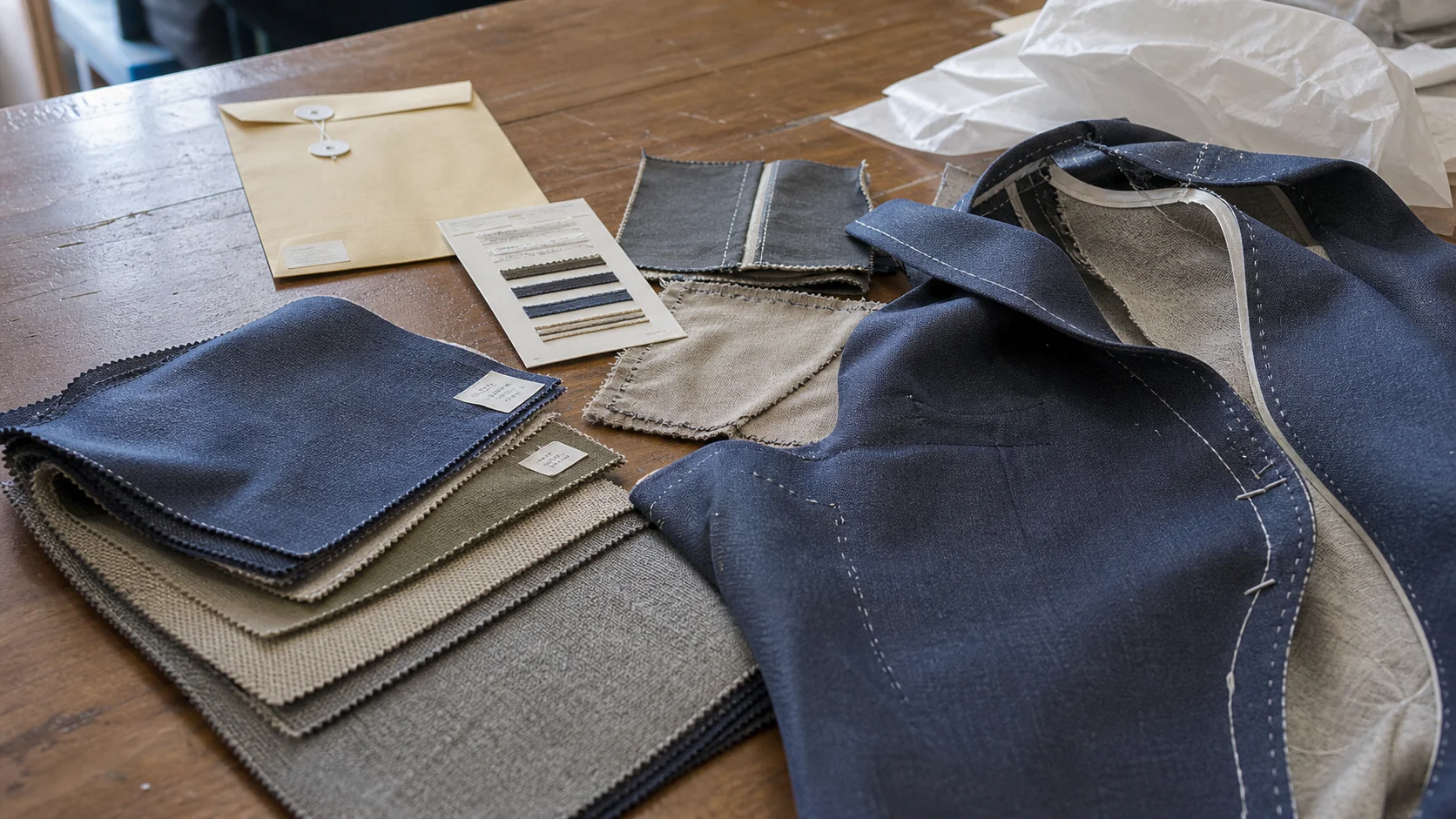
A practical guide for retail operations teams on how to evaluate freezer coat fabrics for cold-chain performance, durability, compliance, and supplier...
Retail buyers working on freezer coats do not just need a warm-looking fabric. They need a material package that performs under cold-chain conditions, holds up to repeated wear, and arrives with consistent quality at scale. A freezer coat may look simple on the rack, but the fabric decisions behind it are not. Shell fabric, lining, insulation, trims, and finishing all affect comfort, durability, and compliance. If any one of those parts is weak, the result is usually returns, complaints, and avoidable margin loss.
This freezer coat factory fabric testing guide for retail operations teams is written for sourcing, buying, and product teams that need a practical view of how to verify fabric quality before bulk production. It covers test points that matter, typical supplier expectations, sample approval steps, likely lead-time dependencies, and the risks that tend to show up only after production starts. The goal is straightforward: help retail buyers specify fabric more clearly and reduce avoidable surprises.
Freezer Coat Fabric Testing for Retail Buyers - Fabrikn production reference
Freezer coats are worn in low-temperature environments such as cold storage, food distribution, logistics, and warehouse operations. The fabric has to manage more than insulation. It must resist tearing, handle repeated bending, maintain performance in cold air, and stay comfortable enough that workers actually wear it properly.
Retail buyers often focus on style, color, or price point first. Those are important, but freezer coat programs fail more often because of fabric weaknesses than because of design issues. A coat can look premium in a showroom and still underperform in a chilled environment if the shell fabric loses flexibility, the coating cracks, or the insulation shifts after laundering.
Fabric testing helps confirm that the chosen material matches the intended use. It also gives the buying team leverage during supplier discussions. When a factory understands that the buyer will ask for testing reports, material traceability, and sample verification, the commercial conversation becomes more disciplined.
Freezer coat sourcing is not just a garment purchase. It is a performance decision with retail, safety, and return-rate consequences.
Before any testing plan is built, the buying team should separate the freezer coat into its key material parts. Each part has its own risk profile.
Retail buyers should avoid treating the shell fabric as the only decision point. In freezer coat production, the full material stack matters. A strong shell cannot rescue weak insulation. A good lining cannot compensate for a poor zipper or an unstable coating.
Factories may offer broad statements like “good quality” or “export standard.” That is not enough for retail operations teams. The buying team needs a test list tied to the actual use case. Below are the most useful checks for freezer coat fabric testing.
Confirm the fiber content through lab testing or approved mill documentation. A polyester shell should not be assumed to be 100% polyester without verification. Even small deviations can affect shrinkage, hand feel, and performance in cold conditions.
GSM, or grams per square meter, is one of the first indicators of body and durability. For freezer coat shells, common weights often fall in the range of 150 to 300 GSM depending on the design, coating, and target warmth level. Insulation layers vary widely, and the buyer should not compare them loosely across vendors without the full construction details.
These tests help determine whether the fabric can withstand pulling, snagging, and stress at seams and stress points. Freezer coats are commonly worn in active work settings, so weak tear strength can lead to damage in elbows, hems, pocket openings, and around zipper areas.
Abrasion testing is useful for buyers selling into warehouse or logistics channels where coats are frequently rubbed against racks, pallets, or equipment. If the outer fabric pills or wears through too quickly, the retailer will see quality complaints even if warmth performance is acceptable.
Testing for shrinkage after washing and drying is important even when the garment is not intended for daily home laundering. Buyers should ask what happens after repeated cleaning cycles. Some cold-chain customers use industrial laundry services, and the fabric has to stay within tolerance.
Colorfastness to washing, rubbing, perspiration, and light should be reviewed. Dark freezer coats may show rub-off, while bright safety colors can fade faster if the dye process is weak. If a garment includes reflective panels or contrast sections, testing should include those materials as well.
Not every factory provides true cold-crack testing, yet it is one of the more relevant checks for freezer coats. This test assesses whether the fabric or coating becomes brittle at low temperatures. Buyers sourcing for extreme cold environments should ask specifically about performance at the intended temperature range.
Some freezer coats require only basic resistance, while others need more robust barrier properties. Water repellency, hydrostatic pressure, or coating integrity may matter depending on the end-use. A factory should clarify whether the design is intended for cold storage only or for exposed outdoor transitions too.
Pilling affects appearance quickly, especially on brushed or blended fabrics. Retail buyers should confirm the acceptable pilling grade and whether the buyer’s target channel requires a higher standard. Apparel sold to commercial buyers tends to attract more scrutiny than casual outerwear.
Even if the fabric itself is strong, the structure can fail at seams. This is especially true for lightweight shells, coated fabrics, and quilted constructions. The buyer should ask how the factory reinforces stress zones and whether seam construction has been tested under load.
Retail operations teams should ask factories for a full specification sheet before approving a sample. This avoids vague promises and allows proper comparison across suppliers.
Specification Area What to Confirm Why It Matters Shell fabric Fiber content, weave, GSM, coating, finish Affects durability, hand feel, and cold resistance Lining Fabric type, GSM, quilt pattern, comfort level Impacts wear comfort and insulation stability Insulation Fill type, fill weight, thermal rating, stitch control Determines warmth and bulk Zippers Brand, gauge, tape type, low-temperature performance Common failure point in cold conditions Reflective tape Width, placement, wash durability, compliance need Important for visibility and retail program requirements Thread Composition, ticket size, color match, strength Weak thread can compromise seam durability Labels and trims Care label, size label, branding, origin marks Impacts compliance and presentationBuyers should also ask for trim source details. The same jacket can vary significantly depending on whether the factory uses generic zipper tape, standard reflective tape, or a higher-grade component with better cold flexibility. Small trim upgrades often protect quality better than spending all the budget on shell fabric.
A well-run freezer coat program should move through a structured sample process. Skipping steps usually creates rework later. The most practical sequence is:
Retail buyers should be careful not to approve a sample based only on appearance. A sample can look correct while still using non-final fabric or trims. Request explicit confirmation that the pre-production sample matches the intended bulk material package. If the factory proposes substitutions, those should be documented before the order is released.
It is also wise to keep an approved reference sample sealed and labeled. This gives the operations team a physical benchmark during inline checks and final inspection.
MOQ for freezer coats depends on fabric source, color complexity, trim sourcing, and whether the factory is buying from stock or weaving to order. For many retail programs, typical MOQ ranges may start around 300 to 500 pieces per color for simpler styles and rise to 1,000 pieces or more when custom fabric, special coatings, or branded trims are involved. Some factories can work lower, but unit cost usually rises.
Lead time also depends on the material path. If the shell fabric is stock-supported, a program may move faster. If the fabric requires custom dyeing, coating, or lamination, buyers should expect longer timelines. Add more time for lab testing, approvals, and correction rounds. A practical planning window for a custom freezer coat program is often 8 to 14 weeks after approvals, though complex builds can take longer.
Retail teams should never assume one factory’s quote covers identical lead time across all variants. A black shell with standard trims is not the same as a hi-vis version with reflective tape, custom zipper pulls, and special packaging. Every added material dependency introduces scheduling risk.
Several problems tend to appear during inspection if fabric testing and sample control were weak earlier in the process.
Buyers should instruct inspection teams to check more than appearance. Functional checks matter: zipper run, seam integrity, measurement tolerances, reflective placement, and any visible fabric defects. A freezer coat that passes a quick visual scan may still fail in real use if the fabric or trims were not validated properly.
Clear questions often reveal whether a factory understands freezer coat fabric requirements or is simply quoting from a generic outerwear template.
Strong suppliers answer these questions directly and with documents. Weak suppliers tend to shift the discussion to general comfort or “normal production standards.” Retail buyers should treat that as a warning sign.
Not every freezer coat needs the same performance level. The right fabric choice depends on channel, climate, user behavior, and price target. That is where purchasing judgment matters.
If the product is intended for warehouse staff working in moderate cold, a midweight shell with solid abrasion resistance and good insulation may be the best value. If the coat will be used in deeper freezer environments, the buyer should place more emphasis on low-temperature flexibility, barrier performance, and hardware reliability. In those cases, a slightly higher fabric cost can reduce returns and improve customer satisfaction.
Some buyers over-spec the shell fabric and under-spec the trims. That is a common mistake. A better zipper, stronger thread, and stable reflective tape can do more for product durability than adding a heavier fabric alone. Other buyers choose the cheapest insulation possible and then face complaints that the coat feels bulky but still does not keep workers warm enough. The balance has to be deliberate.
Price pressure is real in retail, but the lowest FOB is rarely the lowest total cost. A garment that passes first inspection and survives end-use is usually better value than a cheaper style that creates claims, markdowns, or replacement orders.
The practical sourcing rule is simple: buy the fabric package that matches the cold environment, not the one that looks strongest on the quote sheet.
For retail teams that need help organizing fabric specs, sample approvals, and bulk production questions, it helps to work with a supplier that can discuss the full material package clearly. A good manufacturing partner should be able to explain test requirements, coordinate fabric sourcing, and keep documentation aligned with the approved sample.
For more information about production support and apparel manufacturing services, review the services page. If your team is ready to discuss a specific freezer coat project or request a quote, use the contact page. Buyers who want a broader view of the company can also review the about page.
Retail buyers should still keep control of the brief. A manufacturing partner can guide execution, but the buyer must define the end use, test priorities, and commercial tolerances. The clearer the brief, the cleaner the production outcome.
Get a free quote from Fabrikn — your trusted B2B clothing manufacturer with 10+ years of experience. MOQ as low as 200 pieces.
Get a Free Quote →There is no single best fabric. Polyester-based shells with appropriate insulation are common because they balance durability, cost, and performance. The final choice depends on temperature exposure, laundering method, and required barrier performance.
The most relevant tests usually include fiber content verification, GSM, tear strength, tensile strength, abrasion resistance, shrinkage, colorfastness, and low-temperature flexibility. The exact test set should match the end-use environment.
Typical MOQ ranges often start around 300 to 500 pieces per color for simpler programs and may move to 1,000 pieces or more for custom fabrics, special trims, or branded packaging. MOQ depends on material availability and factory setup.
Lead time depends on fabric readiness and approval speed. For custom freezer coat programs, 8 to 14 weeks after approvals is a reasonable planning range, though complex styles may take longer.
Yes. Sample appearance alone is not enough. Buyers should ask for lab reports or documented test results before approving bulk production, especially for shell fabric, coating performance, colorfastness, and shrinkage.
One of the biggest risks is assuming that a fabric that looks suitable at room temperature will also perform well in cold conditions. Low-temperature flexibility, seam behavior, and trim performance often determine whether the coat works in real use.
You can review production support options on the services page, or reach out directly through the contact page.